








Are you sure you want to perform this action?
For Les Malletiers, an antique Louis Vuitton trunk isn’t simply purchased as a beautiful decorative item. It is chosen as a piece of heritage, at the intersection of the art of travel, leather-covered cabinetry, and the history of France’s great fashion houses. At first glance, its appeal is obvious. Upon closer inspection, what truly matters comes into view—construction, markings, hardware, canvas, interior, and overall coherence.
For a discerning connoisseur, that is where the challenge lies. A trunk that is attractive but overly restored may lose some of its appeal. Another, more weathered and closer to its original condition, may instead prove to be a far more worthwhile acquisition. Between desire, authenticity, and value, one must maintain a discerning eye.
## Why an antique Louis Vuitton trunk still fascinates
The antique Louis Vuitton trunk holds a unique place in the world of luxury collectibles. It is not merely a predecessor to contemporary luggage. It represents a revolution in modern travel—the shift toward flat, stackable forms that accompanied the rise of elegant travel in the late 19th and early 20th centuries.
This historical significance explains part of its appeal, but not all of it. A vintage Louis Vuitton trunk also captivates through the mastery of its details. The slats, the metal or brass reinforcements, the side handles, the stamped locks, the evenly spaced studs, the precision of the upholstery—nothing here is mere decoration. Every element serves a function, and that function becomes beauty.
It is also an object that fits seamlessly into interiors with rare ease. In a classic apartment, it extends a tradition of decorative arts. In a more contemporary setting, it introduces a presence, a depth, a history. Few objects possess this ability to be at once a domestic sculpture, an accent piece, and a testament to a bygone way of life.
## What Determines the Value of an Antique Louis Vuitton Trunk
Value is never determined by a single criterion. It arises from a balance between age, rarity, condition, authenticity, and market demand. Two trunks that appear similar can thus vary significantly in value.
The first factor is the model itself. A classic cabin trunk will not carry the same weight as a hat trunk, a compartmentalized wardrobe trunk, or a model still bearing vintage travel labels. Certain interior configurations, specific sizes, or special orders are particularly sought after.
The second factor is the exterior material. Collectors closely examine the various fabrics, historic checkered patterns, leathers, trim, corner protectors, and the evolution of the brand’s visual signatures. Aesthetics matter, of course, but they must remain consistent with the presumed period of manufacture.
Condition is then decisive, with one essential nuance. When it comes to antique trunks, perfect condition is not always the most desirable. An even patina, harmonious signs of use, and a preserved original interior can be more valuable than a restoration that is too new, too smooth, or too uniform. It is important to distinguish between conservation restoration—which is legitimate and sometimes necessary—and alteration that compromises the object’s integrity.
## Authenticity factors to examine carefully
The market for antique trunks attracts both connoisseurs and buyers drawn by its aesthetic appeal. This is precisely why authentication is essential. A beautiful appearance is never enough.
The lock is often the first point of observation. Markings, the quality of craftsmanship, and consistency with the type of trunk and the presumed period must be examined methodically. The same applies to handles, hardware, nails, and reinforcements. A mixed ensemble, combining antique elements with later replacements, calls for careful scrutiny.
The exterior canvas deserves careful examination. Its texture, wear, patterns, installation, and aging must form a credible whole. A replaced canvas does not necessarily invalidate the piece, but it does alter its status as a collectible. The question is therefore not only “is it authentic?” but also “what is original?”
The interior is often revealing. Upholstery, compartments, any padding, straps, papers, labels, numbering, or inscriptions can provide valuable clues. It is often here that one best perceives the object’s actual history. A trunk that is highly detailed on the outside but ordinary or inconsistent on the inside should raise concerns.
Finally, provenance matters. When a piece comes with a clear appraisal and a certificate of authenticity written by a recognized specialist, the nature of the purchase changes. In a segment so prone to approximations, documentary reliability is not merely a comfort factor. It is a prerequisite for value.
## Antique, Restored, Altered—Major Differences
Many buyers discover this point too late. Not all antique trunks on the market follow the same heritage logic.
An antique trunk in its original condition, even with visible wear, generally retains greater appeal for a collector. It tells its story without artifice. Scratches, scuffs, and old hotel or shipping company labels are part of its material truth.
A trunk restored with discernment can remain highly desirable, especially if the structure needed to be reinforced. The quality of the restoration is then essential. A respectful restoration must stabilize, not reinvent.
A transformed trunk enters a different category. When an antique object has been converted into a bar, a table, or a piece of furniture that has been significantly altered, its decorative value may remain strong, but its collectible value often diminishes. It all depends on the buyer’s intentions. A decor enthusiast might seek aesthetic appeal. A collector, on the other hand, will prioritize integrity.
## Buying to Collect or to Decorate
The question deserves to be asked frankly, as it guides everything else. If you are looking for a collector’s item, you will first focus on the period, the rarity of the model, the integrity of the original elements, and the quality of the documentation. Aesthetic appeal remains present, but it is not enough.
If you are looking for a piece for an interior, other criteria may take precedence—size, color, volume, visual condition, functionality. This is not a less noble approach. It is simply different. A large cabin trunk with a beautiful patina can become a focal point in a living room or walk-in closet, even if it is not the rarest piece in the Louis Vuitton collection.
The tricky part arises when you want both at once—decorative beauty and heritage standards. It is often possible, but rarely by chance. You must then be willing to search more thoroughly and compare rigorously.
## How to Determine the Fair Price
The fair price is never an abstract average. It depends on the type of trunk, its era, its condition, its proven authenticity, its rarity on the market, and the quality of its presentation.
A heavily restored piece may look more spectacular in photographs yet be less interesting than a more understated, more authentic example. Conversely, extreme patina or significant structural damage must be evaluated without romanticism. Authenticity does not compensate for everything.
One must also take into account the depth of the market. Certain antique trunks circulate regularly. Others appear rarely, particularly when they combine a good size, fine provenance, attractive interior, and consistent condition. This is where the concept of rarity becomes concrete.
For this reason, guidance from a specialist remains invaluable. At Les Malletiers, this assessment is part of an approach focused on selection, expertise, and authenticity that meets the expectations of discerning collectors, both in France and internationally.
## What a Savvy Buyer Should Always Ask
Before making any purchase, a few simple questions can help avoid the most costly mistakes. Clear photographs of the lock, hardware, handles, corners, interior, and any labels are essential. You should also ask what has been restored, replaced, or reinforced.
The absence of clear information is a red flag in itself. In the world of heritage objects, transparency never detracts from a fine piece; it confirms its value.
A formal appraisal is particularly important when making a purchase remotely. For an antique trunk, trust must be based on tangible evidence, not merely on the seller’s reputation. This is what allows you to buy with discernment, whether it’s your first major purchase or an addition to your collection.
Choosing an antique Louis Vuitton trunk means embracing a certain slowness. You look, you compare, you question the consistency of a detail; sometimes you’d rather walk away than settle for a piece that’s too uncertain. This patience isn’t a hindrance to desire. It’s its best ally.
Related articles

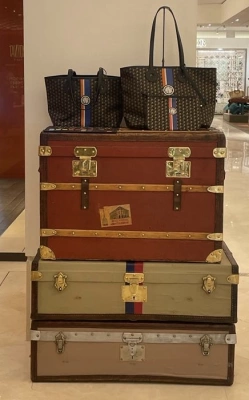
The history of luggage dates back to ancient times, when people used cloth bags or woven baskets to carry their belongings. However, these bags were often bulky and impractical to carry over long distances.
Over the centuries, luggage evolved to become more functional and adapted to travellers' needs. In the Middle Ages, nobles used wooden chests to carry their belongings when travelling. These chests were often heavy and required several people to carry them.
With the advent of rail and sea travel in the 19th century, luggage underwent a new evolution. Wooden trunks became popular, offering better protection for fragile objects. These trunks were often adorned with leather or canvas and were used by wealthy travellers.
In the 20th century, the arrival of commercial aviation led to a further transformation of luggage. Rigid metal or plastic suitcases became common, offering greater shock resistance and storage capacity. Wheels were also added to make transport easier.
Today, luggage is available in a wide variety of shapes, sizes and materials. Many models are available from Les Malletiers....
27 Jul 2023
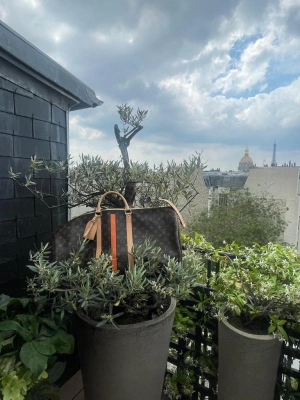
Louis Vuitton's Keepall travel bag, the 1930s... Cruises were fashionable, as were holidays in Deauville and Biarritz.
At that time, Louis Vuitton, renowned for its trunks, had to adapt to these new lifestyles. The result was the Keepall, a bag that "keeps everything". The Keepall is a flexible, zipped bag made from the famous monogrammed coated canvas. Its generous shape allows you to slip in a sports outfit and a few simple clothes for a weekend in the countryside.
An immediate success, the Keepall has never left the Louis Vuitton catalogue. It has been used in the trunk-maker's other collections, and given a new look by artists invited by Marc Jacobs, including Takashi Murakami and others.
Four sizes were chosen (45, 50, 55 and 60 cm), with the first three being the most popular because they could be carried in the cabin.
Seen over and over again on all the people for generations, the Keepall is now a timeless piece, which we keep, cherish and watch lovingly polish... Les Malletiers loves it too!
27 Jul 2023
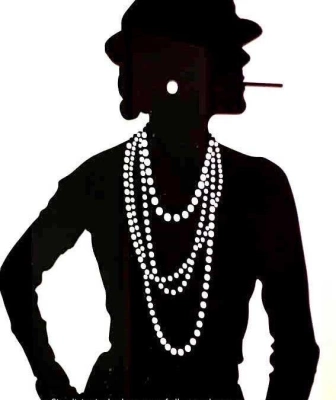
Coco Untold Stories, the early years...
She symbolizes French elegance. Gabrielle Chanel, born in Saumur in 1883, whose real name was Gabrielle Chasnel, was raised in an orphanage. At the age of 12, she was taken in with two of her sisters at Aubazine Abbey in Corrèze.
Her mother died in Brive-la-Gaillarde in 1895. When she was just 12, her father abandoned her a few months later, to the care of the nuns. He never returned. Gabrielle went to Aubazine to learn sewing. She stayed for 6 years. The abbey would remain a powerful source of inspiration for the codes of the House of Chanel...
Coco Chanel's taste for clean lines and her predilection for black, white and beige are perhaps linked to the sobriety of the abbey and its occupants...
Once she left Aubazine, she moved to Moulin. Gabrielle had to earn a living, so she sang in small shows in bars, famous for her rendition of
“Who has seen Coco on the Trocadero? Coco, a nickname that has stuck for posterity...
10 Aug 2023