








Are you sure you want to perform this action?
For Les Malletiers, a Chanel long necklace from the 1980s is more than just a fashion statement. It embodies an era, a stylistic language, a standard of craftsmanship, and—very often—a crucial question at the time of purchase: can we really trust it? In this specific segment, **authenticated vintage Chanel jewelry** holds a special place, because it represents the perfect blend of taste, rarity, and expertise.
The market for vintage Chanel jewelry is as fascinating as it is concerning. Fascinating, because it offers access to designs no longer available in stores, to bold lines, and to instantly recognizable aesthetic signatures. Concerning, because Chanel is among the most counterfeited brands on the secondary market. For both the discerning enthusiast and the collector, the challenge is therefore not merely to find a beautiful piece. It is about finding the right piece, in the right condition, with the right level of rarity, and with absolute certainty.
## Why authenticated vintage Chanel jewelry attracts collectors
Vintage Chanel jewelry possesses a unique power. Where some contemporary pieces favor discretion, vintage Chanel often takes on a more theatrical presence. The camellia, the chain, the double C, the costume pearls, the Byzantine crosses, the colored cabochons, or the gold finishes form a language that spans decades without losing its power.
This desirability also stems from the house’s history. Chanel has successfully transformed costume jewelry into a creative realm in its own right, elevating it to the status of an essential wardrobe accessory. This is no small detail for today’s buyer. Acquiring a brooch, a cuff bracelet, or a pair of vintage clip-ons means entering a fashion vision where jewelry is never secondary.
But not all pieces are created equal. Some collections are more sought-after for their iconic status, others for their limited availability, and still others for the quality of their materials and craftsmanship. A necklace with a leather-interwoven chain does not evoke the same impression as a figurative brooch or a pair of cabochon earrings. The price, too, depends on this nuance.
## What distinguishes a desirable piece from a simply vintage one
Age alone does not create value. In the world of Chanel, what matters is the combination of several criteria—the accuracy of the design, the quality of the finishes, the condition, the presence or absence of original elements, and the piece’s consistency with the house’s known productions.
A beautiful patina can be desirable. On the other hand, excessive wear on the plating, a replaced clasp, missing rhinestones, or a visible repair can shift the piece into a different category. It may still be appealing to wear, but much less so as a collector’s item.
Wearability is also a key consideration. Some spectacular vintage Chanel pieces are stunning in a display case but harder to incorporate into daily life. Conversely, a well-proportioned pair of clip-ons, a signature pendant, or a simply crafted chain can combine heritage value with ease of wear. It all depends on your purpose for buying—whether for a collection, to pass down, for regular use, or as an accent piece for an existing wardrobe.
## How to Identify Authenticated Vintage Chanel Jewelry
Authenticating a piece of Chanel jewelry is never based on a single detail. It requires a comprehensive assessment. Connoisseurs examine the construction, weight, metal quality, precision of the motifs, fastening mechanisms, and any signatures.
### The signature plate is never enough
Many buyers start by looking for a Chanel plate or a date stamp. This is understandable, but insufficient. First, because some antique jewelry features different markings depending on the period. Second, because counterfeits have long since learned to imitate these plates. A signature provides reassurance, but it does not prove authenticity on its own.
The typography, the layout of the markings, the quality of the engraving, and their consistency with the supposed period must be examined methodically. A poorly centered plate, a rough font, or an inconsistent date should raise red flags.
### The finishes often speak louder than the logo
On an authentic piece, the craftsmanship of the volumes, settings, reliefs, and assemblies reveals a level of care that a copy rarely reproduces convincingly. The back of the jewelry is particularly revealing. A neglected back, a rough solder joint, or a flimsy clasp can contradict a flattering appearance on the front.
Weight matters as well. A vintage Chanel piece often has a density and heft in the hand that immediately contribute to its impression of quality. This criterion is not absolute, but it remains revealing when considered in relation to the rest.
### Stylistic consistency is essential
An authentic Chanel piece belongs to a specific visual universe. The combination of design elements, proportions, and finishes must remain credible in light of the house’s history. When a piece of jewelry features too many ostentatious details without overall harmony, suspicion is warranted.
This is where the true difference between simple resale and expertise comes into play. Authentication is not about spotting a logo. It is about recognizing the house’s design philosophy.
## Buying Authenticated Vintage Chanel Jewelry Without Giving In to Impulse
Desire plays a major role in the purchase of vintage jewelry. That’s normal. However, with Chanel even more so than with other houses, impulse buying exposes you to costly disappointments. You must take the time to examine three factors simultaneously—authenticity, condition, and price relevance.
The lowest price isn’t always a bargain. It may reflect an unreported defect, uncertain authenticity, or a botched restoration. Conversely, a high price guarantees nothing if the piece isn’t precisely documented and evaluated by a knowledgeable expert.
For this reason, the buying environment matters almost as much as the item itself. A discerning selection, a rigorous description, precise photographs, and above all, formal authentication provide a framework of trust that is very different from generalist marketplaces. At Les Malletiers, each piece is presented as a heritage object, accompanied by a certificate of authenticity written by Jérôme Lalande, an expert appointed by the Paris Court of Appeal. For a discerning buyer, this difference is significant.
## Which vintage Chanel pieces to choose based on your profile
Choosing a piece of jewelry depends less on trends than on your personal connection to the item. The discerning collector will naturally gravitate toward pieces with a strong visual identity—ornate crosses, sculptural brooches, jewelry belts, long necklaces with cabochons, or clips featuring iconic motifs. These pieces fully embody the decorative power of vintage Chanel.
The enthusiast who wishes to wear their purchase regularly will look instead toward earrings, chain necklaces, flexible bracelets, or pendants that are easier to integrate into a contemporary wardrobe. They often offer an ideal balance between presence and versatility.
As for the heritage buyer, they must accept a simple reality—the rarest pieces are also the hardest to source, and their value fluctuates depending on the era, condition, and current market demand. Here, there are no hard-and-fast rules. You must weigh your initial attraction, potential resale value, and collection goals.
## What to Look for Before Making a Decision
Before any purchase, ask yourself what you truly expect from the piece. Are you looking for a spectacular piece of jewelry to accentuate an outfit, a collector’s item destined to remain rare, or a vintage Chanel classic that you’ll wear often? This answer guides everything.
Next, examine the condition with a critical eye. With vintage pieces, the signs of age are part of the item’s history, but they must not compromise its beauty or structure. A light patina can enhance its charm. Significant loss of gilding, replaced parts, or a weakened mechanism call for a different assessment—and thus a different price.
Finally, insist on thorough authentication. In a market saturated with imitations, trust cannot rest on a general impression or a seller’s reputation alone. It must be established, documented, and upheld.
True luxury in the secondary market isn’t just about finding a desirable Chanel piece. It’s about being able to acquire it with the certainty that it is genuine in every sense of the word—genuine in its origin, genuine in its condition, and genuine in its value. It is this precision that transforms a purchase into a lasting choice.
Related articles

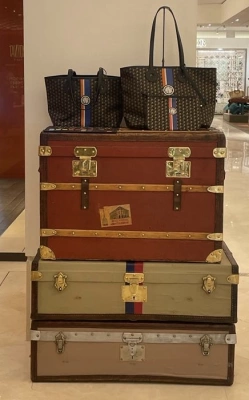
The history of luggage dates back to ancient times, when people used cloth bags or woven baskets to carry their belongings. However, these bags were often bulky and impractical to carry over long distances.
Over the centuries, luggage evolved to become more functional and adapted to travellers' needs. In the Middle Ages, nobles used wooden chests to carry their belongings when travelling. These chests were often heavy and required several people to carry them.
With the advent of rail and sea travel in the 19th century, luggage underwent a new evolution. Wooden trunks became popular, offering better protection for fragile objects. These trunks were often adorned with leather or canvas and were used by wealthy travellers.
In the 20th century, the arrival of commercial aviation led to a further transformation of luggage. Rigid metal or plastic suitcases became common, offering greater shock resistance and storage capacity. Wheels were also added to make transport easier.
Today, luggage is available in a wide variety of shapes, sizes and materials. Many models are available from Les Malletiers....
27 Jul 2023
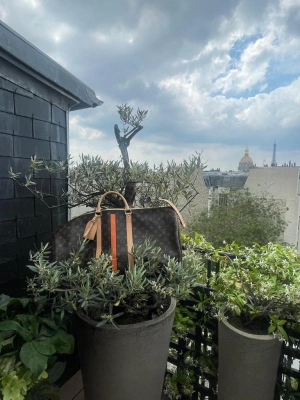
Louis Vuitton's Keepall travel bag, the 1930s... Cruises were fashionable, as were holidays in Deauville and Biarritz.
At that time, Louis Vuitton, renowned for its trunks, had to adapt to these new lifestyles. The result was the Keepall, a bag that "keeps everything". The Keepall is a flexible, zipped bag made from the famous monogrammed coated canvas. Its generous shape allows you to slip in a sports outfit and a few simple clothes for a weekend in the countryside.
An immediate success, the Keepall has never left the Louis Vuitton catalogue. It has been used in the trunk-maker's other collections, and given a new look by artists invited by Marc Jacobs, including Takashi Murakami and others.
Four sizes were chosen (45, 50, 55 and 60 cm), with the first three being the most popular because they could be carried in the cabin.
Seen over and over again on all the people for generations, the Keepall is now a timeless piece, which we keep, cherish and watch lovingly polish... Les Malletiers loves it too!
27 Jul 2023
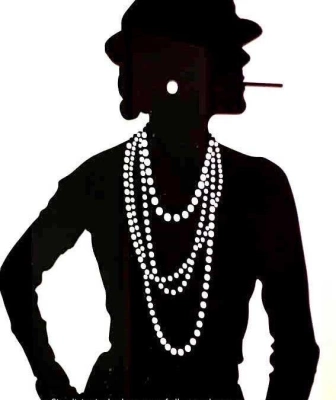
Coco Untold Stories, the early years...
She symbolizes French elegance. Gabrielle Chanel, born in Saumur in 1883, whose real name was Gabrielle Chasnel, was raised in an orphanage. At the age of 12, she was taken in with two of her sisters at Aubazine Abbey in Corrèze.
Her mother died in Brive-la-Gaillarde in 1895. When she was just 12, her father abandoned her a few months later, to the care of the nuns. He never returned. Gabrielle went to Aubazine to learn sewing. She stayed for 6 years. The abbey would remain a powerful source of inspiration for the codes of the House of Chanel...
Coco Chanel's taste for clean lines and her predilection for black, white and beige are perhaps linked to the sobriety of the abbey and its occupants...
Once she left Aubazine, she moved to Moulin. Gabrielle had to earn a living, so she sang in small shows in bars, famous for her rendition of
“Who has seen Coco on the Trocadero? Coco, a nickname that has stuck for posterity...
10 Aug 2023