








Are you sure you want to perform this action?
According to Les malletiers, the luxury secondhand leather goods website: Giving a luxury item is about more than just the gesture. It all comes down to the choice—the right brand, the quality of the material, the history a beautiful object carries with it. When it comes to selecting the best second-hand luxury gifts, the goal isn’t to find a spectacular present at any cost, but rather a desirable, authenticated piece that’s unique enough to leave a lasting impression on the recipient.
The high-end second-hand market has changed profoundly. It no longer caters solely to bargain hunters, but to discerning buyers seeking hard-to-find items, discontinued editions, traditional craftsmanship, and a more refined form of luxury. A well-chosen second-hand gift can thus have more allure, more meaning, and sometimes more heritage value than a mass-produced new item.
## Why the best luxury second-hand gifts are so appealing
A pre-owned luxury gift possesses a rare quality—it already tells a story. A vintage Chanel clutch, a Hermès leather wallet with a perfectly weathered patina, or a bracelet from a prestigious house do not arrive as anonymous objects. They carry a history, a craftsmanship, and a presence that new items do not always offer.
There is also an element of discernment. Giving a prestigious second-hand item shows that one is not satisfied with what is merely visible or readily available. One chooses a piece for its timelessness, its design, and its relative rarity. This approach particularly appeals to connoisseurs of fine fashion houses, who appreciate the artisan’s craftsmanship, the quality of the leather, vintage finishes, and models that have become hard to find.
The main consideration naturally comes down to condition and provenance. A secondhand luxury gift has value only if its authenticity is beyond reproach and its condition is consistent. A very rare but worn-out piece is not always suitable as a gift. Conversely, a less spectacular model, but in remarkable condition, will often be better received.
## 1. The Silk Scarf or Home Scarf
Among the most thoughtful gifts, the silk scarf holds a unique place. It suits a wide range of tastes, transcends generations, and retains the understated elegance characteristic of the great French fashion houses. It is a gift that seeks not immediate impact, but lasting grace.
In the second-hand market, the appeal is twofold. You can access rarer patterns—sometimes more refined than recent collections—while discovering pieces that are no longer in the catalog. For someone with a keen eye for style, it’s often a more subtle choice than an accessory that’s too predictable.
## 2. The leather cardholder or wallet
The small leather goods piece is one of the best second-hand luxury gifts when you want to combine everyday use with understated prestige. A Dior cardholder, a Louis Vuitton wallet, or a piece by Goyard or Prada offers a special connection to the chosen brand—you use it every day, keep it for a long time, and watch it age.
However, you must pay close attention to the details. The corners, stitching, lining, and suppleness of the leather matter more here than on a casual bag. For a gift, it’s best to choose a simple piece in excellent condition with a timeless design.
## 3. Designer jewelry from a major house
Jewelry remains a safe bet, provided you choose it with restraint. In the second-hand market, it offers access to designs no longer available in stores or to particularly sought-after aesthetic periods. A pair of earrings, a bracelet, or a brooch from a designer house can hit the mark, especially if the recipient already has a well-defined sense of style.
This is also one of the categories where expertise is crucial. Signature, hallmarks, condition of the clasp, possible replacement of certain parts—nothing should be left to guesswork. When it comes to a gift, trust is not a minor detail; it is the very condition for the joy of giving.
## 4. The Iconic Belt
A beautiful designer belt is often underestimated. Yet it’s a very thoughtful gift for someone who appreciates clean lines and pieces that define a silhouette without excessive ostentation. Hermès, Gucci, or Dior have established instantly recognizable buckles and finishes, but the right choice depends on the person’s actual style, not just brand recognition.
The second-hand market allows you to find softer leathers, widths that are sometimes no longer produced, or more understated versions than current models. The key consideration remains the size. If you’re unsure, it’s best to opt for less restrictive categories.
## 5. The Evening Bag or Vintage Clutch
For a more memorable gift, a vintage clutch or small evening bag is among the best second-hand luxury gifts. They embody everything one expects from a beautiful object—desire, rarity, occasional use, and strong aesthetic value. A box-shaped leather clutch, a jeweled minaudière, or a chain-strap model from an iconic house can become almost sentimental wardrobe staples.
This is also a category where secondhand items have a clear advantage. Certain proportions, clasps, and lines were more elegant twenty or thirty years ago than in some contemporary designs. Still, you must select a piece whose condition—both inside and out—remains worthy of a gift.
## 6. The vanity case or travel accessory
Luxury travel accessories belong to an ancient tradition, particularly cherished by lovers of distinctive objects. Vanity cases, toiletries bags, travel kits, or small trunks make for less conventional gifts, but are often far more memorable.
They are particularly suited to those who love home goods as much as personal accessories. A beautiful travel item from a renowned leather goods house is more than just a practical tool. It evokes a way of life, a taste for adventure, and a culture of elegance on the move.
## 7. The Watch Strap or Collectible Fashion Watch
Not all watches make good gifts, but certain fashion watches or jewelry pieces from luxury houses can be excellent options. They stand out on the wrist and often hold a value that goes beyond mere timekeeping. For a style enthusiast, this is sometimes exactly what’s needed.
The downside is simple—a watch requires more technical scrutiny. Check the functionality, battery or movement, condition of the glass, wear on the strap, and any maintenance already performed. It can be a remarkable gift, but it demands more attention to detail than a silk scarf or a wallet.
## 8. The Handbag Charm or Signature Accessory
There are lighter gifts, but no less refined. A bag charm, a house key ring, a leather charm, or a small signature accessory can be suitable when you want to give a luxury item with tact, without making a purchase that’s too significant.
This type of gift works very well for someone who already has a well-defined sense of style. It adds a touch, a nuance, rather than seeking to transform an entire look. And when it comes to a rare or discontinued model, its charm is often tenfold.
## 9. The iconic small bag in an everyday size
If the occasion calls for it, an iconic small bag remains one of the most impactful gifts. You must then set aside the idea of a simple logo and think like a connoisseur—a model suitable for everyday use, in a versatile color, with durable construction. A successful gift isn’t necessarily the flashiest one, but the one that will actually be worn.
In the second-hand market, this segment offers excellent opportunities, particularly for earlier collections whose craftsmanship still appeals to collectors. At [Les Malletiers](https://www.lesmalletiers.com/fr/), this rigorous selection process makes perfect sense when prioritizing authenticity, condition, and the piece’s timeless elegance over fleeting trends.
## 10. The Rare Piece for Collectors
Finally, there is the gift intended for a discerning eye. A limited edition, a discontinued model, an accessory from a sought-after era, or an antique trunk-maker’s piece can make for exceptional gifts. It is not the easiest choice, but it is sometimes the most appropriate for a collector or a lover of fashion heritage.
In this case, the gift’s value lies less in its immediate use than in its cultural significance and rarity on the market. You must know the recipient’s tastes precisely. A very rare piece, if it doesn’t fit their world, loses some of its impact.
## How to Choose from the Best Secondhand Luxury Gifts
The right gift always starts with a keen understanding of the person. Do they seek out showy items or more understated signs of good taste? Do they prefer leather goods, jewelry, textile accessories, or travel-related items? Do they buy to wear or to keep? In the world of secondhand luxury, these nuances make all the difference.
The budget, of course, isn’t approached the same way as in other categories. Here, it’s not just about the amount, but about balancing rarity, condition, desirability, and practicality. For the same budget, a small, exceptional item will sometimes have more appeal than a large, average piece.
Finally, one principle must remain non-negotiable—authenticity. In a market saturated with questionable items, offering a certified object—thoroughly examined and clearly presented—is a mark of respect toward the recipient as much as toward the house that produced it.
The finest second-hand luxury gift isn’t necessarily the one that impresses at first glance. It’s the one that, months later, remains present in daily life or in memory as a testament to good taste.
Related articles

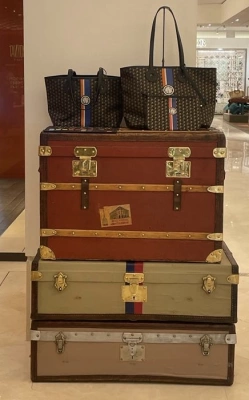
The history of luggage dates back to ancient times, when people used cloth bags or woven baskets to carry their belongings. However, these bags were often bulky and impractical to carry over long distances.
Over the centuries, luggage evolved to become more functional and adapted to travellers' needs. In the Middle Ages, nobles used wooden chests to carry their belongings when travelling. These chests were often heavy and required several people to carry them.
With the advent of rail and sea travel in the 19th century, luggage underwent a new evolution. Wooden trunks became popular, offering better protection for fragile objects. These trunks were often adorned with leather or canvas and were used by wealthy travellers.
In the 20th century, the arrival of commercial aviation led to a further transformation of luggage. Rigid metal or plastic suitcases became common, offering greater shock resistance and storage capacity. Wheels were also added to make transport easier.
Today, luggage is available in a wide variety of shapes, sizes and materials. Many models are available from Les Malletiers....
27 Jul 2023
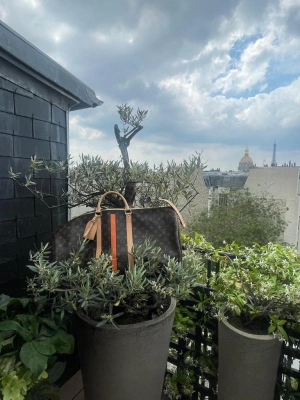
Louis Vuitton's Keepall travel bag, the 1930s... Cruises were fashionable, as were holidays in Deauville and Biarritz.
At that time, Louis Vuitton, renowned for its trunks, had to adapt to these new lifestyles. The result was the Keepall, a bag that "keeps everything". The Keepall is a flexible, zipped bag made from the famous monogrammed coated canvas. Its generous shape allows you to slip in a sports outfit and a few simple clothes for a weekend in the countryside.
An immediate success, the Keepall has never left the Louis Vuitton catalogue. It has been used in the trunk-maker's other collections, and given a new look by artists invited by Marc Jacobs, including Takashi Murakami and others.
Four sizes were chosen (45, 50, 55 and 60 cm), with the first three being the most popular because they could be carried in the cabin.
Seen over and over again on all the people for generations, the Keepall is now a timeless piece, which we keep, cherish and watch lovingly polish... Les Malletiers loves it too!
27 Jul 2023
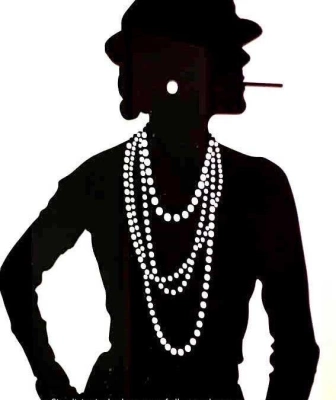
Coco Untold Stories, the early years...
She symbolizes French elegance. Gabrielle Chanel, born in Saumur in 1883, whose real name was Gabrielle Chasnel, was raised in an orphanage. At the age of 12, she was taken in with two of her sisters at Aubazine Abbey in Corrèze.
Her mother died in Brive-la-Gaillarde in 1895. When she was just 12, her father abandoned her a few months later, to the care of the nuns. He never returned. Gabrielle went to Aubazine to learn sewing. She stayed for 6 years. The abbey would remain a powerful source of inspiration for the codes of the House of Chanel...
Coco Chanel's taste for clean lines and her predilection for black, white and beige are perhaps linked to the sobriety of the abbey and its occupants...
Once she left Aubazine, she moved to Moulin. Gabrielle had to earn a living, so she sang in small shows in bars, famous for her rendition of
“Who has seen Coco on the Trocadero? Coco, a nickname that has stuck for posterity...
10 Aug 2023