








Are you sure you want to perform this action?
According to Les Malletiers, the pre-owned leather goods website: Released just a few years apart, these two bags have established two very different visions of Dior. Choosing between the Dior Saddle and the Lady Dior isn’t just a matter of taste. It’s a choice between two expressions of luxury, two ways of carrying a bag, and often two ways of entering the house’s universe.
The dilemma is all the more intriguing in the luxury second-hand market. An iconic bag is never just an accessory there. It becomes an object of style, but also of preservation, of passing down, and sometimes of collecting. Between the bold silhouette of the Saddle and the almost ceremonial architecture of the Lady Dior, the right choice depends less on current trends than on your actual use and your aesthetic sensibility.
## Dior Saddle or Lady Dior: two icons, two languages
The Saddle debuted in the late 1990s with an instantly recognizable shape. Asymmetrical, edgy, almost equestrian, it breaks with the idea of the demure bag. Its slanted flap, suspended silhouette, and famous D-shaped charm give it a very fashion-forward presence. Even when minimalist, it never goes completely unnoticed.
The Lady Dior speaks a different language. More structured, more composed, it embodies a poised elegance. Its rounded handles, cannage, and DIOR charms make it a statement bag, in the noble sense of the term. Where the Saddle asserts an attitude, the Lady Dior establishes an allure.
This is often where the choice comes down to. The Saddle appeals to those who love pieces with a strong, almost graphic personality. The Lady Dior appeals more to lovers of timelessness, balance, and formal refinement.
## Everyday style: allure, silhouette, presence
When worn, the Saddle immediately transforms a silhouette. Even with a very simple outfit, it introduces visual tension. It is particularly suited to contemporary wardrobes, featuring soft suits, crisp denim, fine knitwear, white shirts, and well-defined boots or ballet flats. It has a more instinctive, more urban feel.
The Lady Dior calls for a slightly different aesthetic. It pairs beautifully with structured ensembles, well-tailored coats, understated dresses, and monochromatic outfits. It can, of course, be modernized, especially in smaller sizes or crossbody versions, but it always retains a sense of classic distinction. This is precisely what many are looking for.
In other words, if your wardrobe favors clean lines, fashion-forward pieces, and a certain freedom of style, the Saddle is the natural choice. If you’re looking for a bag that can transition seamlessly from a formal lunch to a workday to dinner without changing its style, the Lady Dior has a clear advantage.
### The question of sizes
The perception of the bag changes significantly depending on its size. A compact Saddle remains highly portable and almost suitable for everyday use. In larger sizes, it becomes even more striking, though sometimes less versatile.
The Lady Dior, on the other hand, comes in proportions that strongly influence its use. The small sizes offer a lively elegance, almost like a piece of jewelry. The medium and large sizes gain in functionality while maintaining their structure. For a first purchase, size often matters just as much as the model itself.
## Real-world use: which one suits you best?
On this point, we must be honest. The Lady Dior is often seen as the most practical choice. Its structure allows for better organization, its opening is generally more user-friendly, and its capacity better suits a full day if you’re carrying a phone, wallet, glasses, and a few essentials.
The Saddle, despite its unique charm, may require more compromises. Its shape, precisely because it is so distinctive, doesn’t always offer the same storage convenience. Some people love it for outings, appointments, and casual days. Others end up reserving it for more occasional use.
This doesn’t mean the Saddle is any less relevant. It simply rewards a purchase driven by desire more than one driven strictly by practicality. If you love bags that define a silhouette before addressing practical needs, it’s remarkable. If you expect a bag to effortlessly accompany varied days, the Lady Dior often works better.
### Carried by hand, on the shoulder, or across the body
The Lady Dior has long been associated with being carried by hand, with all that implies in terms of style. The more recent versions with a crossbody strap expand its versatility and make it more adaptable for everyday life. It remains, however, a bag that retains a certain poise, even when carried casually.
The Saddle, depending on the version, lends itself more easily to being carried on the shoulder or across the body, in line with current trends. This versatility contributes greatly to its renewed success. It seems less formal, more spontaneous, while remaining deeply Dior.
## Materials, finishes, and aging
In the Dior universe, the material is never merely a covering. It determines how the bag ages, its visual presence, and its place in time. A Lady Dior in cannage leather offers an immediate glimpse into the House’s craftsmanship. The pattern, structure, and charms create a complete composition that stands the test of time when well-maintained.
The Saddle operates within a broader creative landscape. Smooth leather, grained leather, denim, twill, embroidery, seasonal editions—it has seen numerous interpretations, some highly desirable, others more dated. This is a key factor in the secondary market. Not all Saddle bags are created equal in terms of stylistic longevity.
The Lady Dior tends to weather trends better. Its strength lies in a consistent design language. The Saddle, on the other hand, oscillates between iconic permanence and sensitivity to the times. Some versions are absolute collector’s items. Others are more a matter of an aesthetic crush tied to a specific era.
## Dior Saddle or Lady Dior on the secondary market
The secondary market doesn’t just reward brand recognition. It distinguishes bags based on their current desirability, rarity, condition, materials, and ability to remain timeless. The Lady Dior enjoys enduring appeal. It feels reassuring, is instantly recognizable, and attracts both classic clients and lovers of fine home decor.
The Saddle, on the other hand, can offer particularly interesting opportunities. Certain production periods, certain diagonal-weave canvases, certain embroidered editions, or certain colorways are in very high demand. But its market is a bit more mixed. It takes a more discerning eye to distinguish the merely attractive piece from the truly desirable one.
For a buyer who values resale value as much as the pleasure of use, the Lady Dior is often a more reliable choice. For a fashion enthusiast who knows exactly which version they’re looking for, the Saddle can become a more personal acquisition—sometimes rarer, sometimes more expressive.
## The Importance of Authenticity and Selection
With Dior even more so than with other houses, authenticity can never be taken lightly. Iconic models, precisely because they are well-known and coveted, are also among the most frequently copied. The overall shape is never enough. One must examine the construction, the quality of the leathers, the metal finishes, the consistency of the markings, the manufacturing details, and the production era.
This is why purchasing a bag in this category requires rigorous selection. A poorly restored Lady Dior loses some of its structure. A Saddle with sloppy finishes or questionable proportions loses all its appeal. In a market where trust determines value, provenance and expertise are not peripheral considerations. They are central.
## What profile suits the Saddle, what profile suits the Lady Dior?
The Saddle is perfectly suited for someone who already owns a few classics and wishes to introduce a more assertive piece into their wardrobe. It also works very well for a collector drawn to the major fashion houses of the 2000s and their recent reinterpretations. It is a bag of taste, sometimes of personal preference.
The Lady Dior often appeals to a lover of timeless pieces, to someone who wants an instantly iconic item without a trend that’s too pronounced. It can be a first major Dior bag, a milestone gift, or a more heirloom-like acquisition. Its prestige is understated, yet very real.
If you’re still hesitating, ask yourself a simple question. Do you want a bag to accent your silhouette or to anchor it? The Saddle accents. The Lady Dior anchors.
At Les Malletiers, this kind of decision is rarely made based on a single photograph or a single price. It is made by looking at the piece, its material, its era, its authenticity, its condition, and above all, the place it will occupy in a collection or in a life.
The best choice, therefore, is not the one everyone agrees on. It is the one that, in a few years, will still feel right to you when you open your closet and your hand reaches for it without hesitation.
Related articles

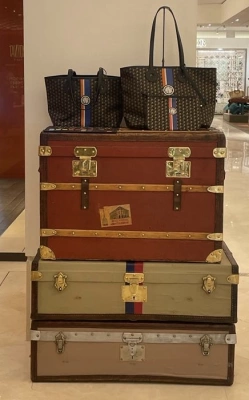
The history of luggage dates back to ancient times, when people used cloth bags or woven baskets to carry their belongings. However, these bags were often bulky and impractical to carry over long distances.
Over the centuries, luggage evolved to become more functional and adapted to travellers' needs. In the Middle Ages, nobles used wooden chests to carry their belongings when travelling. These chests were often heavy and required several people to carry them.
With the advent of rail and sea travel in the 19th century, luggage underwent a new evolution. Wooden trunks became popular, offering better protection for fragile objects. These trunks were often adorned with leather or canvas and were used by wealthy travellers.
In the 20th century, the arrival of commercial aviation led to a further transformation of luggage. Rigid metal or plastic suitcases became common, offering greater shock resistance and storage capacity. Wheels were also added to make transport easier.
Today, luggage is available in a wide variety of shapes, sizes and materials. Many models are available from Les Malletiers....
27 Jul 2023
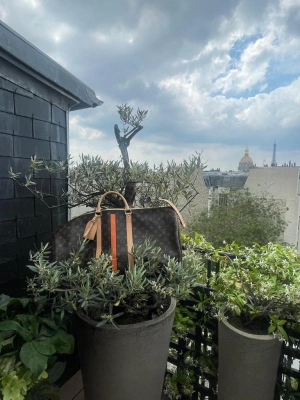
Louis Vuitton's Keepall travel bag, the 1930s... Cruises were fashionable, as were holidays in Deauville and Biarritz.
At that time, Louis Vuitton, renowned for its trunks, had to adapt to these new lifestyles. The result was the Keepall, a bag that "keeps everything". The Keepall is a flexible, zipped bag made from the famous monogrammed coated canvas. Its generous shape allows you to slip in a sports outfit and a few simple clothes for a weekend in the countryside.
An immediate success, the Keepall has never left the Louis Vuitton catalogue. It has been used in the trunk-maker's other collections, and given a new look by artists invited by Marc Jacobs, including Takashi Murakami and others.
Four sizes were chosen (45, 50, 55 and 60 cm), with the first three being the most popular because they could be carried in the cabin.
Seen over and over again on all the people for generations, the Keepall is now a timeless piece, which we keep, cherish and watch lovingly polish... Les Malletiers loves it too!
27 Jul 2023
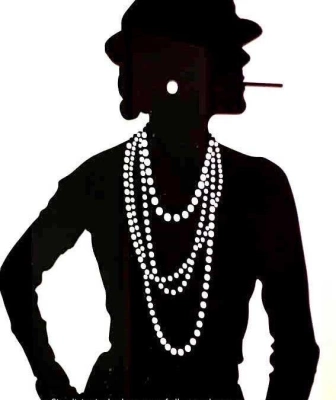
Coco Untold Stories, the early years...
She symbolizes French elegance. Gabrielle Chanel, born in Saumur in 1883, whose real name was Gabrielle Chasnel, was raised in an orphanage. At the age of 12, she was taken in with two of her sisters at Aubazine Abbey in Corrèze.
Her mother died in Brive-la-Gaillarde in 1895. When she was just 12, her father abandoned her a few months later, to the care of the nuns. He never returned. Gabrielle went to Aubazine to learn sewing. She stayed for 6 years. The abbey would remain a powerful source of inspiration for the codes of the House of Chanel...
Coco Chanel's taste for clean lines and her predilection for black, white and beige are perhaps linked to the sobriety of the abbey and its occupants...
Once she left Aubazine, she moved to Moulin. Gabrielle had to earn a living, so she sang in small shows in bars, famous for her rendition of
“Who has seen Coco on the Trocadero? Coco, a nickname that has stuck for posterity...
10 Aug 2023