








Are you sure you want to perform this action?
A Chanel bag isn’t viewed as a mere accessory. It’s viewed as a work of art, with its own codes, materials, production eras, and legitimate variations. This is precisely what makes a Chanel bag appraisal so valuable: it’s not just about listing visible details, but about understanding how an expert integrates observations, overall consistency, and historical knowledge of the brand.
In the secondhand market, many buyers still believe that a photo of the hologram, a certificate of authenticity, or a beautiful chain is enough to reassure them. In reality, these elements are never sufficient proof on their own. A serious appraisal relies on a comprehensive analysis of the bag—from its construction to its aging, including the exact model type.
## What a Chanel bag appraisal example shows
A Chanel bag appraisal worthy of the name does not resemble a simple checklist. It follows a logical process of attribution. The expert first seeks to identify the model, the line, and the presumed period of manufacture, then verifies whether the observed characteristics actually correspond to this combination.
Let’s take the case of a Timeless Classic Flap in quilted leather. The analysis doesn’t stop at the famous double C clasp. It examines the accuracy of the flap’s proportions, the depth of the quilting, how the leather reacts to light, the evenness of the stitching, the interior construction, the Chanel branding, and the plaque or stamp depending on the era. Every detail matters, but it is their consistency that establishes authenticity.
A good appraisal report makes precise observations. It does not merely state that the bag appears authentic. It notes, for example, that the leather’s quality meets the house’s standards for a given period, that the alignment of the clasp and stitching is consistent with Chanel craftsmanship, and that the interior branding features the correct typography, heat-stamping pressure, and expected wear. This nuance makes all the difference.
## Criteria Observed During a Chanel Appraisal
### Material and Texture
At Chanel, the material speaks for itself. Vintage lambskin behaves differently from a more structured caviar leather, and vintage jersey cannot be judged the same way as newer leather. The expert examines the grain, suppleness, density, and how the surface has aged. Leather that is too stiff, too plasticized, or uniformly smooth may raise suspicion, but the opposite is not automatically reassuring. Some heavily worn bags lose their sharpness without losing their authenticity.
This is one of the common pitfalls. Uninformed enthusiasts often equate visual perfection with authenticity, whereas a genuine vintage bag may exhibit a patina, slight irregularities, or a softening consistent with its age.
### Quilting and Proportions
Chanel quilting is a classic area where counterfeits often go wrong. The spacing of the diamonds, their fullness, their continuity from one panel to the next, and how they align with the seams should be examined closely. On an authentic model, the construction gives an impression of balance. On a replica, even a well-made one, something often feels off in the overall geometry.
However, caution is advised. Depending on the year, wear, previous restorations, and even certain specific models, the appearance can vary. Expertise is therefore never limited to a quick comparison with a photograph found online.
### The Chain, Clasp, and Hardware
Chanel jewelry deserves a thorough examination. Weight, metal tone, link quality, the way the leather is integrated into the chain, engravings, and the clasp mechanism all make up a technical whole. In a Chanel handbag appraisal, these elements are often decisive, as counterfeits readily replicate the overall appearance without capturing the precision of craftsmanship.
A clasp may look convincing at first glance yet have a loose rotation, a slightly thick design, or a finish that lacks depth. Similarly, the shade of a gold chain must be considered within the context of its production. Different periods feature varying shades. Here again, judgment depends on knowledge of the collections rather than a single rule.
### Interior Markings
The Chanel marking inside the bag is often overinterpreted. Typography, positioning, gilding, or embossing—everything matters, but nothing should be read in isolation. A correct inscription on an inconsistent lining has no value. Conversely, slight wear on the marking of an older bag may be perfectly normal.
The expert checks the quality of the markings, their placement, their relationship to the lining, as well as their consistency with the model and the period. They also examine the interior finishes, which are often more revealing than the most famous elements.
### The Holographic Sticker and the Card
This is probably the point most misunderstood by the general public. The holographic sticker and the authenticity card do not constitute an absolute guarantee. They may be missing on certain vintage pieces, damaged by time, or, conversely, present on sophisticated counterfeits.
A thorough report notes their presence, condition, and potential consistency with the bag, but never bases its conclusion on them alone. A rigorous Chanel bag appraisal treats them as supplementary clues, never as definitive proof.
## Why photos alone are not always enough
Expert analysis based on photographs can already rule out many problematic items, especially when the inconsistencies are obvious. It also helps guide a purchasing decision before a transaction. But it has its limits. The feel of the leather, the actual quality of the hardware, certain stitching repairs, or discreet restorations are best perceived in person.
This is where the difference between a quick opinion and a true expert assessment comes into play. An expert does not merely look for signs of a replica. They also evaluate the object’s integrity, its historical consistency, and sometimes the impact of repairs on its authenticity. For a collector, this distinction is essential, as authenticity does not encompass the full value of a bag.
## What a Savvy Buyer Should Expect from a Report
A useful report must be clear, well-reasoned, and balanced. It must describe the bag accurately, explain the elements examined, and present a well-argued conclusion. Tone matters, too. When a document relies on vague assertions, it inspires less confidence than a text that lays out its rationale.
In the world of secondhand luxury, editorial rigor is no mere detail. It reflects a method. A reputable firm provides its items with an authentication framework commensurate with their heritage value. At Les Malletiers, this issue is central, because trust cannot rest solely on a commercial promise when dealing with items as prone to counterfeiting as Chanel.
## The Most Common Mistakes When Dealing with a Chanel Bag
Many buyers are reassured by a single striking feature. A card, a serial number, a dust bag, or even an invoice can never replace a thorough examination of the bag itself. Others rely on details seen on social media, which are often taken out of context or only valid for certain periods.
The opposite mistake also exists. An older bag may be wrongly deemed suspicious because it has a worn lining, a slightly marked screw, or a softened chain. Yet natural aging, when consistent, is part of the object’s life. Expertise lies precisely in distinguishing legitimate wear from structural inconsistency.
## Expertise as an Assessment of Consistency
This is the heart of the matter. A Chanel appraisal is not the mechanical sum of conforming details. It is an assessment of consistency. Does the stated model correspond to the observed construction? Does the presumed period correspond to the type of markings, the hardware, the lining, the leather, and the assembly logic? Does the bag’s condition tell a credible story?
This approach requires visual memory, hands-on experience, and actual familiarity with authentic pieces. It also requires the ability to acknowledge that a case is not conclusive without further examination. In the luxury sector, caution is not a weakness. It is a sign of professionalism.
For both buyer and seller, requesting a Chanel bag appraisal report therefore helps understand the basis of a professional opinion. It is not merely a document for reassurance. It is a framework for analysis. And the rarer, older, or more coveted the bag, the more important this analysis becomes.
Before making a decision, it’s important to remember that a beautiful Chanel deserves more than just a hunch. It deserves an eye capable of recognizing its authenticity, craftsmanship, and era.
Related articles

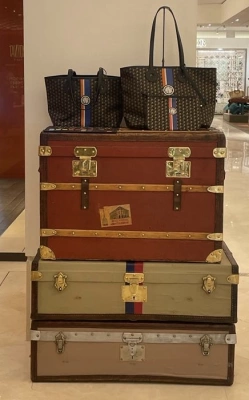
The history of luggage dates back to ancient times, when people used cloth bags or woven baskets to carry their belongings. However, these bags were often bulky and impractical to carry over long distances.
Over the centuries, luggage evolved to become more functional and adapted to travellers' needs. In the Middle Ages, nobles used wooden chests to carry their belongings when travelling. These chests were often heavy and required several people to carry them.
With the advent of rail and sea travel in the 19th century, luggage underwent a new evolution. Wooden trunks became popular, offering better protection for fragile objects. These trunks were often adorned with leather or canvas and were used by wealthy travellers.
In the 20th century, the arrival of commercial aviation led to a further transformation of luggage. Rigid metal or plastic suitcases became common, offering greater shock resistance and storage capacity. Wheels were also added to make transport easier.
Today, luggage is available in a wide variety of shapes, sizes and materials. Many models are available from Les Malletiers....
27 Jul 2023
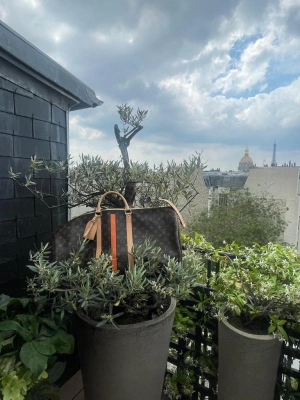
Louis Vuitton's Keepall travel bag, the 1930s... Cruises were fashionable, as were holidays in Deauville and Biarritz.
At that time, Louis Vuitton, renowned for its trunks, had to adapt to these new lifestyles. The result was the Keepall, a bag that "keeps everything". The Keepall is a flexible, zipped bag made from the famous monogrammed coated canvas. Its generous shape allows you to slip in a sports outfit and a few simple clothes for a weekend in the countryside.
An immediate success, the Keepall has never left the Louis Vuitton catalogue. It has been used in the trunk-maker's other collections, and given a new look by artists invited by Marc Jacobs, including Takashi Murakami and others.
Four sizes were chosen (45, 50, 55 and 60 cm), with the first three being the most popular because they could be carried in the cabin.
Seen over and over again on all the people for generations, the Keepall is now a timeless piece, which we keep, cherish and watch lovingly polish... Les Malletiers loves it too!
27 Jul 2023
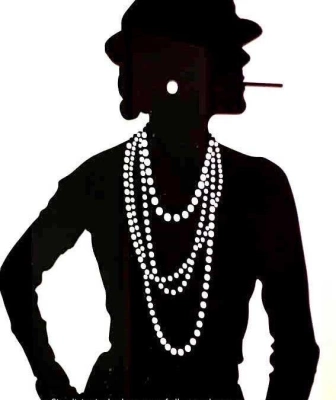
Coco Untold Stories, the early years...
She symbolizes French elegance. Gabrielle Chanel, born in Saumur in 1883, whose real name was Gabrielle Chasnel, was raised in an orphanage. At the age of 12, she was taken in with two of her sisters at Aubazine Abbey in Corrèze.
Her mother died in Brive-la-Gaillarde in 1895. When she was just 12, her father abandoned her a few months later, to the care of the nuns. He never returned. Gabrielle went to Aubazine to learn sewing. She stayed for 6 years. The abbey would remain a powerful source of inspiration for the codes of the House of Chanel...
Coco Chanel's taste for clean lines and her predilection for black, white and beige are perhaps linked to the sobriety of the abbey and its occupants...
Once she left Aubazine, she moved to Moulin. Gabrielle had to earn a living, so she sang in small shows in bars, famous for her rendition of
“Who has seen Coco on the Trocadero? Coco, a nickname that has stuck for posterity...
10 Aug 2023