








Are you sure you want to perform this action?
At Les Malletiers, the resale site for pre-owned bags, a Louis Vuitton bag doesn’t become a collector’s item simply because it’s old or expensive. It becomes one when a model combines three qualities that are rarer than one might think—a strong identity, flawless craftsmanship, and a timeless appeal. This guide to collectible Louis Vuitton bags is for those seeking more than just a beautiful accessory: a piece of heritage, imbued with history, craftsmanship, and, at times, genuine demand on the secondary market.
At Louis Vuitton, the concept of a collection extends beyond limited editions. Certain permanent lines, certain sizes no longer in production, certain special monograms, or manufacturing details can generate interest far exceeding their original status. This is what makes the purchase a demanding one. It’s not enough to simply like a bag. You must understand why it matters.
## What Makes a Louis Vuitton Collector’s Bag
Collectible value stems from a combination of factors. The first is the model’s place in the house’s history. An vintage Speedy, a well-proportioned structured Alma, a vintage Noé, or a Keepall in a version that has become hard to find do not hold the same status as a widely distributed new release. Some bags embody the Louis Vuitton DNA so clearly that they become benchmarks for enthusiasts.
The second criterion is rarity, but this must be defined precisely. A piece may be rare because it was produced in limited quantities, because it has not survived the test of time well, or because it rarely appears on the market in a convincing condition. Conversely, a common model can remain desirable without being a true collector’s item. This nuance is essential for making discerning purchases.
The third criterion is aesthetic clarity. Collectors often seek bags that clearly embody a defining moment in Louis Vuitton’s style: the historic Monogram canvas, the Epi in certain shades, the patent leather from specific eras, artistic collaborations, or travel pieces that directly evoke the house’s trunk-making heritage. A collector’s bag tells a story about Vuitton at first glance.
## Guide to Louis Vuitton Collector Bags: Models to Know
Certain names consistently come up in serious conversations. The Speedy, of course, especially in its well-proportioned vintage versions, with supple canvas and a harmonious patina. It is not rare in the strict sense, but certain references, certain sizes, and certain conditions of preservation generate sustained demand.
The Alma holds a comparable place. Its design, directly linked to the idea of 20th-century Parisian modernity, gives it a special authority. Well-preserved vintage pieces, with clean lines and natural leather that has aged just right, appeal to buyers who value structure and timeless design.
The Noé deserves special attention. Created for transporting bottles of champagne, it single-handedly embodies Louis Vuitton’s ability to transform a specific function into an icon. Older versions in Monogram canvas, when they retain a beautiful shape and leather that still has a lively feel, possess a charm that enthusiasts recognize immediately.
When it comes to travel, the Keepall, the quintessential soft-sided travel bag, remains a staple. Vintage pieces, sought-after sizes, and certain variations in canvas or finishes can fit into a more serious collecting framework. Here, the appeal lies as much in practical use as in its heritage value. Owning a beautiful Keepall is to touch the very heart of the Vuitton aesthetic.
Finally, we must mention collaborations and special editions. Not all age with the same grace. Some are strongly marked by their era, while others have already attained a status bordering on museum-quality. In this segment, the collector is less concerned with mere rarity than with the successful fusion of the house’s identity and a strong creative vision.
## How to assess rarity without being swayed
In the secondary market, the word “rare” is often thrown around too freely. A savvy collector first looks at the actual frequency with which the model appears, then at the quality of the available examples. A bag may turn up several times a year, but almost always in a worn, repaired, or inconsistent condition. A beautiful example, on the other hand, becomes rare.
Completeness also matters. An original dust bag, padlock, bell, authentic zipper pull, consistent lining, legible markings, and correct proportions: these details are not a matter of obsession. They distinguish a piece that is simply old from an object worthy of a discerning collection.
International desirability must also be taken into account. Certain models are rarely seen in Europe but highly sought after in Asia or the United States, which automatically drives up the market. A wise purchase is therefore based not only on personal taste but also on an understanding of the global discourse surrounding the piece.
## Authenticity: The Non-Negotiable Factor
In the world of Louis Vuitton, the question of authenticity brooks no approximation. Sophisticated counterfeits, assemblages made from disparate elements, unreported repairs, or modified pieces make expert appraisal indispensable. A beautiful patina never excuses a manufacturing inconsistency.
The examination must cover the whole: quality of the canvas, clarity of the pattern, symmetry, typography of the markings, hardware, stitching, construction, dating, the logic of the materials, and the model’s conformity to its period. No detail should be isolated from the rest. It is precisely the accumulation of consistent signs that establishes certainty.
For a collector, buying without a serious guarantee of authenticity undermines the item’s entire future value. The thrill of the find must never take precedence over rigor. This is also why a selection curated by a specialist retains particular relevance in a market saturated with uneven offerings.
## Condition Changes Everything
Two bags that appear identical on paper can vary considerably in value depending on their condition. With Louis Vuitton, one must learn to distinguish between a noble patina and problematic wear. Natural leather that has darkened evenly, without drying out or major cracking, can be very appealing. On the other hand, leather that is hardened, stained, brittle, or misshapen compromises both aesthetics and longevity.
The canvas must be examined carefully. Corners, folds, areas near the closures, and points of tension often reveal structural weaknesses. The interior lining, meanwhile, provides insight into the bag’s actual use. Persistent odors, stains, peeling, abnormal wear, or signs of moisture must be taken seriously.
Finally, hardware plays a more significant role than is often acknowledged. Light oxidation or signs of use are acceptable on an antique piece. However, non-original replacements, excessive wear, or missing parts compromise the object’s integrity. In collecting, integrity often takes precedence over mere appearance.
## Buying to Wear, Buying to Preserve
Not all collectors buy with the same intention. Some want a bag for everyday use, one that fits into daily life while retaining genuine heritage value. Others seek a rarer piece, less frequently used, carefully preserved, and worn only occasionally. Neither approach is superior to the other, but it changes the perspective.
If the bag is to be worn often, structural condition and practicality become decisive factors. An iconic but fragile model can be frustrating to use. If the focus is more on heritage value, one is more willing to accept a less practical size or a more delicate piece, provided it possesses a strong sense of uniqueness.
The right purchase often lies at the intersection of these two approaches. A bag significant enough to spark interest, sound enough to last, and personal enough not to depend solely on shifting trends.
## When the price is justified—and when it isn’t
A high price isn’t automatically excessive. It can be justified by superior condition, a reassuring provenance, a hard-to-find model, a specific craftsmanship, or authenticity documented under rigorous conditions. In the world of collectible luxury, peace of mind has a value of its own.
Conversely, some prices are inflated by seductive terms—vintage, rare, collector’s item—without any real basis. A widely available, worn-out model, restored in a questionable manner, or offered without solid expertise does not become desirable simply because it is old. The market rewards beautiful pieces, not mere survivors.
This is where an expert eye makes all the difference. A specialized house like Les Malletiers does not simply select a name or a logo. It identifies objects worthy of being passed down, precisely because they combine authenticity, coherence, and presence.
A fine Louis Vuitton collector’s bag is not chosen in haste. It is recognized by that very particular sense of rightness—that of an object that has stood the test of time without losing its poise, and that continues to speak clearly to the discerning connoisseur. If a piece holds your attention long after the initial thrill of first sight and a thorough examination, it is often because it has already begun to find its place in a collection.
Related articles

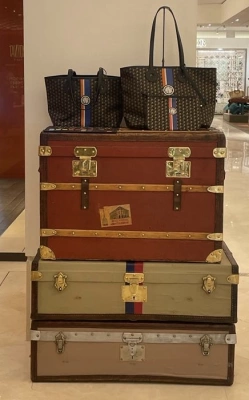
The history of luggage dates back to ancient times, when people used cloth bags or woven baskets to carry their belongings. However, these bags were often bulky and impractical to carry over long distances.
Over the centuries, luggage evolved to become more functional and adapted to travellers' needs. In the Middle Ages, nobles used wooden chests to carry their belongings when travelling. These chests were often heavy and required several people to carry them.
With the advent of rail and sea travel in the 19th century, luggage underwent a new evolution. Wooden trunks became popular, offering better protection for fragile objects. These trunks were often adorned with leather or canvas and were used by wealthy travellers.
In the 20th century, the arrival of commercial aviation led to a further transformation of luggage. Rigid metal or plastic suitcases became common, offering greater shock resistance and storage capacity. Wheels were also added to make transport easier.
Today, luggage is available in a wide variety of shapes, sizes and materials. Many models are available from Les Malletiers....
27 Jul 2023
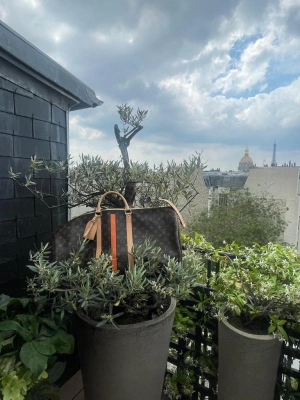
Louis Vuitton's Keepall travel bag, the 1930s... Cruises were fashionable, as were holidays in Deauville and Biarritz.
At that time, Louis Vuitton, renowned for its trunks, had to adapt to these new lifestyles. The result was the Keepall, a bag that "keeps everything". The Keepall is a flexible, zipped bag made from the famous monogrammed coated canvas. Its generous shape allows you to slip in a sports outfit and a few simple clothes for a weekend in the countryside.
An immediate success, the Keepall has never left the Louis Vuitton catalogue. It has been used in the trunk-maker's other collections, and given a new look by artists invited by Marc Jacobs, including Takashi Murakami and others.
Four sizes were chosen (45, 50, 55 and 60 cm), with the first three being the most popular because they could be carried in the cabin.
Seen over and over again on all the people for generations, the Keepall is now a timeless piece, which we keep, cherish and watch lovingly polish... Les Malletiers loves it too!
27 Jul 2023
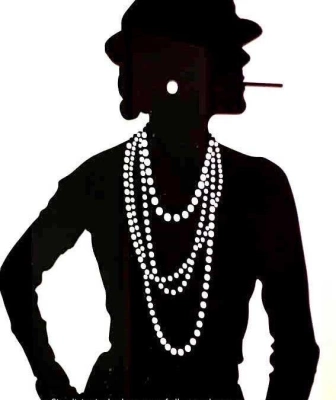
Coco Untold Stories, the early years...
She symbolizes French elegance. Gabrielle Chanel, born in Saumur in 1883, whose real name was Gabrielle Chasnel, was raised in an orphanage. At the age of 12, she was taken in with two of her sisters at Aubazine Abbey in Corrèze.
Her mother died in Brive-la-Gaillarde in 1895. When she was just 12, her father abandoned her a few months later, to the care of the nuns. He never returned. Gabrielle went to Aubazine to learn sewing. She stayed for 6 years. The abbey would remain a powerful source of inspiration for the codes of the House of Chanel...
Coco Chanel's taste for clean lines and her predilection for black, white and beige are perhaps linked to the sobriety of the abbey and its occupants...
Once she left Aubazine, she moved to Moulin. Gabrielle had to earn a living, so she sang in small shows in bars, famous for her rendition of
“Who has seen Coco on the Trocadero? Coco, a nickname that has stuck for posterity...
10 Aug 2023