








Are you sure you want to perform this action?
You rarely spot an authentic bag based on a single detail. What makes the difference is the overall consistency—the quality of the material, the balance of the proportions, the precision of the construction, and the logic of the markings. For those wondering how to tell if a bag is authentic, the real issue isn’t identifying a universal “trick,” but learning to read a designer piece the way one reads a collectible.
## How to tell if a bag is authentic at first glance
The first glance matters, but it’s never enough. A designer bag conveys an immediate sense of balance. Nothing about it seems rough or unrefined. The lines are clean, the volume is just right, and the structure is well-thought-out. Even when a model is supple, it retains a controlled presence.
Counterfeits, even well-made ones, often betray a strange tension. The proportions may seem slightly off, the leather too stiff or, conversely, too soft, the sheen poorly balanced, the topstitching too visible. We’re not talking here about a glaring flaw, but rather a sense of inaccuracy. It’s often this slight inconsistency that alerts the trained eye even before a technical examination.
You must also take the item’s age into account. An authentic vintage bag doesn’t look like a new one. The patina, the softening of the leather, the natural oxidation of certain metals, and the evolution of the canvas or raw edges all tell the story of time. A common mistake is to believe that an antique item must look perfect. In reality, a beautiful antique piece often bears signs of harmonious wear, never an artificial aging process.
## The material almost never lies
Among the most reliable criteria for determining whether a bag is authentic, the material plays a central role. Luxury houses work with leathers, canvases, and linings whose texture is difficult to imitate. It is not merely a matter of perceived quality, but of sensory precision.
Authentic leather has a consistent grain, density, suppleness, or structure that corresponds to the model and the brand. A grained calfskin from Hermès conveys something different from a quilted leather from Chanel or a coated canvas from Louis Vuitton. Each brand has its own tactile language. When this language seems unclear, you should be wary.
The scent also offers a clue, though with caution. Fine leather has a subtle presence, never chemical. That said, this criterion alone is not sufficient, as storage, age, or certain restorations can alter the scent. It is an atmospheric element, not proof.
Linings deserve the same attention. A mediocre synthetic lining—too shiny or too thin—often falls short of expectations. But here again, you need to know the model. Not all brands consistently use leather linings, and certain production periods feature perfectly legitimate variations.
## Stitching, finishes, edges—the language of the workshop
Finishes often speak louder than the logo. A luxury house does not assemble a bag like a mass-produced item. The stitches are even, the thread tension is controlled, and the seams are thoughtfully placed. Even less visible areas, such as the underside of the handles or the inside of the gussets, reveal the level of craftsmanship.
The edges are an excellent indicator. On an authentic piece, they are generally clean, uniform, and applied consistently. An edge that overlaps, cracks abnormally, or suddenly changes color should raise a red flag. However, it is important to distinguish between natural wear and poor craftsmanship. An aged edge may show signs of use without compromising authenticity.
The edges, corners, reinforcements, and handles also tell the bag’s true story. On a counterfeit, these areas often reveal a skimping on materials or rushed workmanship. This is where quality is most quickly apparent.
## Markings, numbers, and stamps are not absolute proof
Many buyers start by looking for a serial number or an interior marking. This is helpful, but it is never enough. Counterfeiters know how to reproduce codes, sometimes with remarkable visual precision. The presence of a number does not authenticate a bag. The absence of a number does not necessarily condemn it either, depending on the brand, the era, and the model.
The right approach is to examine the quality of the marking itself. Is the typography correct? Is the depth of the stamping consistent? Is the positioning exact? Does the marking appear to be integrated into the manufacturing process, or added as an expected label? On high-end pieces, the logo is never merely decorative. It is part of the manufacturing system.
You should also be wary of jumping to conclusions based on “Made in” labels. A brand may produce items in multiple countries and across different time periods, while adhering to its standards. The country indicated must align with the brand and model, but it cannot be interpreted in isolation.
## Hardware, chains, clasps—the precision of metal
Metal components are decisive. Authentic hardware has weight, a clean finish, and consistent color. Gold, palladium, or other metal finishes do not have a garish appearance. They convey a measured quality, never flashy.
On a Chanel bag, for example, the chain, the swivel, or the markings on the metal parts must harmonize with the whole. On a Kelly or a Birkin, the mechanics of the clasps and the precision of the plates must inspire confidence through their accuracy. Metal that is too light, a hollow sound, an off-center screw, or a hesitant engraving are bad signs.
Here again, wear and tear must be interpreted intelligently. A slight patina on an older hardware piece may be perfectly normal. On the other hand, rapid discoloration, a plating that peels inconsistently, or differences in shade between two pieces that are supposed to be identical should raise questions.
## Provenance sometimes carries more weight than the bag itself
Knowing how to determine if a bag is authentic also means looking beyond the object itself. Where does it come from? Who is selling it? Under what conditions is it presented? Is the seller’s narrative precise, consistent, and well-documented?
Provenance is not merely a reassuring detail. It is part of the authentication process. An original invoice, a credible certificate, clear traceability, or a consistent history naturally build trust. But even these elements can be forged or misinterpreted. Their value depends on their credibility and the quality of the examination that accompanies them.
In the secondary market, this is often where the difference lies. An open platform, where anyone can freely post listings, does not offer the same level of security as a selection curated by specialists. When a piece is rigorously appraised and accompanied by a certificate of authenticity issued by a recognized expert, the risk never completely disappears in theory, but it changes in nature in practice.
## What to Avoid Before Buying
The first pitfall is an overly attractive price. A very beautiful, rare, sought-after piece in excellent condition, offered well below market value, calls for caution. The luxury collectibles market follows a logic of value. A major pricing anomaly almost always has an explanation, and that explanation is not always favorable to the buyer.
The second pitfall is insufficient photos. Without clear views of the angles, handles, interior, markings, hardware, and stitching, no serious assessment is possible. A reliable seller welcomes a detailed inspection.
The third pitfall, more subtle, lies in simplistic claims. “Authentic because bought in a store,” “authentic because it has a serial number,” “authentic because it’s genuine leather”—none of these statements constitutes proof. In the world of heritage brands, only a set of corroborating clues allows for a solid assessment.
## When to Seek an Expert Opinion
There comes a point where even the most knowledgeable amateur eye reaches its limit. This is particularly true for heavily counterfeited models, vintage editions, restored bags, or pieces where certain components have been replaced. A changed handle, re-stitching, or non-original hardware can complicate the assessment.
In these cases, expert advice is not a luxury, but a necessity. At Les Malletiers, every piece is presented as authentic and accompanied by a certificate of authenticity written by Jérôme Lalande, an expert appointed by the Paris Court of Appeal. This standard reflects a simple reality: in the world of second-hand luxury bags, trust cannot be decreed—it must be demonstrated.
Buying a designer bag, especially when it is rare or vintage, is as much about choosing an object as it is about choosing the discerning eye that has validated it. The more informed that eye is, the more serene your joy of acquisition will be. And that is often where the true elegance of the secondary market begins.
Related articles

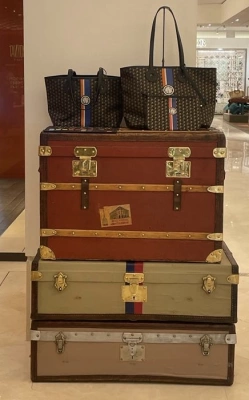
The history of luggage dates back to ancient times, when people used cloth bags or woven baskets to carry their belongings. However, these bags were often bulky and impractical to carry over long distances.
Over the centuries, luggage evolved to become more functional and adapted to travellers' needs. In the Middle Ages, nobles used wooden chests to carry their belongings when travelling. These chests were often heavy and required several people to carry them.
With the advent of rail and sea travel in the 19th century, luggage underwent a new evolution. Wooden trunks became popular, offering better protection for fragile objects. These trunks were often adorned with leather or canvas and were used by wealthy travellers.
In the 20th century, the arrival of commercial aviation led to a further transformation of luggage. Rigid metal or plastic suitcases became common, offering greater shock resistance and storage capacity. Wheels were also added to make transport easier.
Today, luggage is available in a wide variety of shapes, sizes and materials. Many models are available from Les Malletiers....
27 Jul 2023
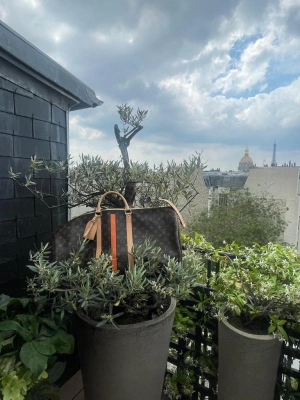
Louis Vuitton's Keepall travel bag, the 1930s... Cruises were fashionable, as were holidays in Deauville and Biarritz.
At that time, Louis Vuitton, renowned for its trunks, had to adapt to these new lifestyles. The result was the Keepall, a bag that "keeps everything". The Keepall is a flexible, zipped bag made from the famous monogrammed coated canvas. Its generous shape allows you to slip in a sports outfit and a few simple clothes for a weekend in the countryside.
An immediate success, the Keepall has never left the Louis Vuitton catalogue. It has been used in the trunk-maker's other collections, and given a new look by artists invited by Marc Jacobs, including Takashi Murakami and others.
Four sizes were chosen (45, 50, 55 and 60 cm), with the first three being the most popular because they could be carried in the cabin.
Seen over and over again on all the people for generations, the Keepall is now a timeless piece, which we keep, cherish and watch lovingly polish... Les Malletiers loves it too!
27 Jul 2023
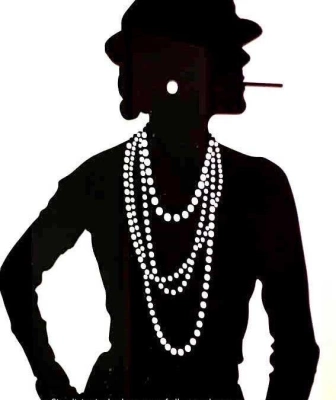
Coco Untold Stories, the early years...
She symbolizes French elegance. Gabrielle Chanel, born in Saumur in 1883, whose real name was Gabrielle Chasnel, was raised in an orphanage. At the age of 12, she was taken in with two of her sisters at Aubazine Abbey in Corrèze.
Her mother died in Brive-la-Gaillarde in 1895. When she was just 12, her father abandoned her a few months later, to the care of the nuns. He never returned. Gabrielle went to Aubazine to learn sewing. She stayed for 6 years. The abbey would remain a powerful source of inspiration for the codes of the House of Chanel...
Coco Chanel's taste for clean lines and her predilection for black, white and beige are perhaps linked to the sobriety of the abbey and its occupants...
Once she left Aubazine, she moved to Moulin. Gabrielle had to earn a living, so she sang in small shows in bars, famous for her rendition of
“Who has seen Coco on the Trocadero? Coco, a nickname that has stuck for posterity...
10 Aug 2023