








Are you sure you want to perform this action?
A vintage Chanel bag isn’t something you buy like a seasonal accessory. It requires a discerning eye, an appreciation for the object itself, and, above all, a method. If you’re wondering how to buy a vintage Chanel bag, the real question isn’t so much about style as it is about discernment: recognizing a piece that’s genuine, authentic, true to its era, and faithful to the quality expected from a brand so closely scrutinized on the secondary market.
Vintage Chanel appeals to buyers for very different reasons. Some seek the unique patina of aged leather; others, a discontinued model, more substantial hardware, or a design closer to the house’s original spirit. There are also those who wish to acquire their first classic piece, one with more personality than a contemporary model. In any case, the purchase deserves more than a quick impulse buy.
## How to buy a vintage Chanel bag without making a mistake
The first rule is simple: never start with the price. With Chanel, an attractive price tag can hide extensive restoration, replaced parts, a weakened structure, or, more seriously, questionable authenticity. Starting with the price before evaluating the item often leads to a bad purchase.
First, you must identify what you’re truly looking for. A Timeless with a single or double flap, a Diana, a Camera Bag, a Vanity, or a model in jersey, lambskin, caviar, tweed, or velvet do not serve the same purposes or meet the same preservation criteria. A collector may sometimes accept a bag in a more fragile condition to acquire a rare version. A buyer who wants to use their bag frequently will prefer a durable material, a practical size, and a bag in excellent structural condition.
This distinction changes everything, because the best purchase isn’t necessarily the one with the highest market value. It’s the one where desirability, condition, and practicality align.
### Identifying the Right Vintage Chanel Model
First and foremost, observe the proportions. Vintage Chanel bags can differ significantly from recent versions, even when they share the same common name. The height of the flap, the length of the chain, the suppleness of the leather, the depth of the gusset, and even the tone of the finish all influence the overall silhouette.
Vintage lambskin leather appeals with its supple feel and subtle sheen, but it shows wear more easily. Caviar leather offers reassurance through its structure and durability, with a more structured presence. Models made of fabric, tweed, or jersey can be stunning, but require a closer examination of wear, scuffs, and any restorations. There is no single “best” choice. It all depends on your aesthetic standards and your tolerance for fragility.
Also consider the size. A vintage mini bag can be perfectly elegant for evening wear but may prove impractical for everyday use. A large Chanel tote from the 1990s offers a striking look, but its appeal will depend on your lifestyle. In the vintage market, style alone isn’t enough. Condition matters just as much as rarity.
## Things to check before buying
Authenticity is the first filter, but it isn’t the only one. A bag can be authentic yet disappointing if its condition has been misjudged. You must therefore examine the piece for overall consistency.
Start with the construction. At Chanel, the bag’s balance, the evenness of the quilting, the tension of the leather, the sharpness of the angles, and the quality of the chain already provide valuable clues. A typical vintage piece bears the marks of time subtly. On the other hand, excessively polished leather, abnormal stiffness, overly repaired edges, or a replaced lining should immediately raise a red flag.
The hardware deserves careful examination. On many older pieces, the gold plating has a density and depth that are highly prized. But the wear on the metal must remain consistent. A fitting that looks too new on a heavily weathered bag—or vice versa—may indicate that it has been altered. Exercise the same caution with screws, clasps, rivets, and chains.
The interior must never be overlooked. The condition of the lining, the smell, the pockets, the markings, and the presence and consistency of serial stickers specific to different periods are all clues, but none should be interpreted in isolation. A savvy buyer does not look for a single reassuring detail. They look for a convergence of signs.
### Authenticity: What Really Matters
When it comes to Chanel, misconceptions spread quickly. Many buyers believe that a certificate of authenticity is sufficient. This is not the case. A certificate can be lost, replaced, or mistakenly associated with another bag. Similarly, a consistent serial number never replaces an expert examination of the piece.
What truly matters is a rigorous authentication process, based on construction, materials, finishes, markings, metal hardware, the period of manufacture, and the overall consistency of the model. In a market where Chanel is one of the most counterfeited brands, the authority of expert assessment profoundly changes the quality of the purchase.
This is why the sales channel is decisive. A seller who takes responsibility for authenticity, backed by clear and documented expertise, offers more than just peace of mind. They mitigate a structural risk of the secondary market.
## Where to Buy a Vintage Chanel Bag
Between general-purpose platforms, consignment shops, specialized dealers, and houses with a strong culture of expertise, the differences are considerable. The issue isn’t just about finding an offer. It’s about knowing in what environment that offer is vetted, described, and guaranteed.
Peer-to-peer platforms may offer access to attractive prices or rarer pieces, but they require real experience. Photographs are sometimes insufficient, descriptions incomplete, and communication with the seller does not compensate for the lack of independent verification. This channel is best suited for those who already know how to accurately assess a bag.
Specialized dealers generally provide a safer framework. However, one must distinguish between simple resale and genuine curation. A reputable dealer is recognized not only by its catalog but by the quality of its curatorial eye: precision in descriptions, transparency regarding condition, disclosure of restorations, consistent pricing, and the level of expertise applied. At Les Malletiers, this standard is part of a curatorial approach, complete with a certificate of authenticity drafted by Jérôme Lalande, an expert appointed by the Paris Court of Appeal—a particularly crucial factor for a brand as high-profile as Chanel.
Purchasing in a showroom can also offer a clear advantage when possible: seeing the piece in person, assessing the leather’s condition, the actual color, the drape of the chain, and the depth of the patina. A vintage Chanel is also revealed in the details.
## How to determine the price of a vintage Chanel
The price of a vintage Chanel bag depends on several factors, not just the model. Rarity matters, of course, but so do the material, color, era, the presence of original components, the structural condition, and the level of market desirability at any given time.
A black Timeless in caviar leather is not valued the same way as a seasonal satin model, even if the latter is rarer. The former benefits from constant, international demand. The latter may appeal to a discerning collector, but its market is more niche. Value is not solely a matter of objective rarity. It depends on the model’s cultural appeal.
You must also distinguish between patina and defects. A slight suppleness, small signs of wear, or even wear are often compatible with a beautiful vintage piece. On the other hand, a stretched chain, severely worn corners, cracked leather, a worn clasp, or visible restoration should significantly affect the price. Paying a high price for a mediocre piece simply because it is old is a common mistake.
### Should you buy to wear or to collect?
The answer changes your criteria. For regular use, it’s better to choose a model whose condition offers true peace of mind, even if it’s slightly less rare. For a collector’s perspective, a hard-to-find color, a discontinued style, or an older series may justify compromises on practicality.
The right purchase is therefore not universal. It depends on your intention. A vintage Chanel bag intended to complement an everyday wardrobe does not follow the same priorities as a piece chosen for its place in a larger collection.
## The most common mistakes
The first is buying too quickly, driven by the fear of missing out on a piece. Vintage items often trigger this reflex, especially with Chanel. However, a poorly documented rarity remains a bad purchase.
The second mistake is overestimating accessories. The box, dust bag, card, and old invoice are valuable, but they never replace the bag’s intrinsic quality or the expertise involved. A piece without a complete set can be excellent. A complete set can be problematic.
The third is believing that a restored bag is always worth less. It’s not that simple. A light, well-executed, and clearly disclosed restoration can preserve the bag’s usability without altering its character. Conversely, a heavy-handed, cosmetic restoration can diminish its collectible value. Again, it all depends on the nature of the restoration.
Buying a vintage Chanel therefore requires a bit of visual literacy, a lot of method, and absolute trust in the source. When a piece is just right—authentic, well-preserved, priced appropriately, and chosen for the right reasons—it goes far beyond the status of a mere fashion purchase. It becomes an object to be passed down, with that unique presence that only beautiful, well-worn pieces can offer.
Related articles

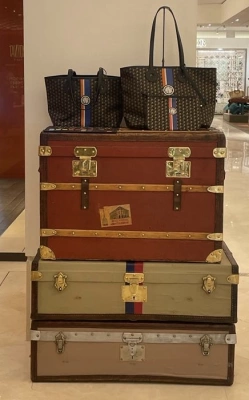
The history of luggage dates back to ancient times, when people used cloth bags or woven baskets to carry their belongings. However, these bags were often bulky and impractical to carry over long distances.
Over the centuries, luggage evolved to become more functional and adapted to travellers' needs. In the Middle Ages, nobles used wooden chests to carry their belongings when travelling. These chests were often heavy and required several people to carry them.
With the advent of rail and sea travel in the 19th century, luggage underwent a new evolution. Wooden trunks became popular, offering better protection for fragile objects. These trunks were often adorned with leather or canvas and were used by wealthy travellers.
In the 20th century, the arrival of commercial aviation led to a further transformation of luggage. Rigid metal or plastic suitcases became common, offering greater shock resistance and storage capacity. Wheels were also added to make transport easier.
Today, luggage is available in a wide variety of shapes, sizes and materials. Many models are available from Les Malletiers....
27 Jul 2023
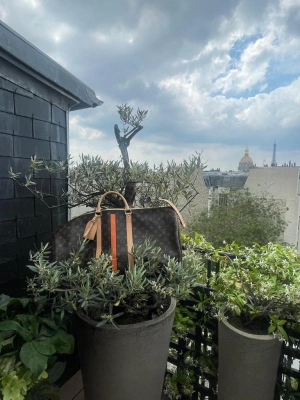
Louis Vuitton's Keepall travel bag, the 1930s... Cruises were fashionable, as were holidays in Deauville and Biarritz.
At that time, Louis Vuitton, renowned for its trunks, had to adapt to these new lifestyles. The result was the Keepall, a bag that "keeps everything". The Keepall is a flexible, zipped bag made from the famous monogrammed coated canvas. Its generous shape allows you to slip in a sports outfit and a few simple clothes for a weekend in the countryside.
An immediate success, the Keepall has never left the Louis Vuitton catalogue. It has been used in the trunk-maker's other collections, and given a new look by artists invited by Marc Jacobs, including Takashi Murakami and others.
Four sizes were chosen (45, 50, 55 and 60 cm), with the first three being the most popular because they could be carried in the cabin.
Seen over and over again on all the people for generations, the Keepall is now a timeless piece, which we keep, cherish and watch lovingly polish... Les Malletiers loves it too!
27 Jul 2023
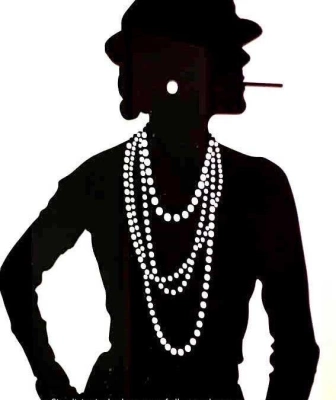
Coco Untold Stories, the early years...
She symbolizes French elegance. Gabrielle Chanel, born in Saumur in 1883, whose real name was Gabrielle Chasnel, was raised in an orphanage. At the age of 12, she was taken in with two of her sisters at Aubazine Abbey in Corrèze.
Her mother died in Brive-la-Gaillarde in 1895. When she was just 12, her father abandoned her a few months later, to the care of the nuns. He never returned. Gabrielle went to Aubazine to learn sewing. She stayed for 6 years. The abbey would remain a powerful source of inspiration for the codes of the House of Chanel...
Coco Chanel's taste for clean lines and her predilection for black, white and beige are perhaps linked to the sobriety of the abbey and its occupants...
Once she left Aubazine, she moved to Moulin. Gabrielle had to earn a living, so she sang in small shows in bars, famous for her rendition of
“Who has seen Coco on the Trocadero? Coco, a nickname that has stuck for posterity...
10 Aug 2023