








Are you sure you want to perform this action?
For Les Malletiers, a vintage Hermès bag isn’t just another accessory. When wondering how to buy vintage Hermès, the real question isn’t just where to buy, but how to recognize an authentic piece—in terms of its material, era, condition, provenance, and price.
At Hermès, time rarely takes its toll on an item. On the contrary, it can enhance its value. An antique Kelly Sellier in its box, a 1990s Bolide, a Rio clutch, or a silk scarf with a sought-after design are not merely of interest for their practical use. They captivate because they embody a certain idea of luxury—one of meticulous craftsmanship, timeless design, and a rarity that cannot be manufactured.
## How to Buy Vintage Hermès with Discernment
Buying vintage at Hermès first requires a shift in perspective. It is not about seeking out new items at a discount, but about evaluating a heritage piece. A vintage item may have a patina, slightly supple leather, softened edges, and sometimes even signs of wear. The challenge lies in distinguishing between acceptable—and sometimes even desirable—wear and tear and damage that compromises the item’s beauty, structure, or resale value.
This distinction is essential, as the Hermès secondary market is one of the most attractive, but also one of the most vulnerable. The more coveted the item, the more it attracts approximations, flattering descriptions, and sophisticated counterfeits. A successful purchase therefore depends less on impulse than on the quality of the examination.
### Start with the right piece
Before even comparing listings, you must clarify what you’re actually looking for. A collector won’t have the same goal as a buyer seeking an everyday bag. A rigid Kelly 28 in black box leather doesn’t have the same presence or the same uses as a soft Trim in natural leather or an vintage Garden Party.
The model matters, of course, but the era matters just as much. Certain years feature cleaner proportions, leathers that are less common today, or particularly prized craftsmanship details. At Hermès, desirability often stems from the combination of a shape, a material, and a specific production era. This explains why a relatively understated model can become far more interesting than an overproduced or overly restored classic.
### Authenticity is never just a detail
In the Hermès universe, authenticity isn’t limited to a stamp or a general impression of quality. It is evident in a coherent whole: construction, saddle stitching, leather quality, markings, typography, hardware, date stamp, proportions, lining, and assembly logic.
The danger lies in pieces that seem convincing at first glance. A savvy buyer knows that a beautiful photograph is no substitute for expert appraisal. That is why one should prioritize houses and specialists capable of vouching for the authenticity of each piece. In a market where trust determines value, a certificate issued by a recognized expert carries far more weight than a mere commercial claim.
## Where to Buy Vintage Hermès
The purchasing channel directly influences the level of risk. Generalist platforms can sometimes yield great finds, but they require extreme vigilance. Photos are inconsistent, descriptions are often brief, and understanding of the product is sometimes insufficient.
Conversely, a specialist in pre-owned luxury goods offers a more curated selection, a more precise presentation, and, above all, a rigorous authentication process. This is particularly valuable for Hermès, a brand whose variations in leather, size, and era require careful scrutiny. A smaller but accurate selection is preferable to an abundance of poorly documented pieces.
A showroom by appointment also offers a decisive advantage: seeing the item in person. The lighting, the condition of the leather, the drape of a bag, the sound of a hardware piece, the evenness of a stitch, or the overall look of an interior can never be fully assessed on a screen. For enthusiasts seeking a specific item, it may also be wise to work with a dealer capable of sourcing a piece based on defined criteria rather than waiting for a random find.
### Condition must be assessed with precision
In the vintage market, “very good condition” means nothing without a concrete description. You must examine the corners, the handles, the shoulder strap if the model has one, the opening folds, the structure of the base, the interior, any odors, oxidation of metal parts, and the presence of previous repairs.
An older Hermès bag can remain highly desirable with a uniform patina. On the other hand, heavy recoloring, visibly re-sewn seams, dried-out leather, or a sagging structure alter the nature of the item. This does not mean that all restoration should be ruled out. Certain interventions are legitimate. But they must be transparent, measured, and compatible with the integrity of the piece.
The best purchase isn’t always the one that looks flawless. It’s often the one whose condition is consistent with its age, without any major compromise to the material or the original design.
### The fair price isn’t necessarily the lowest
One of the most common mistakes is believing that a good deal is measured by the difference from the price of a new item. This logic doesn’t apply to vintage Hermès. The price depends on the model, the leather, the color, the size, the rarity, the condition, the included accessories, and the actual market demand.
A surprisingly low price should prompt caution, not enthusiasm. It may indicate a structural defect, an unmentioned repair, an unclear provenance, or an authenticity issue. Conversely, an expensive piece isn’t automatically a good investment. Some models are overpriced because they’re riding a fashion trend, without offering any particular heritage value.
You must therefore balance desire, practicality, and value. If the goal is to carry the bag often, a more understated color, a more durable leather, and excellent condition will often make more sense than a fragile rarity. If you’re buying for a collection, the priorities shift: provenance, period, material, and uniqueness take precedence.
## The Details That Make the Difference
At Hermès, details are never incidental. The type of leather profoundly alters a piece’s character. Box calf provides a crisp silhouette and formal elegance, but it shows wear more readily. Courchevel, Epsom, or Clémence do not age in the same way and are not intended for the same uses.
Color, too, changes the interpretation. Black, gold, navy, or deep red stand the test of time with great authority. Certain rarer shades generate strong enthusiasm, but require a trained eye to avoid buying a fleeting fad at the price of a timeless classic.
Original accessories also matter: padlocks, bells, keys, dust bags, boxes, and sometimes old invoices. Their absence does not necessarily invalidate the piece, especially for vintage items, but it does influence market perception and sometimes future resale value.
### Buying to Wear or to Collect
This question deserves to be asked frankly. You don’t buy the same vintage Hermès depending on whether you want to incorporate it into a living wardrobe or build a collection of pieces.
For regular use, it’s best to prioritize styles that fit your daily life, leather that can withstand the rigors of real-world use, and a piece where a few signs of wear won’t cause undue anxiety. For a collector’s perspective, rarity may justify higher standards, even at the cost of greater fragility or more occasional use.
This point helps avoid many disappointments. A bag that looks stunning in the window may prove ill-suited to an active lifestyle. Conversely, a less spectacular but well-chosen model often becomes a piece you keep for years.
### Getting expert guidance changes the quality of the purchase
In this segment, expertise isn’t just a luxury. It’s essential for making the right choice. Having guidance allows you to ask the right questions, prioritize criteria, and sometimes pass on an attractive but questionable piece.
A serious specialist does not pressure you into an immediate purchase. They place the piece within the history of the brand, explain its position in the market, describe its condition without exaggeration, and clarify what constitutes its true value. It is this rigor that transforms a purchase into a lasting choice. For a collector seeking a specific item, a house like [Les Malletiers](https://www.lesmalletiers.com/fr/) can also assist with a targeted search, offering the level of selection and assurance that the Hermès universe implies.
Buying vintage Hermès, at its core, means choosing an object that has already stood the test of time and deserves to continue doing so with grace. If the piece is authentic, well-preserved, and just right for you, it will not only be a successful purchase—it will become a presence.
Related articles

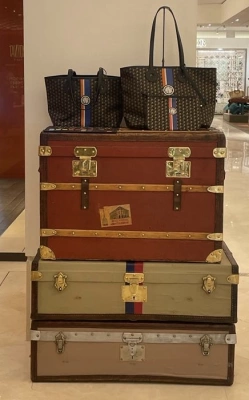
The history of luggage dates back to ancient times, when people used cloth bags or woven baskets to carry their belongings. However, these bags were often bulky and impractical to carry over long distances.
Over the centuries, luggage evolved to become more functional and adapted to travellers' needs. In the Middle Ages, nobles used wooden chests to carry their belongings when travelling. These chests were often heavy and required several people to carry them.
With the advent of rail and sea travel in the 19th century, luggage underwent a new evolution. Wooden trunks became popular, offering better protection for fragile objects. These trunks were often adorned with leather or canvas and were used by wealthy travellers.
In the 20th century, the arrival of commercial aviation led to a further transformation of luggage. Rigid metal or plastic suitcases became common, offering greater shock resistance and storage capacity. Wheels were also added to make transport easier.
Today, luggage is available in a wide variety of shapes, sizes and materials. Many models are available from Les Malletiers....
27 Jul 2023
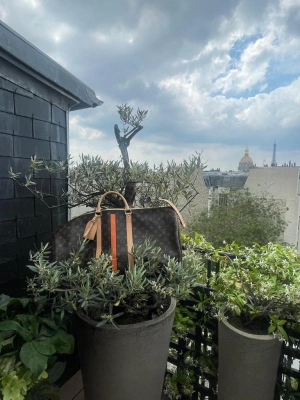
Louis Vuitton's Keepall travel bag, the 1930s... Cruises were fashionable, as were holidays in Deauville and Biarritz.
At that time, Louis Vuitton, renowned for its trunks, had to adapt to these new lifestyles. The result was the Keepall, a bag that "keeps everything". The Keepall is a flexible, zipped bag made from the famous monogrammed coated canvas. Its generous shape allows you to slip in a sports outfit and a few simple clothes for a weekend in the countryside.
An immediate success, the Keepall has never left the Louis Vuitton catalogue. It has been used in the trunk-maker's other collections, and given a new look by artists invited by Marc Jacobs, including Takashi Murakami and others.
Four sizes were chosen (45, 50, 55 and 60 cm), with the first three being the most popular because they could be carried in the cabin.
Seen over and over again on all the people for generations, the Keepall is now a timeless piece, which we keep, cherish and watch lovingly polish... Les Malletiers loves it too!
27 Jul 2023
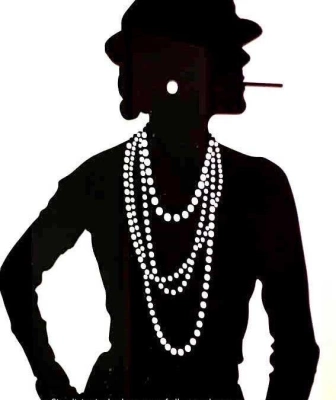
Coco Untold Stories, the early years...
She symbolizes French elegance. Gabrielle Chanel, born in Saumur in 1883, whose real name was Gabrielle Chasnel, was raised in an orphanage. At the age of 12, she was taken in with two of her sisters at Aubazine Abbey in Corrèze.
Her mother died in Brive-la-Gaillarde in 1895. When she was just 12, her father abandoned her a few months later, to the care of the nuns. He never returned. Gabrielle went to Aubazine to learn sewing. She stayed for 6 years. The abbey would remain a powerful source of inspiration for the codes of the House of Chanel...
Coco Chanel's taste for clean lines and her predilection for black, white and beige are perhaps linked to the sobriety of the abbey and its occupants...
Once she left Aubazine, she moved to Moulin. Gabrielle had to earn a living, so she sang in small shows in bars, famous for her rendition of
“Who has seen Coco on the Trocadero? Coco, a nickname that has stuck for posterity...
10 Aug 2023