








Are you sure you want to perform this action?
A collector's item doesn't sell the same way as an ordinary accessory. Whether it's a luxury watch, an iconic handbag, an antique trunk, or a rare piece of jewelry, its value isn't determined solely by its outward condition. It depends on a more nuanced set of factors—authenticity, desirability, provenance, production period, scarcity on the secondary market, and condition. This is precisely why knowing how to sell a collector’s item requires more than simply listing it online.
The first instinct is often to look at prices listed on general-purpose platforms. This is useful for gauging market sentiment, but rarely sufficient to determine a consistent value. In the world of luxury and collectibles, the listed price is not the selling price. Two items that look similar can vary significantly in value depending on their vintage, manufacturing details, color, hardware, size, or original documentation.
## How to Resell a Collector’s Item Without Devaluing It
The first mistake is to confuse speed with accuracy. A quick sale may be appropriate if the item is highly liquid and the price is in line with the market. But with a rare piece, moving too quickly often leads to undervaluing precisely what makes it appealing to a discerning collector.
Above all, the item must be documented with precision. A collector’s item inspires confidence when it is described with rigor. It is therefore advisable to gather everything that can attest to its identity and history: original invoice, certificate, case, dust bag, accessories, any maintenance or repair receipts, and any item that helps date or contextualize the piece. In some cases, the absence of these items does not prevent the sale, but their presence significantly supports the perceived value.
The condition then warrants a clear-eyed assessment. In the world of collectible luxury, “good condition” does not necessarily mean “like new.” A consistent patina, leather that has softened elegantly, and signs of regular use consistent with the item’s age can be perfectly acceptable—or even sought after. On the other hand, a botched restoration, replaced parts without traceability, a strong odor, structural deformation, or poorly photographed localized wear can dampen interest or lead to tougher negotiations.
## Authenticity, the Cornerstone of Resale
In the secondary market, authenticity is not a mere administrative detail. It is the very condition of the transaction. The more coveted the item, the greater the vigilance of buyers. Major heritage brands, particularly in bags, small leather goods, jewelry, or luggage, are subject to extreme scrutiny because they are also among the most frequently counterfeited.
Having the item appraised before putting it up for sale is often the wisest decision. A thorough appraisal reassures buyers, provides security for the seller, and allows the price to be defended with greater authority. It also prevents a common issue: the item is authentic but presented with inconsistencies that create doubt. Yet, with a collector’s item, doubt comes at a high cost.
This step is even more critical when the item is antique, discontinued, part of a limited edition, or belongs to a less standardized category than a widely referenced contemporary model. A trunk, a vanity case, a jewelry watch, a signed piece of jewelry, or an archival handbag often require a more specialized assessment than a simple algorithmic estimate.
## Choosing the Right Sales Channel
The best answer to the question of how to resell a collector’s item depends on the type of object, its level of rarity, and the profile of the target buyer. There is no universally superior channel. There is a suitable channel.
Generalist platforms offer broad visibility, but they require a significant investment from the seller. You must produce visuals, write the listing, answer questions, filter out unserious buyers, manage negotiations, shipping, insurance, and sometimes disputes. This model may work for a well-identified item that is relatively easy to sell, but it becomes riskier as soon as the item enters the realm of high value or rarity.
Selling on consignment or through a second-hand luxury specialist follows a different logic. It prioritizes the presentation of the item, the quality of the narrative, access to a clientele already attuned to the heritage value of the brands, and the ability to showcase the item in an environment consistent with its status. This may take a little longer than an impulsive sale, but the positioning is often more accurate.
For certain exceptional pieces, an expert firm may also recommend waiting for a more favorable market moment. Certain colors, formats, and archival periods experience cycles of interest. Selling at the right time can make a significant difference.
## Preparing the piece before putting it on the market
Preparing does not mean transforming. In the world of collectibles, the temptation to have the item completely restored before sale is not always a good idea. Gentle, professional cleaning may be welcome. So is a discreet refurbishment. On the other hand, overly extensive work—especially if it alters the materials, color, finishes, or original stitching—can compromise the item’s integrity.
Each case must therefore be considered individually. An antique Hermès or Chanel bag, a Louis Vuitton trunk, a Dior wallet, or a designer piece of jewelry do not require the same approach. The guiding principle is simple: preserve what defines the object’s identity and correct only what clearly detracts from its presentation or preservation.
Photographs then play a major role. A collector’s item must be presented with restraint and accuracy. Natural light, clean angles, close-ups of materials, markings, finishes, corners, the interior, clasps, and any signs of wear. Overly filtered or overly flattering images undermine trust. At this market level, a beautiful presentation is credible only if it remains true to the item.
## The right price is neither the highest nor the lowest
Setting a price requires distinguishing between desirability value and transaction value. A piece may be highly desirable in absolute terms yet take time to find a buyer if the price targets an extremely specific buyer. Conversely, a price that is too conservative quickly sparks interest but often leaves the impression of having sold too soon.
To establish a realistic price range, several factors must be considered: the dealer’s valuation, the model’s rarity, condition, completeness, seasonality, the depth of demand, and how frequently the item appears on the market. Paradoxically, some very rare items suffer from a lack of comparable items. Here again, the expert’s eye is decisive.
You must also factor in fees. Between commission, insurance, secure shipping, potential appraisal costs, and taxes depending on the situation, the seller’s net proceeds may differ significantly from the retail price. This is often where disappointments arise. A good advisor clarifies from the outset exactly what you will actually receive.
## What Collectors Are Looking For
The buyer of a collector’s item isn’t just looking for a beautiful object. They’re looking for certainty. Certainty regarding authenticity, price consistency, condition, and the professionalism of the presentation. They also want to feel that the object has been understood for what it is.
This is particularly true in a world where emotion, brand heritage, and the legacy of a design count as much as the material itself. A discontinued bag with a sought-after finish, a trunk bearing the marks of historical use, a piece of jewelry from a line no longer in production, or a vintage travel item must be described with precision—neither exaggerated nor trivialized.
From this perspective, selling through a specialist capable of certifying, contextualizing, and presenting the item to a clientele of connoisseurs can make all the difference. At Les Malletiers, this commitment to authenticity and a heritage-focused perspective precisely shapes our approach to reselling rare and collectible luxury items.
## Factors That Slow Down a Sale
Certain challenges often arise. A seller sometimes overestimates the sentimental value of the item. It’s human nature, but the market doesn’t compensate for personal attachment. Conversely, others downplay a rare variation, an interesting provenance, or a manufacturing detail that makes all the difference.
Sometimes the description is too vague. Simply saying “vintage,” “collector’s item,” or “rare” isn’t enough. You still need to explain why. An identifiable reference, a production period, a specific leather, a limited edition, a distinctive clasp, or a rare color carry much more weight than flattering adjectives.
Finally, a highly desirable piece may nevertheless sell slowly. The collector’s market is not always a volume market. With certain items, one must accept a more selective timeline. Patience, when accompanied by good positioning, is often better rewarded than haste.
Reselling a collector’s item ultimately involves balancing value, trust, and context. When an object has been chosen for its uniqueness, it deserves to be brought back to the market with the same level of care. This is often how a piece changes hands without losing what made it prestigious.
Related articles

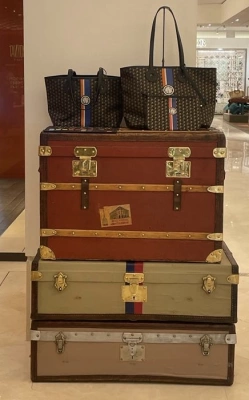
The history of luggage dates back to ancient times, when people used cloth bags or woven baskets to carry their belongings. However, these bags were often bulky and impractical to carry over long distances.
Over the centuries, luggage evolved to become more functional and adapted to travellers' needs. In the Middle Ages, nobles used wooden chests to carry their belongings when travelling. These chests were often heavy and required several people to carry them.
With the advent of rail and sea travel in the 19th century, luggage underwent a new evolution. Wooden trunks became popular, offering better protection for fragile objects. These trunks were often adorned with leather or canvas and were used by wealthy travellers.
In the 20th century, the arrival of commercial aviation led to a further transformation of luggage. Rigid metal or plastic suitcases became common, offering greater shock resistance and storage capacity. Wheels were also added to make transport easier.
Today, luggage is available in a wide variety of shapes, sizes and materials. Many models are available from Les Malletiers....
27 Jul 2023
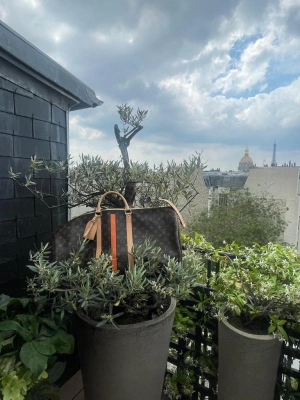
Louis Vuitton's Keepall travel bag, the 1930s... Cruises were fashionable, as were holidays in Deauville and Biarritz.
At that time, Louis Vuitton, renowned for its trunks, had to adapt to these new lifestyles. The result was the Keepall, a bag that "keeps everything". The Keepall is a flexible, zipped bag made from the famous monogrammed coated canvas. Its generous shape allows you to slip in a sports outfit and a few simple clothes for a weekend in the countryside.
An immediate success, the Keepall has never left the Louis Vuitton catalogue. It has been used in the trunk-maker's other collections, and given a new look by artists invited by Marc Jacobs, including Takashi Murakami and others.
Four sizes were chosen (45, 50, 55 and 60 cm), with the first three being the most popular because they could be carried in the cabin.
Seen over and over again on all the people for generations, the Keepall is now a timeless piece, which we keep, cherish and watch lovingly polish... Les Malletiers loves it too!
27 Jul 2023
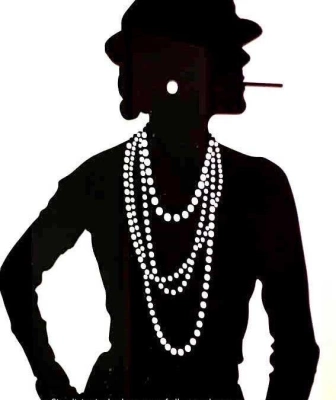
Coco Untold Stories, the early years...
She symbolizes French elegance. Gabrielle Chanel, born in Saumur in 1883, whose real name was Gabrielle Chasnel, was raised in an orphanage. At the age of 12, she was taken in with two of her sisters at Aubazine Abbey in Corrèze.
Her mother died in Brive-la-Gaillarde in 1895. When she was just 12, her father abandoned her a few months later, to the care of the nuns. He never returned. Gabrielle went to Aubazine to learn sewing. She stayed for 6 years. The abbey would remain a powerful source of inspiration for the codes of the House of Chanel...
Coco Chanel's taste for clean lines and her predilection for black, white and beige are perhaps linked to the sobriety of the abbey and its occupants...
Once she left Aubazine, she moved to Moulin. Gabrielle had to earn a living, so she sang in small shows in bars, famous for her rendition of
“Who has seen Coco on the Trocadero? Coco, a nickname that has stuck for posterity...
10 Aug 2023