








Are you sure you want to perform this action?
According to Les Malletiers, the luxury pre-owned resale site, designer jewelry doesn’t sell like a simple accessory. Whether it’s a Chanel cuff bracelet, a Dior brooch, a Hermès necklace, or a more obscure piece from a fashion house, value is never determined by the metal’s shine alone. It rests on a more subtle combination—the signature, the era, the condition, the desirability, the rarity, and, above all, the trust the object inspires. If you’re wondering how to sell haute couture jewelry under the right conditions, the first answer is simple: you must present the piece as a heritage item, not as an ordinary secondhand good.
## How to sell haute couture jewelry without devaluing it
The first pitfall is confusing purchase price, sentimental value, and market price. A pair of vintage clips bought twenty years ago in a brand boutique may have increased in value, remained stable, or, in some cases, appeal primarily for its style rather than its market value. The market for luxury costume jewelry and couture jewelry operates according to its own logic: certain iconic collections sell like hotcakes, while others sell more slowly despite a prestigious brand name.
Selling under favorable conditions therefore requires a clear-eyed assessment. The brand matters, of course, but it is not enough. The date of production, the presence of iconic elements, the condition of the plating, the integrity of the clasps, the state of the rhinestones, pearls, or enamel, and the alignment of the design with current market expectations all play a decisive role.
It is also important to distinguish couture jewelry from fine jewelry. In the former, value stems from a balance between fashion, collectibility, and desirability. In the latter, precious materials carry more weight in the valuation. Many sellers overestimate a piece simply because it is signed, failing to recognize that couture jewelry is valued primarily for its place in the brand’s aesthetic history.
### What the buyer wants to see before purchasing
A savvy buyer doesn’t stop at a beautiful photo. They look for proof. They want to understand whether the piece is authentic, whether it has retained its original integrity, and whether its condition justifies the asking price. A signature on the back, an engraved plaque, a date, a serial number, a distinctive clasp, or even a period case can bolster the piece’s credibility.
Provenance also matters. A piece of jewelry that has been passed down, purchased in a store, comes from a private collection, or is accompanied by an invoice, certificate, box, or pouch inspires greater confidence. This does not mean that a piece without documentation is unsellable. However, it does require a higher level of expertise in its presentation.
## Authenticity: The Tipping Point for Resale
In the secondary market, authenticity is not a mere administrative detail. It is the very condition of the transaction. The more a brand is exposed to counterfeiting, the greater the vigilance. Jewelry from Chanel, Dior, Hermès, or Gucci, for example, requires a precise examination of signatures, materials, finishes, and manufacturing codes.
This is where many individuals make a costly mistake. They list their piece on a general-purpose platform with a few rough photos and a note like “authentic in my opinion.” For a discerning buyer, this is not enough. The lack of a serious guarantee immediately reduces interest—and thus perceived value.
If you wish to sell a piece of designer jewelry at a fair price, you must verify its authenticity through a recognized appraisal or work with a broker whose reputation is built precisely on this standard. In the world of pre-owned luxury, trust is established even before the item goes on sale.
### Factors Influencing Appraisal
A thorough appraisal is never based on a single detail. It considers multiple elements: style, era, construction, engraving, weight, natural wear, quality of craftsmanship, and overall compliance with the brand’s standards. A plaque that looks too new, a replaced clasp, a clumsy solder joint, or inconsistent typography can be enough to raise doubts.
Conversely, a uniform patina, an authentic signature, craftsmanship consistent with a specific period, and well-preserved components enhance the value. A piece may show slight wear and remain highly desirable. It all depends on how this wear affects the visual presence and integrity of the jewelry.
## Which channel to choose for selling haute couture jewelry
The best channel depends less on the urgency of the sale than on the level of standards sought. Peer-to-peer platforms sometimes offer broad exposure, but they require you to manage inquiries, negotiations, authenticity concerns, and the risk of disputes yourself. This model may be suitable for more affordable pieces that are less sensitive or easier to document. It is rarely ideal for haute couture jewelry from a major house when value is based on trust.
Selling to a second-hand luxury specialist is often more suitable for designer pieces. It allows for an appraisal based on the actual market, a more consistent selection of potential buyers, and a more rigorous transaction framework. For a seller, it is also a way to preserve the item’s prestige. An antique or rare piece of jewelry benefits from being presented in an editorial and expert setting, not lost among disparate listings.
Depending on the quality of the piece, several options may be offered: direct purchase, consignment, or more selective support for a particularly sought-after item. Direct purchase offers speed, but the price may be slightly lower than that of a more patient sale. Consignment, on the other hand, can allow for a higher valuation, provided you are willing to accept a longer timeframe. It’s all a matter of balance.
## Preparing for the sale: what really drives interest
Before putting anything up for sale, an honest assessment of the piece is essential. A piece of jewelry that is clean, complete, and properly documented sells better than one that is simply prestigious. This does not mean excessive restoration. A clumsy intervention can alter the authenticity or erase a sought-after patina. On the other hand, gentle cleaning, checking the clasp, and reuniting the original components have an immediate effect on perception.
Photographs must be precise, well-lit, and true to life. The back is just as important as the front. Close-ups of the signature, clasps, manufacturing details, and any signs of wear prevent misunderstandings. In the luxury market, hiding a flaw never helps a serious sale. Showing it accurately, on the other hand, helps build trust.
The description must remain accurate. It is better to write “gold-plated metal, slight wear on the reverse, all rhinestones intact, signature present” than to pile on empty superlatives. The most discerning buyers prefer precision to hyperbole. A brand’s prestige does not need to be overstated.
### Setting the Right Price
The right price is neither the highest possible nor the lowest to sell quickly. It is the balance between desirability, condition, and market liquidity. A highly sought-after iconic piece can command a firm valuation. A more seasonal item, one that is more damaged, or one with less commercial appeal will need to be priced with greater flexibility.
One must also take into account an often-overlooked factor: market depth. Certain antique brooches or long necklaces appeal to a more limited audience of connoisseurs. They may sell very well, but not always immediately. Conversely, designer earrings that are easy to wear and instantly recognizable often find a buyer more quickly.
A specialist knows how to read this nuance. They don’t just look at what the piece is theoretically worth, but what it can actually command today.
## Selling a couture piece of jewelry also means passing on its story
A piece of jewelry from a fashion house is never entirely anonymous. It embodies an aesthetic, a moment in fashion, and sometimes even a certain idea of femininity or the style specific to an era. A sculptural cuff from the 1980s, a chain necklace with equestrian motifs, or a more theatrical brooch do not appeal to the same buyers, but each can find its collector if the piece is presented thoughtfully.
That is why reselling should not be limited to a simple decluttering process. A beautiful piece deserves context, interpretation, and proper presentation. At Les Malletiers, this approach is less about quick sales and more about a process of curation and trust—particularly essential when dealing with pieces from major fashion houses.
If you’re still unsure about the best way to sell a piece of jewelry, ask yourself a simple question: do you just want to sell, or do you want to pass the piece on to someone who will truly appreciate it? In the latter case, the method matters almost as much as the object itself.
Related articles

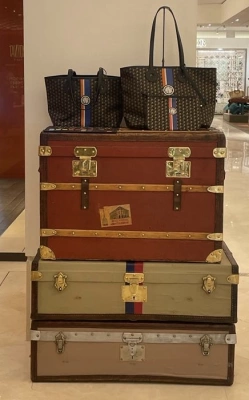
The history of luggage dates back to ancient times, when people used cloth bags or woven baskets to carry their belongings. However, these bags were often bulky and impractical to carry over long distances.
Over the centuries, luggage evolved to become more functional and adapted to travellers' needs. In the Middle Ages, nobles used wooden chests to carry their belongings when travelling. These chests were often heavy and required several people to carry them.
With the advent of rail and sea travel in the 19th century, luggage underwent a new evolution. Wooden trunks became popular, offering better protection for fragile objects. These trunks were often adorned with leather or canvas and were used by wealthy travellers.
In the 20th century, the arrival of commercial aviation led to a further transformation of luggage. Rigid metal or plastic suitcases became common, offering greater shock resistance and storage capacity. Wheels were also added to make transport easier.
Today, luggage is available in a wide variety of shapes, sizes and materials. Many models are available from Les Malletiers....
27 Jul 2023
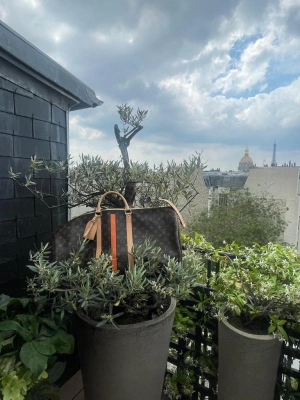
Louis Vuitton's Keepall travel bag, the 1930s... Cruises were fashionable, as were holidays in Deauville and Biarritz.
At that time, Louis Vuitton, renowned for its trunks, had to adapt to these new lifestyles. The result was the Keepall, a bag that "keeps everything". The Keepall is a flexible, zipped bag made from the famous monogrammed coated canvas. Its generous shape allows you to slip in a sports outfit and a few simple clothes for a weekend in the countryside.
An immediate success, the Keepall has never left the Louis Vuitton catalogue. It has been used in the trunk-maker's other collections, and given a new look by artists invited by Marc Jacobs, including Takashi Murakami and others.
Four sizes were chosen (45, 50, 55 and 60 cm), with the first three being the most popular because they could be carried in the cabin.
Seen over and over again on all the people for generations, the Keepall is now a timeless piece, which we keep, cherish and watch lovingly polish... Les Malletiers loves it too!
27 Jul 2023
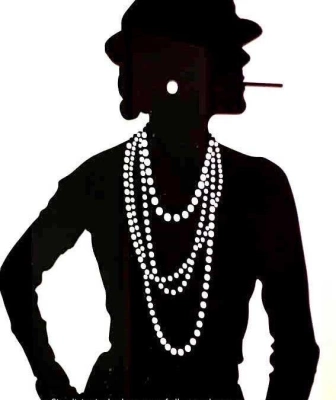
Coco Untold Stories, the early years...
She symbolizes French elegance. Gabrielle Chanel, born in Saumur in 1883, whose real name was Gabrielle Chasnel, was raised in an orphanage. At the age of 12, she was taken in with two of her sisters at Aubazine Abbey in Corrèze.
Her mother died in Brive-la-Gaillarde in 1895. When she was just 12, her father abandoned her a few months later, to the care of the nuns. He never returned. Gabrielle went to Aubazine to learn sewing. She stayed for 6 years. The abbey would remain a powerful source of inspiration for the codes of the House of Chanel...
Coco Chanel's taste for clean lines and her predilection for black, white and beige are perhaps linked to the sobriety of the abbey and its occupants...
Once she left Aubazine, she moved to Moulin. Gabrielle had to earn a living, so she sang in small shows in bars, famous for her rendition of
“Who has seen Coco on the Trocadero? Coco, a nickname that has stuck for posterity...
10 Aug 2023