








Are you sure you want to perform this action?
At Les Malletiers, we’re vigilant. Doubts often arise over the tiniest detail: a letter that’s too thick in the embossing, a screw that shines too brightly, leather that seems perfect—in the wrong sense of the word. When we ask ourselves how to spot a fake Hermès, we’re not dealing with a simple matter of style, but with issues of materials, craftsmanship, provenance, and keen observation. At Hermès, authenticity is never revealed by a single clue. It is built into a coherent whole.
The secondhand market has understood this well. The more desirable a model is, the more it is copied. Birkin, Kelly, Constance, Evelyne, Bolide, or silk accessories and small leather goods attract increasingly sophisticated counterfeits. Some are crude. Others are well-made enough to fool the untrained eye. This is precisely when you need to slow down and take a closer look.
## How to spot a fake Hermès without relying on a single detail
The first mistake is looking for a magic sign. There isn’t one. A fake Hermès may come with a serial number, a box, a dust bag, or even an invoice. These accompanying items are easy to reproduce. Conversely, an authentic vintage bag may have lost its original accessories. A thorough analysis therefore begins with the object itself.
Hermès is a house of craftsmanship. This means that the bag’s authenticity lies in its execution. The leather, the proportions, the silhouette, the quality of the finishes, and the overall balance must all tell the same story. When one element clashes with the whole, you should be suspicious. The problem isn’t always obvious. It often lies in the dissonance.
### The leather: the material almost never lies
At Hermès, leather has a very distinctive presence. It’s not just about suppleness or firmness, but about the feel, the grain, and the depth. Authentic Togo leather has a regular yet lively grain. Clemence offers a rounder suppleness. Box leather is smooth, dense, and refined, with a patina that develops elegantly. Embossed Epsom retains a clean structure without looking plastic.
Counterfeits often fall short here. Either the leather is too stiff, or it lacks body. Either the grain appears repetitive, almost printed, or the surface has an artificial sheen. You must also observe how the leather reacts to angles, folds, and light. An authentic Hermès evolves with subtlety. A fake tends to look stiff or overemphasize the material’s texture.
The smell can help, but it’s not enough. Some fakes are deliberately scented to evoke leather. It’s better to rely on the tactile quality and the way the piece behaves in space.
### Stitching: a workshop’s language
Hermès’s saddle-making is based on a craftsmanship that isn’t easily replicated. Saddler’s stitching, done by hand on many iconic models, produces a slightly angled stitch that is regular without being mechanical. It is a living regularity. If too perfect, the stitch becomes suspicious. If too irregular, it is as well.
On a fake, one often observes inconsistent tension, rough angles, lines that deviate slightly, or thread thickness that is poorly calibrated. The seam junctions, handles, straps, side fasteners, and gussets are particularly revealing. These are the areas where the house allows no shortcuts in assembly.
Age must also be taken into account. An authentic vintage piece may show slight wear on the threads. This aging has nothing to do with poor craftsmanship. The real issue remains the original quality of the workmanship.
## The Hermès stamp: what to really look for
When trying to spot a fake Hermès, the stamp often gets more attention than it deserves. It’s useful, of course, but it must be examined carefully. The “Hermès Paris Made in France” stamp must be clear, well-proportioned, and neatly centered according to the model and size. The typography, spacing, and depth of the branding matter greatly.
On many counterfeits, the letters appear too bold, too deeply engraved, or misaligned. The word “Paris” may look squashed. “Made in France” may lack finesse. Sometimes, the branding is placed too high or too low, or does not naturally follow the bag’s construction.
It is also important to distinguish the main marking from workshop codes and internal markings. Their presence is never proof on its own. Their apparent absence does not automatically disqualify an antique item if the entire piece has not yet been examined. Here again, the overall impression takes precedence over an obsession with a single detail.
### Hardware: weight, tone, precision
Hermès hardware possesses a distinctive density and finish. Plates, locks, spools, clasps, rivets, or bag feet should immediately convey a sense of precision. The metal must not appear visually hollow. It must have weight, a controlled hue, and sharp edges without being harsh.
Fakes often feature gilding that is too yellow, palladium that is too shiny, hesitant engravings, or imperfect closure systems. On a Kelly or a Birkin, the precision of the swivel and the fit of the plates are essential. Sloppy hardware quickly betrays a general manufacturing defect.
Even the plastic protective cover can be misleading. Its presence guarantees nothing. Nor does its absence. Many unscrupulous sellers know that buyers associate plastic with “new.” Yet authenticity never depends on this superficial covering.
## Shape, Proportions, and Construction
Hermès masters volumes with rare precision. An authentic bag retains its shape, even as it ages. The proportions between the flap, the handles, the base, the gussets, and the fasteners create a balance that is difficult to replicate. Copies often fail to capture this subtle architecture.
A fake Birkin may appear slightly too tall, too puffy, or too flat. A Kelly may have a flap that hangs awkwardly, a handle that is too thick, or straps that are poorly positioned. On a Constance, the relationship between the body of the bag and the H clasp requires millimeter-level precision. These discrepancies aren’t always obvious in a single photo, but they become clear when you know the model.
That’s why catalog images or quick comparisons have their limits. Two authentic bags may vary slightly depending on the year, leather, or size. However, poor construction is never acceptable simply because of variation.
### Lining, Edges, and Interior Finishes
The interior of a Hermès deserves as much attention as the exterior. Depending on the model, the lining may be leather or constructed differently, but it must always uphold the house’s standards. The edges are clean, precise, and well-finished. The interior pockets are well-cut. The corners do not fray.
On a fake, the interior often betrays a rush-production approach. Visible glue, rough edges, inferior-quality secondary leather, or poorly proportioned compartments. Counterfeiters are happy to invest in the exterior. The interior details often escape their attention.
## Provenance, seller, documentation: context matters
Knowing how to spot a fake Hermès also means knowing how to spot a risky sale. An absurdly low price remains a classic red flag, but high-end counterfeits sometimes sell at high prices precisely to appear credible. Price alone, therefore, is not a safeguard.
You must carefully examine the provenance. Who is selling the item, under what conditions, with what level of transparency, with what photographs, what description, and what ability to answer specific questions about the model, the leather, the year, the condition, any repairs, and the ownership history? A seller who is evasive about an item supposedly worth several thousand euros always warrants the utmost caution.
A credible certificate of authenticity is only valuable because of the expertise of the person who issues it. In a market saturated with forged documents, independent expertise is crucial. This is why specialized and rigorous dealers inspire greater confidence than generalist platforms where items are sometimes listed without thorough examination. Companies like Les Malletiers base their selection precisely on this requirement for documented authenticity.
## What to Ask Before Buying
Before making any purchase, it is wise to request clear photos of the branding, stitching, hardware, corners, interior, bag feet, and areas of wear. A reputable seller will gladly agree to this inspection. They understand that a Hermès item represents not only a significant investment but also a matter of trust.
You should also ask a simple question: has the item undergone restoration, spa treatment, recoloring, or replacement of parts? Professional intervention does not necessarily negate authenticity, but it does alter how the piece is perceived. Again, everything depends on the nature of the intervention and how it is disclosed.
Finally, be wary of instant certainties. Some counterfeits are convincing enough to pass at first glance. Conversely, certain authentic vintage, weathered, or restored pieces can be misleading. Serious expertise requires time, comparison, and a genuine understanding of Hermès craftsmanship.
Buying Hermès secondhand should always remain a connoisseur’s pleasure, never a gamble. When an item combines the right materials, precise craftsmanship, and a clear provenance, it exudes that rare authenticity that copies never quite achieve.
Related articles

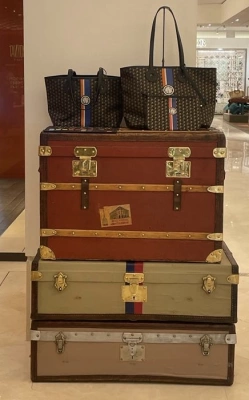
The history of luggage dates back to ancient times, when people used cloth bags or woven baskets to carry their belongings. However, these bags were often bulky and impractical to carry over long distances.
Over the centuries, luggage evolved to become more functional and adapted to travellers' needs. In the Middle Ages, nobles used wooden chests to carry their belongings when travelling. These chests were often heavy and required several people to carry them.
With the advent of rail and sea travel in the 19th century, luggage underwent a new evolution. Wooden trunks became popular, offering better protection for fragile objects. These trunks were often adorned with leather or canvas and were used by wealthy travellers.
In the 20th century, the arrival of commercial aviation led to a further transformation of luggage. Rigid metal or plastic suitcases became common, offering greater shock resistance and storage capacity. Wheels were also added to make transport easier.
Today, luggage is available in a wide variety of shapes, sizes and materials. Many models are available from Les Malletiers....
27 Jul 2023
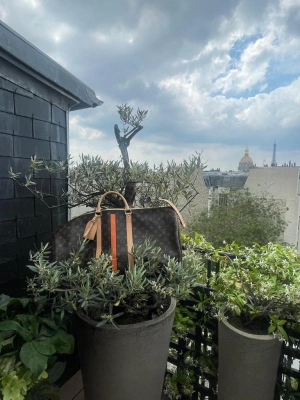
Louis Vuitton's Keepall travel bag, the 1930s... Cruises were fashionable, as were holidays in Deauville and Biarritz.
At that time, Louis Vuitton, renowned for its trunks, had to adapt to these new lifestyles. The result was the Keepall, a bag that "keeps everything". The Keepall is a flexible, zipped bag made from the famous monogrammed coated canvas. Its generous shape allows you to slip in a sports outfit and a few simple clothes for a weekend in the countryside.
An immediate success, the Keepall has never left the Louis Vuitton catalogue. It has been used in the trunk-maker's other collections, and given a new look by artists invited by Marc Jacobs, including Takashi Murakami and others.
Four sizes were chosen (45, 50, 55 and 60 cm), with the first three being the most popular because they could be carried in the cabin.
Seen over and over again on all the people for generations, the Keepall is now a timeless piece, which we keep, cherish and watch lovingly polish... Les Malletiers loves it too!
27 Jul 2023
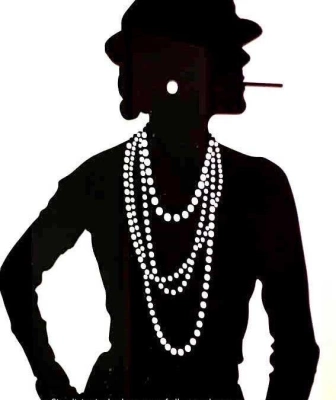
Coco Untold Stories, the early years...
She symbolizes French elegance. Gabrielle Chanel, born in Saumur in 1883, whose real name was Gabrielle Chasnel, was raised in an orphanage. At the age of 12, she was taken in with two of her sisters at Aubazine Abbey in Corrèze.
Her mother died in Brive-la-Gaillarde in 1895. When she was just 12, her father abandoned her a few months later, to the care of the nuns. He never returned. Gabrielle went to Aubazine to learn sewing. She stayed for 6 years. The abbey would remain a powerful source of inspiration for the codes of the House of Chanel...
Coco Chanel's taste for clean lines and her predilection for black, white and beige are perhaps linked to the sobriety of the abbey and its occupants...
Once she left Aubazine, she moved to Moulin. Gabrielle had to earn a living, so she sang in small shows in bars, famous for her rendition of
“Who has seen Coco on the Trocadero? Coco, a nickname that has stuck for posterity...
10 Aug 2023