








Are you sure you want to perform this action?
At a time when certain handbags are selling faster than collectible watches and once-obscure pieces are resurfacing with unprecedented levels of desire, investing in pre-owned luxury is no longer a spur-of-the-moment decision. It is a market of discernment, where purchasing is driven less by simple consumption and more by a careful assessment of rarity, condition, provenance, and the place an object occupies in a house’s history.
The subject naturally attracts lovers of fine pieces, but it demands a precision that the word “investment” sometimes tends to oversimplify. Not all designer bags, designer jewelry, and heirloom trunks appreciate in value in the same way. Some pieces hold their value admirably. Others exceed it. Many, finally, remain above all purchases made for pleasure. The nuance is essential.
## Investing in Secondhand Luxury—What It Really Means
In this world, investing isn’t just about buying cheaper than in a store. It’s about acquiring an item whose value rests on solid fundamentals—lasting desirability, quality of craftsmanship, limited production, brand heritage, and liquidity in the secondary market.
Secondhand luxury offers a unique advantage over new items. The market has already done the sorting. It distinguishes iconic lines from fleeting collections, sought-after materials from less coveted variants, and timeless designs from passing fads. In other words, the secondhand market reveals more clearly what stands the test of time.
This observation holds particularly true for houses whose identity is rooted in a strong heritage. Hermès, Chanel, Louis Vuitton, Dior, Goyard, and Moynat do not generate the same interest for the same reasons. For one, the allure stems from structural rarity. For another, from the iconic status of a model or a fabric. For a third, it stems from the brand’s place in the history of travel, leather goods, or artisanal craftsmanship.
## The pieces best suited for a heritage purchase
Not all segments of the secondhand luxury market operate according to the same dynamics. Iconic bags remain the most accessible entry point, as they combine visibility, desire, and market depth. A Kelly, a Birkin, a Timeless, a Lady Dior, or certain Louis Vuitton models with a strong heritage identity enjoy immediate recognition that sustains their appeal over time.
Small leather goods can also offer an excellent balance between enjoyment of use and value retention, provided you focus on classic models and sought-after materials. Their entry-level price, often more modest, attracts a broader resale market. On the other hand, highly seasonal pieces or those too heavily influenced by a recent trend lose their appeal more quickly.
Trunks, luggage, and travel pieces constitute a category of their own. Their value rests not solely on fashion, but on history, decoration, rarity, and sometimes even the architectural or interior design uses to which they can be put. A beautiful, well-preserved vintage signed trunk, with original details and a clear sense of its era, is almost more of a collector’s item than an accessory.
Jewelry, on the other hand, requires a dual perspective. One must consider the brand, of course, but also the quality of the craftsmanship, the desirability of the design, the presence of gemstones, the period of creation, and the ease of resale. Some pieces of jewelry retain remarkable value. Others remain more susceptible to changing tastes.
## What truly underpins a piece’s value
The first variable is rarity, but it must be understood rigorously. A rare piece is not necessarily a sought-after piece. What matters is the intersection of rarity and desire. A color variant produced in limited quantities may remain of secondary importance if it has never found its audience. Conversely, a highly recognizable version, produced in limited quantities, can become highly coveted.
The second variable is condition. In heritage luxury, preservation is never a minor detail. A clean structure, sharp edges, an intact canvas, consistent hardware, a sound lining, and well-executed restoration work significantly alter the perception of a piece. Between two examples of the same model, the difference in value can be substantial.
Next comes documented provenance. Original invoice, dust bag, box, padlock, bell, shoulder strap, certificate, date code, or workshop elements depending on the brand—everything that accompanies the item reinforces its authenticity. In a market weakened by counterfeits and hybrid assemblies, traceability inspires confidence and supports resale.
Finally, cultural desirability plays a major role. A piece associated with an iconic silhouette, a brand’s peak period, or a design that has become rare possesses a special significance. The luxury market also responds to collective memory.
## Investing in secondhand luxury without confusing market value with trends
This is where the most common mistakes occur. A surge in social media attention or a sudden spike in listed prices is not enough to establish lasting value. There can be a significant gap between the asking price and the actual selling price. It is therefore essential to monitor credible transactions, model turnover, and the consistency of demand.
Some pieces are just a passing trend. Others stand the test of time. Timeless designs, wearable styles, understated colors, and traditionally popular materials generally offer greater stability. Overly conceptual designs, hard-to-wear sizes, or very dated colors may appeal for a while but then lose value on the resale market.
The right approach is to ask not only whether the item appeals today, but whether it will remain relevant in five or ten years. This question rules out many impulse purchases.
## Authenticity is not a detail—it is the foundation
In the secondary market, authenticity is not a mere formality. It determines the entire value of the piece. A weak, ambiguous, or absent authentication exposes you to a net loss, even when the item appears convincing to the untrained eye.
Antique and contemporary luxury requires technical knowledge of the houses, materials, construction, markings, periods of manufacture, and legitimate variations from one workshop to another. This expertise cannot be improvised. It demands a level of expertise capable of distinguishing the genuine from the fake, but also of identifying a well-assembled piece versus one that has been altered, restored in a questionable manner, or is incomplete.
This is precisely why a serious selection is worth more than a simple catalog of listings. At Les Malletiers, each piece is presented as authentic and accompanied by a certificate of authenticity drafted by Jérôme Lalande, Expert at the Paris Court of Appeal. For a buyer who thinks as much of a collector as an investor, this standard changes the very nature of the decision.
## How to Buy Wisely
It is often wiser to buy a very fine version of a great classic than an average version of a supposedly rare piece. The quality of the specimen matters as much as the model’s name. A desirable, well-preserved, and legible item resells better than a piece that looks more impressive on paper but is diminished by its condition.
You must also think about the exit before even the entry. Who might this piece appeal to in the future? Is its size portable? Is its color sufficiently universal? Does its purchase price leave a reasonable margin of safety? Investing in second-hand luxury does not exclude emotion, but it rewards clear-headedness.
For the most savvy buyers, another strategy is to position oneself slightly ahead of the market, in categories that are still under-observed. Certain trunks, soft luggage, home jewelry, or less-publicized vintage pieces sometimes offer more subtle potential than models that are already overexposed. This requires a keen eye and greater patience.
## A good purchase is often one you’d be happy to keep
This is undoubtedly the most elegant criterion. A heritage piece is never merely an asset. It complements a wardrobe, a collection, an interior, and sometimes a personal memory. If its value increases, so much the better. If it holds its own with dignity while offering a rare presence, utility, or emotional resonance, the purchase remains worthwhile.
Secondhand luxury rewards connoisseurs who know how to look beyond the label to recognize craftsmanship, an era, a style, and coherence. The goal is not to speculate blindly, but to choose objects that stand the test of time with authority.
Ultimately, the best acquisitions rarely result from haste. They stem from a trained eye, well-placed trust, and that quiet intuition that recognizes, in an object, more than a price—a permanence.
Related articles

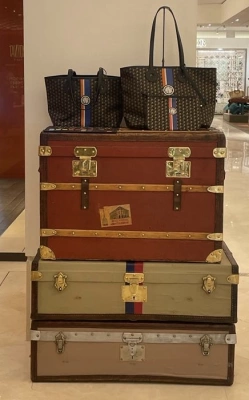
The history of luggage dates back to ancient times, when people used cloth bags or woven baskets to carry their belongings. However, these bags were often bulky and impractical to carry over long distances.
Over the centuries, luggage evolved to become more functional and adapted to travellers' needs. In the Middle Ages, nobles used wooden chests to carry their belongings when travelling. These chests were often heavy and required several people to carry them.
With the advent of rail and sea travel in the 19th century, luggage underwent a new evolution. Wooden trunks became popular, offering better protection for fragile objects. These trunks were often adorned with leather or canvas and were used by wealthy travellers.
In the 20th century, the arrival of commercial aviation led to a further transformation of luggage. Rigid metal or plastic suitcases became common, offering greater shock resistance and storage capacity. Wheels were also added to make transport easier.
Today, luggage is available in a wide variety of shapes, sizes and materials. Many models are available from Les Malletiers....
27 Jul 2023
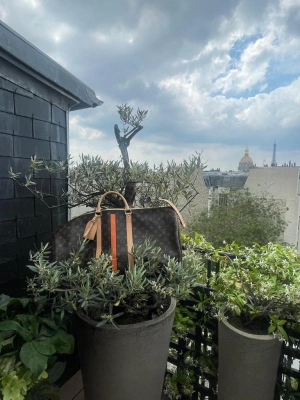
Louis Vuitton's Keepall travel bag, the 1930s... Cruises were fashionable, as were holidays in Deauville and Biarritz.
At that time, Louis Vuitton, renowned for its trunks, had to adapt to these new lifestyles. The result was the Keepall, a bag that "keeps everything". The Keepall is a flexible, zipped bag made from the famous monogrammed coated canvas. Its generous shape allows you to slip in a sports outfit and a few simple clothes for a weekend in the countryside.
An immediate success, the Keepall has never left the Louis Vuitton catalogue. It has been used in the trunk-maker's other collections, and given a new look by artists invited by Marc Jacobs, including Takashi Murakami and others.
Four sizes were chosen (45, 50, 55 and 60 cm), with the first three being the most popular because they could be carried in the cabin.
Seen over and over again on all the people for generations, the Keepall is now a timeless piece, which we keep, cherish and watch lovingly polish... Les Malletiers loves it too!
27 Jul 2023
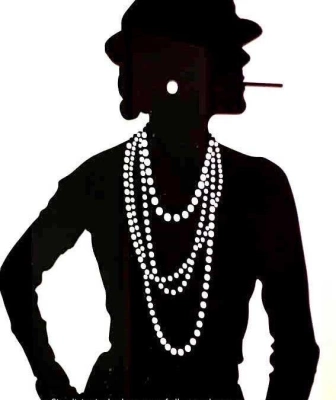
Coco Untold Stories, the early years...
She symbolizes French elegance. Gabrielle Chanel, born in Saumur in 1883, whose real name was Gabrielle Chasnel, was raised in an orphanage. At the age of 12, she was taken in with two of her sisters at Aubazine Abbey in Corrèze.
Her mother died in Brive-la-Gaillarde in 1895. When she was just 12, her father abandoned her a few months later, to the care of the nuns. He never returned. Gabrielle went to Aubazine to learn sewing. She stayed for 6 years. The abbey would remain a powerful source of inspiration for the codes of the House of Chanel...
Coco Chanel's taste for clean lines and her predilection for black, white and beige are perhaps linked to the sobriety of the abbey and its occupants...
Once she left Aubazine, she moved to Moulin. Gabrielle had to earn a living, so she sang in small shows in bars, famous for her rendition of
“Who has seen Coco on the Trocadero? Coco, a nickname that has stuck for posterity...
10 Aug 2023