








Are you sure you want to perform this action?
According to Les Malletiers, the online retailer of pre-owned luxury leather goods: Choosing between Louis Vuitton and Goyard is far from a simple choice between two prestigious names. The question touches on a certain conception of luxury, of travel, of the outward sign of good taste, and, more subtly, of the relationship one has with the object. On one hand, a universally recognized house with a spectacular heritage and unparalleled creative power. On the other, an almost esoteric discretion, a more understated aesthetic language, and a form of exclusivity that immediately speaks to connoisseurs.
The real issue, then, is not which house is “better” in absolute terms. It is about understanding what each one expresses, what it consistently creates, and the place it can occupy in a personal collection or in daily life.
## Louis Vuitton or Goyard: Two Visions of French Luxury
Louis Vuitton and Goyard share a common roots in the world of luggage and travel. This heritage is not merely a marketing gimmick. It continues to shape their identity, their forms, their materials, and their relationship to time.
At Louis Vuitton, the history of travel has given rise to a house that has become a cultural icon. The monogram, the Damier canvas, the trunks, the Keepalls, the Speedys, and the Alzers make up a vocabulary that is instantly recognizable. Louis Vuitton’s strength lies in this rare ability to bring together heritage, global appeal, and innovation. The house speaks equally to collectors of vintage pieces and enthusiasts of contemporary collaborations.
Goyard, by comparison, cultivates a different presence. Quieter, more restrained, and more secretive as well. Its Goyardine canvas, with its painted chevron pattern, does not seek ostentation in the classical sense of the term. It signals membership in a circle of connoisseurs. Where Louis Vuitton is a visible and unapologetic benchmark, Goyard belongs more to the luxury of mutual recognition.
This difference in expression is decisive. It goes beyond style. It touches on the way one wishes to be perceived.
## Style: assertiveness at Vuitton, discretion at Goyard
The primary criterion for choice often comes down to overall appeal. Louis Vuitton offers a broader spectrum. The brand can be heritage-driven, highly fashion-forward, minimalist, or spectacular depending on the lines, creative directors, and eras. A Monogram Alma, a smooth-leather Capucines, or a vintage trunk do not speak the same language, and this is precisely one of the brand’s greatest strengths.
Goyard, on the other hand, embodies a remarkable aesthetic continuity. Saint Louis, Artois, Saigon, Belvédère, and Sénat maintain a strong consistency. The style is recognizable, but without radical variation. For some, this is a rare virtue. For others, it is a limitation, as the formal universe is more confined.
If you love instantly recognizable iconic pieces, extensive archives, and a vast creative landscape, Louis Vuitton is the natural choice. If you’re seeking a more understated, almost coded elegance, Goyard offers a special satisfaction. There is something more intimate about this brand, even when the pattern is famous.
## Materials, Craftsmanship, and User Experience
Comparing Louis Vuitton and Goyard also means looking beyond mere brand imagery. One must examine the object as it functions in daily life.
Louis Vuitton has built its reputation on extremely durable canvas, meticulous construction, and a true mastery of functionality. Many historic models have stood the test of time with remarkable durability. This is particularly true for travel pieces and small leather goods, where the brand has long excelled. Certain vachetta finishes, however, require a certain acceptance of patina, which can appeal to or frustrate users depending on their preferences.
Goyard stands out for the lightness of its canvas and an immediately perceptible suppleness. A Saint Louis, for example, often appeals for its featherweight feel and practicality. It offers the luxury of ease of movement, well-suited to a mobile lifestyle. On the other hand, this lightness also involves trade-offs. Depending on intended use, some buyers may prefer a firmer structure or a more structured shape, which is more readily found in certain Louis Vuitton lines.
There is therefore no one-size-fits-all answer. For intensive, daily use without excessive care, the choice depends on the specific model, even more so than on the brand name. A soft tote does not meet the same expectations as a structured city bag or a travel piece.
## Rarity, Distribution, and Desire
One reason the Louis Vuitton vs. Goyard debate remains so lively lies in the very nature of the desire these brands inspire.
Louis Vuitton is widely distributed globally, but that doesn’t mean every piece is created equal. Some pieces are produced in large quantities and circulate widely on the secondary market. Others, on the contrary, are limited editions, tied to specific periods, collaborations, or models that are now impossible to find. At Vuitton, rarity exists, but it requires knowledge of the lines and vintages.
Goyard maintains a more direct relationship with perceived rarity. The brand’s more controlled distribution, more restrained communication, and almost anti-advertising aura foster a very strong sense of exclusivity. Even well-known models retain this impression of restricted access.
For a collector, this nuance matters. The desire born of visibility is not the same as that born of discretion. Louis Vuitton often attracts with the richness of its history and the variety of its cult objects. Goyard appeals through the sensation of belonging to a circle that needs no name.
## Louis Vuitton or Goyard for investment?
Asking about resale value is legitimate, provided one remains measured. No fashion purchase, even at the highest level, should be reduced to a financial equation. On the other hand, certain brands retain their desirability better, especially when they combine authenticity, condition, the right model, and clear provenance.
Louis Vuitton benefits from a deep, international, and highly liquid secondary market. This is a considerable advantage. Iconic classics, luggage, certain small accessories, and sought-after editions easily find buyers when they are professionally appraised. The predictability of the Vuitton market is reassuring, because demand is constant and structured.
Goyard, for its part, performs exceptionally well, particularly with its iconic models and the most sought-after sizes. The relative rarity of certain items supports their appeal. However, the market is sometimes narrower, more dependent on color, condition, and model. Buyers here are often more knowledgeable—and therefore more demanding.
In both cases, authenticity is central. For highly counterfeited brands, it is not a mere administrative detail but the very essence of the object’s value. This is particularly true in the secondary market, where expertise determines trust—and thus desirability.
## Which brand suits which buyer profile?
Louis Vuitton often appeals to the enthusiast seeking a brand with a vast heritage, capable of offering both a first major purchase and a genuine collecting experience. It serves as an excellent gateway into the world of heritage pieces, without being a conventional choice. A beautiful vintage Vuitton, a piece of luggage marked by time, or a classic model can have an exceptional presence.
Goyard appeals more to those who favor restraint, a more discreet display of the brand, and a form of distinction that transcends trends. It is often the choice of the connoisseur, or the buyer who has already owned pieces from several major houses and is seeking a different kind of emotional connection.
You must also consider your wardrobe and lifestyle. A Goyard tote fits beautifully with a simple, on-the-go look. A more structured Louis Vuitton model may better complement an urban wardrobe, professional use, or a desire for a more tailored piece. The mistake would be to choose based solely on reputation. The right bag is, first and foremost, the one you carry naturally.
## The Value of the Secondary Market in Choosing Between the Two
The secondary market often allows for a more informed comparison between Louis Vuitton and Goyard than the new market does. It reveals patinas, changes in craftsmanship, discontinued models, and lines that have truly stood the test of time. It also offers the opportunity to access rarer pieces, sometimes more desirable than certain contemporary releases.
For Louis Vuitton, the appeal is evident in luggage, vintage small leather goods, certain vintage collections, and iconic models in excellent condition. For Goyard, the secondary market allows you to discover less common colorways, less widely available sizes, and pieces that have already acquired that special depth that only fine materials can develop.
At Les Malletiers, this heritage-driven approach to pre-owned luxury truly comes into its own when one seeks not so much a logo as an authentic, well-chosen object that resonates with one’s sensibility. Between Louis Vuitton and Goyard, the best choice is often the one that transcends image and feels right in the hand.
Ultimately, choosing one or the other comes down to selecting the form of luxury that best reflects who you are. Louis Vuitton asserts, Goyard suggests. And when an object is truly well-chosen, it does more than simply complement an outfit—it ultimately tells a story of how to embody good taste.
Related articles

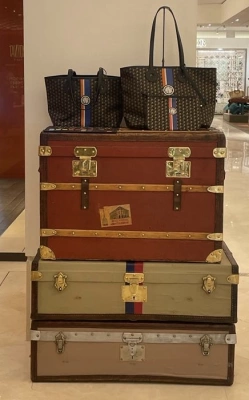
The history of luggage dates back to ancient times, when people used cloth bags or woven baskets to carry their belongings. However, these bags were often bulky and impractical to carry over long distances.
Over the centuries, luggage evolved to become more functional and adapted to travellers' needs. In the Middle Ages, nobles used wooden chests to carry their belongings when travelling. These chests were often heavy and required several people to carry them.
With the advent of rail and sea travel in the 19th century, luggage underwent a new evolution. Wooden trunks became popular, offering better protection for fragile objects. These trunks were often adorned with leather or canvas and were used by wealthy travellers.
In the 20th century, the arrival of commercial aviation led to a further transformation of luggage. Rigid metal or plastic suitcases became common, offering greater shock resistance and storage capacity. Wheels were also added to make transport easier.
Today, luggage is available in a wide variety of shapes, sizes and materials. Many models are available from Les Malletiers....
27 Jul 2023

Louis Vuitton's Keepall travel bag, the 1930s... Cruises were fashionable, as were holidays in Deauville and Biarritz.
At that time, Louis Vuitton, renowned for its trunks, had to adapt to these new lifestyles. The result was the Keepall, a bag that "keeps everything". The Keepall is a flexible, zipped bag made from the famous monogrammed coated canvas. Its generous shape allows you to slip in a sports outfit and a few simple clothes for a weekend in the countryside.
An immediate success, the Keepall has never left the Louis Vuitton catalogue. It has been used in the trunk-maker's other collections, and given a new look by artists invited by Marc Jacobs, including Takashi Murakami and others.
Four sizes were chosen (45, 50, 55 and 60 cm), with the first three being the most popular because they could be carried in the cabin.
Seen over and over again on all the people for generations, the Keepall is now a timeless piece, which we keep, cherish and watch lovingly polish... Les Malletiers loves it too!
27 Jul 2023
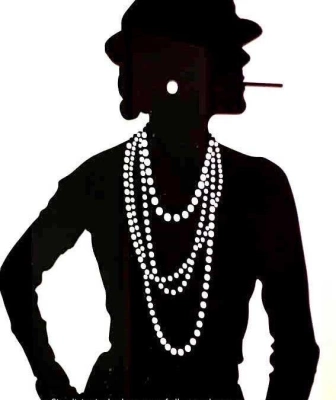
Coco Untold Stories, the early years...
She symbolizes French elegance. Gabrielle Chanel, born in Saumur in 1883, whose real name was Gabrielle Chasnel, was raised in an orphanage. At the age of 12, she was taken in with two of her sisters at Aubazine Abbey in Corrèze.
Her mother died in Brive-la-Gaillarde in 1895. When she was just 12, her father abandoned her a few months later, to the care of the nuns. He never returned. Gabrielle went to Aubazine to learn sewing. She stayed for 6 years. The abbey would remain a powerful source of inspiration for the codes of the House of Chanel...
Coco Chanel's taste for clean lines and her predilection for black, white and beige are perhaps linked to the sobriety of the abbey and its occupants...
Once she left Aubazine, she moved to Moulin. Gabrielle had to earn a living, so she sang in small shows in bars, famous for her rendition of
“Who has seen Coco on the Trocadero? Coco, a nickname that has stuck for posterity...
10 Aug 2023