








Are you sure you want to perform this action?
According to Les Malletiers, the luxury pre-owned sales site: A pre-owned Chanel bag is never just a fashion purchase. It is an encounter with a silhouette, a leather, a chain, a style—and, often, with an era. In the world of high-end pre-owned fashion, the search for a pre-owned Chanel piece requires more than just good taste. It requires a method, a keen eye, and a true understanding of the object.
## Why Pre-Owned Chanel Is So Appealing
Chanel holds a unique place in the pre-owned luxury market. The house embodies what the most discerning enthusiasts seek—an instantly recognizable aesthetic identity, craftsmanship rooted in historic expertise, and a desirability that endures across decades without fading.
A Timeless, a 2.55, a Wallet on Chain, or even certain more discreet clutches do not serve the same purpose, nor do they share the same relationship to style. Yet all these pieces share a rare ability to maintain their presence. Where some bags follow fashion trends, Chanel sets the standard. This is precisely what makes the pre-owned market so attractive—buyers aren’t just looking for a lower price than new, but for access to models that have become hard to find, sometimes discontinued, or unavailable in certain finishes.
One must also account for a phenomenon well-known to collectors. Certain older collections feature details that enthusiasts prefer over more recent productions—such as the type of leather, the depth of the quilting, the shade of the chain, the interior construction, or the balance of proportions. Buying secondhand can thus be a matter of an informed aesthetic choice, rather than a mere alternative.
## Buying a Pre-Owned Chanel—What to Look for First and Foremost
The most common mistake is to start with the price. When it comes to Chanel, the right approach is to start with the overall integrity of the piece. A compelling bag immediately conveys something authentic—in its materials, construction, patina, and finishes.
### The Model and Generation
First, you must precisely identify the model. A Classic Flap does not require the same evaluation criteria as a 2.55 Reissue. The former will often involve considerations of lambskin or caviar leather, the CC turn-lock clasp, and the flap’s structure. The latter will require particular attention to the jewel chain, the Mademoiselle clasp, and the assessment of its proportions.
The generation matters almost as much as the model itself. Two bags that look similar may have significant differences in value depending on when they were made. Some years are sought after for the quality of the leather, others for a specific shade, and still others for a sturdier or softer construction. A savvy buyer therefore isn’t just looking for a model name, but a combination—model, size, material, color, and era.
### Actual condition, not stated condition
In the world of secondhand luxury, overly flattering descriptions must always be cross-checked with a physical inspection. The condition of a Chanel bag is measured by the drape of its structure, the sharpness of the quilting, the wear on the edges, the condition of the corners, the patina of the chain, and the freshness of the interior.
Lambskin, for example, is incomparably elegant but shows wear more easily. This doesn’t make it a bad choice—just a more nuanced one. Conversely, caviar leather holds up better to daily use, but some enthusiasts prefer the more luxurious softness of lambskin. Here, it all depends on the buyer’s intention. Are you looking for a bag to carry often, or a collector’s item with strong aesthetic appeal?
It is also important to distinguish between a noble patina and unsightly wear. A slight change in the leather or hardware can be consistent with the charm of a vintage piece. On the other hand, significant structural sagging, major repairs, questionable recoloring, or a damaged interior profoundly alter the item’s appeal.
## The Decisive Question—Authenticity
At Chanel more than at many other houses, authenticity is never taken lightly. The market is saturated with copies of varying quality, including sophisticated counterfeits capable of fooling the untrained eye. This is why a purchase must always be made within a framework of rigorous verification.
### What a thorough authentication entails
A credible authentication does not rely on a single isolated detail. Neither the sticker, nor the card, nor the original invoice is sufficient on its own. The examination must cover a set of consistent criteria—leather quality, quilting geometry, stitching execution, metal engravings, chain construction, typography, interior markings, series consistency, and overall conformity with the supposed period.
This is where expertise makes all the difference. In a market where trust determines value, the provenance of the authentication is almost as important as the authentication itself. A certificate of authenticity issued by a recognized expert carries far more weight than a simple commercial declaration. For a discerning buyer, this distinction is essential.
### Original accessories—useful, but not definitive
Dust bag, box, certificate of authenticity, ribbons, invoice, tissue paper—these elements enhance the package, but they should never be used as a smokescreen. A perfectly authentic piece may have lost some of its accessories over time. Conversely, a copy may come with misleading elements.
The right approach is to view accessories as additions that enhance desirability and sometimes value, not as standalone proof. For some customers, having a complete set matters a great deal. For others, only the bag’s intrinsic quality matters. Again, it depends on the purpose of the purchase.
## Which Pre-Owned Chanel Bag to Choose Based on Your Needs
The pre-owned Chanel market isn’t limited to the most iconic models. In fact, the best choices are often found among the least expected options.
### For a first purchase
A black model in a versatile size remains the most obvious entry point. It’s a safe choice, easy to carry, and retains high resale value on the secondary market. A medium flap or a WOC can be suitable, provided you don’t get caught up in overly abstract considerations. The right first Chanel is the one you actually want to wear.
### For an established wardrobe
When the basics are already in place, interest may shift toward more unique versions—seasonal colors, tweed, denim, rare finishes, mini sizes, older editions. These choices require more knowledge, but they can offer a more distinctive personality.
### For a collector’s perspective
Collectors look at things differently. They assess relative rarity, period authenticity, the difficulty of finding an identical configuration, and the piece’s heritage significance. From this perspective, a pre-owned Chanel becomes almost a wearable archival artifact. Condition remains important, but it is intertwined with rarity. A hard-to-find version, even with light wear, can be more appealing than a more common piece in near-new condition.
## The Right Price—Between Desire, Rarity, and Consistency
A high price is not automatically excessive, just as a low price is not necessarily a good deal. For Chanel, value is determined by the interplay of several factors—model, year, condition, material, color, size, presence of accessories, market demand, and the seller’s credibility.
One must also factor in the hidden cost of risk. A cheaper purchase from an unreliable source can, in reality, turn out to be the most expensive choice. Conversely, a piece that has been properly appraised, documented, and rigorously described often justifies a higher price point. In the highly refined secondary market, transparency holds value.
For the discerning buyer, the right question is not just “how much does this bag cost?” but “what exactly does this price cover?” The answer may include rarity, condition, authenticity, curation, and the time saved in an often tedious search.
## Where to buy a pre-owned Chanel without compromising on quality
The purchasing channel profoundly changes the experience. Generalist platforms offer volume, but rarely the same level of curation. Specialized channels, on the other hand, offer fewer pieces but greater consistency, traceability, and discernment. For a brand as prominent as Chanel, this difference is not trivial.
A serious specialist does not simply line up bags. They select, examine, reject, and contextualize. They know how to explain why one piece deserves attention, and why another, though seemingly appealing, must be rejected. This ability to curate is invaluable, especially for a clientele seeking not just a bargain but a sure thing.
It is in this spirit that certain specialized resale houses, such as Les Malletiers, view Chanel not as an interchangeable commodity but as a heritage of style to be authenticated, situated, and passed on.
Buying a pre-owned Chanel, at its core, is less about impulse and more about the perfect harmony between an object and a discerning eye. When the model, condition, authenticity, and timing align with clarity, secondhand luxury rediscovers its most precious quality—the rare sensation of having chosen a piece that will outlast fleeting trends.
Related articles

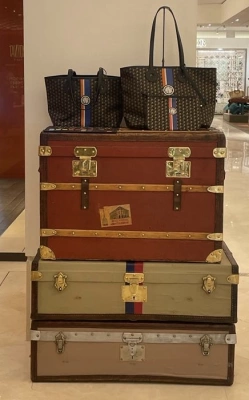
The history of luggage dates back to ancient times, when people used cloth bags or woven baskets to carry their belongings. However, these bags were often bulky and impractical to carry over long distances.
Over the centuries, luggage evolved to become more functional and adapted to travellers' needs. In the Middle Ages, nobles used wooden chests to carry their belongings when travelling. These chests were often heavy and required several people to carry them.
With the advent of rail and sea travel in the 19th century, luggage underwent a new evolution. Wooden trunks became popular, offering better protection for fragile objects. These trunks were often adorned with leather or canvas and were used by wealthy travellers.
In the 20th century, the arrival of commercial aviation led to a further transformation of luggage. Rigid metal or plastic suitcases became common, offering greater shock resistance and storage capacity. Wheels were also added to make transport easier.
Today, luggage is available in a wide variety of shapes, sizes and materials. Many models are available from Les Malletiers....
27 Jul 2023
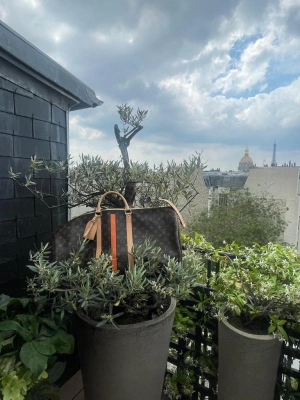
Louis Vuitton's Keepall travel bag, the 1930s... Cruises were fashionable, as were holidays in Deauville and Biarritz.
At that time, Louis Vuitton, renowned for its trunks, had to adapt to these new lifestyles. The result was the Keepall, a bag that "keeps everything". The Keepall is a flexible, zipped bag made from the famous monogrammed coated canvas. Its generous shape allows you to slip in a sports outfit and a few simple clothes for a weekend in the countryside.
An immediate success, the Keepall has never left the Louis Vuitton catalogue. It has been used in the trunk-maker's other collections, and given a new look by artists invited by Marc Jacobs, including Takashi Murakami and others.
Four sizes were chosen (45, 50, 55 and 60 cm), with the first three being the most popular because they could be carried in the cabin.
Seen over and over again on all the people for generations, the Keepall is now a timeless piece, which we keep, cherish and watch lovingly polish... Les Malletiers loves it too!
27 Jul 2023
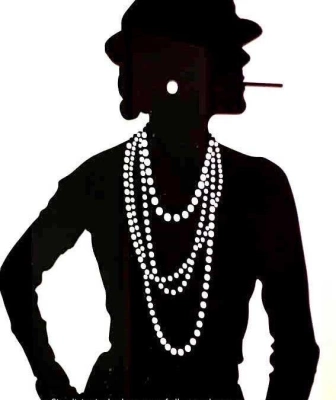
Coco Untold Stories, the early years...
She symbolizes French elegance. Gabrielle Chanel, born in Saumur in 1883, whose real name was Gabrielle Chasnel, was raised in an orphanage. At the age of 12, she was taken in with two of her sisters at Aubazine Abbey in Corrèze.
Her mother died in Brive-la-Gaillarde in 1895. When she was just 12, her father abandoned her a few months later, to the care of the nuns. He never returned. Gabrielle went to Aubazine to learn sewing. She stayed for 6 years. The abbey would remain a powerful source of inspiration for the codes of the House of Chanel...
Coco Chanel's taste for clean lines and her predilection for black, white and beige are perhaps linked to the sobriety of the abbey and its occupants...
Once she left Aubazine, she moved to Moulin. Gabrielle had to earn a living, so she sang in small shows in bars, famous for her rendition of
“Who has seen Coco on the Trocadero? Coco, a nickname that has stuck for posterity...
10 Aug 2023