








Are you sure you want to perform this action?
The Lady Dior isn’t just a bag you buy to complete a wardrobe. It’s a household item, almost a symbol of visual culture. When a customer asks us for our opinion on a vintage Lady Dior bag, the real question is often more complex: are we talking about a stylish purchase, a collector’s item, or a reasonable investment? The answer deserves more than just automatic enthusiasm.
## Review of the vintage Lady Dior bag—what makes it stand out
The vintage Lady Dior’s greatest strength lies in its silhouette. Few bags have managed to establish such a recognizable shape without falling into the trap of fleeting trends. The clean structure, the rounded handles, the cannage, the suspended DIOR letters—everything contributes to a very distinctive presence. You can recognize the bag from a distance, but it doesn’t scream for attention.
This restraint partly explains its longevity. While some “it” bags become dated because they too strongly epitomize a particular decade, the Lady Dior retains an air of timelessness. It belongs to the rare category of bags that can be worn with a tailored suit, a masculine coat, an evening gown, or a specific denim look, without losing their coherence.
Vintage adds a very special quality of perception to this. Older models often feature leather with a denser feel, finishes that are sometimes more substantial depending on the era, and above all that light patina that transforms a luxury accessory into a lived-in object. For a lover of fine pieces, this dimension matters just as much as the overall condition.
### An icon, but not a static icon
It’s also worth noting that the Lady Dior isn’t confined to a single stylistic interpretation. In black cannage lambskin, it exudes a classic, almost ceremonial elegance. In colored patent leather, it becomes more fashion-forward, more bold. In exotic leather or limited editions, it enters the realm of collectibles.
This is precisely what makes assessing a vintage Lady Dior bag a nuanced matter. One does not judge a medium-sized black quilted leather model, a more recent micro version, or an older seasonal edition in the same way. Desirability depends heavily on the size, material, and production period.
## Quality, Usability, Comfort—The True Assessment
In terms of craftsmanship, the Lady Dior generally lives up to its reputation. The structure is meticulous, the cannage requires consistent execution, the handles must retain their shape, and the whole piece rests on a precise balance between rigidity and refinement. A beautiful vintage example immediately gives the impression of solid construction.
On the other hand, we must be honest about its practicality. The Lady Dior isn’t the most practical bag on the market. Its opening may feel less fluid than that of a soft tote or a well-designed flap bag. Depending on the size, access to the interior isn’t always ideal for very active use. If you’re looking for a bag to use intensively from morning to night, every day, there are more convenient options.
This is where sound reasoning comes in. The vintage Lady Dior excels when you expect it to deliver silhouette, poise, and elegant lines. It’s less convincing if you demand almost utilitarian functionality. This isn’t a design flaw—it’s the very logic of a bag conceived as a style statement before being a tote.
### Sizes and what they really mean
The choice of size is crucial. Smaller models charm with their clean lines and grace, but quickly require compromises in terms of capacity. Medium sizes are often the most balanced for those who actually want to carry the bag. Larger sizes, which are rarer depending on the generation, have a strong presence but can lose some of their visual delicacy.
For a first vintage purchase, the medium size in a neutral color is often the most compelling choice. It stands the test of time better, resells more easily, and preserves the model’s original spirit without being overly restrictive.
## What to Check Before Buying
Any serious advice on vintage Lady Dior bags cannot sidestep the central issue of the secondary market: authenticity, of course, but also the overall integrity of the piece. With such an iconic model, counterfeits are numerous and can sometimes be visually convincing to the untrained eye.
You must examine the quality of the cannage, the regularity of the stitching, the precision of the metal finishes, the condition of the handles, the interior markings, the consistency of materials, and the overall harmony of the bag. An authentic Lady Dior rarely stands out because of a single detail. It stands out because of the harmony of all its details.
Condition deserves the same attention. The sumptuous lambskin is also delicate. Corners may show wear, handles may be worn down, certain patent leathers may show signs of deterioration, and the interior may reveal more use than the exterior suggests. Light restoration may be acceptable. Heavy or clumsy restoration is far less so, especially for a purchase intended as an investment.
### Vintage does not mean perfect
This is a key point. Many buyers approach vintage with a contradictory expectation: wanting the spirit of the era without accepting the signs of the times. On an older Lady Dior, slightly supple leather, subtle marks at the corners, or micro-oxidation on the hardware can be compatible with a truly beautiful piece.
On the other hand, structural deformities, sagging cannage, surface cracks, or visible repairs should prompt caution. Good vintage isn’t immaculate vintage at any cost. It’s vintage that’s authentic, sincere, and well-preserved.
## Value and Resale – Is It a Reasonable Purchase?
The Lady Dior has a clear advantage: its iconic status supports its value on the secondary market. One shouldn’t promise an automatic increase in value, as the pre-owned luxury market varies depending on the period, materials, sizes, and condition. But it is an established, recognizable, and sought-after model, and therefore relatively liquid when purchased wisely.
The simplest and most desirable versions are often the most reliable. Black leather, a balanced size, good condition, and impeccable authentication provide a solid foundation. Conversely, certain very dated colors or poor condition can slow down resale, even at a reduced price.
For a collector, the logic may differ. A special edition, a rare material, or a specific era can justify greater interest, even among a niche audience. Again, it all depends on the purpose of the purchase: to wear, keep, collect, pass on, or resell later.
## Who is the vintage Lady Dior really for?
The vintage Lady Dior is a perfect fit for anyone who loves structured bags, the house’s signature elegance, and instantly recognizable pieces without a flashy vibe. It also appeals to buyers who want to acquire a major Dior icon with more discernment than an impulsive new purchase.
It is less suitable for someone who prioritizes lightness, storage capacity, or a very casual look. If your wardrobe is dominated by soft, utilitarian, or very minimalist silhouettes, the Lady Dior may seem more formal than expected. It all depends on the contrast you’re seeking.
### Our take on the vintage Lady Dior bag based on buyer profile
For a first pre-owned luxury purchase, it’s an excellent option provided you embrace its character. For a collector, it’s a foundational piece rather than a whim. For intensive daily use, you must be certain you love its constraints as much as its style.
This is, in fact, what distinguishes great bags from merely desirable ones. Great bags demand genuine commitment. The vintage Lady Dior doesn’t seek to please everyone, and that is part of its nobility.
## Our Final Thoughts
Yes, the vintage Lady Dior deserves its reputation. It combines identity, craftsmanship, style, and recognition value in a way that few bags achieve with such consistency. But it is a purchase that demands precision: choosing the right size, the right material, the right condition, and above all, the right provenance.
In a market where trust makes all the difference, it is best to prioritize an expert selection and impeccable authentication. It is in this spirit that specialized houses like Les Malletiers, with a certificate of authenticity written by Jérôme Lalande, provide luxury vintage items with the setting they deserve. A beautiful vintage Lady Dior is not purchased simply because it is iconic—it is purchased because the chosen piece is the right one.
Related articles

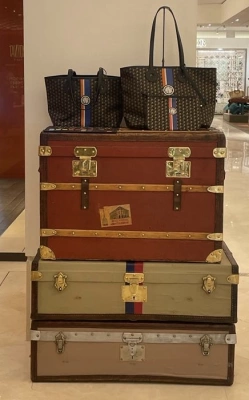
The history of luggage dates back to ancient times, when people used cloth bags or woven baskets to carry their belongings. However, these bags were often bulky and impractical to carry over long distances.
Over the centuries, luggage evolved to become more functional and adapted to travellers' needs. In the Middle Ages, nobles used wooden chests to carry their belongings when travelling. These chests were often heavy and required several people to carry them.
With the advent of rail and sea travel in the 19th century, luggage underwent a new evolution. Wooden trunks became popular, offering better protection for fragile objects. These trunks were often adorned with leather or canvas and were used by wealthy travellers.
In the 20th century, the arrival of commercial aviation led to a further transformation of luggage. Rigid metal or plastic suitcases became common, offering greater shock resistance and storage capacity. Wheels were also added to make transport easier.
Today, luggage is available in a wide variety of shapes, sizes and materials. Many models are available from Les Malletiers....
27 Jul 2023
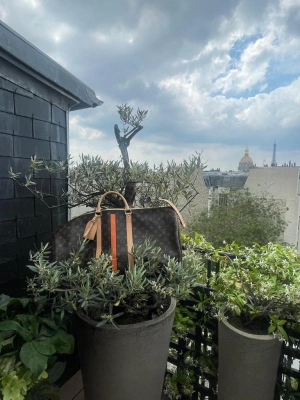
Louis Vuitton's Keepall travel bag, the 1930s... Cruises were fashionable, as were holidays in Deauville and Biarritz.
At that time, Louis Vuitton, renowned for its trunks, had to adapt to these new lifestyles. The result was the Keepall, a bag that "keeps everything". The Keepall is a flexible, zipped bag made from the famous monogrammed coated canvas. Its generous shape allows you to slip in a sports outfit and a few simple clothes for a weekend in the countryside.
An immediate success, the Keepall has never left the Louis Vuitton catalogue. It has been used in the trunk-maker's other collections, and given a new look by artists invited by Marc Jacobs, including Takashi Murakami and others.
Four sizes were chosen (45, 50, 55 and 60 cm), with the first three being the most popular because they could be carried in the cabin.
Seen over and over again on all the people for generations, the Keepall is now a timeless piece, which we keep, cherish and watch lovingly polish... Les Malletiers loves it too!
27 Jul 2023
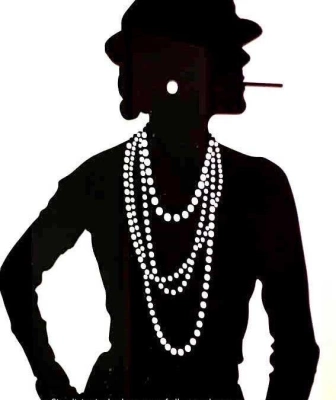
Coco Untold Stories, the early years...
She symbolizes French elegance. Gabrielle Chanel, born in Saumur in 1883, whose real name was Gabrielle Chasnel, was raised in an orphanage. At the age of 12, she was taken in with two of her sisters at Aubazine Abbey in Corrèze.
Her mother died in Brive-la-Gaillarde in 1895. When she was just 12, her father abandoned her a few months later, to the care of the nuns. He never returned. Gabrielle went to Aubazine to learn sewing. She stayed for 6 years. The abbey would remain a powerful source of inspiration for the codes of the House of Chanel...
Coco Chanel's taste for clean lines and her predilection for black, white and beige are perhaps linked to the sobriety of the abbey and its occupants...
Once she left Aubazine, she moved to Moulin. Gabrielle had to earn a living, so she sang in small shows in bars, famous for her rendition of
“Who has seen Coco on the Trocadero? Coco, a nickname that has stuck for posterity...
10 Aug 2023