








Are you sure you want to perform this action?
According to Les malletiers, the pre-owned luxury leather goods website. A Birkin no longer produced in this leather, a Kelly whose patina tells the story of twenty years of careful use, a scarf whose design existed for only a single limited edition—the appeal of pre-owned Hermès is never merely a passing trend. It stems from a more profound truth: at Hermès, time does not necessarily diminish the value of an object. On the contrary, it can give it more presence, more character, and sometimes even more allure.
In the secondhand market, few brands command as much attention, desire, and caution. Buying pre-owned Hermès is therefore not just about finding a beautiful bag at a better price. It is about understanding what you are truly buying: a piece of craftsmanship, a material, an era, a rarity, and above all, undeniable authenticity.
## Why pre-owned Hermès appeals so much to connoisseurs
Hermès occupies a unique place in the world of luxury. The house does not rely on mass production or the rapid turnover of trends. It builds its appeal through continuity, masterful craftsmanship, and a sense of restraint that has long set its creations apart from the logic of instant consumption.
This uniqueness is particularly evident in the secondary market. A pre-owned Hermès bag is not sought after merely because it bears a famous name. It is sought after because, in its very structure, it remains an object of exceptional craftsmanship. The saddle stitch, the quality of the leather cut, the balance of proportions, the precision of the metal finishes—all contribute to making a Hermès piece an object that withstands the test of time better than many others.
But we must go further. The appeal of pre-owned Hermès also stems from the fact that the second-hand market offers access to features sometimes absent in new items: specific colors, less common sizes, leathers that the house no longer produces in the same way today, or pieces that are no longer available in stores. For the discerning connoisseur, pre-owned is not a substitute. It is often the true gateway to a specific piece.
## Buying Pre-Owned Hermès - What You’re Really Paying For
The price of a Hermès piece on the secondary market is never determined by its category alone. Two bags that look similar can vary considerably in price depending on condition, leather, color, size, production period, or the model’s desirability at a given moment.
First and foremost, you pay for the intrinsic quality of the item. A Kelly Sellier does not convey the same precision of lines as a more supple Birkin. A Constance does not serve the same purpose or have the same presence as a Bolide. In small leather goods, a Hermès wallet or clutch can also embody this same excellence in craftsmanship, offering a more understated expression of luxury.
Next, we pay for rarity. Some colors endure over time, while others appear and then disappear. Some leathers appeal for their grain, others for their suppleness or their structured form. There are also pieces that are more desirable because they are in remarkable condition relative to their age.
Finally, we pay for the security of the purchase. This is where many buyers make a mistake in their perspective. In a market saturated with disparate offerings, documented authenticity, expertise, and careful curation hold real value. An attractive price without solid assurance can end up costing a great deal. Conversely, a piece that has been rigorously verified, accurately described, and placed within its heritage context fully justifies its price point.
### Condition is not a detail; it is an interpretation of the object
In the world of luxury collectibles, condition is not merely a quick mention. One must examine the texture of the leather, the corners, the stitching, the condition of the handles, the interior, the hardware, and the consistency of wear across the bag’s various parts. A light patina can be beautiful—even desirable. A clumsy restoration, on the other hand, can alter the piece’s authenticity.
The key is to distinguish between noble wear and structural weakness. Leather softened by time can gain charm. Excessive deformation, visible repairs, or undocumented replacements change the nature of the item.
## Points to Watch for in the Pre-Owned Hermès Market
The more coveted the item, the higher the standards must be. Hermès is one of the most counterfeited brands on the secondary market, and counterfeits have become increasingly sophisticated. A general glance is not enough. Details matter, but interpreting them requires true expertise.
One should not rely on a single isolated clue. The markings, stitching, hardware, date code, overall shape, the drape of the leather, and sometimes even the smell must all be considered together. A cautious buyer does not merely seek reassurance. They seek certainty.
### Authenticity Before a Good Deal
In this world, the concept of a “good deal” is often misunderstood. A Hermès piece offered significantly below market value raises more questions than it does enthusiasm. The price discrepancy can, of course, be explained by condition, missing accessories, or a less liquid model. But when nothing truly justifies this discrepancy, caution must prevail.
This is why serious players in the sector rely on formal expertise. At Les Malletiers, every piece comes with a certificate of authenticity issued by Jérôme Lalande, an expert appointed by the Paris Court of Appeal. In a market where trust cannot be commanded, this rigor profoundly transforms the shopping experience.
## Which pre-owned Hermès models deserve special attention
The market naturally focuses on the icons. The Birkin, the Kelly, and the Constance remain central figures, both for their desirability and their ability to hold their value. However, limiting pre-owned Hermès to these names alone would mean missing out on a much broader heritage.
The Bolide, for example, appeals to those who appreciate functional purity and historical depth. The Evelyne caters to a more everyday, on-the-go lifestyle without compromising on material quality. The Garden Party, the Picotin, or certain clutches offer a more flexible take on Hermès elegance—sometimes less flashy, but often highly relevant.
One must also look beyond the bag. The house’s belts, scarves, bracelets, wallets, and jewelry are playing an increasingly significant role in the second-hand market. They allow buyers to either enter the Hermès universe with a different level of investment or to enrich a collection with highly recognizable pieces, sometimes rarer than one might imagine.
### Between Investment and Impulse Buy
One does not exclude the other, but you need to know what you’re looking for. Some buyers prefer classic styles—sought-after sizes, timeless colors, well-established leathers—because they remain more recognizable on the market. Others choose a more unique shade, an atypical size, or an older piece for its distinct character.
The best purchase isn’t always the one that follows the most obvious trend. It’s often the one that perfectly matches your needs, your taste, and your tolerance for financial risk. A highly liquid item doesn’t serve the same purpose as a more niche collector’s item.
## How to Buy Wisely
A successful purchase starts with a simple question: are you looking for a piece to wear often, an investment, or a specific model you’ve long awaited? The answer changes everything. It guides your selection of leather, size, color, and acceptable condition.
Next, you must request comprehensive information. Clear photographs, an honest description of wear, a list of included accessories, confirmation of authenticity, and a realistic assessment of the market are essential. A reputable seller does not embellish the item. They provide an accurate assessment.
It is also wise to accept that finding a truly beautiful piece may take time. The Hermès market rewards patience far more than impulse. When a specific model becomes hard to find, it’s better to wait for the right piece than to settle for a mediocre compromise.
For collectors or enthusiasts seeking a particular item, a targeted search may be more effective than browsing at random. When you know what you want, the quality of your sourcing matters just as much as your expertise.
## What a Secondhand Hermès Piece Really Reveals
A well-chosen Hermès item says more than just something about taste. It also says something about one’s relationship with time. The new fascinates with its promise. The pre-owned, when in impeccable condition, captivates with its depth. It already carries a story, yet remains open to another.
This is undoubtedly why Hermès remains so unique on the secondary market. Few houses combine such excellence in craftsmanship, enduring aesthetic appeal, and intergenerational desire. Provided one buys with method, knowledge, and discernment, the second-hand market does not diminish the Hermès experience—it deepens it.
The wisest approach, therefore, is not simply to seek out a secondhand Hermès, but a piece that still deserves that name, with the clear evidence of its craftsmanship, provenance, and condition. When these elements come together, the purchase ceases to be opportunistic. It becomes a connoisseur’s choice.
Related articles

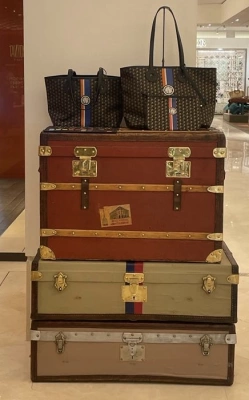
The history of luggage dates back to ancient times, when people used cloth bags or woven baskets to carry their belongings. However, these bags were often bulky and impractical to carry over long distances.
Over the centuries, luggage evolved to become more functional and adapted to travellers' needs. In the Middle Ages, nobles used wooden chests to carry their belongings when travelling. These chests were often heavy and required several people to carry them.
With the advent of rail and sea travel in the 19th century, luggage underwent a new evolution. Wooden trunks became popular, offering better protection for fragile objects. These trunks were often adorned with leather or canvas and were used by wealthy travellers.
In the 20th century, the arrival of commercial aviation led to a further transformation of luggage. Rigid metal or plastic suitcases became common, offering greater shock resistance and storage capacity. Wheels were also added to make transport easier.
Today, luggage is available in a wide variety of shapes, sizes and materials. Many models are available from Les Malletiers....
27 Jul 2023
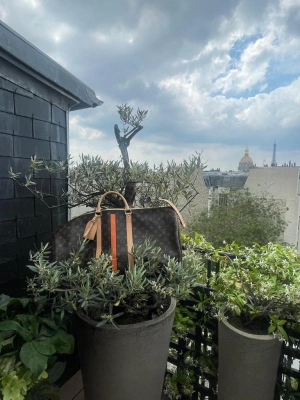
Louis Vuitton's Keepall travel bag, the 1930s... Cruises were fashionable, as were holidays in Deauville and Biarritz.
At that time, Louis Vuitton, renowned for its trunks, had to adapt to these new lifestyles. The result was the Keepall, a bag that "keeps everything". The Keepall is a flexible, zipped bag made from the famous monogrammed coated canvas. Its generous shape allows you to slip in a sports outfit and a few simple clothes for a weekend in the countryside.
An immediate success, the Keepall has never left the Louis Vuitton catalogue. It has been used in the trunk-maker's other collections, and given a new look by artists invited by Marc Jacobs, including Takashi Murakami and others.
Four sizes were chosen (45, 50, 55 and 60 cm), with the first three being the most popular because they could be carried in the cabin.
Seen over and over again on all the people for generations, the Keepall is now a timeless piece, which we keep, cherish and watch lovingly polish... Les Malletiers loves it too!
27 Jul 2023
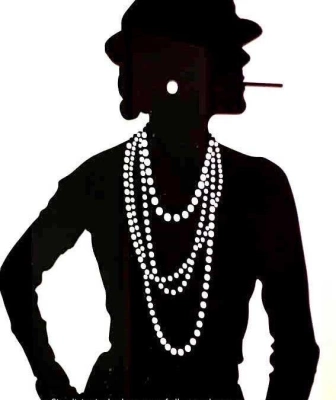
Coco Untold Stories, the early years...
She symbolizes French elegance. Gabrielle Chanel, born in Saumur in 1883, whose real name was Gabrielle Chasnel, was raised in an orphanage. At the age of 12, she was taken in with two of her sisters at Aubazine Abbey in Corrèze.
Her mother died in Brive-la-Gaillarde in 1895. When she was just 12, her father abandoned her a few months later, to the care of the nuns. He never returned. Gabrielle went to Aubazine to learn sewing. She stayed for 6 years. The abbey would remain a powerful source of inspiration for the codes of the House of Chanel...
Coco Chanel's taste for clean lines and her predilection for black, white and beige are perhaps linked to the sobriety of the abbey and its occupants...
Once she left Aubazine, she moved to Moulin. Gabrielle had to earn a living, so she sang in small shows in bars, famous for her rendition of
“Who has seen Coco on the Trocadero? Coco, a nickname that has stuck for posterity...
10 Aug 2023