








Are you sure you want to perform this action?
According to Les Malletiers, some bags are simply desirable. Others fall into a different category—that of pieces that encapsulate an era, a craftsmanship, and a house signature that is instantly recognizable. The vintage Dior collector’s bag belongs to this second category. It is sought after not only for its allure, but for what it says about Dior, the French silhouette, and the enduring appeal of objects that span decades without losing their authority.
The vintage market has understood this well. At Dior, value never rests on a single criterion. It arises from a balance between design, material, era, condition, and stylistic clarity. This is precisely what makes the pursuit exciting for a discerning connoisseur—and tricky for a buyer less familiar with the house’s codes.
## What makes a vintage Dior bag a collector’s item?
Not every vintage bag bearing the Dior name is, by definition, a collector’s item. The term implies more than mere age. It refers to a model whose desirability endures over time, either because it has left its mark on the house’s stylistic history, because it embodies a formal vocabulary that is now rare, or because it was produced in limited quantities.
At Dior, several factors can elevate a bag into the realm of collectibles. First is the strength of the design. An instantly recognizable silhouette, perfect proportions, clean construction, and details unique to the house are more likely to remain sought-after. Next is the material. High-quality leathers, precise finishes, certain iconic canvases or patterns, as well as well-preserved hardware, matter greatly.
The era also plays a decisive role. Certain decades are more sought-after than others, not because they are objectively superior, but because they resonate with contemporary tastes. A bag can be very beautiful without being particularly rare. Conversely, a rare variant—in a subtle color or a configuration that was not widely released—can spark genuine collector’s interest.
## The Dior signatures that collectors scrutinize
The Dior universe is built on a consistently refined tension between structure and femininity. An experienced collector therefore focuses less on the mere notoriety of a name and more on the consistency of its codes. The cannage pattern, for example, is not merely a decorative detail. It is a motif that engages with the house’s history and, on certain vintage pieces, takes on a very distinctive presence depending on its scale, the material, and the patina.
Charm letters, rigid handles, architectural shapes, or conversely, certain softer lines from later years—all of these deserve to be interpreted with nuance. An iconic model generally retains greater value on the secondary market. However, there are also less publicized bags that appeal to connoisseurs due to their understated nature, construction, or limited production.
This is where an expert eye makes all the difference. A collector isn’t just buying a logo or a revived trend. They’re looking for the right piece, one in which the house’s identity is clearly expressed.
## How to evaluate a vintage Dior collector’s bag before purchasing
The first temptation is often to focus on the overall condition. This is essential, but insufficient. A vintage Dior collector’s bag must be examined as a whole, with the level of attention one would give to a heritage object.
The structure is a key factor. A bag that has retained its shape, volume, and clean lines will always be more compelling than a sagging one, even if the latter appears acceptable at first glance. The corners, edges, handles, and areas of wear reveal a great deal about the bag’s actual history. As for the metal hardware, it must be scrutinized without leniency. A fitting that is too worn can affect the overall impression of the entire bag.
The interior matters just as much as the exterior. The lining, pockets, markings, stitching, and overall scent often allow one to distinguish a well-preserved bag from one that has simply been cleaned before resale. One must also consider the overall consistency. A uniform patina is often more desirable than a visible or poorly executed restoration.
Authenticity remains the decisive factor. In a market where counterfeits have long been circulating, particularly for the most prominent brands, authentication must never be treated as a mere administrative formality. It determines the trust, value, and future resale potential of the piece.
## Rarity, condition, desirability—what truly determines value
The price of a vintage Dior piece does not follow a simple formula. Two bags that look similar can vary significantly in price depending on their date, material, or market availability. Pure rarity is not always enough. An extremely rare piece that is aesthetically less compelling or difficult to wear may appeal only to a narrow circle. Conversely, a highly recognizable model in excellent condition may remain more liquid and therefore more sought-after.
Condition almost always acts as a catalyst. In the luxury collectibles segment, the most discerning buyers accept patina when it is elegant, consistent, and age-appropriate. On the other hand, structural defects, visible repairs, or non-compliant replacements detract from the value.
Desirability is more subtle. It depends on the moment, on silhouettes brought back into the spotlight, on reinterpreted archives, and on a taste for certain proportions or colors. One must therefore avoid overly rigid judgments. A piece that is minor today may become highly sought-after tomorrow if the market’s perspective shifts. This does not mean one should buy speculatively. It means that a good purchase is based first and foremost on the object’s intrinsic quality.
## Buying to wear or buying to collect
This question deserves to be asked frankly, as it changes how one chooses. A collector who wishes to wear their bag regularly may accept slightly softened leather, provided the overall piece remains elegant and in good condition. Someone seeking an archival piece, intended to be carefully preserved, will often pay closer attention to absolute integrity, completeness, and the freshness of the materials.
There is no hierarchy between these two approaches. They simply serve different purposes. Some purchases make sense because they enhance a sophisticated wardrobe and lend a contemporary look a sense of historical depth. Others fall under a collector’s logic—almost documentary in nature—where the piece matters as much for its presence as for its use.
The wisest course is to clarify this point before making a purchase. A very rare but fragile bag is not always the best choice for frequent use. Conversely, a very beautiful model that is slightly less rare can offer more lasting satisfaction if it fits naturally into daily life.
## Where Vigilance Must Be Maximum
With Dior, as with other major fashion houses, the risk areas are well known.
Unclear provenance, overly vague descriptions, insufficient photographs, and abnormally attractive prices should raise red flags. The secondary luxury market rests on a simple paradox—the more desirable the item, the greater the need for rigor.
A reputable seller must be able to document the item, describe it accurately, and provide a clear account of its condition. In this world, trust cannot be imposed. It is built through the quality of expertise, the consistency of the selection, and the professionalism of the presentation. This is precisely why a specialized house like Les Malletiers places a central emphasis on certified authenticity and a rigorous curation process, designed for connoisseurs of fine provenance rather than volume.
## Vintage Dior Collector’s Bag – The Right Approach to a Sustainable Purchase
The best purchase is rarely the most impulsive one. It requires looking, comparing, and letting the piece speak for itself. Beautiful vintage items don’t just appeal because of the label. They stand out through the clarity of their lines, the quality of their materials, and a presence that stands up to scrutiny.
Before deciding, ask yourself if the bag possesses this dual strength—aesthetic and heritage. Does it stay true to Dior’s codes without being merely anecdotal? Is it in good enough condition to be passed down, or at least preserved with dignity over time? Is its rarity genuine, or merely implied? And above all, does it evoke that very special feeling unique to collectible pieces—the sense that it doesn’t just serve a function, but occupies a place?
It is often at this point that the difference lies between a pleasant purchase and a worthwhile acquisition. A great vintage bag is not a substitute for a new one. It is an object of taste, memory, and discernment. When it is authentic, well-chosen, and understood for what it is, it does not simply follow fashion—it outlives it.
Related articles

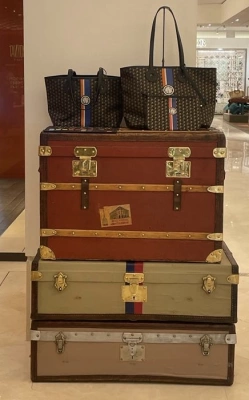
The history of luggage dates back to ancient times, when people used cloth bags or woven baskets to carry their belongings. However, these bags were often bulky and impractical to carry over long distances.
Over the centuries, luggage evolved to become more functional and adapted to travellers' needs. In the Middle Ages, nobles used wooden chests to carry their belongings when travelling. These chests were often heavy and required several people to carry them.
With the advent of rail and sea travel in the 19th century, luggage underwent a new evolution. Wooden trunks became popular, offering better protection for fragile objects. These trunks were often adorned with leather or canvas and were used by wealthy travellers.
In the 20th century, the arrival of commercial aviation led to a further transformation of luggage. Rigid metal or plastic suitcases became common, offering greater shock resistance and storage capacity. Wheels were also added to make transport easier.
Today, luggage is available in a wide variety of shapes, sizes and materials. Many models are available from Les Malletiers....
27 Jul 2023
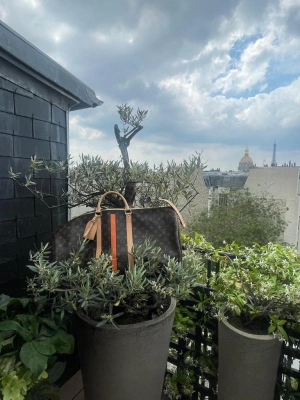
Louis Vuitton's Keepall travel bag, the 1930s... Cruises were fashionable, as were holidays in Deauville and Biarritz.
At that time, Louis Vuitton, renowned for its trunks, had to adapt to these new lifestyles. The result was the Keepall, a bag that "keeps everything". The Keepall is a flexible, zipped bag made from the famous monogrammed coated canvas. Its generous shape allows you to slip in a sports outfit and a few simple clothes for a weekend in the countryside.
An immediate success, the Keepall has never left the Louis Vuitton catalogue. It has been used in the trunk-maker's other collections, and given a new look by artists invited by Marc Jacobs, including Takashi Murakami and others.
Four sizes were chosen (45, 50, 55 and 60 cm), with the first three being the most popular because they could be carried in the cabin.
Seen over and over again on all the people for generations, the Keepall is now a timeless piece, which we keep, cherish and watch lovingly polish... Les Malletiers loves it too!
27 Jul 2023

Coco Untold Stories, the early years...
She symbolizes French elegance. Gabrielle Chanel, born in Saumur in 1883, whose real name was Gabrielle Chasnel, was raised in an orphanage. At the age of 12, she was taken in with two of her sisters at Aubazine Abbey in Corrèze.
Her mother died in Brive-la-Gaillarde in 1895. When she was just 12, her father abandoned her a few months later, to the care of the nuns. He never returned. Gabrielle went to Aubazine to learn sewing. She stayed for 6 years. The abbey would remain a powerful source of inspiration for the codes of the House of Chanel...
Coco Chanel's taste for clean lines and her predilection for black, white and beige are perhaps linked to the sobriety of the abbey and its occupants...
Once she left Aubazine, she moved to Moulin. Gabrielle had to earn a living, so she sang in small shows in bars, famous for her rendition of
“Who has seen Coco on the Trocadero? Coco, a nickname that has stuck for posterity...
10 Aug 2023