








Are you sure you want to perform this action?
A Chanel bag is never quite bought in the same way as any other bag. The question of whether to choose a vintage or new Chanel piece isn’t just a matter of budget or the item’s overall condition. It involves a certain sensibility, a relationship with time, and sometimes a very personal way of entering the world of the house.
Some customers want the absolute crispness of a recent model, the precision of an intact silhouette, the feeling of being the first to wear the piece. Others, on the contrary, seek the depth offered by an older piece—the right patina, leather that has lived, a manufacturing detail no longer found in current collections. Between the two, there is no universal answer. There are criteria, customs, and above all, a clear idea of what is expected from Chanel.
## Chanel vintage or new: a matter of desire, not just price
Reducing the choice between vintage and new to a simple financial decision would be a mistake. Of course, price matters. But in the world of Chanel, the perceived value of a piece also depends on its era, its construction, its rarity, and its evocative power.
A new model often appeals because of its immediate clarity. It belongs to the house’s current aesthetic, meets contemporary standards, and offers reassurance through its presentation. For a first Chanel purchase, this clarity can be decisive.
Vintage follows a more subtle logic. It attracts enthusiasts of pieces that are less common, sometimes more unique, and often brimming with character. An older Timeless in jersey, a Diana in soft lambskin, or a minaudière from an iconic season do not carry the same presence as a model fresh off the store shelf. Vintage is not merely older. It is often more narrative.
## What new items still struggle to offer
Buying a new Chanel piece means choosing an item with no history of use. For some people, that’s enough. When you want to mark a special moment in life, give a gift with strong symbolic meaning, or build a carefully curated luxury wardrobe, new items offer undeniable clarity.
There is also the question of the availability of sizes, certain finishes, or recent colorways. A current collection can fulfill a very specific desire—a particular mini size, a seasonal shade, a redesigned chain, or a style better suited to contemporary uses.
That said, new items have their limits. Successive price increases have altered the perception of certain models. Many savvy buyers now question the gap between retail price and actual desirability. A piece may be new, but it may be less exceptional in its craftsmanship or less interesting from a heritage perspective than a truly beautiful vintage piece.
## Why Vintage Chanel Is So Fascinating
Vintage Chanel holds a special appeal because it offers access to production periods that many enthusiasts consider remarkable. Some older leathers have a softer feel, some gold plating has a richer presence, and certain proportions possess an elegance not always found today.
The scarcity factor must also be considered. A vintage piece isn’t simply hard to find because it’s old. It may be hard to find because it was produced only for a brief period, in an uncommon material, or with a detail that’s now impossible to find. This is where true collecting sensibility comes into play.
Vintage also allows one to escape a certain uniformity.
In a market saturated with images, owning a Chanel piece that is less expected, more subtle, and sometimes discontinued, has real aesthetic value. You’re no longer just choosing a logo or a status symbol. You’re choosing a story of form, material, and era.
### The charm of patina, provided it’s just right
That’s the whole point. A beautiful patina adds depth to a Chanel bag. It bears witness to time without damaging it. On the other hand, excessive wear, altered edges, sagging quilting, or clumsy restoration can rob the piece of a significant part of its appeal.
Vintage therefore requires a more trained eye. You must be able to distinguish the noble traces of time from structural wear and tear. This distinction is crucial, both for the pleasure of use and for resale value.
## The real criterion: how you wear Chanel
The right choice often depends less on the piece itself than on the person wearing it. A customer who uses her bag daily, travels frequently, and prioritizes practicality may prefer a newer model, made of more durable leather or in a more functional size.
Conversely, someone building a collection, who rarely wears their pieces, or who seeks a very specific stylistic presence will often be better off looking toward vintage options. Certain older models have a visual and cultural impact far superior to newer ones, even if the latter are flawless on paper.
We must also consider the psychological connection to the object. Some buyers are perfectly comfortable with the delicacy of vintage lambskin. Others desire total freedom of use and dread even the slightest mark. Luxury should not become a constant constraint. A good purchase is one you can confidently own over the long term.
## Vintage or New Chanel: What Criteria to Consider Before Buying
Beyond personal taste, several factors allow for discerning judgment. The first is authenticity. With Chanel more than with many other brands, this is never a mere formality. The secondary market is rife with sophisticated counterfeits, sometimes deceptive even to a trained eye. Serious, documented expertise therefore remains an absolute must.
Next comes condition. For a vintage piece, you must examine the structure, the condition of the leather, the uniformity of the color, the state of the chain, the corners, the lining, and the quality of any repairs. For a recent piece, you’ll focus more on the balance between the asking price, the model’s desirability, and the design’s longevity.
Rarity must be assessed with discretion. Not everything that is old is rare, and not everything that is rare is necessarily desirable. A piece’s value stems from a combination of several factors—the era, condition, material, provenance, and its place in Chanel’s stylistic history.
Finally, there is the question of future liquidity. Some items resell more easily than others. Well-recognized classics, in sought-after sizes and colors, generally retain a stable appeal. Models that are too seasonal, too specific, or visibly restored often require more patience.
### The Importance of Provenance and Expertise
In this segment, trust is not an added service. It is the foundation of the decision. A Chanel piece acquires a whole new legitimacy when presented with rigorous expertise, an honest description of its condition, and an accurate assessment of its true qualities.
This is precisely what distinguishes a trusted player from an undifferentiated marketplace. At Les Malletiers, this standard is rooted in a vision of the luxury item as a piece of heritage as much as a fashion accessory.
## When Vintage Is a Better Choice Than New
Vintage becomes particularly relevant when seeking a Chanel with character rather than one that’s readily available. It is often the best option for those who appreciate classic lines, softer leathers, period finishes, or simply the feeling of acquiring a less standardized piece.
It is also a wise choice when seeking an iconic piece whose new price has become very high, provided you accept that a beautiful vintage piece also commands a fair market price. Vintage isn’t automatically cheaper. For the most coveted pieces, it can even exceed the price of a new item.
Finally, vintage is the way to go when collecting. You no longer enter the world of Chanel through the current storefront, but through its material legacy. It’s a more selective approach, often more demanding, but also more rewarding.
## When new remains the most logical choice
New remains the best option if you want a flawless piece, plan for heavy use, and desire a purchasing experience with no ambiguity regarding condition. It’s also ideal for those who prefer a very contemporary aesthetic or wish to celebrate a personal purchase clearly and without compromise.
It is also the simplest choice for a first Chanel when you don’t yet feel ready to assess the nuances of vintage, construction, or patina. Taste develops over time. There is no obligation to start with vintage to be considered a true connoisseur.
The right question, then, isn’t which is superior in absolute terms. It’s about understanding what you expect from the item—purity, history, rarity, comfort of use, or potential for passing it on.
A beautiful Chanel is often the one that perfectly matches your vision. If you like the idea of a piece that already carries a bit of history within it, vintage can offer much more than just an alternative to new. If you’re looking for the crispness of a brand-new piece, new remains the obvious choice. True luxury, at its core, lies in choosing with discernment rather than following market trends.
Related articles

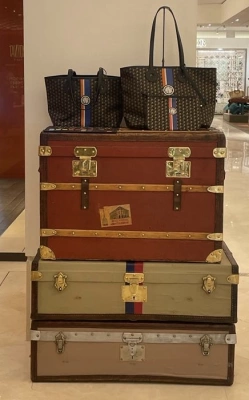
The history of luggage dates back to ancient times, when people used cloth bags or woven baskets to carry their belongings. However, these bags were often bulky and impractical to carry over long distances.
Over the centuries, luggage evolved to become more functional and adapted to travellers' needs. In the Middle Ages, nobles used wooden chests to carry their belongings when travelling. These chests were often heavy and required several people to carry them.
With the advent of rail and sea travel in the 19th century, luggage underwent a new evolution. Wooden trunks became popular, offering better protection for fragile objects. These trunks were often adorned with leather or canvas and were used by wealthy travellers.
In the 20th century, the arrival of commercial aviation led to a further transformation of luggage. Rigid metal or plastic suitcases became common, offering greater shock resistance and storage capacity. Wheels were also added to make transport easier.
Today, luggage is available in a wide variety of shapes, sizes and materials. Many models are available from Les Malletiers....
27 Jul 2023
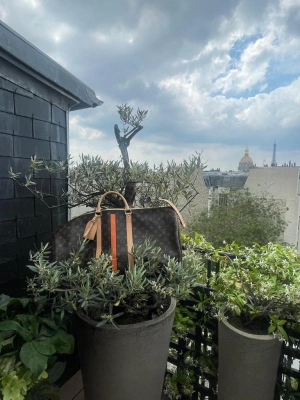
Louis Vuitton's Keepall travel bag, the 1930s... Cruises were fashionable, as were holidays in Deauville and Biarritz.
At that time, Louis Vuitton, renowned for its trunks, had to adapt to these new lifestyles. The result was the Keepall, a bag that "keeps everything". The Keepall is a flexible, zipped bag made from the famous monogrammed coated canvas. Its generous shape allows you to slip in a sports outfit and a few simple clothes for a weekend in the countryside.
An immediate success, the Keepall has never left the Louis Vuitton catalogue. It has been used in the trunk-maker's other collections, and given a new look by artists invited by Marc Jacobs, including Takashi Murakami and others.
Four sizes were chosen (45, 50, 55 and 60 cm), with the first three being the most popular because they could be carried in the cabin.
Seen over and over again on all the people for generations, the Keepall is now a timeless piece, which we keep, cherish and watch lovingly polish... Les Malletiers loves it too!
27 Jul 2023
Coco Untold Stories, the early years...
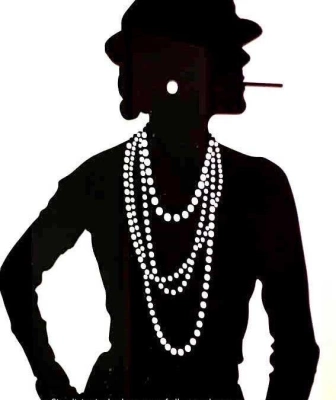
She symbolizes French elegance. Gabrielle Chanel, born in Saumur in 1883, whose real name was Gabrielle Chasnel, was raised in an orphanage. At the age of 12, she was taken in with two of her sisters at Aubazine Abbey in Corrèze.
Her mother died in Brive-la-Gaillarde in 1895. When she was just 12, her father abandoned her a few months later, to the care of the nuns. He never returned. Gabrielle went to Aubazine to learn sewing. She stayed for 6 years. The abbey would remain a powerful source of inspiration for the codes of the House of Chanel...
Coco Chanel's taste for clean lines and her predilection for black, white and beige are perhaps linked to the sobriety of the abbey and its occupants...
Once she left Aubazine, she moved to Moulin. Gabrielle had to earn a living, so she sang in small shows in bars, famous for her rendition of
“Who has seen Coco on the Trocadero? Coco, a nickname that has stuck for posterity...
10 Aug 2023