








Are you sure you want to perform this action?
A Kelly bag sitting unused in its dust bag, a Chanel Classic Flap worn less than you’d hoped, an older Louis Vuitton model that’s become too understated for your wardrobe—selling a pre-owned luxury bag isn’t just a matter of posting a few photos and waiting for an offer. In this market, value doesn’t depend solely on the brand name. It rests on a more subtle balance between authenticity, condition, desirability, rarity, and presentation quality.
This is precisely what distinguishes a quick sale from a fair sale.
## Selling a pre-owned luxury bag—what truly determines its value
The first instinct is often to look at prices listed elsewhere. This is helpful, but rarely sufficient. A bag isn’t valued simply because a similar model is listed at a certain price. It’s valued because a buyer is willing to pay that price for a specific piece, in a specific condition, with a reliable provenance.
The brand matters, of course. Hermès, Chanel, Louis Vuitton, Dior, Goyard, and Moynat don’t follow the same logic. Some lines are extremely sought-after due to their enduring aesthetic appeal. Others experience more cyclical demand, driven by trends, archives, or media visibility. Added to this are variations in size, leather, color, hardware, and year of production.
A black Togo leather Birkin with palladium-plated hardware is not viewed as a seasonal model in a more unique shade. A Chanel in soft lambskin does not appeal to the same clientele as a caviar leather piece. An older Speedy with a beautiful patina may be more appealing than a newer model that is visually less interesting. The secondhand luxury market therefore does not follow a single formula. You must assess the item for what it is, not for what it claims to be.
## Authenticity: The First Requirement for a Serious Sale
In the resale market, authenticity is not a mere administrative detail. It is the foundation of the transaction. A savvy buyer isn’t just purchasing a bag; they are buying certainty.
Without solid proof, even a very beautiful model can cause hesitation, prolong the sale, or lead to tough negotiations. Conversely, an item accompanied by proper documentation inspires confidence and preserves its value. Original invoices, cards, dust bags, boxes, and service tickets can support a case, but they do not always replace expert appraisal when it is necessary.
This is particularly true for the most counterfeited brands and iconic models. In this segment, the quality of authentication directly influences both the price and the ease of the sale. A seller who anticipates this point immediately positions themselves among professionals and collectors, rather than in the uncertain world of vague listings.
## The condition of the bag—a more nuanced criterion than it seems
Saying that a bag is in “very good condition” means almost nothing if this assessment isn’t substantiated. In the world of vintage luxury, condition is assessed with precision.
We examine the edges, handles, seams, corners, structural integrity, cleanliness of the lining, condition of the hardware, presence of odors, signs of wear, quality of the patina, and, depending on the model, the suppleness or firmness of the leather.
For certain vintage pieces, light and even wear is not a major flaw. It can even be a sign of fine materials and harmonious aging. On the other hand, a clumsy repair, excessive recoloring, or a restoration that alters the original character often carries more weight.
Therefore, one should neither overemphasize normal wear nor downplay actual flaws. A balanced perspective is essential. A collectible bag does not have to look brand-new to be desirable, but it must be described with precision.
## Should you have your bag restored before selling it?
The answer depends on the model, its condition, and the extent of the restoration work planned. A light cleaning, a subtle reshaping, or proper maintenance can enhance the piece’s value. On the other hand, extensive restoration is not always advisable.
With certain bags, especially vintage ones, collectors prefer the material to remain intact—even if marked by time—rather than having overly visible repairs. A consistent patina is sometimes preferable to artificially uniform leather. For a newer model intended for daily use, a discreet refurbishment can, on the contrary, reassure buyers and speed up the sale.
The right approach is to improve the presentation without erasing the item’s identity. When in doubt, it’s best to seek expert advice before incurring costs that won’t necessarily be recouped in the final price.
## Choosing the Right Channel to Sell a Pre-Owned Luxury Bag
This is often where the difference between maximum exposure and a controlled sale comes into play. General-purpose platforms offer visibility, but they also expose you to fierce competition, unqualified buyers, repeated requests for discounts, and constant questions about authenticity.
Direct sales between individuals may be suitable for certain simple, well-documented items. But as soon as the bag reaches a high value, the model is rare, or the brand is particularly sensitive to counterfeiting, the process quickly becomes demanding. You must be able to answer technical questions, justify the price, secure payment, and manage logistics.
Working with a specialist generally allows the bag to be positioned in an environment more consistent with its status. The item is no longer presented as a simple secondhand item, but as a curated, verified, and properly contextualized piece. For sellers seeking to balance discretion, security, and value, this support is truly valuable. At Les Malletiers, this challenge takes on a special dimension thanks to a rigorous selection process and the backing of expert authentication.
## How to present a bag to get a credible offer
A poorly photographed bag almost always appears less desirable than it actually is. Conversely, an overly flattering presentation that hides flaws undermines trust. Aim for an accurate, precise, and elegant image.
Natural light remains your best ally. The background should be simple. Essential shots include the front, back, side, bottom, interior, and details of handles, clasps, corners, markings, and any notable flaws. Any included accessories must be clearly visible.
The description deserves the same care. You should indicate the manufacturer, model, dimensions, material, color, type of metal, year or period if known, as well as the actual condition. Vague or exaggerated wording undermines credibility. In the luxury market, restraint inspires more confidence than exaggeration.
## The right price isn’t always the highest price
Setting a price that’s too ambitious can leave the item unsold for months. This lost time comes at an invisible cost—seller fatigue, a gradual decline in offers, and the perception that the item is unsellable. Conversely, undervaluing a rare bag amounts to giving up too quickly on an item whose desirability could have been better defended.
The right price depends on the desired speed of sale, the season, the model, and the chosen channel. An iconic piece in a classic color will sell more easily than a very specific variation, even if the latter is rarer. Rarity alone does not guarantee liquidity. It all depends on the depth of demand.
You must also factor in potential commissions, listing fees, and the difference between the listed price, the negotiated price, and the actual amount received. Many sellers compare theoretical figures without accounting for this gap.
## Timing matters more than you might think
Some bags enjoy relatively steady demand. Others sell better at specific times—before the holidays, in the spring, during a resurgence of interest in a particular brand, or when a specific style returns to the forefront.
Listings posted in a rush rarely secure the best terms. It’s better to sell when you can prepare the listing, gather the original documents, organize a polished presentation, and give the market time to respond. Rushing almost always weakens the negotiation.
For high-value items, waiting can be reasonable if accompanied by the right positioning. For more common models, a more dynamic strategy is sometimes preferable. Again, it all depends on the nature of the bag and the profile of the buyer you’re targeting.
## What a savvy buyer really wants
They want to be reassured, but also captivated. They are looking for a beautiful object, of course, but above all, they seek a piece whose history, authenticity, and condition match the promise made. They want to feel that they are not buying a risk or a mere approximation.
This is why selling a pre-owned luxury bag involves more than just listing it online. You must build a relationship of trust around the item. The more valuable the bag, the more crucial this aspect becomes.
A beautiful bag always retains its appeal when presented with intelligence, expertise, and restraint. If you’re considering parting with it, the wisest move isn’t to rush, but to offer it a setting that respects its true value.
Related articles

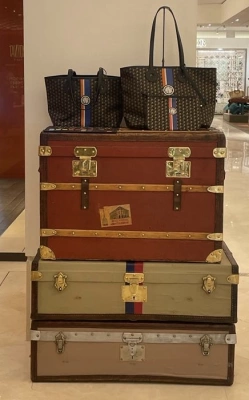
The history of luggage dates back to ancient times, when people used cloth bags or woven baskets to carry their belongings. However, these bags were often bulky and impractical to carry over long distances.
Over the centuries, luggage evolved to become more functional and adapted to travellers' needs. In the Middle Ages, nobles used wooden chests to carry their belongings when travelling. These chests were often heavy and required several people to carry them.
With the advent of rail and sea travel in the 19th century, luggage underwent a new evolution. Wooden trunks became popular, offering better protection for fragile objects. These trunks were often adorned with leather or canvas and were used by wealthy travellers.
In the 20th century, the arrival of commercial aviation led to a further transformation of luggage. Rigid metal or plastic suitcases became common, offering greater shock resistance and storage capacity. Wheels were also added to make transport easier.
Today, luggage is available in a wide variety of shapes, sizes and materials. Many models are available from Les Malletiers....
27 Jul 2023
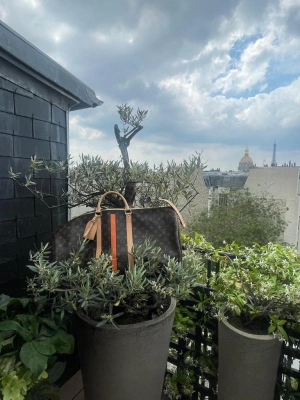
Louis Vuitton's Keepall travel bag, the 1930s... Cruises were fashionable, as were holidays in Deauville and Biarritz.
At that time, Louis Vuitton, renowned for its trunks, had to adapt to these new lifestyles. The result was the Keepall, a bag that "keeps everything". The Keepall is a flexible, zipped bag made from the famous monogrammed coated canvas. Its generous shape allows you to slip in a sports outfit and a few simple clothes for a weekend in the countryside.
An immediate success, the Keepall has never left the Louis Vuitton catalogue. It has been used in the trunk-maker's other collections, and given a new look by artists invited by Marc Jacobs, including Takashi Murakami and others.
Four sizes were chosen (45, 50, 55 and 60 cm), with the first three being the most popular because they could be carried in the cabin.
Seen over and over again on all the people for generations, the Keepall is now a timeless piece, which we keep, cherish and watch lovingly polish... Les Malletiers loves it too!
27 Jul 2023
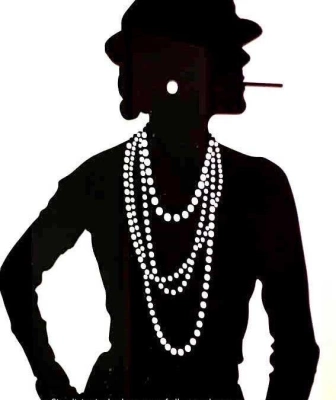
Coco Untold Stories, the early years...
She symbolizes French elegance. Gabrielle Chanel, born in Saumur in 1883, whose real name was Gabrielle Chasnel, was raised in an orphanage. At the age of 12, she was taken in with two of her sisters at Aubazine Abbey in Corrèze.
Her mother died in Brive-la-Gaillarde in 1895. When she was just 12, her father abandoned her a few months later, to the care of the nuns. He never returned. Gabrielle went to Aubazine to learn sewing. She stayed for 6 years. The abbey would remain a powerful source of inspiration for the codes of the House of Chanel...
Coco Chanel's taste for clean lines and her predilection for black, white and beige are perhaps linked to the sobriety of the abbey and its occupants...
Once she left Aubazine, she moved to Moulin. Gabrielle had to earn a living, so she sang in small shows in bars, famous for her rendition of
“Who has seen Coco on the Trocadero? Coco, a nickname that has stuck for posterity...
10 Aug 2023