








Are you sure you want to perform this action?
The two terms are often used as if they were interchangeable. However, when it comes to a Chanel bag, a Louis Vuitton trunk, or a designer piece of jewelry, understanding **the difference between vintage and secondhand** profoundly changes how one views the item—and often determines whether the purchase is a wise one.
In the world of luxury, this distinction goes beyond mere fashion terminology. It relates to the era of manufacture, cultural value, rarity, condition, and, of course, desirability. A secondhand item can be recent, flawless, and highly coveted. A vintage piece, on the other hand, belongs to a specific era, sometimes to a bygone aesthetic, and carries with it a piece of history that the contemporary market no longer reproduces.
## What is the difference between vintage and secondhand in practice?
Secondhand refers, in the most direct sense, to an item that has already had a first owner. The main criterion is prior use, not age. A Hermès bag purchased six months ago and then resold is therefore secondhand. It may be almost new, still in line with the brand’s current codes, featuring leather, hardware, and a style still in production.
Vintage, on the other hand, refers to an older piece from an identifiable period, whose value extends beyond mere resale. In fashion and leather goods, an item is generally considered vintage after about twenty years, sometimes longer depending on the brand and category. But age alone is not enough. An older piece without any distinctive character does not automatically attain vintage status in the noble sense of the term.
In other words, everything vintage is secondhand, but not everything secondhand is vintage. That is the essential distinction.
## Vintage Is Not Just About Age
What truly distinguishes vintage is the intersection of age and uniqueness. A vintage piece tells the story of an era through its silhouette, clasp, monogram, construction, or history of use. It bears witness to a specific moment in a brand’s style and craftsmanship.
Take, for example, a Dior bag from the 1990s or an older Goyard suitcase. Their appeal lies not only in the fact that they have stood the test of time. It also lies in the manufacturing details, proportions, materials, or finishes that are no longer exactly the same as today’s. Vintage appeals because it offers a less standardized version of luxury—sometimes more authentic, rarer, and even bolder.
This heritage aspect explains why certain vintage pieces are sought after as collectibles, while others remain simply secondhand items.
### Secondhand can be very contemporary
Conversely, secondhand covers a much broader spectrum. It includes everything from a Prada clutch from last season to a Gucci wallet that was still being sold in stores just a short while ago. The desired benefit isn’t always the same. Some buyers want to acquire an iconic piece at a more reasonable price. Others are looking for a discontinued model, a hard-to-find color, or a style no longer listed in the catalog.
In this context, secondhand shopping often responds to a desire for immediate gratification and practical use. Vintage, on the other hand, is more closely tied to personal taste, culture, and sometimes collecting.
## What Changes in Terms of Value
One of the most common misconceptions is the belief that vintage items are always more expensive than recent second-hand ones. It’s not that simple.
A piece’s value depends first and foremost on the brand, the model, its rarity, condition, materials, provenance, and market demand. A highly sought-after vintage Chanel bag can naturally command a high price. But a recent Hermès model, made of prized leather, in one of the brand’s signature styles, may be worth more than an older but less desirable piece.
The term “vintage” therefore guarantees neither an automatic premium nor intrinsic superiority. Rather, it signals a different positioning. Sometimes we pay for age, but more often for rarity and character.
This is where a more discerning reading of the market comes into play. A recent secondhand piece can offer an excellent balance between use, condition, and value. A vintage piece, on the other hand, may justify its price through an aesthetic or historical presence that no reissue can fully replicate. It all depends on what one is seeking to buy: functionality, a signature, an era, or an emotion.
## Condition: A Decisive Factor
In the luxury sector, condition is never assessed superficially. One must examine the structural integrity, the condition of the corners, the quality of the leather, the patina, the interior, the metal finishes, and any restorations and their appropriateness.
For a recent secondhand piece, expectations are often high. The buyer hopes for an item that has been worn very little, close to its original condition. For vintage pieces, the perspective is more nuanced. A light patina, consistent wear, or the softness of the leather that comes with age can all add to the charm, provided the overall condition remains sound, legible, and true to the spirit of the piece.
We must therefore avoid two extremes: idealizing every sign of age under the guise of authenticity, or, conversely, demanding that an antique item look brand-new. In vintage items, preservation matters just as much as history. In secondhand items, the item’s condition—how little it has been used—often remains a major selling point.
## What is the difference between vintage and secondhand in terms of authenticity?
On this point, no leniency is permitted. A piece is either authentic or it is not. But the risks do not always manifest in the same way.
Recent second-hand items circulate in a very broad, fast-moving, and abundant market, where counterfeits sometimes mimic current styles with a disturbing degree of precision. Vintage items, on the other hand, can present other challenges: poorly documented older collections, changes in markings, manufacturing details specific to a particular period, and past repairs that obscure the object’s true nature.
In other words, neither the term “vintage” nor “secondhand” protects the buyer. What protects them is expertise. For a clientele devoted to heritage houses, authenticity is not just another sales pitch. It is the absolute prerequisite for value, legacy, and trust. At Les Malletiers, every piece is presented as authentic and accompanied by a certificate written by Jérôme Lalande, Expert at the Paris Court of Appeal—a requirement that takes on its full meaning in a market where desirability also attracts ambiguities.
## A question of style, but also of intention
Choosing between vintage and secondhand often comes down to clarifying one’s own relationship with luxury.
If you’re looking for an everyday bag—a clean silhouette, simple functionality, and more predictable maintenance—recent secondhand pieces may be the most relevant option. You stay close to the brand’s contemporary references, with familiar proportions and features.
If you’re looking for a piece with character, a less common item, or a design from another era, vintage opens up a more unique realm. It appeals to those who want to buy not just a brand, but a history of taste. An old vanity case, a 1980s clutch, a cabin trunk, or a bag with a discontinued clasp don’t carry the same status as an item simply resold after use.
This is why vintage often appeals to those with a personal sense of style and to collectors, while secondhand goods in the broader sense also cater to more functional purchases. Of course, the two worlds overlap. A piece can be practical, precious, and steeped in memory all at once.
## How to Know What You’re Really Buying
The best approach is to look beyond the label. When a seller mentions “vintage,” ask yourself: What era does the piece date from? What makes it unique? Is its condition consistent with its age? Do its details align with the brand’s design codes from that era?
When it comes to secondhand items, other questions take precedence: how much has the item been worn, is it still in production, what original components come with it, and is its value justified by the current market?
Vocabulary matters, but precision matters more. A thriving second-hand luxury market relies on rigorous descriptions, honest photographs, serious expertise, and a genuine ability to situate the item within the brand’s history.
Ultimately, the distinction between vintage and second-hand isn’t meant to mechanically rank two categories. It helps define two ways of buying. One prioritizes informed access to an item that has already been worn. The other seeks, beyond mere use, the presence of an era, a craftsman’s touch, or a rarity sometimes impossible to find in new items. Making the right choice rarely begins with love at first sight alone. It begins with a discerning eye.
Related articles

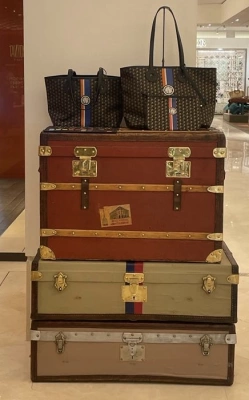
The history of luggage dates back to ancient times, when people used cloth bags or woven baskets to carry their belongings. However, these bags were often bulky and impractical to carry over long distances.
Over the centuries, luggage evolved to become more functional and adapted to travellers' needs. In the Middle Ages, nobles used wooden chests to carry their belongings when travelling. These chests were often heavy and required several people to carry them.
With the advent of rail and sea travel in the 19th century, luggage underwent a new evolution. Wooden trunks became popular, offering better protection for fragile objects. These trunks were often adorned with leather or canvas and were used by wealthy travellers.
In the 20th century, the arrival of commercial aviation led to a further transformation of luggage. Rigid metal or plastic suitcases became common, offering greater shock resistance and storage capacity. Wheels were also added to make transport easier.
Today, luggage is available in a wide variety of shapes, sizes and materials. Many models are available from Les Malletiers....
27 Jul 2023
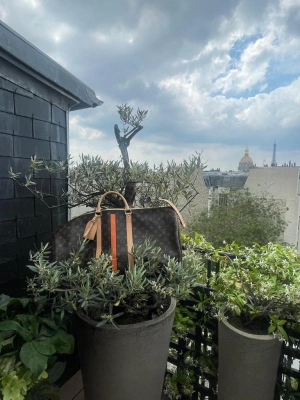
Louis Vuitton's Keepall travel bag, the 1930s... Cruises were fashionable, as were holidays in Deauville and Biarritz.
At that time, Louis Vuitton, renowned for its trunks, had to adapt to these new lifestyles. The result was the Keepall, a bag that "keeps everything". The Keepall is a flexible, zipped bag made from the famous monogrammed coated canvas. Its generous shape allows you to slip in a sports outfit and a few simple clothes for a weekend in the countryside.
An immediate success, the Keepall has never left the Louis Vuitton catalogue. It has been used in the trunk-maker's other collections, and given a new look by artists invited by Marc Jacobs, including Takashi Murakami and others.
Four sizes were chosen (45, 50, 55 and 60 cm), with the first three being the most popular because they could be carried in the cabin.
Seen over and over again on all the people for generations, the Keepall is now a timeless piece, which we keep, cherish and watch lovingly polish... Les Malletiers loves it too!
27 Jul 2023
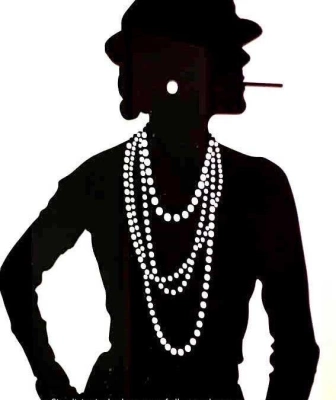
Coco Untold Stories, the early years...
She symbolizes French elegance. Gabrielle Chanel, born in Saumur in 1883, whose real name was Gabrielle Chasnel, was raised in an orphanage. At the age of 12, she was taken in with two of her sisters at Aubazine Abbey in Corrèze.
Her mother died in Brive-la-Gaillarde in 1895. When she was just 12, her father abandoned her a few months later, to the care of the nuns. He never returned. Gabrielle went to Aubazine to learn sewing. She stayed for 6 years. The abbey would remain a powerful source of inspiration for the codes of the House of Chanel...
Coco Chanel's taste for clean lines and her predilection for black, white and beige are perhaps linked to the sobriety of the abbey and its occupants...
Once she left Aubazine, she moved to Moulin. Gabrielle had to earn a living, so she sang in small shows in bars, famous for her rendition of
“Who has seen Coco on the Trocadero? Coco, a nickname that has stuck for posterity...
10 Aug 2023