








Are you sure you want to perform this action?
At Les Malletiers, there are bags you buy to carry, and others you treat as collector’s items. The most beautiful collector’s bags fall into the latter category. Their appeal transcends passing trends. They embody the craftsmanship of the atelier, an era, sometimes a special commission, and almost always a rarity that only grows over time.
In the world of secondhand luxury, not all iconic bags become collector’s items. This status depends neither on price alone, nor on the logo, nor even on the brand’s reputation. It rests on a more subtle set of criteria: the quality of craftsmanship, the strength of the design, enduring desirability, actual rarity, and, of course, authenticity. A collector’s item is not simply old. It is recognizable, consistent in its execution, and distinctive enough to continue to capture the interest of discerning enthusiasts.
## What Makes the Most Beautiful Collector’s Bags
The first criterion is creative intent. Some models immediately established a silhouette that has endured through the decades without becoming commonplace. Others have become collector’s items due to their limited distribution, a discontinued material, a custom color, or a workshop detail that is no longer found. The beauty of a collector’s bag often lies in this balance between the familiar and the exceptional.
One must also consider the construction. The finest pieces reveal a precision that withstands the test of time: clean lines, meticulously selected leather, balanced hardware, and perfect proportions. Even when weathered, a large collector’s bag retains its structure, aesthetic appeal, and dignity as an object. This is often where the difference lies between a piece that remains attractive and one that is truly significant.
Finally, there is the question of context. A model can take on a whole new dimension when it belongs to a particularly sought-after period of a house, when it was produced before certain manufacturing changes, or when it fits into a broader history of travel, elegance, or French and European leather goods.
## The great houses behind the most beautiful collector’s bags
### Hermès, the art of desire
At Hermès, a collector’s item often arises from the combination of perfect form and controlled rarity. The Kelly and the Birkin remain obvious benchmarks, but not all examples are created equal from a collector’s perspective. A less common size, a precious leather, a shade that has become hard to find, or a particularly crisp Sellier finish can transform a classic into a major piece.
Other models appeal to a more discerning eye. The vintage Constance, certain travel bags, or sizes now less common on the market embody a more understated elegance. At Hermès, detail matters immensely. The craftsman’s touch, the precision of the edges, the condition of the corners, and the consistency of the leather and trimmings determine the true level of desirability.
### Chanel, the icon when it retains its character
The 2.55, the Classic Flap, and certain vintage variations from the House of Chanel occupy a central place in any discussion of the most beautiful collector’s bags. But here again, “collector’s item” is not simply a model name. Enthusiasts seek specific eras, proportions, materials, and sometimes even a certain suppleness of the leather or a metal shade that is harder to find today.
The most compelling vintage pieces possess a personality that more standardized productions do not always replicate. A rare black jersey, beautifully preserved vintage lambskin, a particularly striking tweed, or a limited-edition runway collection can elevate a piece to a whole new level. At Chanel, the beauty of a collector’s item often lies in this tension between instant recognition and true uniqueness.
### Louis Vuitton: The History of Travel Becomes a Collection
Louis Vuitton occupies a unique place, as the house is not limited to handbags in the strict sense. Its heritage of travel opens the door to trunks, luggage, vanity cases, and small leather goods that have become collector’s items. At this house, a collector’s item might be a vintage Speedy in a sought-after finish, but also a monogrammed travel piece, structured and aged to perfection.
Collaborations, limited editions, and discontinued models have also fueled the collectors’ market. That said, not everything that is rare is necessarily beautiful or enduring. The strongest pieces are often those that blend innovation with the house’s historical vocabulary. When a Louis Vuitton object retains this heritage depth, it transcends the mass-produced effect and enters the realm of the collectible.
### Dior: the line, the symbol, the memory of an era
The Lady Dior has established itself as an instantly recognizable shape. Certain older versions, colorways, and finishes hold particular appeal for collectors today. But Dior also offers other avenues: the iconic saddle bags of the 2000s, runway pieces, or bags that carry the stylistic memory of a creative director and a very specific moment in fashion.
The case of Dior clearly shows that a collector’s item can also be generational. Certain models long regarded as signatures of their era return to the forefront as soon as their design regains aesthetic relevance. The appeal is then twofold: the pleasure of form and historical interpretation.
### Goyard, Moynat, Prada, Gucci: rarity cultivated differently
Certain houses appeal less through media exposure than through the discernment of connoisseurs. Goyard and Moynat, with their heritage in luggage and their artisanal vocabulary, offer pieces whose understated elegance contributes to their prestige. A bag, trunk, or travel kit from these houses may hold greater collectible value than more ostentatious items, precisely because it appeals to the informed eye.
Prada and Gucci, on the other hand, offer more dynamic collector’s items. Certain periods, certain leathers, and certain lines designed under influential artistic directors gain interest with hindsight. Here, everything depends on the right choice of model. The savvy collector doesn’t just follow the vintage revival trend. They seek a piece capable of standing the test of time through its own design.
## How to Recognize a True Collector’s Bag
The first temptation is to confuse rarity with lasting value. Yet an uncommon bag is not always a desirable collector’s item. It may be rare because it was unpopular, because it has aged poorly, or because it does not represent a significant moment in the brand’s history. Conversely, certain relatively well-known models remain highly sought-after when they appear in a specific, well-preserved version.
It is therefore necessary to consider several factors simultaneously: provenance, the consistency of materials, overall condition, the model’s historical significance, and its place within a brand’s legacy. The presence of a certificate of authenticity issued by a recognized expert obviously changes the game. In a market where counterfeits, reassemblies, and extensive restorations blur the lines, authenticity is not merely a bonus. It is the very foundation of value.
Condition also warrants a nuanced assessment. A collector’s item does not need to be in pristine condition to be significant. A noble, uniform, and authentic patina can enhance the charm of an antique bag. On the other hand, excessive restoration, non-compliant part replacements, or a sagging structure can compromise its integrity. It all depends on the model and intended use. A true collector does not evaluate a piece the same way a buyer who wants to wear it every week would.
## Buy with discernment, not haste
The high-end second-hand market has broadened access to bags that were once hard to find, but it has also led to a proliferation of fakes. The more coveted the item, the greater the vigilance required. The finest collector’s bags demand a careful, unhurried examination. You must be willing to compare, to ask questions, and to reject a beautiful photograph if the expertise, description, or consistency of the item do not measure up.
For a connoisseur already attuned to a brand’s heritage, the most worthwhile purchase is not always the one most eagerly anticipated. A piece that is less obvious but better preserved, rarer in its version, or more faithful to the brand’s original spirit can offer deeper satisfaction than a highly visible model that is, however, commonplace in its execution.
It is precisely within this logic of selection that specialized players like Les Malletiers find their legitimacy: not by amassing a catalog of items, but by offering pieces chosen for their authenticity, their state of preservation, and their genuine collectible value.
## The finest collector’s bags are chosen with memory
A great collector’s bag does not stand out solely for its prestige. It creates a lasting connection with the person who chooses it. In it, one sees craftsmanship, a silhouette, a brand, and sometimes an entire era. And perhaps that is the true luxury: acquiring less, but acquiring more wisely, with enough memory to recognize what truly deserves to stand the test of time.
Related articles

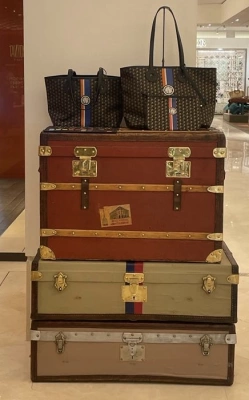
The history of luggage dates back to ancient times, when people used cloth bags or woven baskets to carry their belongings. However, these bags were often bulky and impractical to carry over long distances.
Over the centuries, luggage evolved to become more functional and adapted to travellers' needs. In the Middle Ages, nobles used wooden chests to carry their belongings when travelling. These chests were often heavy and required several people to carry them.
With the advent of rail and sea travel in the 19th century, luggage underwent a new evolution. Wooden trunks became popular, offering better protection for fragile objects. These trunks were often adorned with leather or canvas and were used by wealthy travellers.
In the 20th century, the arrival of commercial aviation led to a further transformation of luggage. Rigid metal or plastic suitcases became common, offering greater shock resistance and storage capacity. Wheels were also added to make transport easier.
Today, luggage is available in a wide variety of shapes, sizes and materials. Many models are available from Les Malletiers....
27 Jul 2023
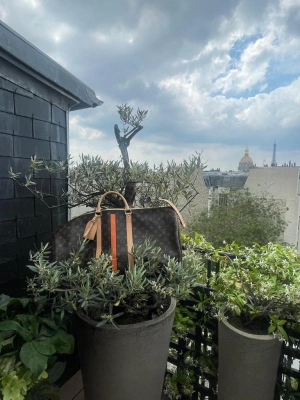
Louis Vuitton's Keepall travel bag, the 1930s... Cruises were fashionable, as were holidays in Deauville and Biarritz.
At that time, Louis Vuitton, renowned for its trunks, had to adapt to these new lifestyles. The result was the Keepall, a bag that "keeps everything". The Keepall is a flexible, zipped bag made from the famous monogrammed coated canvas. Its generous shape allows you to slip in a sports outfit and a few simple clothes for a weekend in the countryside.
An immediate success, the Keepall has never left the Louis Vuitton catalogue. It has been used in the trunk-maker's other collections, and given a new look by artists invited by Marc Jacobs, including Takashi Murakami and others.
Four sizes were chosen (45, 50, 55 and 60 cm), with the first three being the most popular because they could be carried in the cabin.
Seen over and over again on all the people for generations, the Keepall is now a timeless piece, which we keep, cherish and watch lovingly polish... Les Malletiers loves it too!
27 Jul 2023
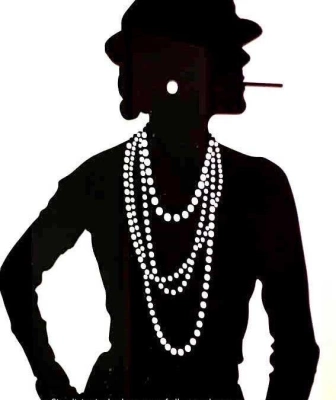
Coco Untold Stories, the early years...
She symbolizes French elegance. Gabrielle Chanel, born in Saumur in 1883, whose real name was Gabrielle Chasnel, was raised in an orphanage. At the age of 12, she was taken in with two of her sisters at Aubazine Abbey in Corrèze.
Her mother died in Brive-la-Gaillarde in 1895. When she was just 12, her father abandoned her a few months later, to the care of the nuns. He never returned. Gabrielle went to Aubazine to learn sewing. She stayed for 6 years. The abbey would remain a powerful source of inspiration for the codes of the House of Chanel...
Coco Chanel's taste for clean lines and her predilection for black, white and beige are perhaps linked to the sobriety of the abbey and its occupants...
Once she left Aubazine, she moved to Moulin. Gabrielle had to earn a living, so she sang in small shows in bars, famous for her rendition of
“Who has seen Coco on the Trocadero? Coco, a nickname that has stuck for posterity...
10 Aug 2023