








Are you sure you want to perform this action?
According to Les Malletiers, a vintage Hermès wallet, isn’t chosen simply as a leather accessory. Whether it’s the proportions of a Silk’In, the understated elegance of a Béarn, the structure of Box leather, or the suppleness of Epsom, every detail reflects a specific use, a certain style, and, often, a particular sense of taste. In the vintage market, this standard is compounded by another reality—a piece’s value depends as much on its desirability as on the certainty of its authenticity.
## Why the vintage Hermès wallet appeals to connoisseurs
At Hermès, the small maroquin wallet is never an afterthought. It embodies what makes the house’s reputation—precision of lines, quality of leatherwork, and a sense of functionality without compromising on elegance. In its vintage version, the wallet takes on an extra dimension. It carries an era, a craftsmanship that has sometimes become rarer, and that patina that new pieces do not yet possess.
It also appeals for a very practical reason. While a Hermès bag may represent a major purchase, the wallet allows one to enter the house’s world through an everyday object, without sacrificing the nobility of the gesture. It is a more discreet, often more intimate purchase, one that speaks more to personal refinement than to ostentation.
Finally, vintage adds what many seek today—uniqueness. Certain colors are no longer produced, certain sizes have evolved, and certain finishes are seen less frequently in recent collections. For a client attuned to the nuances of leather and the history of design, this is precisely where the appeal lies.
## Which Models to Choose
Choosing a Hermès wallet starts with the model. It’s not just about the silhouette, but about practical use. A large companion-sized wallet doesn’t meet the same needs as a more compact wallet designed to fit into a small shoulder bag or an evening clutch.
### The Béarn, for its clean lines
The Béarn is one of the most beloved classics. Its structured flap and famous H-shaped clasp give it an instantly recognizable look, without being overly flashy. It is often the model of choice for those who appreciate a very structured, almost architectural elegance.
When looking at vintage pieces, pay special attention to the corners, the condition of the flap, and the sharpness of the closure. A Béarn in good condition retains that sense of precision that is its charm. If it is too loose, it loses some of its distinction.
### The Silk’In, for a lighter touch
The Silk’In offers a different style. Externally, it remains understated, but the interior, lined with printed silk, introduces a freer, almost playful contrast. It is often an excellent choice for those who prefer restraint on the outside and a touch of whimsy on the inside.
On the vintage market, the appeal of the Silk’In depends heavily on the condition of the zipper closure, the freshness of the lining, and the cleanliness of the compartments. A beautiful silk interior, free of excessive wear or stains, immediately changes the perception of the piece.
### Compact Sizes, Often Underestimated
Smaller wallets—flap cardholders or compact multifunctional models—also deserve attention. They better suit contemporary habits, where people carry less cash and more cards. Their advantage is clear: they fit into bags of various sizes without sacrificing elegance.
Their limitation, however, lies in capacity. For a woman who wants to carry papers, coins, and receipts, a compact size can quickly feel restrictive. It all depends, therefore, on one’s personal relationship with the object—whether it’s an essential part of daily life or an accessory chosen for its formal elegance.
## Leathers and what they truly change
In Hermès leather goods, leather is never merely a medium. It determines the sheen, the feel, the durability, and even the way the piece ages.
Box remains one of the most admired leathers. Smooth, deep, and sometimes almost mirror-like when well-preserved, it gives the wallet a very classic look. But it shows wear more easily. For some collectors, these marks are part of the piece’s beauty. For others, they are a drawback.
Epsom, with its more textured grain, provides greater structure to the form and often withstands visible wear better. It is well-suited for a purchase intended for regular use. Courchevel calfskin, sought after on certain vintage pieces, also features this graphic texture that appeals to lovers of clean lines.
Goatskin, when it appears, is prized for its subtle sheen and excellent durability. It often has a very refined presence. Again, this is not about designating one leather as superior in absolute terms. It all depends on the character of the piece and the expectations of its future owner.
## How to Assess the Condition of a Vintage Hermès Wallet
Condition is a more nuanced subject than it appears. A vintage piece is not meant to look new. What we look for is consistency between its age, its past use, and its state of preservation.
Start with the corners and edges. These are the areas that reveal excessive wear the fastest. Next, examine the interior—the gussets, the card slots, the cleanliness of the linings, and the evenness of the stitching. A wallet can have an attractive exterior and a very worn interior, which significantly changes its appeal.
The closure is also important. On a zipper, the slide must remain smooth. On a flap, the structure must not be sagging. Finally, you must assess the color accurately. Some shades darken or develop a patina beautifully, while others do not withstand friction as well. A slightly weathered Box Black can remain superb. A light shade with irregular wear will require more discernment.
## Authenticity: The Decisive Factor
For a vintage Hermès women’s wallet, authenticity is not a mere formality. It underpins the very value of the item. On the secondary market, caution is paramount, especially since small leather goods are often mistakenly considered easier to evaluate.
The markings, date stamps, quality of the saddle stitching, consistency of the leather, construction of the compartments, typography of the hot-stamped markings, and the execution of the finishes must all be considered together. A single isolated clue is never enough. It is precisely this holistic view that distinguishes a serious appraisal from a mere visual impression.
This is where a specialized firm makes the difference. At [Les Malletiers](https://www.lesmalletiers.com/fr/), every piece is presented as authentic and comes with a certificate of authenticity written by Jérôme Lalande, an expert appointed by the Paris Court of Appeal. For a discerning clientele, this guarantee is not merely a comforting extra—it is essential for a worry-free purchase.
## Value, Price, and Desirability
The price of a vintage Hermès wallet does not depend solely on the Hermès name. It varies according to the model, the leather, the color, the condition, the presence of the box or original accessories, and, more subtly, the balance between rarity and market demand.
A classic model in a subtle color can retain excellent resale value because it remains easy to carry and sought-after over time. Conversely, a more unusual shade or a discontinued size may appeal to a smaller circle but generate strong interest among true connoisseurs.
Two common misconceptions should therefore be avoided. The first is the belief that an older piece is necessarily more valuable. The second is the belief that a wallet should be viewed as an investment. Some models hold their value remarkably well—sometimes better than one might imagine—but the wisest purchase remains one made primarily for quality, style, and longevity.
## Buying to Use or to Collect
This distinction is worth making. If the wallet is intended for daily use, it is best to opt for a well-preserved piece, made of durable leather, with a clean interior and a size suited to your actual habits. A piece that is too delicate may end up stored away, and thus poorly chosen.
If the intention is more collector-oriented, other criteria come into play—an antique color, a less common material, or a design that has become rare. In this case, a few signs of age may be perfectly acceptable if the piece retains its original integrity and desirability.
A good purchase often lies in this balance between emotion and discipline. One can succumb to a superb shade or particularly fine leather, provided the item remains consistent with its future use.
Choosing a vintage Hermès wallet ultimately means recognizing that a small format can carry a great deal of history, craftsmanship, and style. The most fitting pieces aren’t always the most eye-catching. They are often the ones we keep for a long time, that we open every day with the same quiet pleasure, and whose presence becomes, over time, a personal signature.
Related articles

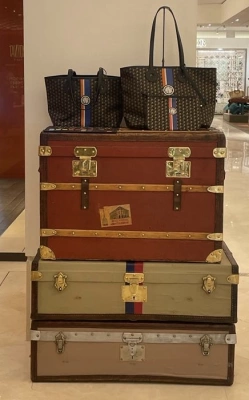
The history of luggage dates back to ancient times, when people used cloth bags or woven baskets to carry their belongings. However, these bags were often bulky and impractical to carry over long distances.
Over the centuries, luggage evolved to become more functional and adapted to travellers' needs. In the Middle Ages, nobles used wooden chests to carry their belongings when travelling. These chests were often heavy and required several people to carry them.
With the advent of rail and sea travel in the 19th century, luggage underwent a new evolution. Wooden trunks became popular, offering better protection for fragile objects. These trunks were often adorned with leather or canvas and were used by wealthy travellers.
In the 20th century, the arrival of commercial aviation led to a further transformation of luggage. Rigid metal or plastic suitcases became common, offering greater shock resistance and storage capacity. Wheels were also added to make transport easier.
Today, luggage is available in a wide variety of shapes, sizes and materials. Many models are available from Les Malletiers....
27 Jul 2023
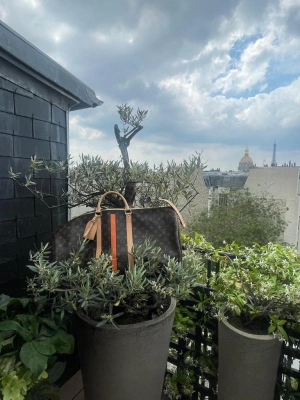
Louis Vuitton's Keepall travel bag, the 1930s... Cruises were fashionable, as were holidays in Deauville and Biarritz.
At that time, Louis Vuitton, renowned for its trunks, had to adapt to these new lifestyles. The result was the Keepall, a bag that "keeps everything". The Keepall is a flexible, zipped bag made from the famous monogrammed coated canvas. Its generous shape allows you to slip in a sports outfit and a few simple clothes for a weekend in the countryside.
An immediate success, the Keepall has never left the Louis Vuitton catalogue. It has been used in the trunk-maker's other collections, and given a new look by artists invited by Marc Jacobs, including Takashi Murakami and others.
Four sizes were chosen (45, 50, 55 and 60 cm), with the first three being the most popular because they could be carried in the cabin.
Seen over and over again on all the people for generations, the Keepall is now a timeless piece, which we keep, cherish and watch lovingly polish... Les Malletiers loves it too!
27 Jul 2023
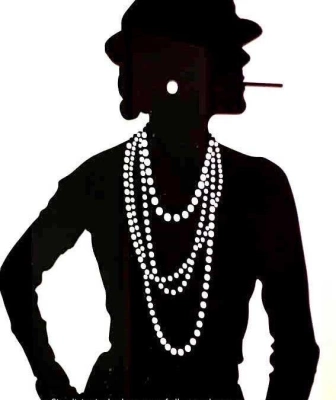
Coco Untold Stories, the early years...
She symbolizes French elegance. Gabrielle Chanel, born in Saumur in 1883, whose real name was Gabrielle Chasnel, was raised in an orphanage. At the age of 12, she was taken in with two of her sisters at Aubazine Abbey in Corrèze.
Her mother died in Brive-la-Gaillarde in 1895. When she was just 12, her father abandoned her a few months later, to the care of the nuns. He never returned. Gabrielle went to Aubazine to learn sewing. She stayed for 6 years. The abbey would remain a powerful source of inspiration for the codes of the House of Chanel...
Coco Chanel's taste for clean lines and her predilection for black, white and beige are perhaps linked to the sobriety of the abbey and its occupants...
Once she left Aubazine, she moved to Moulin. Gabrielle had to earn a living, so she sang in small shows in bars, famous for her rendition of
“Who has seen Coco on the Trocadero? Coco, a nickname that has stuck for posterity...
10 Aug 2023