








Are you sure you want to perform this action?
According to Les Malletiers, the luxury secondhand leather goods website: A Hermès bag made from leather that’s no longer available, a vintage Louis Vuitton trunk, a Chanel piece of jewelry produced for only a short time, a Dior model that’s been out of the collections for years—when you’re wondering where to find a rare luxury item, it’s never just a matter of knowing the right place. It’s a matter of discernment, method, provenance, and, above all, trust.
The high-end secondhand market has gained visibility, but true rarity remains elusive. It circulates sparingly, sells quickly, and demands a trained eye. A rare piece isn’t simply an old or expensive item. It’s an object with limited availability on the market, whose desirability stems from its history, craftsmanship, limited production run, unique material, or a discontinued line.
## Where to Find a Rare Luxury Item Without Making a Mistake
The most accurate answer is often less spectacular than one might imagine. The most beautiful pieces are rarely found where everyone is looking at the same time. Generalist platforms may give the illusion of immense choice, but they mix the exceptional with the ordinary, and sometimes the authentic with the dubious. For a discerning connoisseur, this volume is not an advantage in itself. It creates noise.
The most interesting channels are generally those based on genuine curation. A specialized second-hand dealer, a merchant known for their rigor, a network of collectors, or a bespoke search conducted by a knowledgeable contact—these are where rarity becomes accessible under the right conditions.
The decisive factor remains authenticity. In the vintage and collector’s luxury segment, it cannot be treated as a mere formality. The more sought-after the piece, the more it attracts reproductions, forgeries, excessive restorations, or vague descriptions. A beautiful find that has not been thoroughly appraised immediately loses its appeal—and sometimes its value.
### Houses Specializing in Secondhand Luxury
This is often the most reassuring channel for a discerning buyer. Provided, of course, that one can distinguish a simple resale shop from a true specialist. A reputable house does not merely list references. It selects. It documents. It knows the manufacturing variations, periods, signatures, materials, clasps, markings, and details that make the difference between a desirable piece and a questionable one.
This type of intermediary offers a valuable advantage: the filter. You don’t waste your time sifting through weak listings, poorly described conditions, or uncertain provenance. You enter a world already curated according to criteria of consistency, quality, and authenticity.
For an international or Parisian clientele seeking collectibles, Les Malletiers embodies precisely this approach based on curation and expertise, with pieces authenticated and presented as objects of heritage as much as of desire.
### Private networks and on-demand research
The rarest piece isn’t always online. Many items circulate confidentially, through selling clients, estates, collectors who are parting with part of their wardrobe, or professionals who work with specific buyer databases. This is particularly true for certain iconic bags in rare colors, antique trunks, historic luggage, or limited-edition jewelry from luxury houses.
In this context, on-demand searches really come into their own. If you know exactly what you’re looking for—a specific model, an era, a type of leather, a size, or a signed piece of jewelry—it’s often more effective to entrust this search to a specialist than to wait for a random find. This allows you to refine your criteria and avoid settling for mediocre options.
### Auctions: Proceed with Caution
Auctions can yield some wonderful discoveries, particularly in heritage categories such as trunks, luggage, certain pieces of jewelry, or rare accessories. However, they require real discipline. An attractive estimate doesn’t tell the whole story. The condition, restoration, absence of original parts, or an overly brief description can radically alter the value of the purchase.
You must also factor in fees, lead times, and the fact that you’re sometimes buying with less guidance than you’d get from a dedicated specialist. For a seasoned collector, this can be fertile ground. For a buyer new to rare items, the risk of error remains real.
## What Makes a Piece Truly Rare
Rarity is often misunderstood. An item is not rare simply because it is expensive, nor even because it is no longer manufactured. Some discontinued items remain easy to find. Others, however, become nearly impossible to find due to very specific details.
An item may be rare because it belongs to a short production run, because it was made from a material that is difficult to source, because it features a discontinued style, or because it encapsulates a defining moment in a brand’s history. This is the case with certain vintage Chanel bags featuring unique proportions, Louis Vuitton luggage from historic lines, or Hermès models whose combination of size, leather, and color has become exceptionally rare on the market.
Desirability also plays a role. A piece that was objectively produced in limited quantities is not always the most sought-after. Conversely, certain iconic models, though known to all, become rare when in excellent condition, with their original features and a sufficiently clear provenance.
### Condition matters as much as the model
In the vintage luxury market, true rarity often lies in the combination of model, authenticity, and condition. Finding a vintage bag is one thing. Finding that same bag with an intact structure, well-maintained leather, preserved corners, a consistent patina, and original elements is another.
You must therefore accept a simple reality: the older and more sought-after the piece, the more unlikely it is to be in perfect, pristine condition. It all depends on your intention. A collector may prioritize original integrity, even with slight signs of age. An enthusiast who wants to wear the piece daily will sometimes seek a different balance. The key is knowing what you’re willing to accept—and why.
## Criteria to Consider Before Buying
When a rare piece comes along, emotion can cloud judgment. That’s precisely when you need to slow down. A successful acquisition isn’t based solely on a gut feeling, but on a careful analysis of several clues.
First, authenticity must be established through a thorough appraisal. Next comes the overall consistency of the item: quality of materials, finishes, presumed date, markings, serial number or signature (if present), and alignment with the brand’s and era’s standards.
Provenance is also important. A piece accompanied by a certificate of authenticity, an old invoice, its original dust bag, or any item tracing its history inspires greater confidence. This does not replace expert appraisal, but it enhances the object’s transparency.
Finally, one must look beyond the fantasy of a bargain. A rare piece at an abnormally low price almost always raises a red flag. In the world of luxury collectibles, spectacular discounts and perfect condition rarely go hand in hand.
## Where to find rare luxury items depending on what you’re looking for
Not all rare items are found in the same places. For a highly sought-after collector’s bag, luxury leather goods specialists are often the best people to contact. For an antique trunk or a designer travel bag, dealers familiar with the history of the houses and estate sales can offer better opportunities. For a house-branded piece of jewelry or discontinued small leather goods, networking and targeted market monitoring often make the difference.
In other words, the right question isn’t just where to find a rare luxury item, but who to look to depending on the exact nature of the piece. A seller who is excellent on Chanel does not necessarily have the same depth of knowledge regarding Moynat or Goyard. A connoisseur of contemporary bags is not always an expert on antique trunks. Specialization remains a major advantage.
This requirement also demands a certain amount of patience. Purchasing a rare piece does not always lend itself to immediacy. Sometimes one must wait several weeks, several months, or even longer. This patience is not an obstacle. It is part of the very logic of collecting. It is better to wait for the right piece than to settle for an incomplete or questionable version.
The finest acquisition is not necessarily the most eye-catching. It is the one that stands the test of time, withstands expert scrutiny, and delivers the undiminished pleasure of ownership. Searching for a rare piece ultimately means learning to recognize what is truly worth waiting for.
Related articles

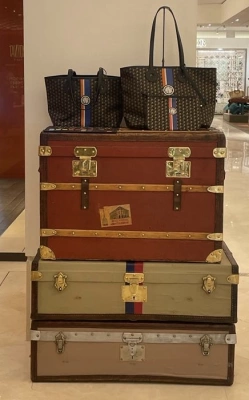
The history of luggage dates back to ancient times, when people used cloth bags or woven baskets to carry their belongings. However, these bags were often bulky and impractical to carry over long distances.
Over the centuries, luggage evolved to become more functional and adapted to travellers' needs. In the Middle Ages, nobles used wooden chests to carry their belongings when travelling. These chests were often heavy and required several people to carry them.
With the advent of rail and sea travel in the 19th century, luggage underwent a new evolution. Wooden trunks became popular, offering better protection for fragile objects. These trunks were often adorned with leather or canvas and were used by wealthy travellers.
In the 20th century, the arrival of commercial aviation led to a further transformation of luggage. Rigid metal or plastic suitcases became common, offering greater shock resistance and storage capacity. Wheels were also added to make transport easier.
Today, luggage is available in a wide variety of shapes, sizes and materials. Many models are available from Les Malletiers....
27 Jul 2023
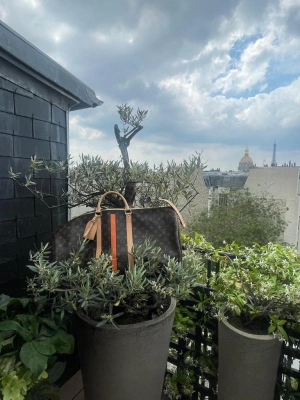
Louis Vuitton's Keepall travel bag, the 1930s... Cruises were fashionable, as were holidays in Deauville and Biarritz.
At that time, Louis Vuitton, renowned for its trunks, had to adapt to these new lifestyles. The result was the Keepall, a bag that "keeps everything". The Keepall is a flexible, zipped bag made from the famous monogrammed coated canvas. Its generous shape allows you to slip in a sports outfit and a few simple clothes for a weekend in the countryside.
An immediate success, the Keepall has never left the Louis Vuitton catalogue. It has been used in the trunk-maker's other collections, and given a new look by artists invited by Marc Jacobs, including Takashi Murakami and others.
Four sizes were chosen (45, 50, 55 and 60 cm), with the first three being the most popular because they could be carried in the cabin.
Seen over and over again on all the people for generations, the Keepall is now a timeless piece, which we keep, cherish and watch lovingly polish... Les Malletiers loves it too!
27 Jul 2023
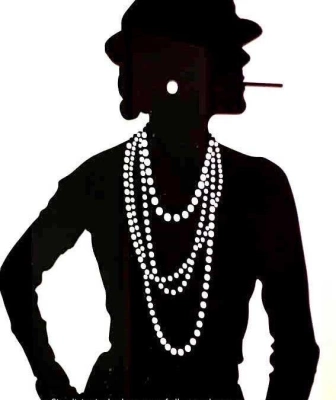
Coco Untold Stories, the early years...
She symbolizes French elegance. Gabrielle Chanel, born in Saumur in 1883, whose real name was Gabrielle Chasnel, was raised in an orphanage. At the age of 12, she was taken in with two of her sisters at Aubazine Abbey in Corrèze.
Her mother died in Brive-la-Gaillarde in 1895. When she was just 12, her father abandoned her a few months later, to the care of the nuns. He never returned. Gabrielle went to Aubazine to learn sewing. She stayed for 6 years. The abbey would remain a powerful source of inspiration for the codes of the House of Chanel...
Coco Chanel's taste for clean lines and her predilection for black, white and beige are perhaps linked to the sobriety of the abbey and its occupants...
Once she left Aubazine, she moved to Moulin. Gabrielle had to earn a living, so she sang in small shows in bars, famous for her rendition of
“Who has seen Coco on the Trocadero? Coco, a nickname that has stuck for posterity...
10 Aug 2023