








Are you sure you want to perform this action?
Les Malletiers advise you to be vigilant. All it takes is a few misinterpreted details—a seam that’s too uniform, replaced hardware, or an imprecise date—to turn a prestigious purchase into a costly mistake. In the secondhand market, the real question is therefore not just which bag to choose, but where to buy an authenticated pre-owned luxury bag without compromising on value, enjoyment, or peace of mind.
A beautiful vintage or contemporary bag isn’t purchased like an everyday accessory. It is part of a story of heritage, craftsmanship, and preservation. Whether it’s a vintage Chanel, a weathered Kelly, an antique Louis Vuitton Speedy, or a more exclusive model by Moynat or Goyard, the quality of a purchase depends as much on the item itself as on the context in which it is presented.
## Where to buy an authenticated pre-owned luxury bag with confidence
The most reliable answer can be summed up in a few words: from a specialist whose credibility is built on expertise, curation, and traceability. Not all secondhand retailers are created equal. A large marketplace offers choice, but rarely the same level of documentation as a specialized resale house. A shop that’s very active on social media may inspire desire, without necessarily offering the guarantees that truly protect the buyer.
The right place is one that stakes its reputation on authenticity. This requires in-depth knowledge of the brands, production eras, variations in branding, materials, linings, clasps, series, and possible restorations. In the pre-owned luxury market, authority isn’t claimed—it’s demonstrated.
A reputable seller must be able to explain why a bag is authentic, not just assert it. This distinction is essential. A certificate, a written appraisal, a precise description of the condition, detailed photographs, and a clear policy regarding the item’s provenance already provide a more solid foundation than a simple “authenticated” note slipped into a product listing.
### The right approach: prioritize expertise over price
The market is often attractive due to the price difference compared to new items. However, when it comes to luxury items, an abnormally low price should raise red flags. A Hermès, Chanel, or Dior bag offered well below its market value isn’t necessarily a bargain. It could be a sophisticated counterfeit, a heavily altered piece, or an item whose actual condition has been downplayed.
Conversely, a high price is not an automatic guarantee. Some platforms capitalize on a premium image without providing the level of verification one would reasonably expect. The right indicator is therefore not the price alone, but the balance between price, rarity, condition, documentation, and the quality of the expertise.
## The criteria that distinguish a truly reliable source
A credible resale house presents each bag as a unique item. It specifies the reference number when it can be established, the material, the dimensions, the exterior and interior condition, and the presence of original elements such as the box, dust bag, invoice, or accessories. It also notes any restorations, color touch-ups, or replacements of metal parts where applicable.
This transparency is crucial, as authenticity alone is not always sufficient to determine value. An authentic bag that has been overly restored, is misshapen, or is incomplete can lose a significant portion of its appeal, especially for a collector-buyer. One must therefore evaluate the item based on two criteria: is it genuine, and is it desirable in its current condition?
The best dealers also know how to apply the concept of curation. In other words, they do not seek to sell everything. They make selections. This curation makes sense in the world of heritage luxury, where rarity, integrity, and condition matter just as much as the name inscribed on the clasp.
### What a certificate should truly provide
The term is often used lightly. A serious certificate of authenticity is not a decorative document. It must bind the issuer. Its value increases when it is issued by a recognized expert capable of legally and professionally standing by their analysis.
For a savvy buyer, this makes all the difference. It is no longer simply a commercial opinion, but an expert assessment backed by identifiable expertise. In a market saturated with increasingly convincing imitations, this distinction safeguards the purchase, particularly for high-value pieces or those intended for long-term preservation.
## Marketplaces, consignment shops, specialty stores: what really matters
Marketplaces appeal because of their abundance. You can find almost anything there, sometimes very quickly. But this abundance has a downside: the quality of vetting varies considerably. Some implement internal checks, while others leave much of the responsibility to the seller. For an iconic piece that is widely copied, this remains insufficient for many discerning buyers.
Physical consignment shops can offer a more direct connection to the item. You see the bag, you feel the leather, you examine the condition of the structure. This is invaluable. However, quality depends entirely on the shop’s level of expertise. A beautiful setting does not replace rigorous authentication.
Specialty shops, especially those focusing on heritage brands and a curated selection, often offer the best balance. They sell fewer items but know them better. They contextualize the piece, situate it within its manufacturing history, and take greater responsibility for what they offer.
It is with this approach that certain houses, such as Les Malletiers, place a central emphasis on expertise and provenance, accompanying each piece with a certificate of authenticity drafted by Jérôme Lalande, an expert appointed by the Paris Court of Appeal. For the international buyer as well as the seasoned collector, this level of authority is no small matter. It is the foundation of trust.
## Where to buy an authenticated pre-owned luxury bag based on your profile
It all depends on your purchasing intent. If you’re looking for a bag to carry every day, with a beautiful patina and a budget in check, you may be willing to accept some signs of wear provided they are clearly described. In this case, the clarity of the product listing and honesty about the condition matter almost as much as the authenticity itself.
If you’re buying an iconic piece for a collection, your criteria become stricter. You’ll want consistent dating, careful preservation, original finishes, and, ideally, all accessories included. The seller must then provide expert guidance, not just a sales pitch.
Finally, if you’re targeting a brand prone to counterfeiting—Hermès, Chanel, Louis Vuitton, Dior—you must exercise the utmost caution. The more in-demand the model, the more sophisticated the counterfeits circulating. The best approach is to narrow down your options and buy from a seller whose expertise is evident, well-documented, and consistent over time.
### Warning Signs Not to Be Ignored
Certain phrases should immediately make you pause before making a decision. A seller who refuses to show the interior, who doesn’t photograph areas of wear, who remains vague about the item’s provenance, or who uses vague expressions like “appears authentic” or “authenticated according to our criteria” does not offer the level of assurance expected in this market.
You should also be wary of descriptions that are too brief for expensive items. In the secondhand luxury market, a lack of detail is never neutral. It often signifies a lack of knowledge or a desire to avoid uncomfortable questions.
## Making the right purchase is also a matter of taste
Buying an authenticated pre-owned luxury bag isn’t just about avoiding a counterfeit. It’s about choosing an object that has stood the test of time with dignity. A beautiful vintage piece may bear slight signs of wear, but retains its silhouette, its material, and its presence. It still tells the story of the hand that crafted it and the house that conceived it.
This aspect matters particularly to lovers of vintage and heritage. A secondhand bag from a major fashion house isn’t a “cheaper” version of a new one. It’s often something else entirely. A leather no longer available today, a proportion that’s fallen out of favor, a more subtle artisanal finish, or simply the elegance of objects that have lived through time without losing their poise.
A good purchase, therefore, meets three criteria: authenticity, condition, and emotion. If one is missing, the item loses its appeal sooner. If all three are present, the piece naturally finds its place in a wardrobe or collection.
Take the time to choose the right source before choosing the bag. In this world, the quality of the eye cast upon the object is often as valuable as the object itself.
Related articles

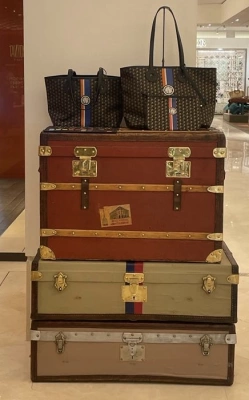
The history of luggage dates back to ancient times, when people used cloth bags or woven baskets to carry their belongings. However, these bags were often bulky and impractical to carry over long distances.
Over the centuries, luggage evolved to become more functional and adapted to travellers' needs. In the Middle Ages, nobles used wooden chests to carry their belongings when travelling. These chests were often heavy and required several people to carry them.
With the advent of rail and sea travel in the 19th century, luggage underwent a new evolution. Wooden trunks became popular, offering better protection for fragile objects. These trunks were often adorned with leather or canvas and were used by wealthy travellers.
In the 20th century, the arrival of commercial aviation led to a further transformation of luggage. Rigid metal or plastic suitcases became common, offering greater shock resistance and storage capacity. Wheels were also added to make transport easier.
Today, luggage is available in a wide variety of shapes, sizes and materials. Many models are available from Les Malletiers....
27 Jul 2023
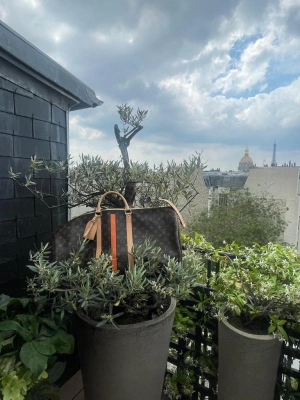
Louis Vuitton's Keepall travel bag, the 1930s... Cruises were fashionable, as were holidays in Deauville and Biarritz.
At that time, Louis Vuitton, renowned for its trunks, had to adapt to these new lifestyles. The result was the Keepall, a bag that "keeps everything". The Keepall is a flexible, zipped bag made from the famous monogrammed coated canvas. Its generous shape allows you to slip in a sports outfit and a few simple clothes for a weekend in the countryside.
An immediate success, the Keepall has never left the Louis Vuitton catalogue. It has been used in the trunk-maker's other collections, and given a new look by artists invited by Marc Jacobs, including Takashi Murakami and others.
Four sizes were chosen (45, 50, 55 and 60 cm), with the first three being the most popular because they could be carried in the cabin.
Seen over and over again on all the people for generations, the Keepall is now a timeless piece, which we keep, cherish and watch lovingly polish... Les Malletiers loves it too!
27 Jul 2023
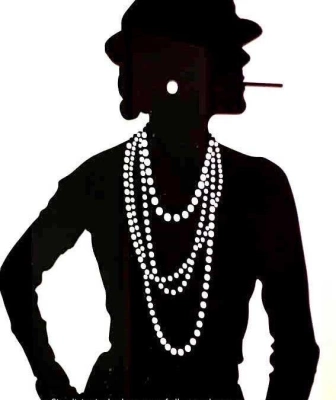
Coco Untold Stories, the early years...
She symbolizes French elegance. Gabrielle Chanel, born in Saumur in 1883, whose real name was Gabrielle Chasnel, was raised in an orphanage. At the age of 12, she was taken in with two of her sisters at Aubazine Abbey in Corrèze.
Her mother died in Brive-la-Gaillarde in 1895. When she was just 12, her father abandoned her a few months later, to the care of the nuns. He never returned. Gabrielle went to Aubazine to learn sewing. She stayed for 6 years. The abbey would remain a powerful source of inspiration for the codes of the House of Chanel...
Coco Chanel's taste for clean lines and her predilection for black, white and beige are perhaps linked to the sobriety of the abbey and its occupants...
Once she left Aubazine, she moved to Moulin. Gabrielle had to earn a living, so she sang in small shows in bars, famous for her rendition of
“Who has seen Coco on the Trocadero? Coco, a nickname that has stuck for posterity...
10 Aug 2023