








Are you sure you want to perform this action?
According to Les Malletiers, some bags aren’t simply sought out like a seasonal accessory. They must be tracked down, compared, and scrutinized. When wondering where to find a collector’s bag, the real question is often more demanding: where to find a piece that is just right—authentic, desirable, and still capable of standing the test of time without losing its appeal.
The secondhand luxury market has made access to rare models more visible, but not necessarily more reliable. A limited-edition Chanel, a vintage Kelly, an early-decade Monogram Alma, a Lady Dior in a version no longer available today, or a discontinued Goyard model are not merely about image value. They carry a history of craftsmanship, an era, and sometimes a production detail or finish that makes all the difference. This is precisely where buying a collector’s bag becomes an exercise in discernment.
## Where to find a collector’s bag today
In theory, you can find a collector’s bag just about anywhere: on major general-interest platforms, at auctions, from specialized resellers, through private networks, or at certain luxury antique dealers. In practice, these channels offer neither the same level of rigor nor the same understanding of the object.
Very open platforms appeal through their abundance. One sometimes comes across beautiful finds there, but also a lot of noise: vague descriptions, insufficient photographs, approximate dates, poorly documented restorations, and above all, guarantees of authenticity that vary in value. For a collector, an overwhelming supply is not an advantage if it obscures essential criteria.
Auctions can reveal remarkable pieces, particularly in the more heritage-focused segments. However, they require a discerning reading of the catalog, a solid grasp of estimates, and the ability to assess the actual condition beyond a sometimes brief description. The hammer price is never the final price, and the excitement of the auction can cause one to overlook very concrete details: structural wear, replacement parts, or imperfect consistency between the model and its period.
Private networks and recommendations among collectors remain a valuable channel, but one reserved for those who already have access to the right circle. It is a world where exquisite pieces circulate, but where trust often rests on established relationships, not always on comprehensive documentation.
The most reliable path remains for those seeking to buy with peace of mind: the luxury resale specialist with a strong culture of authentication. It is often there that one finds not only the bag, but also the context that allows for an informed purchase.
## The right place isn’t just one that has stock
A collector’s bag isn’t just a coveted model. Its desirability depends on several factors: the brand, of course, but also the year, the leather or canvas, the color, the metal hardware, the size, the presence of original elements, the condition, and sometimes even the stylistic consistency of a particular era.
A truly specialized dealer doesn’t simply present an inventory. They curate a selection. This distinction is crucial. A house like Hermès doesn’t follow the same logic of rarity as Chanel. Louis Vuitton requires a specific understanding of trunks, vintage collections, collaborations, or discontinued models. At Dior, certain editions or cannage patterns will carry more significance than a visually similar model that was produced in much greater numbers. The collector isn’t just looking for a prestigious name. They’re looking for the right version.
That’s why the right expert must be able to explain why a piece matters. Not just how much it costs.
### What a specialist should be able to tell you
Before buying, you need clear answers regarding authenticity, condition, provenance (when known), any restorations, and the model’s place in the house’s history. If you receive vague answers, or if every bag is described as an exceptional piece without nuance, it’s best to walk away.
A serious expert will also be able to tell you when a piece is beautiful without being a true collector’s item, or rare without being particularly worth the price. This ability to provide perspective is often the best sign of credibility.
## Where to find a collector’s bag without taking unnecessary risks
The main risk isn’t just blatant counterfeiting. There are also more subtle pitfalls: an authentic bag that has been restored to the point of losing its collectible value, a model with replaced components, a piece with an imprecise date, or a price inflated by a passing trend rather than actual rarity.
In this context, the certificate of authenticity carries considerable weight, but here again, it all depends on who issued it. A simple generic statement does not carry the same weight as an authentication issued by a recognized authority. In this regard, the market has become more professional, but it remains uneven. A savvy buyer should not merely request a certificate. They must also consider the legitimacy of the issuer.
Condition deserves the same scrutiny. A collector’s item doesn’t need to be perfect to be desirable. On the contrary, certain patinas are consistent with the spirit of an antique piece. However, one must distinguish between a noble patina and structural wear. A darkened handle on an antique monogram canvas bag does not have the same impact as pronounced sagging, weakened corners, or a visibly repaired lining.
## The best sources depending on the type of bag you’re looking for
Not all collector’s bags are found in the same place. A recent iconic model, produced in limited quantities a few seasons ago, may reappear at certain luxury retailers well-connected to the contemporary market. An older, more understated, and heritage-style piece will often require a more specialized search.
For the great classics from Hermès, Chanel, or Louis Vuitton, the most credible specialists are those who understand the production variations and preservation criteria specific to each house. For bags that are less visible but highly sought after by connoisseurs—Moynat, older Prada lines, certain Gucci Tom Ford designs, or now-unobtainable Dior styles—the quality of curation matters even more, as the market is less standardized.
Sometimes, the best way to find a collector’s bag is not to wait for it to appear in a store window. The most desirable pieces sometimes circulate even before they’re officially released, or are sourced on demand for a specific client. When a professional truly knows their market, they can guide the search methodically: identifying the right references, ruling out false leads, and waiting patiently for the right opportunity. It’s a slower approach, but often a much more accurate one.
## The price of a collector’s bag is never a standalone factor
It’s often believed that a collector’s item can be recognized by its high price. This is a common misconception. Some pieces are overpriced because they’ve benefited from sudden visibility. Others remain relatively affordable because they appeal more to connoisseurs than to the general public. Between market demand and collectible value, the gap can be significant.
A fair price depends on the model’s rarity, demand, condition, the presence of original accessories, and the item’s future resale potential. It also depends on the brand. A vintage Chanel bag in excellent condition may follow a very different logic than a discontinued Goyard bag or an older, more limited-circulation Dior model.
This is where an editorial eye makes the difference. It’s not just a matter of whether the price is high or low, but whether it is justified by the object’s intrinsic quality.
## What to Look for Before Buying
Even when dealing with a reputable seller, you must examine a collector’s bag carefully. The photographs should allow you to inspect the corners, handles, seams, markings, lining, hardware, and overall appearance. A collector’s bag has a certain presence. If it looks worn, inconsistent, or overly restored, that feeling is worth heeding.
You should also ask yourself what kind of collector you are. Some seek an item to wear regularly, others a heritage piece to preserve, and still others a purchase that combines enjoyment with the potential to hold its value. These intentions do not involve the same trade-offs. A very rare but fragile collector’s item is not necessarily the right choice for frequent use. Conversely, a piece that is slightly less rare but superbly preserved may prove more satisfying in the long run.
For those who wish to be guided in this search, a specialist like Les Malletiers can offer a particularly reassuring framework, thanks to a rigorous selection process and authentication accompanied by a certificate issued by Jérôme Lalande, Expert at the Paris Court of Appeal. In a market where trust determines the quality of the purchase, this rigor is no small matter.
Finding a collector’s bag, ultimately, is less a matter of luck than of discernment. Beautiful pieces still exist, but they require more than just a quick click: time, criteria, and uncompromising standards. This is often how the purchases we truly cherish come to be.
Related articles

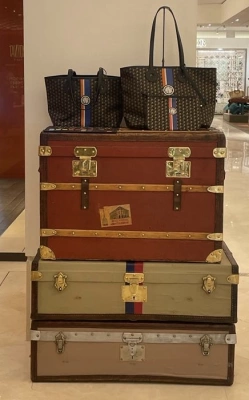
The history of luggage dates back to ancient times, when people used cloth bags or woven baskets to carry their belongings. However, these bags were often bulky and impractical to carry over long distances.
Over the centuries, luggage evolved to become more functional and adapted to travellers' needs. In the Middle Ages, nobles used wooden chests to carry their belongings when travelling. These chests were often heavy and required several people to carry them.
With the advent of rail and sea travel in the 19th century, luggage underwent a new evolution. Wooden trunks became popular, offering better protection for fragile objects. These trunks were often adorned with leather or canvas and were used by wealthy travellers.
In the 20th century, the arrival of commercial aviation led to a further transformation of luggage. Rigid metal or plastic suitcases became common, offering greater shock resistance and storage capacity. Wheels were also added to make transport easier.
Today, luggage is available in a wide variety of shapes, sizes and materials. Many models are available from Les Malletiers....
27 Jul 2023
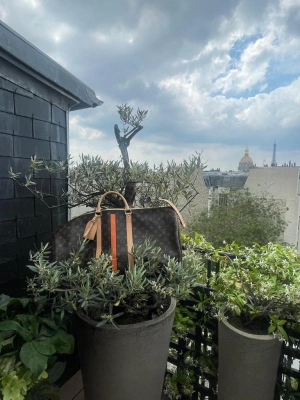
Louis Vuitton's Keepall travel bag, the 1930s... Cruises were fashionable, as were holidays in Deauville and Biarritz.
At that time, Louis Vuitton, renowned for its trunks, had to adapt to these new lifestyles. The result was the Keepall, a bag that "keeps everything". The Keepall is a flexible, zipped bag made from the famous monogrammed coated canvas. Its generous shape allows you to slip in a sports outfit and a few simple clothes for a weekend in the countryside.
An immediate success, the Keepall has never left the Louis Vuitton catalogue. It has been used in the trunk-maker's other collections, and given a new look by artists invited by Marc Jacobs, including Takashi Murakami and others.
Four sizes were chosen (45, 50, 55 and 60 cm), with the first three being the most popular because they could be carried in the cabin.
Seen over and over again on all the people for generations, the Keepall is now a timeless piece, which we keep, cherish and watch lovingly polish... Les Malletiers loves it too!
27 Jul 2023
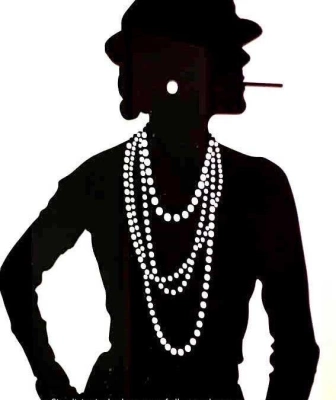
Coco Untold Stories, the early years...
She symbolizes French elegance. Gabrielle Chanel, born in Saumur in 1883, whose real name was Gabrielle Chasnel, was raised in an orphanage. At the age of 12, she was taken in with two of her sisters at Aubazine Abbey in Corrèze.
Her mother died in Brive-la-Gaillarde in 1895. When she was just 12, her father abandoned her a few months later, to the care of the nuns. He never returned. Gabrielle went to Aubazine to learn sewing. She stayed for 6 years. The abbey would remain a powerful source of inspiration for the codes of the House of Chanel...
Coco Chanel's taste for clean lines and her predilection for black, white and beige are perhaps linked to the sobriety of the abbey and its occupants...
Once she left Aubazine, she moved to Moulin. Gabrielle had to earn a living, so she sang in small shows in bars, famous for her rendition of
“Who has seen Coco on the Trocadero? Coco, a nickname that has stuck for posterity...
10 Aug 2023