








Are you sure you want to perform this action?
According to Les malletiers, the website for selling pre-owned luxury leather goods: A designer bag isn’t something you buy like an ordinary accessory. When it comes to a piece by Chanel, Hermès, Louis Vuitton, or Dior, the question of why to buy a certified bag arises almost immediately. Not out of excessive caution, but because at this level of desire, price, and rarity, authenticity is not a mere detail—it determines everything else.
The luxury second-hand market has matured significantly. Today, it attracts discerning collectors, connoisseurs of fine materials, and customers seeking an iconic piece that has become impossible to find, or simply a piece with a more authentic patina and history. But this richness has its downside: the more an object is desired, the more it is copied. Buying a certified bag, therefore, means choosing a standard of quality consistent with the object itself.
## Why buying a certified bag truly changes the purchase
A certificate is not merely a reassuring document. In the world of pre-owned luxury, it serves as a key to understanding. It allows the object to be situated within a chain of trust: materials, finishes, construction, markings, production era, consistency of details—everything must speak the same language.
Without this validation, the purchase often relies on fragmentary clues: a few photos, a serial number, a partial invoice, a seller’s supposed reputation. Yet none of these elements, taken in isolation, is sufficient. An invoice may accompany another item, a number can be reproduced, and a flattering photograph reveals nothing about replaced leather, reupholstered trim, or inconsistent assembly.
Conversely, a certified bag is part of a process of expertise. You are no longer just buying a silhouette or a logo, but a piece recognized for what it truly is. For a discerning collector, this difference is decisive.
## Authenticity, of course—but not only that
Certification is often reduced to the fight against counterfeiting. This is true, but it is incomplete. A certified bag also protects against more subtle errors, such as deviations from the original model.
In the high-end second-hand market, there are authentic bags that have been altered: handles replaced, heavy re-dyeing, non-compliant hardware, re-lined interiors, or non-standard parts substituted. These alterations do not always negate the bag’s basic authenticity, but they do affect its value, aesthetic integrity, and sometimes its collectible appeal.
This is where serious expertise comes into its own. It does not simply say yes or no. It assesses the overall coherence of the object. For a discerning buyer, this nuance is essential, as it determines the item’s heritage value.
### The Certificate as an Extension of the Expert Eye
In a market saturated with quick claims, the certificate establishes a clear hierarchy between opinion and expertise. Any seller can write “authentic.” Few can back up that claim with recognized expertise.
When a bag comes with a certificate issued by a legitimate expert, the relationship to the purchase changes profoundly. Trust no longer rests solely on sales pitch, but on an authority external to the transaction, capable of examining the item methodically.
For the buyer, it offers peace of mind. For the collector, it is a standard.
## Why buying a certified bag also protects its value
A beautiful bag is not always an investment, and it would be artificial to view every luxury purchase through that lens. Some pieces are bought first and foremost for the pleasure of wearing them, for the elegance of their lines, or for the thrill of owning a model long sought after. Yet the question of value never completely disappears.
A certified bag resells better, circulates more easily on the secondary market, and inspires greater confidence in a future buyer. This applies to both timeless classics and rarer models. Between two pieces that appear similar, the one whose authenticity is clearly established generally has a clear advantage.
This advantage isn’t just due to the presence of a document. It stems from the fact that a certificate reduces uncertainty. Yet, in the luxury sector, uncertainty leads to depreciation.
### Future resale begins at the moment of purchase
Many buyers do not immediately consider reselling. Then tastes evolve, a collection shifts focus, an opportunity arises, or one wishes to finance a new acquisition. In any case, the quality of the documentation accompanying the item becomes important.
Buying a certified item is already preparing for this potential step. You retain not only an object but also its traceability. This does not guarantee an increase in value, of course. The market value depends on the brand, the model, the rarity, the material, the condition, and the market conditions at the time. However, it prevents a price reduction due to doubt.
## A Fairer Purchase for Rare or Sought-After Pieces
The more iconic a bag is, the more it is subject to counterfeits. But the phenomenon doesn’t stop at best-sellers. Certain less visible models—precisely because they are less well-known to the general public—also circulate in misleading versions, sometimes incorrectly dated or misattributed.
This is particularly true for vintage pieces, older editions, discontinued models, specific leathers, or uncommon colors. Here, certification becomes even more valuable. It allows one to distinguish true rarity from perceived rarity.
From a connoisseur’s perspective, this distinction is fundamental. A rarely seen bag is not necessarily rare. An old bag is not automatically desirable. And a sought-after model must be examined in its precise details, not through the brand’s general aura.
## Why buying a certified bag is a matter of taste
There is also a more intimate, almost cultural dimension to choosing a certified bag. Those who buy a second-hand luxury item are not merely purchasing visible status. They are choosing a crafted object, rooted in a legacy of style and craftsmanship.
Therefore, accepting uncertainty about its authenticity would undermine the very meaning of the purchase. The beauty of a designer bag does not lie in its resemblance to the original. It lies in the fact that it is the original—with its construction, its craftsmanship, its presence, and its place in the history of a house.
In other words, certification is not an administrative formality. It aligns with a more accurate way of viewing luxury: as a realm of excellence, not approximation.
## Limitations to Understand Before Buying
However, one must exercise caution. A certificate does not resolve all issues. It does not replace an examination of the bag’s condition, attention to any restorations, or an assessment of the asking price. A bag may be authentic yet poorly maintained. It may be certified yet still overpriced. It may also be a perfect fit for a collector but less so for everyday use.
This is why purchasing a certified bag requires a broader perspective: the quality of the leather, the suppleness of the structure, wear on the corners, the condition of the lining, the functionality of the clasps, the presence of accessories, and the long-term desirability of the model.
Certification is an essential foundation. It is not the only criterion, but it is the one that gives meaning to all the others.
### The Importance of Recognized Expertise
Not all certificates are created equal. Some are mere commercial attestations, while others result from a genuine examination process. For a savvy buyer, this distinction matters greatly.
Ideally, one should prioritize a piece accompanied by an authentication issued by a clearly identified authority whose expertise is well-established. At Les Malletiers, each item is thus presented with a certificate of authenticity written by Jérôme Lalande, an Expert at the Paris Court of Appeal. In a market where trust determines value, this level of rigor transforms the very nature of the shopping experience.
## Buy Better, Not Just Buy Risk-Free
Ultimately, the real answer to the question of why buy a certified bag can be summed up in a few words: to buy with integrity. Integrity in how the item is viewed. Integrity in respecting its value. Integrity in the relationship between desire, knowledge, and legacy.
In the world of secondhand luxury, the most beautiful piece isn’t always the most flashy. It’s often the one where every detail holds its own, where the story is clear, and where authenticity doesn’t depend on a vague promise. A certified bag offers this: the chance to love a piece without unnecessary reservations, with the peace of mind that an exceptional object deserves.
And when choosing a bag meant to stand the test of time, that peace of mind is no small matter.
Related articles

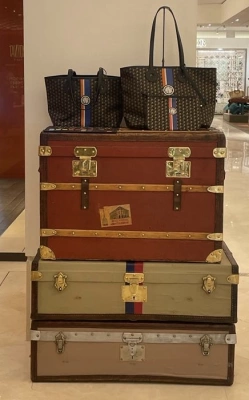
The history of luggage dates back to ancient times, when people used cloth bags or woven baskets to carry their belongings. However, these bags were often bulky and impractical to carry over long distances.
Over the centuries, luggage evolved to become more functional and adapted to travellers' needs. In the Middle Ages, nobles used wooden chests to carry their belongings when travelling. These chests were often heavy and required several people to carry them.
With the advent of rail and sea travel in the 19th century, luggage underwent a new evolution. Wooden trunks became popular, offering better protection for fragile objects. These trunks were often adorned with leather or canvas and were used by wealthy travellers.
In the 20th century, the arrival of commercial aviation led to a further transformation of luggage. Rigid metal or plastic suitcases became common, offering greater shock resistance and storage capacity. Wheels were also added to make transport easier.
Today, luggage is available in a wide variety of shapes, sizes and materials. Many models are available from Les Malletiers....
27 Jul 2023
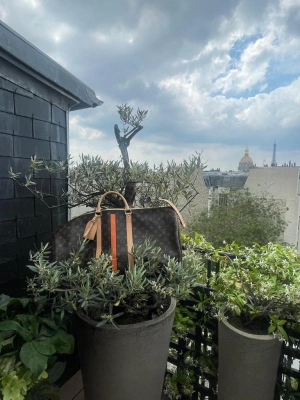
Louis Vuitton's Keepall travel bag, the 1930s... Cruises were fashionable, as were holidays in Deauville and Biarritz.
At that time, Louis Vuitton, renowned for its trunks, had to adapt to these new lifestyles. The result was the Keepall, a bag that "keeps everything". The Keepall is a flexible, zipped bag made from the famous monogrammed coated canvas. Its generous shape allows you to slip in a sports outfit and a few simple clothes for a weekend in the countryside.
An immediate success, the Keepall has never left the Louis Vuitton catalogue. It has been used in the trunk-maker's other collections, and given a new look by artists invited by Marc Jacobs, including Takashi Murakami and others.
Four sizes were chosen (45, 50, 55 and 60 cm), with the first three being the most popular because they could be carried in the cabin.
Seen over and over again on all the people for generations, the Keepall is now a timeless piece, which we keep, cherish and watch lovingly polish... Les Malletiers loves it too!
27 Jul 2023
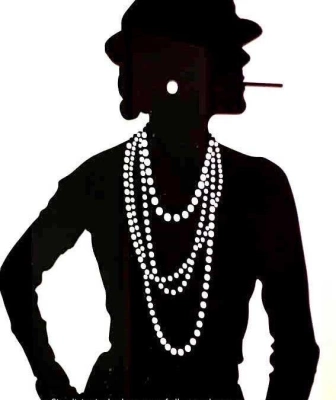
Coco Untold Stories, the early years...
She symbolizes French elegance. Gabrielle Chanel, born in Saumur in 1883, whose real name was Gabrielle Chasnel, was raised in an orphanage. At the age of 12, she was taken in with two of her sisters at Aubazine Abbey in Corrèze.
Her mother died in Brive-la-Gaillarde in 1895. When she was just 12, her father abandoned her a few months later, to the care of the nuns. He never returned. Gabrielle went to Aubazine to learn sewing. She stayed for 6 years. The abbey would remain a powerful source of inspiration for the codes of the House of Chanel...
Coco Chanel's taste for clean lines and her predilection for black, white and beige are perhaps linked to the sobriety of the abbey and its occupants...
Once she left Aubazine, she moved to Moulin. Gabrielle had to earn a living, so she sang in small shows in bars, famous for her rendition of
“Who has seen Coco on the Trocadero? Coco, a nickname that has stuck for posterity...
10 Aug 2023