








Are you sure you want to perform this action?
A Chanel bag from a bygone decade, a Louis Vuitton trunk weathered by travel, a bracelet from a renowned fashion house that is no longer in production—sometimes a single item is all it takes to understand why buying vintage luxury is less of a trend and more a matter of personal taste. Prestigious vintage items appeal not only because they extend a piece’s lifespan. They attract because they offer a different relationship with luxury—one that is more refined, more personal, and often more discerning.
## Why Buy Vintage Luxury Today
Buying a vintage piece means, first and foremost, choosing an item that has stood the test of time without losing its appeal. In the world of luxury, this enduring appeal is no small matter. It speaks to the quality of the materials, the precision of the design, and the excellence of the craftsmanship. A bag or piece of jewelry that remains desirable twenty, thirty, or fifty years after its creation does not owe its appeal to chance.
This sense of timelessness also changes the perspective on the purchase. One no longer simply acquires a seasonal accessory, but a form of portable heritage. Certain vintage pieces retain the signature of a specific era—proportions, finishes, hardware details, linings, patinas—that current collections no longer replicate. For the discerning connoisseur, this is where the true interest begins.
Vintage luxury also fulfills an expectation that has become central among collectors and savvy buyers alike—finding what not everyone can buy at the same time. In a landscape saturated with images and new launches, rarity regains decisive value.
## Rarity: The True Definition of Desire
The primary market offers novelty. Vintage, on the other hand, offers selection. This is a fundamental difference. An antique piece is not merely older than a new one—it may be discontinued, abandoned by the brand, produced in limited quantities, or belong to a particularly sought-after creative period.
This rarity fosters a more subtle pleasure than that of immediate acquisition. It requires a discerning eye, patience, and sometimes memory. Connoisseurs know this well—certain Hermès, Dior, Goyard, or Moynat models are almost never found in good condition anymore, with a clear provenance and original features preserved. When they do reappear, they are not a matter of ordinary opportunity, but of serendipity.
This is also what distinguishes a vintage luxury purchase from a simple secondhand purchase. The issue is not merely the price, nor even the previous use. The issue is the object’s uniqueness. A period clasp, vintage canvas, leather no longer available today, a silhouette abandoned by contemporary production—all these elements shift the purchase into the realm of collecting.
## Craftsmanship That Is Often More Visible
One of the most compelling arguments in favor of vintage lies in the clearer manifestation of craftsmanship. On many vintage pieces, the craftsmanship is evident in an almost didactic way. The cut is more structured, the materials thicker, the artisan’s touch more perceptible. Some leathers develop a depth over time that new ones cannot offer. Some fabrics gain suppleness without losing their shape. Some trims develop a patina rather than simply wearing out.
We must avoid overly simplistic generalizations—not everything was better in the past, and not all vintage pieces surpass current productions. But it is true that many houses, depending on the era, offered finishes, proportions, or materials that have since become rarer. Buying vintage thus provides access to a less standardized expression of luxury, one closer to the brand’s material history.
To the trained eye, this aspect matters greatly. One no longer chooses merely a brand, but a production era, an aesthetic language, and sometimes even a certain notion of good taste.
## Buying Vintage Luxury for Its Timeless Value
When discussing value, nuance is essential. Not all vintage luxury pieces appreciate in value, and not all should be purchased as investments. Yet, ignoring this aspect would be reductive. Certain iconic creations retain their appeal on the market remarkably well, especially when they combine three qualities: undeniable authenticity, compelling condition, and enduring desirability.
Vintage shopping often allows for a more heritage-oriented approach rather than a consumerist one. A well-chosen piece can be worn for years, passed down, and then resold under favorable conditions. This is not an automatic guarantee, but a real possibility, especially for items from houses with strong historical legitimacy.
This perspective changes the nature of the expenditure. One pays not only for the moment of purchase, but for the duration of the relationship with the object. In some cases, vintage luxury even offers a better balance between purchase price, intrinsic quality, and value stability than certain new items whose market value remains uncertain.
## Authenticity: An Absolute Requirement
If there is a single serious caveat to buying vintage luxury, it lies here. The secondary market is also a realm of confusion—vague descriptions, unreported restorations, modified parts, sophisticated counterfeits, and unclear provenance. The more coveted the item, the greater the risk and the greater the need for rigor.
This is why authenticity cannot be treated as a mere sales pitch. It must be demonstrated. The discerning buyer expects concrete evidence—examination of materials, consistency in craftsmanship, dating, interpretation of markings, verification of construction details, and, where possible, clear documentation.
In this world, trust stems from expertise, not rhetoric. A specialized specialist like Les Malletiers places this requirement at the center of its approach, with each piece accompanied by a certificate of authenticity drafted by Jérôme Lalande, an expert appointed by the Paris Court of Appeal. For a collector, this rigor is not incidental. It determines both the peace of mind of the purchase and the future value of the object.
## A Less Predictable Elegance
Vintage luxury also appeals to those seeking to stand out without ostentation. Wearing an older model, a discontinued piece of jewelry, or a travel item steeped in history creates a different allure than that produced by immediately recognizable new items.
There is, in vintage, a form of understated elegance. The object speaks less loudly, but often says more. It suggests a visual culture, a more intimate relationship with style, a preference for permanence over effect. This holds true for a vintage Kelly bag as much as for a Chanel clutch, a Goyard suitcase, or a patinated leather wallet from a historic house.
This uniqueness isn’t for everyone, and that’s perfectly fine. Some buyers prefer the shine of the new, the boutique experience, the recent purchase. Others seek a piece that’s already part of a legacy. Vintage luxury clearly appeals to the latter sensibility.
## What to Look for Before Buying
A successful purchase rarely relies on impulse alone. You must examine the actual condition, of course, but also how that condition aligns with the item’s age. A light patina may be desirable. Heavy restoration, on the other hand, can diminish its collectible value. Similarly, you must distinguish between noble wear and structural fatigue.
Completeness also matters. Original dust bag, padlock, key, vintage invoice, box, mirror, shoulder strap, hardware—depending on the category, these details can significantly influence the item’s appeal. For some buyers, they are a matter of convenience. For others, they are integral to the value.
Finally, one must ask what one is truly looking for. A collector’s item that will be worn infrequently does not meet the same criteria as a bag intended for frequent use. The right purchase is not always the rarest one. It is the one where function, condition, character, and price come together in perfect harmony.
## Why Vintage Luxury Resonates So Much Today
We sometimes associate vintage with nostalgia. That is only part of the story. In reality, buying vintage can be a very modern way of asserting one’s priorities. Preferring a time-tested object to the constant stream of novelty, choosing substance over hype, prioritizing permanence over aesthetic obsolescence—these are decidedly contemporary decisions.
Vintage luxury doesn’t just promise a different way of shopping. It offers a different way of seeing. It teaches us to recognize timeless designs, the brands that have built a coherent aesthetic, and the details that distinguish a beautiful object from one that’s merely expensive. As our eye becomes more refined, our purchases become more personal, more thoughtful, and often more satisfying.
And that is perhaps the best reason to buy vintage luxury—not to own more, but to own better.
Related articles

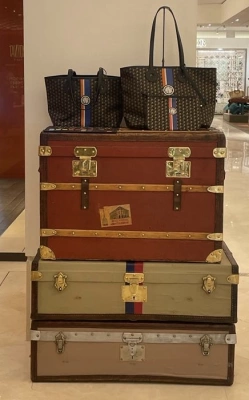
The history of luggage dates back to ancient times, when people used cloth bags or woven baskets to carry their belongings. However, these bags were often bulky and impractical to carry over long distances.
Over the centuries, luggage evolved to become more functional and adapted to travellers' needs. In the Middle Ages, nobles used wooden chests to carry their belongings when travelling. These chests were often heavy and required several people to carry them.
With the advent of rail and sea travel in the 19th century, luggage underwent a new evolution. Wooden trunks became popular, offering better protection for fragile objects. These trunks were often adorned with leather or canvas and were used by wealthy travellers.
In the 20th century, the arrival of commercial aviation led to a further transformation of luggage. Rigid metal or plastic suitcases became common, offering greater shock resistance and storage capacity. Wheels were also added to make transport easier.
Today, luggage is available in a wide variety of shapes, sizes and materials. Many models are available from Les Malletiers....
27 Jul 2023
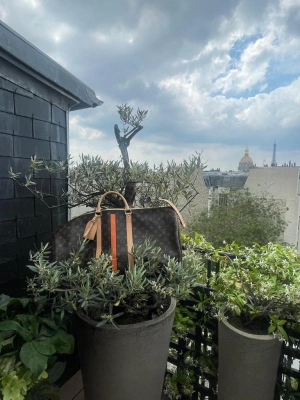
Louis Vuitton's Keepall travel bag, the 1930s... Cruises were fashionable, as were holidays in Deauville and Biarritz.
At that time, Louis Vuitton, renowned for its trunks, had to adapt to these new lifestyles. The result was the Keepall, a bag that "keeps everything". The Keepall is a flexible, zipped bag made from the famous monogrammed coated canvas. Its generous shape allows you to slip in a sports outfit and a few simple clothes for a weekend in the countryside.
An immediate success, the Keepall has never left the Louis Vuitton catalogue. It has been used in the trunk-maker's other collections, and given a new look by artists invited by Marc Jacobs, including Takashi Murakami and others.
Four sizes were chosen (45, 50, 55 and 60 cm), with the first three being the most popular because they could be carried in the cabin.
Seen over and over again on all the people for generations, the Keepall is now a timeless piece, which we keep, cherish and watch lovingly polish... Les Malletiers loves it too!
27 Jul 2023
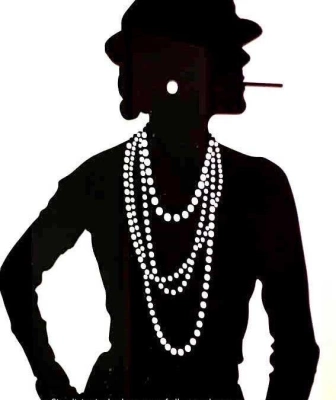
Coco Untold Stories, the early years...
She symbolizes French elegance. Gabrielle Chanel, born in Saumur in 1883, whose real name was Gabrielle Chasnel, was raised in an orphanage. At the age of 12, she was taken in with two of her sisters at Aubazine Abbey in Corrèze.
Her mother died in Brive-la-Gaillarde in 1895. When she was just 12, her father abandoned her a few months later, to the care of the nuns. He never returned. Gabrielle went to Aubazine to learn sewing. She stayed for 6 years. The abbey would remain a powerful source of inspiration for the codes of the House of Chanel...
Coco Chanel's taste for clean lines and her predilection for black, white and beige are perhaps linked to the sobriety of the abbey and its occupants...
Once she left Aubazine, she moved to Moulin. Gabrielle had to earn a living, so she sang in small shows in bars, famous for her rendition of
“Who has seen Coco on the Trocadero? Coco, a nickname that has stuck for posterity...
10 Aug 2023