








Are you sure you want to perform this action?
A Chanel Classic Flap from the 1990s, a Kelly in weathered Box leather, an older monogrammed Speedy with canvas that’s still thick—some bags don’t just age; they gain status. Asking why a vintage bag increases in value is less about observing a passing trend and more about understanding the intersection of heritage, rarity, and enduring desire.
The secondhand luxury market has matured. Yet not all vintage bags become sought-after pieces. The gap between a model that is simply dated and a true collector’s item can be considerable. Value is never determined by age alone. It rests on a set of precise, often subtle criteria that stem as much from the history of the fashion houses as from the material quality of the object.
## Why a vintage bag increases in value over time
The first reason lies in the natural scarcity of beautiful pieces. A bag is not a watch kept in a safe. It accompanies a life, endures daily use, and is subjected to friction, light, humidity, and sometimes clumsy restorations. Over the years, the number of examples that remain in very good condition dwindles. This simple decrease in supply is enough to create a difference in value.
But true rarity goes further. Certain models were produced for only a short time, in specific colors, with finishes that are no longer used or leathers that the brand no longer employs. When a manufacturing detail disappears, it retrospectively acquires special significance. Collectors are not just looking for a name or a silhouette. They are looking for a specific version of a model, rooted in an identifiable creative period.
We must also factor in the phenomenon of heritage revaluation. A bag bearing the signature of a house with strong historical legitimacy benefits from collective memory. Hermès, Chanel, Louis Vuitton, Dior, Goyard, or Moynat are not valued solely for their logos. Their value is rooted in a formal language, artisanal craftsmanship, aesthetic continuity, and a presence in the history of taste. When a vintage piece embodies this heritage, it ceases to be a mere accessory and enters the realm of heirlooms.
## The House, Craftsmanship, and the Model’s History
Not all luxury brands evolve in the same way on the secondary market. Desirability rests first and foremost on the cultural strength of the house. A brand that is highly visible at a given moment may lose its luster if it lacks heritage depth. Conversely, a more discreet but historically grounded house may see its vintage pieces rediscovered with great force.
The quality of craftsmanship plays a decisive role. A vintage bag gains value when it demonstrates, through its very presence, the nobility of its design. The density of the leather, the structure of the canvas, the precision of the stitching, the quality of the metal hardware, or the balance of the silhouette matter just as much as the signature. The most sought-after pieces are often those that demonstrate a level of craftsmanship perceived as superior to certain more recent productions.
The model’s own history further amplifies this dynamic. An iconic bag, associated with an era, a figure, or a landmark design line, retains its appeal more easily. This is particularly true of shapes that have become timeless because they have stood the test of time without losing their relevance. The market draws a very clear distinction between the iconic and the merely vintage.
### Discontinuation Changes Everything
When a model is discontinued, or when a leather type, clasp, size, or color is permanently removed from the catalog, perceptions shift. What is no longer available in stores enters a different economy of desire. It can no longer be obtained by order or by waiting. One must seek it out, recognize it, and then seize it at the right moment.
This lack of accessibility fuels its value. It is even stronger when the older version features characteristics deemed more appealing than the contemporary version. In the collector’s world, the notion of a “best period” is essential.
## Condition: A More Subtle Criterion Than It Seems
On paper, a flawless bag is worth more. In practice, the question of condition requires nuance. A vintage piece in mint condition is rare and often highly sought after, especially if it retains its original hardware. But a beautiful, age-appropriate condition can also be highly desirable, provided the structure is sound and the patina is elegant.
Patina is not a flaw when it reveals the quality of the material. On certain Box or Barenia leathers or on vintage canvases, it even adds a depth that connoisseurs consider irreplaceable. Conversely, visible repairs, rough recoloring, overly reworked corners, or replaced hardware can diminish the value, even if the bag appears visually refreshed.
This is where an important distinction between wear and damage comes into play. Wear tells a story of time. Damage compromises the integrity of the piece. A knowledgeable collector readily accepts the former and is wary of the latter.
### Original accessories boost the value
Dust bag, box, invoice, lock, bell, shoulder strap, mirror, card, or hologram—depending on the brand and era—these elements carry real weight. They do not create value on their own, but they reinforce it. They contribute to the object’s completeness and provide reassurance about its history.
In certain categories, the presence of a complete set can make a clear difference, particularly when the buyer is already thinking in terms of collecting or future resale.
## Market demand and generational trends
The value of a vintage bag is never determined in a laboratory. It is shaped by the eyes of buyers. Certain pieces that were long underestimated return to the forefront when tastes change. A highly structured shape, considered austere ten years ago, may now appear strikingly modern. A discreet logo or an archival clasp can become desirable again as tastes shift away from the overly conspicuous.
This trend is not always speculative. It can be deeply cultural. The generations buying today often rediscover the ’80s, ’90s, or 2000s with a dual perspective—both nostalgic and critical. They want objects that are more distinctive, less standardized, and bear a clear formal signature. Vintage meets this expectation because it offers uniqueness in a landscape that is sometimes uniform.
There is, however, one point to watch out for. A rapid rise in popularity does not guarantee lasting value. Some models rise with the trend and then stabilize, or even decline. The bags that best retain their value are generally those that combine current desirability with historical legitimacy. When one is missing, the value becomes more fragile.
## Authenticity: An Absolute Prerequisite for Value
No rarity, no leather, no patina can compensate for uncertainty regarding authenticity. In the world of secondhand luxury, trust directly determines value. A bag that has been thoroughly authenticated is not only more reassuring to purchase; it is also more liquid on the market, and thus a more solid asset.
This is a simple reality that is often overlooked. Two bags that appear comparable can have significant price differences depending on the quality of their documentation, the seller’s reliability, and the precision of the authentication. Provenance, consistency in manufacturing details, and examination of materials and markings are essential. In a market saturated with counterfeits and altered pieces, certainty is worth a great deal.
For this reason, the most discerning buyers favor dealers capable of providing written expertise and rigorous selection. At Les Malletiers, this demand for authenticity is fully integrated into how a piece is viewed—not as a mere secondhand bag, but as a vintage luxury item whose value rests on verifiable facts.
## What Truly Gains Value, and What Retains It
A vintage bag gains value when it combines several key factors. It must come from a brand whose prestige transcends fleeting fashion trends. It must embody a recognizable model—often iconic or now rare. It must exhibit discernible craftsmanship, consistent condition, and ideally reassuring traceability. Finally, it must meet a market demand deep enough not to depend on a mere passing fad.
This also means that not all vintage purchases should be viewed as investments. The true criterion remains the intrinsic quality of the piece. When a bag has presence, a history, remarkable craftsmanship, and unquestionable authenticity, it already possesses the essentials. Any potential increase in value comes later, almost as a logical consequence.
The most accurate approach, therefore, is to buy a vintage bag as one would choose a work of art—with emotion, with discernment, and with a clear understanding of what deserves to stand the test of time. This is often how the pieces that truly matter are born, in a collection as in life.
Related articles

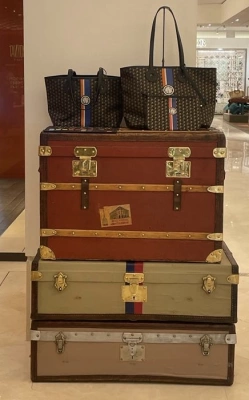
The history of luggage dates back to ancient times, when people used cloth bags or woven baskets to carry their belongings. However, these bags were often bulky and impractical to carry over long distances.
Over the centuries, luggage evolved to become more functional and adapted to travellers' needs. In the Middle Ages, nobles used wooden chests to carry their belongings when travelling. These chests were often heavy and required several people to carry them.
With the advent of rail and sea travel in the 19th century, luggage underwent a new evolution. Wooden trunks became popular, offering better protection for fragile objects. These trunks were often adorned with leather or canvas and were used by wealthy travellers.
In the 20th century, the arrival of commercial aviation led to a further transformation of luggage. Rigid metal or plastic suitcases became common, offering greater shock resistance and storage capacity. Wheels were also added to make transport easier.
Today, luggage is available in a wide variety of shapes, sizes and materials. Many models are available from Les Malletiers....
27 Jul 2023
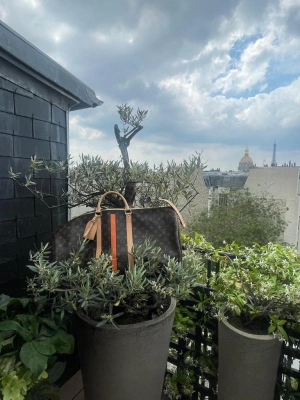
Louis Vuitton's Keepall travel bag, the 1930s... Cruises were fashionable, as were holidays in Deauville and Biarritz.
At that time, Louis Vuitton, renowned for its trunks, had to adapt to these new lifestyles. The result was the Keepall, a bag that "keeps everything". The Keepall is a flexible, zipped bag made from the famous monogrammed coated canvas. Its generous shape allows you to slip in a sports outfit and a few simple clothes for a weekend in the countryside.
An immediate success, the Keepall has never left the Louis Vuitton catalogue. It has been used in the trunk-maker's other collections, and given a new look by artists invited by Marc Jacobs, including Takashi Murakami and others.
Four sizes were chosen (45, 50, 55 and 60 cm), with the first three being the most popular because they could be carried in the cabin.
Seen over and over again on all the people for generations, the Keepall is now a timeless piece, which we keep, cherish and watch lovingly polish... Les Malletiers loves it too!
27 Jul 2023
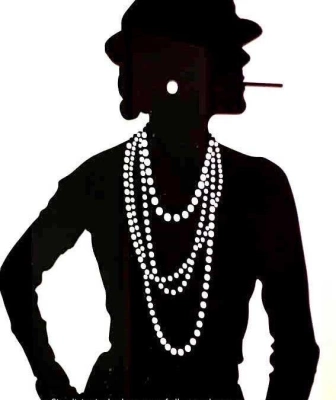
Coco Untold Stories, the early years...
She symbolizes French elegance. Gabrielle Chanel, born in Saumur in 1883, whose real name was Gabrielle Chasnel, was raised in an orphanage. At the age of 12, she was taken in with two of her sisters at Aubazine Abbey in Corrèze.
Her mother died in Brive-la-Gaillarde in 1895. When she was just 12, her father abandoned her a few months later, to the care of the nuns. He never returned. Gabrielle went to Aubazine to learn sewing. She stayed for 6 years. The abbey would remain a powerful source of inspiration for the codes of the House of Chanel...
Coco Chanel's taste for clean lines and her predilection for black, white and beige are perhaps linked to the sobriety of the abbey and its occupants...
Once she left Aubazine, she moved to Moulin. Gabrielle had to earn a living, so she sang in small shows in bars, famous for her rendition of
“Who has seen Coco on the Trocadero? Coco, a nickname that has stuck for posterity...
10 Aug 2023