








Are you sure you want to perform this action?
A secondhand luxury handbag isn’t something you buy like a seasonal accessory. When people look for secondhand luxury handbags, they’re often seeking something more than just a beautiful object—a brand, an era, a line that’s no longer available, and sometimes even a certain sense of style. The market is rich, but it demands a trained eye, because desirability alone is never enough.
## Why second-hand luxury bags are so appealing
The appeal of these pieces lies first and foremost in what they embody. A vintage Kelly, a Timeless Chanel from a golden era of production, a Louis Vuitton Speedy with perfectly aged leather, or a Lady Dior in a discontinued shade do not have the same presence as a mass-produced item. High-end second-hand shopping provides access to items that have already stood the test of time, and sometimes gained character.
There is also a more subtle, yet decisive, reason. New luxury goods are subject to collection cycles, price hikes, waiting lists, and availability that varies by brand. Second-hand items, when carefully curated, offer a different sense of time. We no longer buy only what is in stores today, but what still deserves to be worn or kept tomorrow.
This logic appeals to both the discerning enthusiast and the collector. Some seek an iconic piece in a specific configuration. Others prefer a more niche model—less visible, yet more interesting in terms of craftsmanship, leather, or rarity.
## What Sets a Good Purchase Apart from a Disappointing One
In the world of second-hand luxury handbags, the first distinction lies in authenticity. This may seem obvious, but it is the factor that determines everything else. A seemingly great deal instantly loses all value if its provenance is unclear or if the expertise is insufficient. In this segment, trust isn’t granted; it’s earned.
Next comes condition. An older bag doesn’t need to be perfect to be desirable. A consistent patina, slightly softened corners, and subtly marked hardware can even enhance a piece’s charm. On the other hand, heavy restoration, brittle leather, lingering odors, a sagging structure, or clumsy repairs radically change the picture. Nuance is essential—time can ennoble an object, but it can also alter it.
The third criterion is the authenticity of the model. Not all bags from a major house are created equal on the secondary market. Some maintain consistent desirability thanks to their design, cultural status, or everyday utility. Others have a more volatile market value. A successful purchase therefore depends on the balance between personal desire, intrinsic quality, and long-term potential.
## How to evaluate a bag before buying it
### The material often speaks louder than the logo
The leather, the canvas, the finishes, the feel of the bag—everything speaks volumes. Box calf, Chanel Caviar, Louis Vuitton Epi leather, well-preserved Goyard canvas, or vintage Prada nylon do not age in the same way. You must observe how the material reacts to light, its structure, its suppleness, and its natural creases. A compelling bag is often recognizable even before you focus on the signature.
The hardware deserves the same attention. Gold plating that’s too uniform on a piece that’s supposed to have a history can raise questions, as can rough engraving or inconsistent weight. Luxury houses each have their own practices, eras, and manufacturing variations. This is precisely where expertise makes the difference.
### Condition must be assessed, not just noted
Descriptions like “very good condition” or “excellent condition” aren’t enough on their own. You need to understand what they mean. A clean interior is reassuring, but it doesn’t make up for a worn-out shoulder strap. A beautiful overall silhouette can hide a worn clasp. Conversely, a slight mark under the flap matters little if the structure, stitching, and leather are remarkable.
A savvy buyer isn’t necessarily looking for the total absence of signs of use. They’re looking for overall consistency. A bag must tell a credible story, never a rough approximation.
## Second-hand luxury bags and lasting value
It would be simplistic to present second-hand luxury leather goods as merely an investment. Not all models appreciate in value, and some price surges are more a matter of fashion trends than true heritage value. Yet, ignoring the question of value would be just as naive.
Some pieces stand the test of time with remarkable stability. This is due to several factors—the strength of the brand, the timelessness of the design, the quality of craftsmanship, the rarity of certain versions, and the depth of international demand. Hermès, Chanel, Louis Vuitton, and Goyard do not dominate this market by chance. These are names whose history, masterful craftsmanship, and place in the collective imagination fuel their desirability.
But one must remain discerning. The most profitable piece is not always the most interesting to own. A highly sought-after bag may be easier to resell, certainly, but a less visible model, from a golden era of production or a discontinued line, can offer far greater pleasure than a purchase dictated solely by market indicators.
## The Appeal of Rare or Discontinued Models
The true luxury of the second-hand market often begins where standard offerings end. A color no longer in the collections, a discontinued size, a unique finish, a workshop detail, a rarely seen travel model, a matching small leather good—it is these nuances that capture the attention of connoisseurs.
In this spirit, rarity is not merely a matter of quantity. It also depends on the quality of an object’s presence. Some bags are rare because they were produced in limited numbers. Others because few have been preserved in fine condition. Still others because they belong to an era when the house worked with certain materials or proportions with an elegance that feels different today.
For this reason, selection matters as much as inventory. An exceptional piece is not defined solely by its name. It stands out through the convergence of brand, condition, era, and desire.
## The Decisive Role of Authentication
In the secondary market, authentication is not a mere administrative detail. It is the very prerequisite for a confident purchase. Counterfeits have become more sophisticated, hybrid constructions exist, and certain restorations can obscure the original intent. In light of this, vague statements or ambiguous guarantees are no longer sufficient.
A certificate issued by a recognized authority provides a whole new level of security. It entails expertise, a method, and accountability. For the buyer, this changes everything—not only at the time of purchase, but also for preservation, insurance, or a potential future resale.
It is precisely this level of rigor that distinguishes a specialized house from a generalist platform. At Les Malletiers, each piece is presented as an object of trust before being presented as an object of desire. In this world, that is the right order.
## Buy according to your style, not according to market hype
There is a common temptation in the world of second-hand luxury bags—to choose the most talked-about model rather than the one that truly fits your life. Yet a bag, even a prestigious one, remains a silhouette piece. It must complement a certain look, a certain gesture, a way of moving through the day, travel, dinner, and work.
Someone who values discretion might gravitate toward less flashy designs, understated leathers, and understated silhouettes. A more assertive collector might seek out an iconic monogram, a signature chain, or a piece with strong cultural resonance. No choice is inherently superior. It all depends on the relationship you wish to have with the object.
This is also why guidance matters. When a specific model has eluded you for a long time, it may be wiser to wait for the right piece than to settle for a mediocre version. In the world of pre-owned luxury, patience is often a form of discernment.
A truly beautiful bag doesn’t need to be new to be exceptional. It needs to be just right—just right in its provenance, just right in its condition, just right in the way it resonates with you. The right purchase isn’t the one that makes the biggest splash, but the one whose presence continues to make an impression long after the first glance.
Related articles

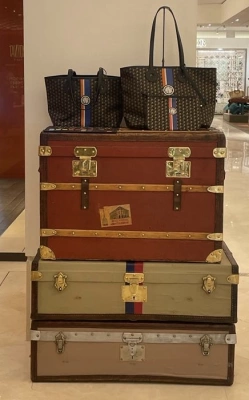
The history of luggage dates back to ancient times, when people used cloth bags or woven baskets to carry their belongings. However, these bags were often bulky and impractical to carry over long distances.
Over the centuries, luggage evolved to become more functional and adapted to travellers' needs. In the Middle Ages, nobles used wooden chests to carry their belongings when travelling. These chests were often heavy and required several people to carry them.
With the advent of rail and sea travel in the 19th century, luggage underwent a new evolution. Wooden trunks became popular, offering better protection for fragile objects. These trunks were often adorned with leather or canvas and were used by wealthy travellers.
In the 20th century, the arrival of commercial aviation led to a further transformation of luggage. Rigid metal or plastic suitcases became common, offering greater shock resistance and storage capacity. Wheels were also added to make transport easier.
Today, luggage is available in a wide variety of shapes, sizes and materials. Many models are available from Les Malletiers....
27 Jul 2023
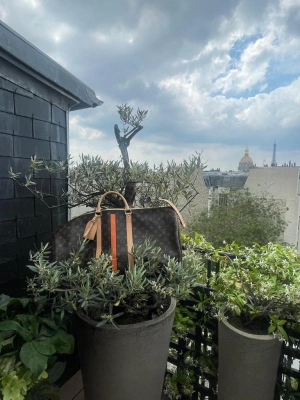
Louis Vuitton's Keepall travel bag, the 1930s... Cruises were fashionable, as were holidays in Deauville and Biarritz.
At that time, Louis Vuitton, renowned for its trunks, had to adapt to these new lifestyles. The result was the Keepall, a bag that "keeps everything". The Keepall is a flexible, zipped bag made from the famous monogrammed coated canvas. Its generous shape allows you to slip in a sports outfit and a few simple clothes for a weekend in the countryside.
An immediate success, the Keepall has never left the Louis Vuitton catalogue. It has been used in the trunk-maker's other collections, and given a new look by artists invited by Marc Jacobs, including Takashi Murakami and others.
Four sizes were chosen (45, 50, 55 and 60 cm), with the first three being the most popular because they could be carried in the cabin.
Seen over and over again on all the people for generations, the Keepall is now a timeless piece, which we keep, cherish and watch lovingly polish... Les Malletiers loves it too!
27 Jul 2023
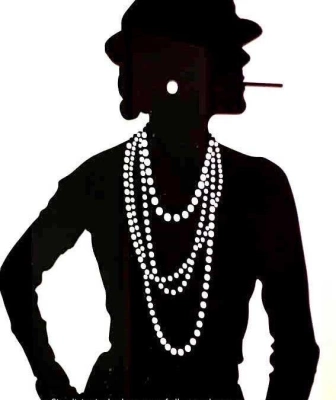
Coco Untold Stories, the early years...
She symbolizes French elegance. Gabrielle Chanel, born in Saumur in 1883, whose real name was Gabrielle Chasnel, was raised in an orphanage. At the age of 12, she was taken in with two of her sisters at Aubazine Abbey in Corrèze.
Her mother died in Brive-la-Gaillarde in 1895. When she was just 12, her father abandoned her a few months later, to the care of the nuns. He never returned. Gabrielle went to Aubazine to learn sewing. She stayed for 6 years. The abbey would remain a powerful source of inspiration for the codes of the House of Chanel...
Coco Chanel's taste for clean lines and her predilection for black, white and beige are perhaps linked to the sobriety of the abbey and its occupants...
Once she left Aubazine, she moved to Moulin. Gabrielle had to earn a living, so she sang in small shows in bars, famous for her rendition of
“Who has seen Coco on the Trocadero? Coco, a nickname that has stuck for posterity...
10 Aug 2023