








Are you sure you want to perform this action?
A vintage Hermès bag, a monogrammed Louis Vuitton trunk, a signed piece of Chanel jewelry—in the high-end secondhand market, the question isn’t just whether the item appeals. It’s about who authenticates it, using what method, and for what purpose. The choice between a forensic appraisal and a boutique authentication therefore deserves more than a quick answer, as it involves trust, the item’s heritage value, and, at times, the legal implications of the document provided.
In the world of pre-owned luxury items, these two forms of validation are not always equivalent, but they are not systematically opposed either. It all depends on the context. Buying a vintage bag, insuring a rare piece, preparing for a resale, resolving a dispute, or documenting an estate does not require the same level of formality. That is where the nuance matters.
## Forensic Expertise or Boutique Authentication: What Are We Really Talking About?
Boutique authentication refers, broadly speaking, to the examination of an item by a market professional. This could be a specialized reseller, an auction house, an independent expert collaborating with a boutique, or an in-house department. This authentication is based on the observation of specific markers: materials, quality of workmanship, consistency of markings, typography, hardware, stitching, dating, and the manufacturing logic specific to a given house. When done seriously, it draws on detailed knowledge of workshops, periods, models, and variations.
Forensic expertise refers to a more formal framework. In France, the term refers to an expert assessment conducted in a litigious context or performed by an expert whose institutional recognition confers special authority. This distinction is essential. A boutique may be excellent at identifying a 1970s Kelly bag or an antique Moynat trunk without necessarily producing a document with the same legal weight in a proceeding. Conversely, a forensic-level appraisal is not necessary for all private purchases.
The real issue, therefore, is not to abstractly rank the two, but to assess the purpose of the document. Do you wish to secure a purchase? Establish proof? Preserve an object’s future resale value? Or have a document that can be presented to an insurer, a lawyer, or a court?
## What a Dealer’s Authentication Guarantees
A properly conducted dealer’s authentication primarily meets a commercial need for trust. For the informed buyer, it means that the item has been examined before being put up for sale, that it has passed a quality screening, and that it is presented as authentic by a professional who stakes their reputation on it. In a market saturated with sophisticated forgeries, this is already significant.
It also has cultural value. In shops specializing in vintage and collectibles, authentication is not merely a matter of saying yes or no. It involves situating the piece within its manufacturing history, identifying a specific period, distinguishing acceptable restoration from damaging alterations, and assessing the desirability of a long-discontinued model. This attention to detail often eludes generalist platforms, which are too focused on volume.
However, not all boutique authentications are the same. Some are brief, standardized, almost administrative. Others are backed by a personalized certificate, a precise description, and the involvement of an identified expert. This is where the collector’s vigilance is essential. The term “authenticated” has real value only if one knows by whom, based on what expertise, and with what degree of responsibility.
## When Judicial Expertise Becomes Decisive
There are situations where a private authentication is no longer sufficient. This is the case when a dispute arises after a sale, when an item is the subject of serious controversy, or when a significant financial stake requires a more formal opinion. A judicial appraisal or one of equivalent rigor then provides a different kind of assurance: no longer merely commercial, but probative.
For a very valuable object, this aspect can also provide reassurance beforehand. An international buyer, an heir in the process of estate division, an insured party facing an insurance claim, or a seller wishing to fully document their item do not merely expect a specialist’s assessment. They want a document capable of supporting a position in the event of a dispute.
This does not mean that an appraisal of this nature is required for every Monogram wallet or every pair of designer earrings. The use of a more formal appraisal is particularly justified when the risk, value, or complexity of the item increases. A highly sought-after bag, a modified piece, an antique model with unusual features, or a restored travel trunk often require a more in-depth assessment than a common secondhand item.
### The question of the document’s weight
This is often where the most tangible difference lies. A certificate issued by a reputable boutique reassures the buyer and facilitates future resale, especially if that boutique is known for its specialization. But a document drafted by an identified expert with recognized authority is not received in the same way by insurers, market intermediaries, or legal advisors.
In other words, the document does not merely serve a descriptive function. It carries weight. And this weight depends less on the layout than on the author’s expertise, methodology, and credibility.
## Collectible luxury demands a method, not intuition
In luxury leather goods, luggage, and jewelry, serious authentication never relies on a single clue. A consistent date code is not enough. Nor is a convincing stamp. High-quality counterfeits can imitate the most visible signs. What distinguishes the authentic from the fake is often the convergence of subtle details: the tension of a saddle stitch, the depth of gilding, the logic of a lining’s construction, the correspondence between a hardware component and a production year, the natural aging of materials, or a subtle incompatibility between several elements supposedly belonging to the same period.
Antique objects add another layer of difficulty. Manufacturers have evolved, and so have workshops. Certain finishes have disappeared, markings have changed, and repairs have been made over the course of the object’s life. A piece may be authentic even if it has undergone restoration, or feature partial replacements that affect its value without negating its origin. Only a trained eye can distinguish an acceptable intervention from a problematic alteration.
This is why the dichotomy between forensic expertise and boutique authentication becomes meaningless if we overlook the central issue: genuine expertise in the object category. An excellent expert in paintings is not necessarily the best judge of a vintage Birkin bag. A generalist dealer does not always possess the technical knowledge required for a Belle Époque trunk. In the realm of heritage luxury, specialization is a paramount criterion.
## Whether buying or selling, the appropriate level of proof depends on the project
An enthusiast acquiring an iconic piece for personal use does not have the same needs as a collector building a cohesive collection or a seller seeking to maximize the object’s desirability. For a personal purchase, a solid boutique authentication, accompanied by a precise description and an established reputation, may be entirely sufficient.
For future resale, the matter becomes more strategic. A clear, signed certificate of authenticity, kept alongside the invoice and all provenance information, facilitates the item’s smooth circulation in the market. The rarer the item, the more valuable this documentation becomes. It reduces doubt, and thus friction.
From this perspective, certain specialized firms offer a distinct advantage when they combine curation, expertise, and a certificate issued by a recognized authority. At Les Malletiers, this link between heritage selection and a certificate of authenticity issued by Jérôme Lalande, an Expert at the Paris Court of Appeal, precisely meets the expectations of a public seeking not merely a desirable piece, but a defensible one.
## The Right Questions to Ask Before Making a Choice
Before deciding between a judicial appraisal or a dealer’s authentication, it is essential to consider a few simple questions. What is the value of the item? Is its model frequently counterfeited? Is its configuration classic or atypical? Is the document intended to reassure a buyer, prepare an insurance claim, support a resale, or address a dispute? Finally, is the issuer of the certificate clearly identified and legitimate in this category of goods?
The rarer, older, or more financially significant the item, the higher the standards must be. Conversely, systematically seeking the most formal solution for a purchase with no particular stakes may prove disproportionate. The right choice isn’t the most impressive one on paper. It is the one that corresponds exactly to the intended use.
In the secondary luxury market, sophistication lies not only in the leather, the clasp, or the patina. It also lies in the quality of the eye cast upon the object. For the discerning connoisseur, buying with discernment is less about demanding a promise of authenticity than about understanding the nature of the proof presented to them.
Related articles

Inauguration du Show Room Les Malletiers
09 Dec 2024
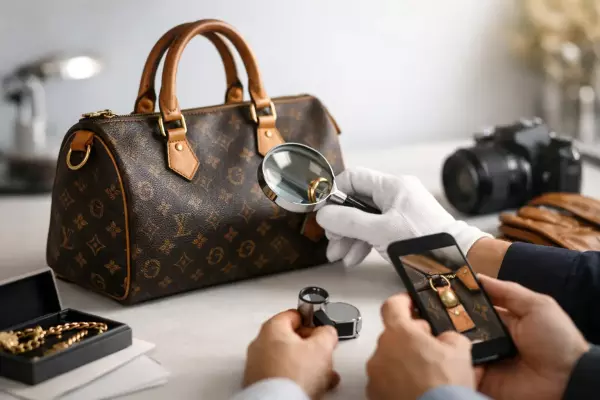
How to authenticate a vintage luxury bag?
With this in mind, purchasing from a recognized specialist profoundly changes the experience. At Les Malletiers, each piece comes with a certificate of authenticity issued by Jérôme Lalande, an expert appointed by the Paris Court of Appeal. For a discerning buyer, this level of rigor is not merely a comfort; it is a prerequisite for trust.
A timeless Chanel from the 1990s, a Kelly with subtle patina, an older Speedy that retains its structure—the desirability of a vintage luxury bag lies as much in its beauty as in its authenticity. On the secondary market, this authenticity is never a mere detail. It determines value, peace of mind, and, often, the very possibility of passing an item on in good condition.
Knowing how to authenticate a vintage luxury bag therefore requires more than just a quick glance. You must read an object as you would read an archival document—through its materials, its finishes, its house-specific vocabulary, and the consistent traces of time.
How to authenticate a vintage luxury bag without making a mistake
The first mistake is to look for a single decisive clue. In the world of vintage, authentication almost always relies on a combination of factors. A serial number may appear correct yet coexist with inconsistent hardware. A beautiful patina may be reassuring, even as the typography of the branding does not correspond to any credible production period.
In other words, authenticity is established through cross-referencing. The brand, the presumed era, the materials used, the way the bag has aged, its provenance, and the quality of the details must all tell the same story. As soon as one element tells a different story, caution is warranted.
The material often reveals the truth first
The leather of a genuine vintage luxury bag isn’t just visually appealing. It has a texture, density, and reaction to light that reveal precise craftsmanship. Hermès box calf doesn’t behave like Chanel grained leather. Vintage Louis Vuitton monogram canvas has a distinctive drape, far removed from the overly plasticized or artificially supple surfaces found on some counterfeits.
Aging is just as revealing. Authentic leather evolves with nuance. It may develop creases, gain a sheen, or loosen slightly in the right places. In contrast, inferior materials often age abruptly—with uniform cracking, abnormal shine, inconsistent discoloration, or a lingering chemical odor. True vintage ages with complexity, not caricature.
Finishes don’t lie for long
Leading houses distinguish themselves in the details of craftsmanship. Stitching must be even, clean, and suited to the design. A slightly angled seam may be normal on certain supple pieces, but general irregularity, loose stitches, or poorly chosen thread are red flags.
Hardware deserves special attention. The weight, the tone of the metal, the engraving, and the sharpness of the clasps or snap hooks matter greatly. On a high-quality vintage bag, the metal elements have a presence. They do not sound hollow and do not give the impression of having been added merely as decoration. Here again, one must consider the brand and the era. A gold tone that is too bright on an older model may look appealing, yet be historically questionable.
Markings, logos, and internal codes
One of the most common reflexes is to check only the interior logo. This is useful, but insufficient. A marking must be examined as a whole—font, spacing, depth of stamping, placement, exact wording, and consistency with the supposed decade.
Some brands have evolved their signatures over time. At Chanel, holograms and authenticity cards correspond to specific periods, but they are never sufficient on their own. At Louis Vuitton, date codes can be helpful, provided they are correctly interpreted. At Hermès, the markings, the quality of the stamping, and the artisan codes must be scrutinized rigorously, without jumping to conclusions.
The pitfall here is twofold. On one hand, some buyers overestimate the importance of internal codes. On the other, they forget that a very old bag may not feature the modern elements they hoped to find. The absence of a detail is therefore not always cause for suspicion. It may simply be consistent with the piece’s age.
Linings, Pockets, and Interiors
The interior of a bag often reveals what the exterior tries to conceal. The lining must correspond to the model, the expected material, and the brand’s manufacturing logic. A lining that looks too new in a bag that is clearly old may raise questions about restoration or replacement. This isn’t necessarily a deal-breaker, but it must be disclosed and understood.
Pockets, zippers, and compartments are also very revealing. The brand of the zipper, the shape of the slider, the color of the lining, or the presence of a pocket in an unusual location can signal an inconsistency. In vintage luxury, construction errors are rare. If the interior design seems slapdash, the doubt is legitimate.
Provenance matters almost as much as the item itself
A beautiful bag with poor documentation remains riskier than a beautiful item with clear provenance. Original invoice, old appraisal, vintage dust bag, proof of in-store purchase, ownership history—none of these elements replaces an examination of the bag, but all reinforce the credibility of the whole.
However, one must remain cautious. Original accessories get lost. Papers become separated from the items. The absence of an invoice does not automatically invalidate a vintage piece. On the other hand, a confusing provenance, evasive answers about the origin, or a seller unable to describe the model precisely should prompt caution.
In a market saturated with flattering images, the quality of the seller’s pitch is an indicator in itself. A serious professional accurately describes the condition, the era, any restorations, and points of concern. They do not compensate for a lack of certainty with vague phrases or excessive promises.
When Expertise Becomes Essential
There comes a point where even the most knowledgeable amateur eye must stop. This is particularly true for the most counterfeited brands, iconic models, and high-value pieces. The more sought-after a bag is, the more sophisticated the copies become.
A thorough appraisal does more than simply validate a logo. It places the item within its production timeline, examines the consistency of materials, compares details against the brand’s standards, and provides a definitive professional opinion. It is precisely this level of rigor that reassures discerning collectors.
In this spirit, purchasing from a recognized specialist profoundly transforms the experience. At Les Malletiers, each piece comes with a certificate of authenticity drafted by Jérôme Lalande, Expert at the Paris Court of Appeal. For a discerning buyer, this rigor is not merely an added comfort. It is a prerequisite for trust.
16 Mar 2026

A vintage leather bag isn’t stored like an ordinary accessory. Its material has a history, its patina has developed over time, and every crease speaks as much to its use as to the quality of its craftsmanship. Knowing how to care for a vintage leather bag means preserving a delicate balance between the bag’s structure, suppleness, and its history.
An older model by Hermès, Chanel, Louis Vuitton, Dior, or Gucci doesn’t just require attention. It requires precise care. Cleaning it too much can sometimes strip the surface. Moisturizing it too much risks softening the leather. Exposing it too much accelerates the wear that time has already begun to leave behind. Proper care is not about ostentation—it is about moderation.
## How to care for a vintage leather bag without damaging it
The first rule is to treat the bag according to its specific nature. Smooth box calf does not react the same way as supple lambskin. An antique patent leather bag isn’t treated like a coated canvas bag trimmed with natural leather. And a structured bag from the 1960s doesn’t have the same care requirements as a more recent, supple-looking tote. Before doing anything, you must observe.
Look at the surface, the condition of the corners, the state of the handles, the lining, the hardware, and also the smell. A musty smell may indicate improper storage. Excessive stiffness sometimes reveals dried-out leather. A slight rippling isn’t necessarily a defect—it can be part of the normal life of an antique piece.
Preserving, at its core, doesn’t mean restoring to new condition. It means slowing down wear and tear, preserving the original shape, and respecting the acquired patina.
### The Right Storage Environment
Vintage leather does not tolerate extremes. Direct light alters colors, particularly on natural leathers, deep reds, blues, burgundies, and certain delicate finishes. Humidity promotes mold, while overly dry air can harden the material and accentuate cracks.
The ideal setting is a temperate, well-ventilated room, protected from sunlight and heat sources. A closed walk-in closet may be suitable if it is neither damp nor overheated. However, a basement, attic, or poorly ventilated room should be avoided, even for temporary storage.
The bag should be placed in its fabric cover, never in plastic. Fabric allows the material to breathe. Plastic, on the other hand, traps moisture and can cause condensation, color transfer, or musty odors. If the original cover is missing, a clean cotton pillowcase is a preferable alternative.
### Preserving the Shape Without Straining the Material
This is one of the most overlooked points. An empty bag loses its structure. An overfilled bag becomes misshapen. The goal is to provide support without stretching the material.
The interior can be lined with plain tissue paper or unprinted paper, gently crumpled to fill the space without creating sharp angles. Avoid newspaper, which can transfer ink, and rigid materials that leave marks on the walls. For the handles or shoulder strap, it’s best to leave them in a natural position rather than folding them sharply inside.
Models with flaps require special care. If the clasp exerts continuous pressure on weakened leather, marks may appear.
In some cases, it is best to close the bag without fully tightening it, or to place a thin layer of tissue paper between the parts that come into contact.
## Clean with Care
The temptation to restore everything is understandable, especially when an old bag looks dull. However, vintage leather does not tolerate harsh cleaning routines. Light, regular care is better than an improvised restoration.
The safest approach is to dust it off with a soft, dry, lint-free cloth. This is often enough to restore the appearance of well-preserved leather. If a superficial mark appears, a slightly damp cloth may be suitable, provided you never soak the material or rub too hard on a fragile area.
Nourishing creams should be used with discretion. Dry leather can benefit from them, but using too much can sometimes darken the color, alter the sheen, or leave a greasy feel. On a collectible piece, it is wise to test the product on an inconspicuous area. Some antique leathers, particularly those with a high-gloss finish or varnish, do not respond well to generic care products.
### The Most Common Mistakes
Wipes, even those labeled “gentle,” are rarely suitable. Neither are universal stain removers. As for oils, thick balms, or homemade remedies, they often cause more damage than they repair. A heritage-style bag is not a utilitarian leather item.
You should also be wary of overzealous cleaning of the hardware. Antique metals sometimes have a patina consistent with the piece’s age. Polishing them excessively can create an artificial contrast or even alter their finish.
Finally, the lining deserves just as much attention as the exterior. Emptying it regularly, airing it out, and avoiding open cosmetics or unprotected pens significantly extends its lifespan. Many vintage bags lose their practical value due to a neglected interior rather than worn-out leather.
## Carrying a Vintage Bag Without Accelerating Its Aging
Taking good care of a bag also means carrying it properly. Certain daily habits have a direct impact on its longevity. Repeated contact with dark clothing, particularly raw denim, can cause color transfer—sometimes irreversible—on light-colored leathers. Hands that have recently been treated with hand cream or perfume also leave marks on the handles and flaps.
A vintage bag isn’t necessarily fragile, but it isn’t designed to withstand excessive modern-day strain. Stuffing it with a laptop, a metal water bottle, a heavy keychain, or a pile of bulky items eventually wears down the seams, pulls on the fasteners, and causes the shape to sag.
Rotating your collection is a form of care. Carrying the same piece every day, especially when it’s already several decades old, mechanically accelerates its wear. Rotating your collection gives the leather time to regain its shape and limits constant stress points.
### When should you consult a specialist?
As soon as cracks appear, along with noticeable discoloration, a peeling lining, a persistent musty odor, or a sagging structure, a professional’s expertise becomes invaluable. Not all artisans approach vintage pieces with the same sensitivity. With an antique item, the question isn’t just about repairing it, but knowing how far to go.
Overly visible restoration, sloppy recoloring, or the inappropriate replacement of metal parts can diminish a bag’s appeal, especially when it comes to a sought-after model. For a collector, preserving the item’s integrity often matters more than an artificially new appearance.
This is where serious expertise truly shines. In the secondhand luxury market, the actual condition, authenticity, and consistency of past interventions directly influence a piece’s desirability. At Les Malletiers, this standard is a natural part of assessing a heritage item.
## How to preserve a vintage leather bag over the long term
Over the years, consistency trumps dramatic interventions. A visual inspection every two or three months is often enough to detect warping, signs of moisture, or the onset of drying out. It’s best to take the bag out of its dust bag, air it out briefly, check its lining, and reposition the handles correctly.
If you own multiple pieces, keeping a record can also be helpful. Noting the date of purchase, the observed condition, any care performed, or past restorations helps track the evolution of each model. This attention to detail benefits both the collector and the future buyer, should the piece ever return to the market.
Finally, one must accept that beautiful vintage leather does not remain static. A patina evolves, a hue warms, and suppleness transforms. The real challenge is not to stop time, but to guide this evolution with intelligence. A well-preserved vintage bag does not lose its soul—it gains in presence.
Perhaps the best way to care for a vintage bag lies in this simple idea: treat it not as an object to be preserved behind glass, but as a piece of heritage that we nurture with discernment, so that it may continue to stand the test of time with grace.
27 Mar 2026