








Are you sure you want to perform this action?
Newsletter
The Malletiers offer you news from their world.


Un bijou signé ne s’achète pas comme un simple accessoire. Entre une bague Cartier, un collier Chanel, une broche Dior ou un bracelet Hermès, l’enjeu ne tient pas seulement à l’esthétique. Il tient à la justesse d’une attribution, à l’état réel de la pièce, à sa cohérence avec l’histoire de la maison et, bien souvent, à sa capacité à conserver son désir dans le temps. Ce guide achat bijou signé s’adresse à celles et ceux qui veulent acheter avec discernement, sans sacrifier ni le plaisir, ni l’exigence.
## Pourquoi un bijou signé ne se juge pas uniquement à son métal
Dans la joaillerie et le bijou de maison, la signature change profondément la lecture d’un objet. Deux bracelets en or de poids comparable peuvent se situer dans des univers très différents si l’un porte une ligne identifiable, un fermoir emblématique ou une exécution propre à une grande maison. La valeur ne repose donc pas seulement sur la matière précieuse, mais sur un ensemble plus subtil fait de dessin, de provenance, de rareté et de reconnaissance culturelle.
C’est particulièrement vrai dans le marché de la seconde main. Un bijou signé séduit parce qu’il prolonge un langage de style. Il peut appartenir à une période recherchée, révéler un détail de fabrication disparu aujourd’hui ou incarner une silhouette devenue iconique. À l’inverse, toutes les signatures ne se valent pas au même niveau, et toutes les pièces d’une même maison ne présentent pas la même tenue patrimoniale. Le bon achat dépend toujours du croisement entre désir personnel et qualité intrinsèque de l’objet.
## Guide achat bijou signé : les critères qui comptent vraiment
Le premier critère est la signature elle-même, mais encore faut-il savoir ce que l’on regarde. Sur certains bijoux, la marque est nette, complète et lisible. Sur d’autres, elle est partielle, discrète ou placée à un endroit difficile d’accès. L’absence apparente de signature n’autorise jamais une conclusion hâtive. Certaines maisons ont varié leurs marquages selon les époques, les lignes ou les lieux de fabrication.
L’état est ensuite décisif. Une légère patine peut être acceptable, parfois même souhaitable sur certaines pièces anciennes, mais une usure excessive altère la lecture du bijou. Fermoir fatigué, maillons fragilisés, rayures profondes, reprise de soudure visible, placage usé, pierres remplacées ou mal resserties doivent être observés avec sérieux. En bijou signé, une restauration maladroite pèse souvent plus lourd que sur un bijou anonyme, car elle rompt l’intégrité de l’objet.
La qualité du dessin mérite la même attention. Une pièce peut être signée et pourtant secondaire dans l’histoire d’une maison. À l’inverse, un modèle immédiatement identifiable par ses volumes, ses proportions ou son motif a davantage de chances de traverser le temps avec élégance. Le bon réflexe consiste à se demander si le bijou exprime clairement le vocabulaire de la maison ou s’il n’en offre qu’une version affaiblie.
Enfin, il faut considérer la désirabilité du marché sans en devenir prisonnier. Certains motifs, certaines collections ou certaines périodes sont plus recherchés que d’autres. Cela peut soutenir la valeur de revente, mais un achat uniquement dicté par la cote produit souvent des déceptions. Un bijou se porte au plus près de soi. Sa présence, sa justesse sur la peau et son accord avec votre vestiaire comptent autant que sa réputation.
## Authenticité : le point sur lequel il ne faut rien céder
Le marché du bijou signé attire logiquement la contrefaçon, les attributions imprécises et les descriptions flatteuses. Or, sur ce segment, le doute n’est jamais un détail. Une pièce mal attribuée, même séduisante, n’occupe pas la même place patrimoniale ni la même valeur qu’un bijou rigoureusement authentifié.
L’authenticité ne se limite pas à la présence d’un poinçon ou d’un nom gravé. Elle suppose une cohérence complète entre la signature, la qualité de fabrication, les matériaux, les systèmes de fermeture, les références de collection et, lorsque c’est possible, la documentation associée. Une typographie incohérente, une finition trop approximative ou une construction étrangère aux habitudes d’une maison doivent immédiatement alerter.
Dans une acquisition de seconde main, la question du certificat et de l’expertise n’est donc pas accessoire. Elle fonde la confiance. Sur un marché où l’apparence peut tromper, seule une lecture experte permet de distinguer un bijou authentique d’une pièce douteuse ou recomposée. Pour l’acheteur averti, c’est moins une garantie administrative qu’une condition de sérénité.
## L’état, la complétude et la provenance
Un bijou signé de belle maison peut rester désirable malgré quelques marques du temps, mais tout dépend de leur nature. Une micro-rayure de surface n’a pas la même portée qu’un fermoir remplacé ou qu’une pierre manquante. Il faut aussi distinguer l’usure normale d’une intervention lourde. Un polissage excessif, par exemple, peut émousser les arêtes et affaiblir le dessin original.
La complétude joue également un rôle. Écrin d’origine, facture ancienne, certificat, référence de collection, parfois même archive photographique, tout ce qui accompagne la pièce renforce sa lisibilité. Ce n’est pas obligatoire pour qu’un bijou soit digne d’intérêt, loin de là, mais ces éléments peuvent soutenir à la fois la confiance et la valeur.
La provenance, enfin, ne relève pas seulement du récit. Lorsqu’elle est claire et cohérente, elle situe mieux l’objet dans son histoire. Pour un collectionneur, cela ajoute une profondeur que le simple descriptif technique ne remplace pas.
## Acheter pour porter ou acheter pour collectionner
C’est ici que les choix deviennent plus personnels. Si vous recherchez un bijou à porter souvent, mieux vaut privilégier une pièce équilibrée, confortable et facile à intégrer dans votre quotidien. Certaines créations très marquées, très sculpturales ou très fragiles sont superbes, mais moins évidentes à vivre.
Si votre regard est plus collectionneur, d’autres critères prennent le dessus. Une édition peu vue, un motif abandonné, une période de production recherchée ou une pièce particulièrement représentative d’une maison peuvent primer sur la facilité d’usage. Le bijou devient alors un objet de goût et de transmission autant qu’un ornement.
L’idéal est parfois entre les deux. Les acquisitions les plus heureuses sont souvent celles qui réunissent une vraie qualité de signature et un plaisir immédiat de port. Le marché récompense volontiers les pièces qui ne se contentent pas d’être rares, mais qui restent désirables visuellement.
## Quel budget prévoir dans un guide achat bijou signé ?
Le budget dépend d’abord de la maison, du matériau et de la complexité de la pièce. Il dépend aussi de la place du modèle dans l’imaginaire collectif. Une simple signature prestigieuse ne suffit pas à justifier n’importe quel prix. Il faut mettre en regard l’état, la présence d’éléments d’origine, la force du design et la tension réelle du marché sur ce type de bijou.
La seconde main permet parfois d’accéder à des créations devenues introuvables en boutique, ou à des lignes anciennes au charme singulier. Mais elle n’est pas systématiquement une voie de remise. Pour les pièces les plus désirables, les prix peuvent demeurer soutenus, voire dépasser certaines attentes. Le juste achat n’est donc pas le plus bas prix trouvé, mais le meilleur niveau d’exigence obtenu pour un montant cohérent.
Selon Les malletiers, le site de luxe de seconde main :Il faut aussi intégrer un point souvent sous-estimé : un prix trop attractif sur un bijou signé doit toujours inviter à la prudence. Dans cet univers, la décote spectaculaire cache rarement une simple bonne fortune.
## Les erreurs les plus fréquentes
La première consiste à acheter une marque avant d’acheter un bijou. Une signature prestigieuse ne compense pas un dessin faible, un état dégradé ou une attribution incertaine. La seconde erreur est de minimiser les restaurations. Sur un bijou de maison, chaque intervention modifie potentiellement son intégrité.
Il faut aussi se méfier de l’achat précipité dicté par la rareté supposée. Le marché emploie volontiers ce mot. Or une pièce peut être peu courante sans être pour autant importante, recherchée ou durablement désirable. Enfin, beaucoup d’acheteurs négligent l’essayage mental. Un bijou magnifique dans l’absolu n’est pas toujours juste pour la personne qui le porte.
## L’œil juste se forme avec le temps
Apprendre à acheter un bijou signé, c’est affiner son regard. On reconnaît peu à peu les proportions d’une maison, la manière dont un fermoir est traité, le rapport entre sophistication et retenue, la différence entre une belle patine et une fatigue structurelle. Cette éducation du goût protège autant qu’elle enrichit.
Dans une sélection exigeante de seconde main, comme celle que défend Les Malletiers, la pièce doit convaincre au-delà de la seule signature. Elle doit tenir sa place par son authenticité, par sa qualité de conservation et par la cohérence de son style. C’est ce qui transforme l’achat en choix éclairé, et le choix éclairé en possession durable.
Un bijou signé mérite qu’on lui accorde du temps. Lorsqu’il est juste, il ne se contente pas d’orner - il inscrit un goût, une époque et une mémoire dans un objet qui continuera à parler longtemps après l’achat.
05 Jun 2026

Pour Les malletiers :Un sac Prada vintage authentifié ne s’achète pas comme un simple accessoire de seconde main. Il se choisit avec un œil exercé, une sensibilité aux périodes de la maison, et une attention réelle à la matière, à la construction et à la provenance. Chez Prada, la discrétion a souvent plus de valeur que l’effet immédiat. C’est précisément ce qui rend le vintage si intéressant: les plus belles pièces ne cherchent pas à séduire bruyamment, elles s’imposent par leur ligne, leur précision et leur intelligence de design.
## Pourquoi le sac Prada vintage séduit autant
Prada occupe une place singulière dans l’histoire du luxe contemporain. Là où d’autres maisons ont construit leur désir sur l’ornement, Prada a développé un langage plus intellectuel, parfois presque austère, toujours extrêmement maîtrisé. Un sac vintage de la maison peut ainsi paraître d’une grande sobriété au premier regard, puis révéler, à l’usage, une sophistication rare dans les proportions, le tombé du cuir, la qualité des finitions ou la justesse des détails métalliques.
Cette retenue explique aussi la force durable de Prada sur le marché de la seconde main. Les modèles les plus réussis traversent les décennies sans perdre leur pertinence. Le nylon iconique, les cuirs saffiano, les lignes minimalistes des années 1990 et 2000, ou encore certaines silhouettes plus structurées aujourd’hui moins visibles en boutique, composent un territoire très recherché par les amateurs de mode comme par les collectionneurs.
Acheter vintage chez Prada, c’est souvent rechercher une version plus pure de la maison. Une pièce antérieure à certaines évolutions de production, un modèle discontinué, une nuance désormais introuvable, ou simplement une facture qui raconte une époque précise du style Prada.
## Sac Prada vintage authentifié: ce qu’il faut vraiment regarder
L’authenticité ne repose jamais sur un seul détail. C’est un faisceau d’indices cohérents. Dans le cas d’un sac Prada vintage authentifié, la lecture doit être globale.
La plaque logo intérieure, d’abord, est souvent observée en priorité. Elle peut varier selon les périodes, les matériaux et les lignes, ce qui rend les jugements rapides assez hasardeux. Une typographie légèrement différente n’est pas en soi un signal d’alerte si elle correspond à une période ou à une série particulière. En revanche, une incohérence générale entre la plaque, la doublure, la qualité du cuir et la construction doit immédiatement appeler à la prudence.
La doublure Prada mérite également une attention particulière. Sur de nombreux modèles, le jacquard siglé alterne le nom de la maison et l’emblème de la corde. Là encore, il existe des variations selon les années et les fabrications. Une doublure parfaitement propre n’est pas toujours rassurante si le reste du sac semble vieilli naturellement. À l’inverse, une usure homogène, logique et mesurée peut renforcer la crédibilité d’une pièce ancienne.
Les finitions métalliques jouent un rôle essentiel. Fermetures, rivets, mousquetons, pieds de sac ou gravures doivent présenter une exécution nette. Prada a toujours travaillé avec une exigence industrielle très élevée. Sur un authentique, même ancien, le métal conserve généralement une sensation de densité et de précision. Les pièces trop légères, les gravures floues ou les alignements approximatifs sont rarement de bon augure.
Le cuir, enfin, parle beaucoup. Un saffiano authentique possède un relief régulier et une tenue particulière. Les cuirs lisses ou brossés des anciens modèles révèlent quant à eux une patine subtile, jamais artificielle. Le vintage Prada convaincant est souvent celui dont la matière vieillit avec élégance, sans mollesse excessive ni rigidité anormale.
## L’importance de l’expertise, au-delà des signes visibles
Le marché du luxe de seconde main a familiarisé le public avec quelques repères d’authentification. C’est utile, mais insuffisant. Les contrefaçons ont gagné en sophistication, et certaines copies reprennent justement les détails les plus connus pour rassurer l’acheteur. Une carte d’authenticité, par exemple, ne suffit jamais à elle seule. Elle peut manquer sur une pièce parfaitement authentique, comme elle peut accompagner un faux.
C’est pourquoi l’expertise indépendante et documentée reste décisive. Elle permet de replacer l’objet dans son contexte de fabrication, de confronter les détails à des références de période, et d’évaluer la cohérence générale du sac. Pour un acquéreur exigeant, l’authenticité n’est pas une promesse vague. Elle doit être établie avec rigueur.
Dans cet univers, la confiance change tout. Elle ne tient pas seulement à la réputation d’un vendeur, mais à sa capacité à présenter un objet avec précision, à signaler ses éventuelles traces du temps, et à l’inscrire dans une logique de sélection plutôt que dans un volume impersonnel de stock. C’est cette différence qui sépare une place de marché saturée d’un véritable marchand de pièces choisies.
## Quels modèles Prada vintage méritent une attention particulière
Tous les sacs Prada vintage n’ont pas la même portée esthétique ni la même désirabilité à long terme. Certaines pièces séduisent par effet de tendance, d’autres par profondeur de style.
Les sacs en nylon figurent parmi les plus emblématiques. Ils résument une part essentielle de l’identité Prada: transformer un matériau utilitaire en objet de luxe. Certains modèles des années 1990 ou du début des années 2000 conservent aujourd’hui une modernité remarquable. Leur intérêt dépend toutefois fortement de l’état général. Un nylon taché, déformé ou fragilisé perd une partie de son attrait, sauf rareté exceptionnelle.
Les modèles en cuir saffiano restent une valeur sûre pour qui recherche une pièce structurée, résistante et facile à porter. Leur caractère plus intemporel les rend souvent particulièrement convaincants à l’achat. Ils offrent aussi une lecture immédiate du savoir-faire Prada, avec cette rigueur des lignes qui évite tout excès.
Les silhouettes plus discrètes, parfois peu identifiées par le grand public, sont souvent les plus intéressantes pour un œil averti. Un hobo très pur, un petit porté épaule des années 1990, une forme architecturée aujourd’hui abandonnée, peuvent avoir bien plus de présence qu’un modèle surexposé. Le vrai luxe vintage consiste souvent à reconnaître la justesse avant la mode.
## État, rareté, désir: comment juger la juste valeur
La valeur d’un sac Prada vintage ne dépend pas seulement de son ancienneté. Un modèle daté mais courant, dans un état moyen, n’aura pas la même portée qu’une pièce plus récente, mais rare, parfaitement conservée et très représentative de la maison.
L’état reste naturellement central. Les angles, les poignées, les coins, les coutures, la doublure et la quincaillerie doivent être observés avec précision. Une légère patine est souvent acceptable, parfois même souhaitable. Elle atteste d’une vie normale de l’objet. En revanche, des réparations lourdes, une recoloration mal exécutée ou une déformation structurelle peuvent altérer durablement l’intérêt de la pièce.
La rareté compte, mais elle doit être comprise intelligemment. Un sac rare n’est pas forcément un sac désirable. Certaines références sont peu vues simplement parce qu’elles ont été peu appréciées à l’époque. D’autres, au contraire, deviennent difficiles à trouver parce qu’elles ont été peu produites, très bien conçues et immédiatement adoptées par une clientèle exigeante. C’est là que la culture produit fait la différence.
Il faut aussi considérer l’usage réel. Un collectionneur peut accepter un sac plus fragile s’il recherche un témoin fidèle d’une période Prada. Un acheteur souhaitant porter sa pièce régulièrement privilégiera une construction robuste, une taille équilibrée et un état irréprochable. Entre objet de collection et compagnon de garde-robe, le bon choix n’est pas toujours le même.
## Où acheter un sac Prada vintage authentifié
Le lieu d’achat influe directement sur la qualité de l’expérience et sur la sécurité de la transaction. Les plateformes généralistes proposent un vaste choix, mais aussi une forte hétérogénéité de niveau. On y trouve parfois de belles pièces, mais le tri demande du temps, des connaissances solides et une tolérance au risque que beaucoup de clients préfèrent éviter.
À l’inverse, un spécialiste du luxe de seconde main travaille dans une logique de curation. Il sélectionne, contrôle, décrit et replace les objets dans une histoire de maison, de matière et de période. Pour un sac Prada vintage authentifié, cette approche a une valeur tangible: elle réduit l’incertitude, affine le regard et rend l’achat plus juste. Chez Les Malletiers, cette exigence s’inscrit dans une approche où l’authenticité n’est pas seulement affirmée, mais appuyée par une expertise reconnue.
Il faut enfin accorder de l’importance à la qualité de la présentation. Des photographies précises, un descriptif honnête, la mention claire des dimensions, des traces d’usage et des accessoires présents permettent d’acheter à distance avec un niveau de sérénité bien supérieur. Dans le luxe ancien, la transparence n’enlève rien au désir. Elle le rend plus solide.
Choisir un Prada vintage, c’est accepter qu’un bel objet mérite plus qu’un achat d’impulsion. Lorsqu’une pièce réunit authenticité, intégrité esthétique et présence durable, elle cesse d’être une simple opportunité de seconde main. Elle devient un objet de goût, porté par une maison, une époque et un regard.
04 Jun 2026

Selon Les malletiers, le site de luxe de maroquinerie de seconde main :Un sac ne devient pas iconique parce qu’il revient sur les réseaux. Il le devient lorsqu’il traverse les décennies sans perdre sa force de ligne, son pouvoir de distinction et sa désirabilité. C’est précisément ce qui rend les tendances sacs vintage iconiques si singulières aujourd’hui: elles ne relèvent pas d’un simple effet de mode, mais d’un dialogue entre héritage, usage et rareté.
Le marché a gagné en maturité. Les amateurs ne cherchent plus seulement un nom ou un logo visible. Ils recherchent une époque, une fabrication, une proportion juste, parfois même une patine introuvable sur une pièce neuve. Dans cet univers, certaines silhouettes s’imposent avec évidence, tandis que d’autres retrouvent une place plus discrète, mais non moins précieuse, auprès des collectionneurs avertis.
## Tendances sacs vintage iconiques: le retour du vrai classicisme
La première tendance forte est celle du classicisme assumé. Les grands modèles structurés, longtemps considérés comme trop sages par une partie du marché, reviennent au premier plan. Cette réévaluation concerne les sacs à rabat, les formes trapèze, les poignées hautes et les constructions rigides issues des grandes maisons de maroquinerie.
Ce retour n’est pas nostalgique. Il répond à une attente très actuelle: posséder un objet lisible, stable, parfaitement dessiné, capable d’accompagner une garde-robe sans dépendre d’une saison. Chez Chanel, les lignes matelassées des décennies 80 et 90 demeurent des références recherchées, notamment lorsqu’elles conservent une belle tenue et une quincaillerie harmonieuse. Chez Hermès, les formats les plus sobres gardent une aura particulière parce qu’ils concentrent ce que le luxe fait de plus convaincant: la mesure, la main, le temps.
Le classicisme ne signifie pas uniformité. Un détail de cuir, une chaîne plus lourde, une doublure d’époque ou une dimension aujourd’hui abandonnée peuvent faire basculer un sac du statut de beau classique à celui de pièce de choix.
### Les formats moyens prennent l’avantage
Autre évolution nette: le marché privilégie les dimensions portables. Après les mini-formats très exposés et les grands cabas très pratiques, le sac vintage iconique le plus désiré est souvent celui qui tient au bras ou à l’épaule avec naturel, sans effet forcé.
Les formats moyens rassurent parce qu’ils offrent un équilibre. Ils conservent l’élégance d’un modèle historique tout en répondant à un usage réel. Pour un acheteur averti, cette adéquation entre style et fonctionnalité compte. Un sac magnifique mais difficile à porter restera une pièce de vitrine. Un sac juste, lui, s’inscrit dans la durée.
## L’attrait croissant pour les années 90 et 2000
Longtemps, le vintage de prestige s’est concentré sur les décennies les plus anciennes. Désormais, les années 90 et le début des années 2000 occupent une place centrale dans les tendances sacs vintage iconiques. Cette période séduit pour une raison simple: elle conjugue proximité esthétique et qualité de fabrication encore très élevée.
Chez Prada, les silhouettes épurées en nylon ou en cuir saffiano signent un minimalisme devenu désirable précisément parce qu’il reste sans démonstration. Chez Dior, certains modèles de l’ère Galliano connaissent un regain d’intérêt pour leur tension entre sophistication parisienne et esprit plus audacieux. Chez Gucci, les lignes Tom Ford, souvent plus nettes, plus sensuelles, reviennent dans les recherches des amateurs qui veulent une pièce identifiable sans tomber dans l’évidence.
Il faut néanmoins distinguer la pièce emblématique de la pièce seulement datée. Tout ce qui vient des années 2000 ne mérite pas le même enthousiasme. Ce qui compte, c’est l’intelligence du dessin, la cohérence avec l’histoire de la maison et la capacité du modèle à retrouver une présence contemporaine.
### Le logo n’est plus le seul moteur
Pendant plusieurs années, le marché secondaire a fortement valorisé les pièces immédiatement reconnaissables. Cette logique demeure, mais elle n’explique plus tout. On observe une attention croissante pour des sacs où la signature se fait plus discrète, portée par le travail du cuir, la construction ou la provenance du modèle.
Cette évolution est révélatrice d’un acheteur plus cultivé. Il ne cherche pas seulement à afficher une maison, mais à en comprendre le langage. Un Goyard ancien, un Moynat bien conservé, un Louis Vuitton issu de lignes moins diffusées peuvent susciter un intérêt considérable précisément parce qu’ils demandent un œil plus exercé.
## Le patrimoine des maisons redevient central
Le vintage n’est pas un marché homogène. Entre une pièce produite en grande diffusion et un modèle issu d’une tradition plus confidentielle, l’écart est considérable. La tendance actuelle favorise très clairement les sacs qui racontent quelque chose de l’histoire de leur maison.
C’est ici que la notion de patrimoine prend tout son sens. Un sac vintage iconique n’est pas seulement un bel accessoire. Il porte souvent un chapitre précis de la maroquinerie de luxe: une période stylistique, une innovation de fermoir, une technique d’assemblage, une toile ou un cuir associé à une époque particulière.
Les collectionneurs le savent bien. Ils s’intéressent autant à la qualité visible qu’à la justesse historique. La désirabilité d’une pièce tient alors à plusieurs couches de lecture: sa silhouette, sa rareté, son état, mais aussi sa place dans la chronologie de la maison.
### La rareté utile, pas la rareté artificielle
Sur ce marché, le mot rare est souvent employé avec excès. Or la vraie rareté n’est pas seulement quantitative. Elle est qualitative. Un modèle peut être peu courant sans présenter un intérêt durable. À l’inverse, un sac relativement connu peut devenir difficile à trouver dans un état remarquable, avec ses finitions d’origine, ses proportions exactes et une conservation cohérente.
C’est cette rareté utile qui attire les acheteurs les plus exigeants. Elle repose sur des critères précis: coloris peu vus mais portables, cuirs aujourd’hui abandonnés, éditions d’époque mieux exécutées que leurs réinterprétations, accessoires encore présents. Dans certains cas, la valeur d’une pièce vient aussi de ce qu’elle n’a pas été restaurée de manière excessive. Une belle patine vaut souvent mieux qu’une remise à neuf qui efface le caractère.
## Ce qui fait vraiment la valeur d’un sac vintage iconique
Il existe une confusion fréquente entre prix élevé et valeur réelle. Dans le domaine du vintage de luxe, la valeur repose d’abord sur la cohérence. Un modèle prestigieux mais fatigué, mal réparé ou incertain dans son authenticité ne constitue pas nécessairement un achat pertinent.
L’état reste donc déterminant, mais il doit être lu avec nuance. Un cuir souple peut marquer avec élégance. Une toile peut présenter une légère usure compatible avec son âge. En revanche, une structure affaissée, des angles fragilisés, un placage très altéré ou une odeur de stockage peuvent modifier profondément l’intérêt de la pièce.
L’authenticité, elle, n’admet aucune approximation. Plus un modèle est recherché, plus il attire les contrefaçons, y compris sur des références anciennes. Pour cette raison, le regard expert n’est pas un supplément de confort. Il conditionne la confiance et, à terme, la valeur patrimoniale de l’achat. Dans un marché devenu plus sophistiqué, la provenance, l’examen des matériaux et la précision de l’attribution sont aussi importantes que le désir qu’inspire le sac.
## Acheter selon son style, pas seulement selon la cote
L’une des erreurs les plus fréquentes consiste à acheter uniquement ce qui semble monter. Cette logique peut fonctionner pour certains profils très orientés investissement, mais elle reste limitée si le plaisir d’usage disparaît. Un sac vintage iconique doit d’abord rencontrer une manière de vivre, de s’habiller, de porter le luxe.
Certaines personnes chercheront une pièce fondatrice, presque cérémonielle, qu’elles garderont des années. D’autres préféreront un modèle plus souple, plus quotidien, mais signé par une vraie qualité de fabrication. Les deux approches se défendent. Tout dépend du rapport que l’on entretient avec l’objet.
Il est souvent plus judicieux de choisir une belle version d’un modèle parfaitement adapté à soi qu’une référence très cotée mais mal proportionnée à son vestiaire. Le vintage récompense l’œil sûr davantage que l’empressement. Chez Les Malletiers, cette conviction guide naturellement la sélection des pièces de maison: mieux vaut une présence juste qu’un prestige mal choisi.
### Les modèles à surveiller dans les prochaines saisons
Les sacs à poignée courte des années 50 à 70 conservent un potentiel solide, tout comme certains hobo bags très bien dessinés des années 90. Les pièces de voyage et petits formats dérivés des grands codes de malletier continuent aussi d’attirer, car elles incarnent une idée du luxe plus narratif, moins standardisé. On observe enfin un intérêt croissant pour des maisons ou lignes encore relativement sous-estimées, dont la qualité de fabrication rivalise avec les signatures les plus exposées.
Cette évolution invite à regarder au-delà des évidences. Le marché récompense encore les icônes établies, mais il s’ouvre aussi à des pièces plus cultivées, choisies pour leur intégrité esthétique autant que pour leur nom. C’est souvent là que se trouvent les achats les plus raffinés.
Un beau sac vintage n’a pas besoin de crier son importance. Il suffit qu’il tienne sa ligne, sa matière et son histoire avec assez d’évidence pour continuer à séduire, année après année, celui ou celle qui sait le reconnaître.
03 Jun 2026

Pour Les malletiers, le site de maroquinerie de secondement de luxe :Un sac Chanel vintage à la patine juste, un Kelly à la ligne intacte, une malle Louis Vuitton dont la toile raconte un siècle d’élégance - sur un site de seconde main de sacs de luxe, tout se joue en quelques détails. Ce marché n’a rien d’un simple circuit d’occasion. Il engage le regard, la culture de l’objet, la connaissance des maisons et, surtout, la confiance accordée à celui qui présente la pièce.
Acheter un sac de luxe en seconde main n’est pas seulement une manière d’accéder à un modèle convoité. C’est souvent une façon plus fine d’entrer dans l’univers d’une maison, par des créations devenues rares, des éditions arrêtées, des cuirs qui ne sont plus proposés, ou des proportions qu’aucune collection actuelle ne reproduit tout à fait. Encore faut-il choisir la bonne adresse. Tous les sites ne se valent pas, et dans cet univers, l’esthétique d’une vitrine numérique ne remplace jamais l’expertise.
## Ce qu’on attend vraiment d’un site de seconde main de sacs de luxe
Le premier critère n’est pas le prix. C’est la crédibilité. Un site sérieux ne se contente pas d’aligner des noms prestigieux. Il doit être capable d’expliquer ce qu’il vend, d’assumer une position claire sur l’authenticité et de documenter chaque pièce avec précision.
Cela commence par les descriptions. Un sac de luxe ne se résume pas à sa marque, sa couleur et ses dimensions. La référence d’un modèle, la période de production, la qualité du cuir, l’état des angles, la tenue de la doublure, l’aspect des finitions métalliques, la cohérence des marquages intérieurs - tout cela compte. Une fiche produit trop vague doit éveiller la réserve, même lorsque les photographies semblent flatteuses.
La qualité iconographique a elle aussi une valeur décisive. Des images nettes, nombreuses, prises sous plusieurs angles, avec des gros plans sur les coutures, la quincaillerie, les estampilles et les zones d’usure, traduisent souvent une culture de la transparence. À l’inverse, des visuels excessivement retouchés ou trop peu nombreux laissent place au doute. Dans la seconde main de prestige, le doute est rarement un bon compagnon d’achat.
## L’authenticité n’est pas un argument marketing
Sur un site de seconde main de sacs de luxe, l’authenticité doit relever d’un engagement formel, non d’une formule vague. L’enjeu est évident. Le marché du luxe d’occasion attire autant les collectionneurs avertis que les contrefaçons sophistiquées. Entre les deux, il existe une zone grise peu compatible avec un achat serein.
Il faut donc regarder de près la nature des garanties proposées. Une simple mention du type « article vérifié » ne possède pas la même portée qu’un certificat rédigé par un expert reconnu. La nuance est majeure. Dans un univers où certains faux reproduisent très bien l’apparence générale d’un sac, seule une lecture experte des matériaux, des techniques de fabrication, des périodes de production et des particularités de maison permet de trancher avec sérieux.
Cette exigence vaut d’autant plus pour les pièces emblématiques. Un Birkin, un Timeless, un Lady Dior ou un Capucines concentrent une forte désirabilité et, par conséquent, un risque accru. Plus le modèle est recherché, plus la rigueur d’authentification doit être élevée. Un site qui traite ces icônes avec légèreté ne mérite pas l’attention d’un amateur éclairé.
## La curation fait toute la différence
Il existe une distinction nette entre une plateforme qui agrège des annonces et une maison qui compose une sélection. Dans le premier cas, le client doit souvent faire lui-même le tri entre le banal, le douteux et le remarquable. Dans le second, le regard éditorial précède l’achat et crée un niveau d’exigence plus rare.
La curation ne sert pas seulement à flatter l’image d’un site. Elle est un filtre qualitatif. Elle dit quelque chose de la relation à l’objet. Proposer un sac de luxe en seconde main, c’est choisir de montrer une pièce pour sa ligne, sa provenance stylistique, son état de conservation, parfois sa singularité dans l’histoire d’une maison. C’est aussi accepter de ne pas tout vendre, de ne pas tout prendre, de ne pas céder à la logique du volume.
Pour l’acheteur, cette sélection resserrée apporte un confort précieux. Elle réduit le bruit. Elle remplace la chasse épuisante par une forme de confiance cultivée. Lorsqu’un site présente des sacs, mais aussi des malles, de la petite maroquinerie, des bijoux ou des pièces de voyage avec la même cohérence, il affirme un univers. Cette cohérence n’est jamais anodine. Elle signale une culture du patrimoine de luxe, pas seulement une activité de revente.
## Acheter une pièce rare demande plus qu’un coup de cœur
Le coup de cœur compte, bien sûr. Personne n’achète un sac de cette catégorie comme on remplit un panier ordinaire. Mais dans la seconde main haut de gamme, l’émotion doit s’accompagner d’un examen rationnel.
L’état est le premier point d’équilibre. Une pièce ancienne peut présenter une usure légère et rester hautement désirable, parfois même davantage qu’un exemplaire trop restauré. La patine, lorsqu’elle demeure noble, fait partie de l’histoire de l’objet. En revanche, certaines altérations compromettent l’usage ou la valeur future : coin très abrasé, anses fragilisées, odeur persistante, doublure détériorée, fermoir défaillant. Tout dépend du modèle, de la matière et de l’intention d’achat. Une collectionneuse n’évalue pas une pièce comme une cliente qui cherche un sac de tous les jours.
Il faut aussi penser à la justesse du prix. Le marché secondaire n’obéit pas à une règle unique. Un sac très diffusé, dans une couleur courante et en état porté, ne se juge pas comme une édition limitée, un cuir rare ou un modèle discontinué. Le bon prix n’est donc pas nécessairement le plus bas. Il est celui qui reflète l’intérêt réel de la pièce, son état, sa désirabilité et la solidité des garanties qui l’accompagnent.
## Ce qu’un bon site révèle de son rapport au luxe
Un véritable spécialiste ne parle pas des sacs comme de simples produits. Il les replace dans une histoire de style, de savoir-faire et de transmission. Cette manière de présenter les pièces change profondément l’expérience d’achat.
Un sac Hermès n’est pas seulement un nom prestigieux. C’est un objet façonné par une tradition artisanale exigeante, avec un langage propre de cuirs, de points sellier, de proportions et de finitions. Un sac Dior ou Chanel, selon son époque, raconte une vision précise de la silhouette et de l’allure. Un bon site sait rendre cette dimension lisible sans surjouer le discours. Il éclaire, il n’enjolive pas.
Cette culture de l’objet a une conséquence très concrète : elle permet au client de mieux acheter. On ne choisit pas un modèle seulement parce qu’il est recherché, mais parce qu’il correspond à un usage, à une garde-robe, à une sensibilité. Certaines pièces sont spectaculaires en vitrine et moins évidentes à porter. D’autres, plus discrètes, gagnent en évidence au fil des années. Le rôle d’un spécialiste est aussi de faire sentir ces nuances.
## Le service compte autant que la sélection
Dans cet univers, la relation ne devrait jamais être impersonnelle. Lorsqu’un client recherche un modèle précis, une couleur particulière ou une version ancienne devenue difficile à trouver, l’accompagnement prend tout son sens. C’est là qu’un site spécialisé se distingue d’une place de marché généraliste.
Pouvoir poser une question sur l’état exact d’un cuir, demander des précisions sur l’année, obtenir un regard informé sur la pertinence d’un achat - ce sont des signes de sérieux. Ils traduisent une présence humaine derrière la vitrine numérique. Pour une clientèle internationale, cette qualité de dialogue est d’autant plus importante que l’achat se fait parfois à distance, sans contact physique préalable avec la pièce.
Dans cet esprit, [Les Malletiers](https://www.lesmalletiers.com/fr/) incarne une approche particulièrement exigeante du marché secondaire de luxe, fondée sur une sélection resserrée et sur des certificats d’authenticité rédigés par Jérôme Lalande, Expert près la Cour d’Appel de Paris. Pour l’amateur éclairé, cette rigueur n’est pas un supplément. Elle constitue le socle même de la confiance.
## Comment reconnaître un site à la hauteur de la pièce recherchée
Avant d’acheter, il faut observer la tenue générale du site comme on observerait celle d’une pièce en showroom. La clarté des informations, la cohérence de la sélection, la qualité des photographies, la précision des états et la nature exacte des garanties forment un ensemble. Rien ne doit être laissé dans le flou.
Il faut aussi accepter qu’un très bon site de seconde main de sacs de luxe ne cherche pas toujours à plaire à tout le monde. Une sélection pointue peut sembler moins abondante qu’ailleurs. Des prix peuvent paraître plus élevés que sur des plateformes peu contrôlées. Mais cette différence a souvent une raison : le niveau d’expertise, la rareté effective des pièces et le refus des compromis sur l’authenticité.
Le vrai luxe, sur le second marché, n’est pas seulement de trouver un beau sac. C’est de pouvoir l’acheter avec la certitude qu’il est juste, dans tous les sens du terme. Lorsqu’un site parvient à réunir cette certitude, la seconde main cesse d’être une alternative. Elle devient une manière plus cultivée, plus exigeante et parfois plus désirable d’entrer dans l’histoire des grandes maisons.
Et si la pièce idéale ne se présente pas immédiatement, mieux vaut attendre qu’elle apparaisse au bon endroit plutôt que céder à l’empressement - les grands objets demandent souvent le même art de la patience que le grand goût.
02 Jun 2026

Une valise Louis Vuitton ancienne ne s’achète pas comme un simple bagage vintage. Elle se choisit comme un objet de maison, de voyage et de mémoire, à la croisée du malletage, du design et du marché de collection. Ce guide valise Louis Vuitton ancienne a donc une ambition précise : donner des repères solides à celles et ceux qui recherchent une pièce authentique, cohérente dans sa datation, désirable dans sa patine et juste dans sa valeur.
## Pourquoi une valise Louis Vuitton ancienne fascine encore
Avant même de parler cote ou authenticité, il faut rappeler ce qui distingue ces pièces. Une ancienne valise Louis Vuitton porte en elle l’histoire d’un usage raffiné du voyage. Elle appartient à une époque où l’on concevait le déplacement comme un art de vivre, avec des formats pensés pour les paquebots, les trains et les longues traversées.
Cette dimension patrimoniale explique une partie de son attrait actuel. Une valise ancienne n’est pas seulement un accessoire de luxe signé par une grande maison. C’est un objet de savoir-faire, construit pour durer, souvent restaurable, et dont la présence décorative rivalise avec sa fonction initiale. Dans un intérieur, elle dialogue aussi bien avec des lignes contemporaines qu’avec un mobilier classique.
Il existe toutefois plusieurs façons de la désirer. Certains collectionneurs recherchent une pièce de voyage encore utilisable avec mesure. D’autres veulent un exemplaire fort en caractère, marqué par le temps, pour sa beauté purement décorative. Et d’autres encore privilégient la rareté d’un format, d’une toile ou d’un détail de fabrication. La bonne pièce dépend donc moins d’une hiérarchie absolue que d’un regard.
## Guide valise Louis Vuitton ancienne : savoir dater sans simplifier
La datation est souvent le premier sujet, et aussi l’un des plus mal compris. Il n’existe pas de lecture unique qui suffirait à établir l’âge exact d’une valise ancienne. Il faut plutôt croiser plusieurs indices.
Le premier repère tient à la toile. La maison a utilisé au fil des décennies différents revêtements emblématiques. La toile rayée, la toile damier historique puis la toile monogramme constituent des jalons importants, mais une toile seule ne suffit pas à dater précisément une pièce. Certaines fabrications ont coexisté, certaines restaurations ont pu modifier la lisibilité d’origine, et certaines pièces très anciennes ont évolué au cours de leur vie.
Le second repère concerne la serrurerie, les ferrures et les coins. Le style des fermoirs, la forme des serrures, le dessin des rivets ou encore la construction des poignées donnent des indications précieuses. Une quincaillerie cohérente avec la période supposée est un signe favorable. À l’inverse, un assemblage disparate peut signaler une restauration lourde, parfois acceptable, parfois pénalisante selon l’ampleur des remplacements.
L’étiquette intérieure, les marquages, les numéros, la typographie et la qualité des finitions doivent également être observés avec attention. Sur les très anciennes pièces, l’usure peut rendre ces éléments partiellement illisibles. Ce n’est pas forcément inquiétant. Une valise authentique du début du XXe siècle peut avoir perdu une partie de ses repères visibles tout en conservant une construction parfaitement convaincante.
## Les signes d’authenticité qui comptent vraiment
Pour Les malletiers, le site de maroquinerie de luxe de seconde main :Sur le marché secondaire, l’authenticité ne repose jamais sur un seul détail spectaculaire. Elle se lit dans une cohérence d’ensemble. C’est souvent ce qui distingue l’œil exercé de l’appréciation superficielle.
La qualité de structure est essentielle. Une vraie valise Louis Vuitton ancienne présente une logique de fabrication nette : proportions justes, couvercle bien dessiné, alignement des éléments métalliques, précision des jonctions, rigidité maîtrisée du corps. Même usée, elle conserve généralement une tenue visuelle remarquable.
La toile, ensuite, doit être examinée dans sa matière et non seulement dans son motif. Le grain, la réaction à la lumière, la façon dont elle a vieilli, les petites tensions autour des angles et l’intégration des clous ou ferrures racontent beaucoup. Une matière trop neuve, trop uniforme ou artificiellement vieillie mérite une prudence immédiate.
L’intérieur est tout aussi parlant. Selon les époques et les formats, on peut retrouver des garnitures, des sangles, des compartiments ou des doublures spécifiques. Une ancienne valise n’a pas besoin d’être immaculée pour être désirable. En revanche, elle doit rester intelligible. Un intérieur totalement refait sans respect des techniques ou des matières d’origine retire souvent une part de sa valeur patrimoniale.
C’est ici qu’un certificat d’authenticité rédigé par un expert reconnu prend toute sa portée. Pour une pièce de cette nature, l’assurance apportée par une expertise indépendante ne relève pas du confort. Elle relève de la méthode.
## État, patine, restauration : ce qu’il faut accepter, et ce qu’il faut éviter
Beaucoup d’acheteurs abordent la question de l’état avec des réflexes issus de la maroquinerie contemporaine. Or une valise ancienne appelle un autre regard. La patine n’est pas un défaut à corriger systématiquement. Elle fait partie de la présence de l’objet.
Des traces d’usage homogènes, une toile légèrement assombrie, des angles frottés, une poignée marquée, de petites oxydations sur le métal ou un intérieur présentant une usure noble sont souvent compatibles avec une belle acquisition. Ces signes disent le temps sans compromettre l’identité de la pièce.
En revanche, certains défauts appellent davantage de réserve. Une structure affaissée, une odeur persistante d’humidité, des déformations sévères, une toile décollée sur de larges zones, des remplacements grossiers de ferrures ou une restauration envahissante peuvent altérer durablement l’intérêt de la valise. Tout dépend ensuite de votre projet. Pour un usage décoratif, on tolère parfois davantage. Pour une logique de collection, l’exigence doit être plus élevée.
La restauration est un sujet délicat. Une intervention ancienne, discrète et bien exécutée n’est pas toujours problématique. Elle peut même avoir permis la conservation de la pièce. Mais une restauration excessive, qui efface la lecture historique de la valise, diminue souvent son attrait pour un connaisseur. Entre une pièce trop refaite et une pièce intacte avec une patine honnête, la seconde l’emporte souvent.
## Ce qui fait la valeur d’une ancienne valise Louis Vuitton
La valeur ne dépend pas seulement de l’ancienneté. Un exemplaire très ancien mais lourdement transformé peut valoir moins qu’une pièce un peu plus tardive, mais plus fraîche et plus cohérente. Sur ce segment, la hiérarchie des prix répond à plusieurs critères qui se combinent.
Le format joue beaucoup. Certaines petites valises de cabine, certains modèles de mallettes ou certains formats décoratifs séduisent particulièrement, car ils s’intègrent facilement à un intérieur. Les grandes malles de voyage, quant à elles, relèvent d’un autre registre, plus monumental, souvent plus collectionneur.
La toile compte également. Certaines périodes et certains motifs suscitent un intérêt plus soutenu, notamment lorsqu’ils sont bien conservés. La rareté d’une configuration, la présence d’aménagements intérieurs spécifiques ou d’initiales peintes d’époque peuvent aussi renforcer le caractère singulier d’une pièce. Les initiales, d’ailleurs, ne sont pas toujours un défaut. Pour certains amateurs, elles ajoutent une dimension aristocratique ou narrative, à condition qu’elles soient esthétiquement convaincantes.
Enfin, la provenance commerciale a son importance. Entre une pièce trouvée sans historique sur un canal anonyme et une valise présentée avec expertise, description rigoureuse et regard de spécialiste, l’écart de confiance justifie souvent un écart de prix.
## Comment acheter avec discernement
Un achat réussi commence par une bonne question : cherchez-vous un objet à exposer, à transmettre, ou à utiliser occasionnellement ? Cette réponse oriente tout le reste. Une valise destinée à être posée dans un dressing ou un salon peut accepter quelques fragilités qu’un usage même léger rendrait peu souhaitables.
Exigez ensuite des photographies précises. Les coins, la poignée, les fermoirs, les coutures, les vues de profil, l’intérieur, les marquages et les éventuelles restaurations doivent apparaître clairement. Si ces zones ne sont pas montrées, il faut demander pourquoi.
Prenez aussi le temps d’évaluer la cohérence générale. Une belle pièce ancienne ne crie pas. Elle convainc par une forme d’évidence : matériaux accordés, usure crédible, détails compatibles entre eux, présence intacte. Lorsqu’un objet semble composé de signes trop démonstratifs, mieux vaut ralentir.
Dans cet esprit, passer par un spécialiste habitué aux pièces de voyage patrimoniales reste souvent la décision la plus sûre. Chez Les Malletiers, cette exigence répond à une conviction simple : une maison comme Louis Vuitton mérite, sur le marché secondaire, le même sérieux d’examen que dans l’univers des arts décoratifs.
## Acheter pour collectionner, ou acheter pour vivre avec
Il n’y a pas une bonne manière de posséder une valise Louis Vuitton ancienne. Certains amateurs recherchent une pièce presque muséale. D’autres veulent une présence chaleureuse, un objet de caractère qui habite une entrée, un bureau ou une chambre. Les deux approches se défendent.
La première privilégie la rareté, la conservation et la justesse historique. La seconde accorde davantage de place à l’émotion visuelle, au dialogue avec l’intérieur et à la poésie du voyage ancien. Entre les deux, il existe tout un territoire de nuances, et c’est souvent là que se font les achats les plus intelligents.
Le plus juste n’est pas toujours la pièce la plus spectaculaire. C’est souvent celle dont la construction, la patine et la provenance composent un ensemble convaincant, sans excès ni faiblesse majeure. Une ancienne valise Louis Vuitton réussie impose moins une signature qu’une présence - celle d’un objet qui a traversé le temps sans perdre sa tenue.
Si vous hésitez entre plusieurs exemplaires, choisissez celui que vous aurez encore plaisir à regarder dans dix ans. Sur ce marché, le goût sûr reste une forme très concrète de discernement.
01 Jun 2026

Les Malletiers, le Site, de maroquinerie de seconde main de luxe : Un sac Kelly des années 1990, une malle Louis Vuitton marquée par le voyage, un bracelet Chanel dont la production a cessé depuis longtemps - en seconde main, la valeur ne tient jamais à la seule étiquette. Elle naît d’un faisceau de critères plus subtils, où l’authenticité, la rareté, l’état de conservation et la désirabilité se répondent. C’est précisément ce qui distingue le marché du luxe de l’occasion des circuits plus ordinaires de revente.
## La seconde main n’est pas un marché uniforme
Parler de seconde main comme d’un ensemble homogène serait une erreur. Entre une pièce courante, encore proche du retail, et un objet devenu difficile à trouver, la logique de valeur change radicalement. Dans le premier cas, l’achat peut répondre à une recherche d’accès plus mesuré à une maison de prestige. Dans le second, il s’agit déjà d’une démarche de connaisseur, parfois de collectionneur.
Le luxe d’occasion ne suit donc pas uniquement la décote classique que l’on associe à la revente. Certaines références perdent de la valeur, d’autres la conservent remarquablement, et quelques-unes la dépassent. Tout dépend de la maison, du modèle, de la période de production, des finitions, de la matière, mais aussi du moment culturel que traverse l’objet. Une silhouette peut redevenir désirable après plusieurs années d’oubli. Une ligne arrêtée peut soudain s’imposer comme plus séduisante que les collections actuelles.
Cette réalité exige un regard formé. Acheter une pièce de prestige en seconde main ne consiste pas seulement à comparer des prix. Il faut comprendre ce que l’on regarde, et surtout pourquoi cela compte.
## Pourquoi la seconde main de luxe attire un public exigeant
Le succès du marché ne repose pas seulement sur des considérations économiques. Pour une clientèle avertie, la seconde main offre d’abord un accès à ce que le neuf ne propose plus. Un coloris disparu, un cuir ancien, une fabrication interrompue, une patine devenue introuvable sur les productions récentes - autant d’éléments qui déplacent l’achat du terrain de la simple consommation vers celui du choix cultivé.
Il y a aussi une relation plus intime au temps. Une pièce déjà portée, déjà conservée, parfois déjà transmise, n’est pas un objet diminué. Elle peut au contraire apparaître plus accomplie. Certains cuirs gagnent en profondeur, certaines malles acquièrent une présence que seule l’histoire confère, certains bijoux révèlent mieux le style d’une époque une fois sortis du flux des collections saisonnières.
C’est là une nuance essentielle. La seconde main de luxe ne séduit pas nécessairement parce qu’elle serait une alternative. Elle séduit souvent parce qu’elle est, en elle-même, le lieu où se trouvent les plus belles versions de certains objets.
## L’authenticité, point de départ absolu
Sur ce marché, tout commence par une question simple et décisive : la pièce est-elle authentique ? Sans réponse rigoureuse, la valeur s’effondre. Avec elle, la confiance du marché, le plaisir d’acquérir et la possibilité même de transmettre.
L’authenticité ne devrait jamais être traitée comme une mention accessoire. Dans l’univers des grandes maisons, elle engage la construction de l’objet, la justesse des matériaux, les codes de fabrication, les marquages, les typographies, les finitions, les ferrures, les doublures, les coutures, et parfois des détails infimes qu’un œil non exercé ne perçoit pas. Ce niveau d’exigence explique pourquoi l’expertise sérieuse demeure la clef de voûte de toute acquisition de valeur.
Un prix attractif ne compense jamais une provenance floue. À l’inverse, une pièce parfaitement authentifiée inspire une confiance durable, y compris lorsque son état n’est pas absolument parfait. Sur le marché du luxe, la certitude prévaut presque toujours sur l’approximation.
## Ce qui crée réellement la valeur d’une pièce
L’authenticité seule ne suffit pourtant pas à établir la valeur. Elle en constitue la base, non le sommet. La hiérarchie des prix se construit ensuite à partir d’un ensemble de facteurs qui doivent être lus ensemble.
La rareté compte, bien sûr. Mais il faut distinguer la rareté réelle de la rareté supposée. Un modèle peu vu n’est pas nécessairement un modèle recherché. La vraie rareté est celle qui rencontre le désir du marché. Une édition limitée, une combinaison de cuir et de couleur peu diffusée, une ligne emblématique aujourd’hui arrêtée ou un format devenu difficile à sourcer peuvent créer une tension véritable entre l’offre et la demande.
L’état de conservation joue ensuite un rôle majeur, avec une subtilité souvent mal comprise. En seconde main de luxe, le “comme neuf” n’est pas toujours l’unique idéal. Pour certaines pièces vintage, une légère patine homogène peut être préférable à une restauration excessive. Tout dépend de l’objet. Un sac structuré supporte mal les déformations. Une malle ancienne peut conserver son autorité malgré des traces de voyage, à condition qu’elles n’altèrent ni sa solidité ni sa lecture esthétique. Un bijou, lui, appelle généralement une attention plus stricte à l’intégrité des éléments.
La provenance et la complétude influencent aussi la perception. Dust bag, boîte, facture d’origine, cadenas, clochette, bandoulière, clefs, miroir, accessoires internes - ces éléments ne relèvent pas du détail anecdotique. Ils renforcent la cohérence de l’ensemble, rassurent l’acheteur et peuvent soutenir la valeur, parfois nettement.
Enfin, il y a la force symbolique de la maison. Toutes les signatures n’occupent pas la même place dans l’imaginaire du luxe. Certaines sont portées par une histoire artisanale exceptionnelle, d’autres par une puissance culturelle, d’autres encore par une esthétique immédiatement reconnaissable. Lorsqu’un objet réunit l’autorité d’une grande maison et une exécution particulièrement désirable, il entre dans une zone où la valeur devient autant culturelle que marchande.
## Acheter en seconde main - entre plaisir, patrimoine et discernement
L’achat d’une pièce de luxe d’occasion peut répondre à des intentions très différentes. On peut rechercher un usage quotidien, une pièce de garde-robe durable, un cadeau significatif ou un objet de collection. Or ces objectifs ne conduisent pas aux mêmes choix.
Pour un achat d’usage, l’état pratique, la fonctionnalité et la résistance de la matière priment souvent. Pour un achat patrimonial, on regardera davantage la pérennité du modèle, sa place dans l’histoire de la maison, la stabilité de son désir sur le marché. Pour une logique de collection, la rareté, l’arrêt de production, les détails de fabrication et l’intégrité d’origine prennent davantage de poids.
C’est pourquoi il faut se méfier des réponses trop simples à la question : “Est-ce une bonne affaire ?” Une bonne affaire pour qui, et pour quel horizon ? Un sac légèrement restauré peut être excellent pour un usage régulier et beaucoup moins convaincant pour un collectionneur. À l’inverse, une pièce très rare, au prix soutenu, peut être parfaitement justifiée si elle se présente dans une configuration presque introuvable.
Le discernement consiste moins à chercher le prix le plus bas qu’à reconnaître la justesse d’un équilibre entre désir, qualité et sécurité d’achat.
## Les limites du marché de masse
Les grandes plateformes ont rendu la seconde main plus visible, mais elles ont aussi installé une certaine confusion. L’abondance donne l’illusion du choix, sans toujours garantir la qualité de sélection. Or, dans le luxe, l’excès d’offre peut masquer l’essentiel : toutes les pièces ne méritent pas d’être proposées, toutes les annonces ne se valent pas, et tous les standards d’authentification ne sont pas comparables.
Pour un amateur exigeant, la question n’est pas seulement de trouver un modèle, mais de trouver le bon exemplaire. Cela implique une sélection plus sévère, une lecture précise de l’état, et une capacité à écarter ce qui est banal, incohérent ou trop altéré. Dans cette perspective, la curation a une véritable valeur. Elle fait gagner du temps, évite les compromis malheureux et replace l’objet dans une logique de goût plutôt que de simple disponibilité.
C’est d’ailleurs ce qui explique l’intérêt croissant pour des maisons spécialisées comme Les Malletiers, lorsqu’elles associent sélection resserrée, culture de l’objet et expertise d’authentification. Dans un marché saturé de signaux contradictoires, l’autorité devient un service en soi.
## Seconde main et désir durable
Il serait réducteur de présenter la seconde main de luxe comme un geste uniquement vertueux ou uniquement financier. Sa force tient ailleurs. Elle propose une autre temporalité du désir. Elle invite à choisir moins vite, mais mieux. À regarder une pièce pour ce qu’elle est vraiment - sa construction, sa provenance, sa place dans l’histoire d’une maison - plutôt que pour son seul effet immédiat.
Cette approche change la relation à l’achat. On ne cherche plus uniquement la nouveauté. On cherche la justesse. Un objet qui a traversé le temps sans perdre sa présence possède souvent une qualité que les sorties de saison ne peuvent pas promettre d’emblée. Il a déjà prouvé quelque chose.
C’est peut-être là le vrai luxe contemporain. Non pas accumuler, mais reconnaître. Reconnaître la main, la matière, l’époque, l’équilibre d’une ligne, l’évidence d’une pièce qui restera désirable au-delà du moment. La seconde main, lorsqu’elle est abordée avec exigence, n’est pas un marché de substitution. C’est un territoire de connaisseurs, où l’on apprend que la valeur la plus sûre est souvent celle qui a déjà traversé le temps avec grâce.
31 Mai 2026

Les malletiers, le site de maroquinerie de seconde main : Un Chanel Classic Flap des années 90, un Kelly au cuir patiné juste comme il faut, un Dior Saddle d’époque introuvable en boutique - sur le marché secondaire, le désir va souvent de pair avec le doute. Savoir comment acheter un sac vintage authentifié ne relève pas d’un simple réflexe de prudence. C’est la condition pour acquérir une pièce de maison, avec son histoire, sa valeur et sa légitimité.
Le vintage de luxe n’est pas un territoire uniforme. Entre la pièce de collection, l’icône revisitée et l’objet simplement ancien, les écarts de qualité sont considérables. Un achat réussi repose moins sur l’impulsion que sur la lecture attentive de trois éléments : l’authenticité, l’état réel et la cohérence de provenance. Quand l’un de ces piliers manque, même un sac séduisant perd immédiatement de son intérêt.
## Comment acheter un sac vintage authentifié sans se tromper
La première erreur consiste à confondre authenticité et apparence. Un sac peut sembler convaincant à l’œil non exercé, présenter un logo correct, une quincaillerie flatteuse, une silhouette fidèle, et pourtant ne pas être authentique. Les contrefaçons les plus problématiques ne sont plus grossières. Elles imitent les codes visibles, tout en trahissant des écarts dans la construction, le grain du cuir, la typographie, les finitions intérieures ou les marquages de série.
Acheter un sac vintage authentifié suppose donc de privilégier une validation fondée sur l’expertise, et non sur une intuition. Dans l’univers du luxe de seconde main, le certificat n’est pas un simple accessoire rassurant. Il fixe un cadre. Il engage celui qui l’émet. Plus l’expertise est précise, plus l’achat gagne en solidité.
Un vendeur sérieux doit être en mesure d’expliquer ce qui fonde l’authentification : analyse des matériaux, cohérence des codes de fabrication, période de production, détails de montage, signature de la maison, usure naturelle compatible avec l’âge annoncé. Lorsqu’un article est accompagné d’un certificat établi par un expert reconnu, la relation à l’objet change. On n’achète plus seulement un sac ancien, mais une pièce identifiée, examinée et replacée dans son contexte.
## Ce qu’un certificat d’authenticité doit vraiment apporter
Tous les certificats ne se valent pas. Certains documents très sommaires n’offrent qu’une formule vague, sans détail sur la pièce, sans identification claire du modèle, sans mention du cuir, de la toile ou des particularités observées. Dans un marché où la confiance détermine la valeur, cette approximation est insuffisante.
Un certificat utile doit permettre d’associer sans ambiguïté le document au sac vendu. Il doit décrire la pièce, préciser la maison, parfois le modèle, et surtout émaner d’une autorité crédible. C’est particulièrement décisif pour les maisons les plus copiées, comme Chanel, Hermès, Louis Vuitton ou Dior. Plus le modèle est iconique, plus l’exigence d’expertise doit être élevée.
Il faut également distinguer le certificat d’authenticité des éléments d’origine tels que dust bag, boîte ou facture ancienne. Ces accessoires ont leur intérêt, parfois même une vraie valeur patrimoniale, mais ils ne remplacent pas une authentification. Ils peuvent accompagner la pièce, rarement suffire à eux seuls.
### L’absence de facture n’est pas un signal absolu
Dans le vintage, beaucoup de sacs remarquables circulent sans facture d’origine. Cela n’a rien d’anormal, surtout pour des pièces acquises il y a vingt, trente ou quarante ans. Ce qui compte n’est pas la présence systématique de papiers commerciaux anciens, mais la qualité de l’examen actuel. Une belle provenance aide. Une expertise rigoureuse protège.
## L’état du sac compte autant que son authenticité
Un sac authentique peut rester un mauvais achat si son état a été mal évalué. Les photographies lissent souvent la réalité. Une lumière flatteuse atténue les griffures, absorbe les différences de teinte, et masque la fatigue d’une poignée ou l’usure d’un angle. Le vrai regard se porte sur la structure générale de la pièce.
Il faut observer si le sac conserve sa tenue, si les coins sont nets ou écrasés, si les coutures restent régulières, si la doublure présente des déchirures, des odeurs ou des traces de stylo, si la quincaillerie a gardé sa cohérence. Sur certains modèles, une patine franche est désirable. Sur d’autres, une déformation excessive diminue fortement l’intérêt, même à prix attractif.
L’enjeu n’est pas de rechercher un objet parfait. Le vintage vit avec le temps, et c’est souvent ce qui fait son charme. En revanche, il faut savoir distinguer la patine noble de l’usure structurelle. Un cuir assoupli peut être magnifique. Une base affaissée, un fermoir fragilisé ou une anse fatiguée demandent une autre lecture, surtout si vous envisagez un usage régulier.
### Restauré ou non restauré : cela dépend de votre intention
Une restauration professionnelle peut redonner lisibilité et élégance à une pièce ancienne. Mais sur certains sacs de collection, une intervention trop lourde altère le caractère d’origine. Si vous achetez pour porter souvent, une restauration bien conduite peut être pertinente. Si vous achetez pour conserver un témoin fidèle d’une époque, mieux vaut parfois préférer une patine honnête à une remise à neuf trop visible.
## Le bon prix n’est pas forcément le plus bas
Le marché du vintage de luxe est traversé par une illusion tenace : croire qu’une bonne affaire se mesure d’abord à l’écart de prix. En réalité, un prix inhabituellement bas signale souvent un problème de traçabilité, d’état, ou d’authentification. À l’inverse, un prix plus élevé peut se justifier par la rareté du modèle, la qualité du cuir, la présence d’un certificat solide, ou l’excellence de conservation.
La valeur d’un sac vintage dépend d’un ensemble de critères. La maison, bien sûr, mais aussi la période de production, la couleur, le format, la matière, l’état, la désirabilité du modèle et sa fréquence réelle sur le marché. Un modèle discontinué, dans une teinte sobre, avec une très belle structure et une provenance claire, peut avoir plus d’intérêt qu’un sac plus connu mais banal dans son exécution.
Il faut aussi accepter qu’un achat très sécurisé coûte rarement le minimum. L’expertise, la sélection et le contrôle ont une valeur. Dans l’univers des pièces patrimoniales, payer le juste prix est souvent plus sage que corriger plus tard une erreur coûteuse.
## Où acheter un sac vintage authentifié
Le choix du canal d’achat influence directement le niveau de risque. Les plateformes ouvertes offrent parfois un large choix, mais elles imposent à l’acheteur une vigilance maximale. Plus l’intermédiaire est distant du produit, plus il faut redoubler d’exigence. Des photos nombreuses ne remplacent ni l’examen de la matière, ni la compétence d’un spécialiste.
Les maisons de revente spécialisées offrent un cadre plus rigoureux, à condition que leur sélection soit réelle et leur discours étayé. Il est utile de regarder comment la pièce est présentée. Un vendeur expert ne se contente pas d’énumérer une marque, une couleur et une dimension. Il sait situer un modèle, qualifier son état avec précision, expliquer ses singularités et assumer l’authentification.
Chez Les Malletiers, cette exigence prend une forme particulièrement claire : chaque pièce est accompagnée d’un certificat d’authenticité rédigé par Jérôme Lalande, Expert près la Cour d’Appel de Paris. Pour un acheteur averti, ce niveau d’engagement change profondément la qualité de l’acquisition.
## Les détails qui révèlent un vendeur fiable
Avant même de regarder le sac, observez la manière dont il est décrit. Un professionnel sérieux mentionne les défauts, n’efface pas les traces du temps et ne promet pas une perfection artificielle. La transparence fait gagner du temps aux connaisseurs.
Demandez des vues précises de l’intérieur, des angles, des poignées, des marquages, de la fermeture et de la base. Si la réponse reste vague, incomplète ou évasive, il vaut mieux passer son chemin. Dans le vintage de prestige, la retenue est élégante, mais l’opacité ne l’est jamais.
Un autre indice tient à la cohérence globale de l’offre. Une sélection exigeante inspire davantage confiance qu’un inventaire indistinct mélangeant des pièces patrimoniales et des articles sans intérêt. La curation dit quelque chose du regard porté sur l’objet. Et dans le luxe ancien, le regard est déjà une forme d’expertise.
## Acheter pour porter, collectionner ou transmettre
La meilleure façon d’acheter juste consiste à clarifier votre intention. Si vous cherchez un sac à utiliser souvent, privilégiez un modèle dont l’état structurel permet un usage serein, même avec une légère patine. Si vous achetez une pièce de collection, soyez plus attentif à la période, à la rareté, à l’intégrité des détails et à la fidélité de conservation.
Il existe aussi des achats de transmission, moins impulsifs, plus réfléchis. Dans ce cas, la dimension documentaire prend encore plus de poids. Une pièce authentifiée, choisie avec discernement, conserve non seulement son attrait esthétique, mais aussi sa capacité à traverser le temps avec crédibilité.
Le bon sac vintage n’est pas seulement celui que l’on reconnaît. C’est celui dont chaque détail résiste à l’examen, dont la présence justifie l’attente, et dont l’authenticité ne repose jamais sur la promesse seule. Acheter avec exigence, c’est laisser entrer dans sa garde-robe un objet qui a déjà une histoire - et mérite la suivante.
30 Mai 2026

Pour Les malletiers, le site de maroquinerie de luxe de seconde main :Certaines pièces Dior se reconnaissent avant même d’être identifiées. Une ligne Cannage, la structure d’un Lady Dior, la netteté d’une selle de Saddle Bag, ou simplement cette manière très Dior d’unir rigueur et féminité. Acheter un dior occasion n’est donc jamais un achat anodin. C’est une décision de goût, bien sûr, mais aussi une affaire de discernement, tant l’écart peut être grand entre une belle acquisition de collection et une pièce surévaluée, restaurée à l’excès ou mal attribuée.
Sur le marché secondaire, Dior occupe une place singulière. La maison n’est pas seulement associée à des sacs iconiques. Elle incarne aussi une histoire de silhouette, d’atelier et de détails qui résistent aux effets de mode lorsqu’ils ont été bien conçus. C’est précisément ce qui rend l’achat d’une pièce de seconde main si intéressant. On n’y cherche pas uniquement un nom, mais un objet qui porte encore la cohérence d’une maison de couture.
## Pourquoi le Dior occasion attire les connaisseurs
Un Dior occasion attire d’abord parce qu’il permet d’accéder à des périodes esthétiques distinctes de la maison. Entre les années Galliano, les lignes plus architecturées, les réinterprétations plus récentes des grands classiques, chaque époque propose un vocabulaire différent. Pour un amateur averti, cela change tout. Un sac Dior n’est pas seulement désirable parce qu’il est signé Dior, mais parce qu’il appartient à un moment précis de la maison.
C’est là que le marché de seconde main devient plus subtil que l’achat neuf. Le neuf répond souvent à une saison, à un lancement, à une visibilité immédiate. La seconde main, elle, permet un regard plus cultivé. On peut rechercher un cannage particulier, une couleur discontinue, une quincaillerie moins fréquente, ou une version dont la fabrication témoigne d’un niveau de soin que certaines séries plus récentes n’ont pas toujours reproduit à l’identique.
Il existe aussi une raison plus pratique, mais non moins essentielle. Certaines pièces Dior ont déjà démontré leur capacité à conserver leur désirabilité. Toutes ne prennent pas de valeur, loin de là, mais certaines conservent une tenue remarquable lorsqu’elles réunissent trois conditions : un modèle établi, un très bel état et une authenticité parfaitement documentée.
## Ce qu’il faut regarder avant d’acheter un Dior occasion
Le premier critère n’est pas le prix. C’est la justesse de la pièce. Un sac très attractif financièrement mais discutable dans ses finitions, sa provenance ou son état devient souvent un mauvais achat. À l’inverse, un exemplaire plus cher mais sain, cohérent et bien expertisé offre une valeur bien plus solide.
L’authenticité reste évidemment le point cardinal. Chez Dior, elle se lit dans un ensemble de signes et non dans un seul détail miracle. La qualité du cuir, la précision des coutures, l’équilibre de la construction, la régularité du cannage lorsqu’il est présent, la typographie des marquages, le comportement des garnitures métalliques, l’étiquette intérieure ou les codes de production doivent être envisagés comme un tout. Une pièce authentique possède une cohérence d’exécution que les imitations reproduisent rarement sans fausse note.
L’état demande, lui aussi, une lecture nuancée. Un Dior occasion n’a pas à être parfait pour être désirable. Une légère patine peut même renforcer le charme d’un cuir de belle qualité. En revanche, certains défauts pèsent fortement sur l’intérêt de la pièce : angles abrasés de manière structurelle, poignées fragilisées, déformation durable, odeur de stockage, craquelures, reprise de couleur approximative, ou remplacement de pièces métalliques. Ce sont des altérations qui affectent non seulement l’esthétique, mais aussi l’intégrité de l’objet.
Il faut également examiner la proportion entre rareté et portabilité. Un modèle rare n’est pas toujours le meilleur choix. Certaines pièces très spécifiques séduisent en photographie et vivent mal au quotidien. D’autres, plus discrètes, traversent les années avec une élégance presque silencieuse. Le bon achat dépend donc de votre intention. Cherchez-vous une pièce à porter souvent, une acquisition de collection, ou un Dior qui tienne les deux promesses à la fois ?
## Les modèles Dior les plus recherchés
Le Lady Dior demeure la référence la plus évidente, mais cela ne veut pas dire la plus simple à acheter. Sa popularité multiplie l’offre et, avec elle, les écarts de qualité. Les versions en agneau présentent souvent une beauté incomparable, mais elles demandent plus d’attention à l’usage. Les cuirs plus structurés ou certains formats peuvent mieux convenir à un usage régulier. Pour un achat serein, l’état des anses, des coins et des charms est déterminant.
Le Saddle Bag conserve une aura particulière. Son dessin asymétrique lui donne un statut presque immédiat dans l’histoire de l’accessoire. Mais justement, cette force visuelle le rend plus dépendant des cycles de goût. Pour certains collectionneurs, c’est un atout. Pour d’autres, cela appelle plus de retenue. Un Saddle ancien, bien conservé, avec une toile ou un cuir fidèle à son époque, peut toutefois offrir une présence remarquable au sein d’une collection.
Les modèles Book Tote et certaines lignes plus récentes attirent un autre profil d’acheteur. Leur impact est souvent plus contemporain, plus visible, parfois plus lié à l’image. Ils exigent donc une attention particulière sur l’usure, car les matières textiles, les coins et les poignées peuvent marquer plus vite qu’un modèle plus compact en cuir. Ici, l’état réel compte souvent davantage que la cote théorique.
Il ne faut pas négliger non plus les petits accessoires Dior, les portefeuilles, pochettes, bijoux fantaisie et pièces plus discrètes. Pour entrer dans l’univers de la maison avec exigence, ils constituent parfois des acquisitions plus fines que certains sacs très médiatisés. Ils permettent de privilégier la qualité d’exécution, la rareté d’un détail ou le charme d’une période, plutôt qu’une simple reconnaissance immédiate.
## Dior occasion et valeur - ce qui fait vraiment la différence
La valeur d’un Dior occasion ne repose jamais sur un seul facteur. Le modèle compte, bien sûr, mais il ne suffit pas. La couleur joue un rôle décisif. Les teintes classiques conservent généralement une liquidité supérieure, tandis que certaines couleurs très mode peuvent séduire intensément puis ralentir sur le marché. Cela ne signifie pas qu’il faille éviter les nuances audacieuses. Il faut seulement les acheter pour de bonnes raisons, c’est-à-dire le plaisir et la singularité, non une revente supposée facile.
Les matériaux ont, eux aussi, un effet direct. L’agneau est souvent plus précieux au regard, mais plus délicat. Le veau structuré rassure davantage sur la tenue. Les toiles monogrammées ou brodées peuvent être très désirables, à condition d’avoir été conservées avec soin. Quant aux éditions limitées, elles ne valent que si leur rareté rencontre encore un désir réel. Une édition limitée oubliée n’est pas nécessairement plus intéressante qu’un grand classique impeccable.
Les accessoires d’origine ont leur importance, sans qu’il faille en faire un absolu. Dust bag, carte, facture ancienne, boîte ou bandoulière d’origine renforcent la cohérence d’ensemble. Mais une pièce superbe, authentifiée avec rigueur, reste préférable à un exemplaire moyen simplement mieux accompagné. Dans l’univers du collectionneur, l’objet prime toujours sur l’habillage documentaire, même si celui-ci ajoute une couche bienvenue de confiance.
## Où la confiance devient essentielle
Le véritable sujet, sur le marché du dior occasion, n’est pas seulement de trouver une pièce. C’est de trouver la bonne médiation entre désir et certitude. Trop de plateformes présentent des objets sur la base de descriptions vagues, de photographies insuffisantes ou d’expertises peu lisibles. Or, plus la pièce est recherchée, plus l’exigence doit monter.
Un vendeur sérieux doit être capable de documenter l’état avec franchise, de signaler les restaurations, de décrire précisément les matériaux et de présenter une authentification crédible. Pour un acheteur averti, cette transparence n’est pas un supplément de confort. C’est une condition d’achat.
Dans ce contexte, une maison spécialisée comme Les Malletiers offre un cadre plus rassurant pour des clients qui ne souhaitent ni approximation ni théâtralisation commerciale. La présence d’un certificat d’authenticité rédigé par Jérôme Lalande, Expert près la Cour d’Appel de Paris, change profondément la qualité de la transaction. Elle replace la pièce dans un registre d’expertise, non dans la simple promesse marchande.
## Comment acheter avec justesse, pas seulement avec envie
Le bon réflexe consiste à ralentir. Un très beau Dior supporte d’être examiné. Demandez-vous si vous aimez réellement le modèle, ou si vous réagissez à sa visibilité. Regardez ensuite si son état est compatible avec votre usage. Un sac de collection peut tolérer une certaine fragilité. Un sac destiné à un usage fréquent exige davantage de solidité.
Interrogez aussi la place de la pièce dans votre garde-robe ou votre collection. Un Lady Dior noir en très bel état n’a pas la même fonction qu’un Saddle imprimé ou qu’une pochette plus rare. L’intelligence de l’achat naît souvent de cette adéquation entre la pièce, le moment et la personne qui l’acquiert.
Enfin, acceptez qu’un achat juste ne soit pas toujours immédiat. Dans le luxe de seconde main, attendre le bon exemplaire vaut souvent mieux que céder à une disponibilité moyenne. Un objet de maison comme Dior mérite cette patience. Elle fait partie du plaisir, parce qu’elle transforme l’achat en choix éclairé.
Un Dior occasion bien choisi ne se contente pas d’orner une silhouette. Il introduit dans le quotidien un fragment cohérent d’histoire, de savoir-faire et de style - et cela, lorsque l’œil est sûr, ne se démode pas.
29 Mai 2026

Selon Les malletiers, le site de maroquinerie de luxe de seconde main :À Paris, un sac ancien ne se choisit pas comme un accessoire de saison. Il se lit, presque comme un objet de patrimoine. Rechercher un sac vintage authentifié Paris, c’est entrer dans un marché où l’allure ne suffit jamais, où la main, l’œil et la connaissance de la maison comptent autant que le désir. Entre pièce iconique, modèle discontinué et exemplaire de collection, la différence est réelle - et elle détermine autant la valeur que le plaisir d’acquisition.
## Pourquoi un sac vintage authentifié à Paris attire les connaisseurs
Paris conserve une place singulière dans l’univers du luxe de seconde main. Ce n’est pas seulement une question d’adresse ou de prestige. C’est ici que se croisent l’histoire des grandes maisons, la culture de l’objet bien fait et une clientèle habituée à distinguer la mode passagère de la permanence stylistique.
Un beau sac vintage ne répond pas au même désir qu’une nouveauté de boutique. Il offre autre chose : un cuir patiné avec justesse, une ligne parfois abandonnée par la maison, un fermoir devenu rare, un détail d’atelier qui n’existe plus. Certaines pièces Chanel, Hermès, Louis Vuitton, Dior ou Gucci portent en elles une époque précise du goût. Elles rappellent un vocabulaire de fabrication et de proportion que les amateurs cherchent précisément parce qu’il n’est plus parfaitement reproductible.
Mais cette désirabilité a son revers. Plus un modèle est recherché, plus le marché attire les approximations, les restaurations mal déclarées et, bien sûr, les contrefaçons. D’où l’importance centrale de l’authentification. Dans ce segment, elle ne constitue pas un service accessoire. Elle est la condition même de la confiance.
## Ce qui distingue un vrai sac vintage d’une simple occasion
Le mot vintage est souvent employé avec légèreté. Or, un sac d’occasion n’est pas nécessairement une pièce vintage au sens noble du terme. La nuance tient à l’époque, bien sûr, mais aussi à la pertinence esthétique et à l’intérêt patrimonial du modèle.
Un sac véritablement vintage possède en général au moins l’une de ces qualités : il appartient à une période identifiable de la maison, il présente des codes de fabrication devenus rares, ou il incarne une silhouette emblématique recherchée pour sa force de style. Un Kelly ancien, un Timeless Chanel d’une décennie spécifique, un Speedy Louis Vuitton issu d’une production ancienne ou un modèle de voyage signé Goyard ou Moynat n’ont pas seulement une valeur d’usage. Ils portent une mémoire de la fabrication française et européenne du luxe.
À l’inverse, certains sacs récents revendus sur le second marché sont simplement pré-possédés. Ils peuvent être désirables, parfois en excellent état, mais ils ne relèvent pas du même registre culturel. Pour l’acheteur averti, cette distinction compte. Elle influe sur le prix, sur la rareté, mais aussi sur la façon dont la pièce s’inscrit dans une garde-robe ou dans une collection.
## L’authentification : le point décisif
Dans le luxe de seconde main, l’authentification ne devrait jamais être implicite. Un vendeur peut affirmer, un marché peut suggérer, des photos peuvent rassurer un instant. Rien de cela ne remplace un examen expert.
Sur un sac ancien, l’authenticité se joue dans une accumulation de signes : qualité du cuir, régularité des surpiqûres, marquages, ferrures, typologie de doublure, construction des anses, cohérence des dates ou des codes, et adéquation entre le modèle, l’époque et les finitions observées. Plus la pièce est ancienne, plus l’analyse exige de la nuance. Une variation d’atelier ou une production spécifique ne se juge pas comme un sac contemporain standardisé.
C’est pourquoi un certificat d’authenticité établi par un expert reconnu change radicalement la nature de l’achat. Il ne rassure pas seulement au moment de la transaction. Il accompagne aussi la valeur future de la pièce, sa traçabilité et, le cas échéant, sa revente ultérieure. Dans un marché où l’erreur coûte cher, l’autorité de l’expertise fait toute la différence.
## Comment évaluer un sac vintage authentifié Paris sans se tromper
L’état général reste un critère essentiel, mais il mérite d’être lu avec intelligence. Une pièce ancienne n’a pas vocation à paraître neuve. Une patine régulière, un cuir assoupli avec élégance, de fines marques d’usage cohérentes avec l’âge peuvent au contraire confirmer son authenticité et son charme. Le problème commence lorsque l’usure compromet la structure, l’usage ou la lisibilité du modèle.
Il faut donc regarder plusieurs niveaux à la fois. La forme du sac s’est-elle affaissée ? Les coins sont-ils usés de manière excessive ? Les ferrures ont-elles conservé leur relief et leur teinte ? La doublure présente-t-elle des altérations importantes ? Une odeur de stockage, une réparation visible ou un recoloriage approximatif doivent inviter à la prudence. Tous les défauts n’ont pas le même poids. Un micro-frottement discret sur un modèle rare se tolère mieux qu’une restauration lourde sur une pièce pourtant plus commune.
La provenance compte également. Un sac accompagné de ses éléments d’origine, ou au minimum d’une documentation claire, inspire une confiance supérieure. Cela ne signifie pas qu’une pièce dépourvue de facture doit être écartée, loin de là. Dans le vintage, bien des objets remarquables ont traversé les décennies sans archive complète. Mais plus les informations sont précises, plus l’évaluation est sereine.
## Rareté, désir et juste prix
Le prix d’un sac vintage ne dépend jamais d’un seul facteur. Il résulte d’un équilibre entre rareté, état, demande du marché, maison, matière, coloris et moment de la production. Deux sacs visuellement proches peuvent afficher des écarts considérables si l’un appartient à une période plus recherchée ou à une fabrication moins courante.
Les connaisseurs le savent : la rareté n’est pas toujours spectaculaire. Elle peut se loger dans un détail de cuir, une taille peu diffusée, une quincaillerie spécifique, une teinte aujourd’hui introuvable ou un modèle retiré du catalogue depuis longtemps. À l’inverse, certaines pièces très visibles sur les réseaux paraissent rares alors qu’elles sont simplement très demandées.
Il faut aussi accepter qu’un bon achat ne soit pas toujours un achat au prix le plus bas. Dans l’univers des sacs de prestige, un exemplaire parfaitement authentifié, bien conservé et soigneusement sélectionné peut coûter davantage qu’une offre comparable en apparence. Mais cette différence correspond souvent à quelque chose de tangible : sécurité, justesse de description, qualité de l’objet et tranquillité d’esprit.
## Paris, un cadre pertinent pour acheter avec discernement
Acheter à Paris a du sens lorsque l’on recherche plus qu’une simple transaction. La ville demeure un lieu de circulation privilégié pour les belles pièces, notamment issues de maisons françaises dont l’histoire s’y lit avec une clarté particulière. Le regard porté sur un objet y est souvent plus exigeant, plus informé, plus attentif aux notions de style, de fabrication et de provenance.
Pour un amateur international comme pour un collectionneur installé en France, Paris offre aussi un avantage symbolique. Acquérir un sac ancien dans cette capitale du goût, lorsqu’il est présenté avec sérieux et expertise, inscrit l’achat dans une continuité culturelle. L’objet n’est plus seulement désiré pour son nom. Il est apprécié pour ce qu’il raconte du luxe, de l’artisanat et d’une certaine permanence française.
Dans cette approche, une sélection rigoureuse vaut mieux qu’une abondance confuse. C’est précisément ce qui fait la différence entre une plateforme généraliste et une maison spécialisée comme Les Malletiers, lorsque la pièce est accompagnée d’un certificat d’authenticité rédigé par Jérôme Lalande, Expert près la Cour d’Appel de Paris. Pour l’acheteur, cette exigence modifie profondément l’expérience : on n’acquiert pas un sac supposé authentique, mais une pièce examinée avec autorité.
## Quel sac vintage authentifié Paris choisir selon son profil
Le choix dépend moins des tendances que de la relation que l’on souhaite entretenir avec l’objet. Certains recherchent un sac de tous les jours, capable de traverser les saisons avec tenue. D’autres achètent une pièce plus rare, destinée à ponctuer une silhouette ou à enrichir une collection.
Pour un usage régulier, les modèles structurés et les cuirs résistants offrent souvent le meilleur équilibre entre élégance et praticité. Chez Louis Vuitton ou Prada, certaines lignes anciennes se prêtent très bien à cette logique. Pour un achat plus patrimonial, les modèles iconiques signés Hermès, Chanel, Dior ou Goyard prennent une autre dimension, à condition que l’état, l’authenticité et la cohérence du prix soient irréprochables.
Il faut enfin écouter une vérité simple : le meilleur sac vintage n’est pas seulement celui dont la cote paraît solide. C’est celui dont la présence vous retient durablement. Une belle pièce ne séduit pas par effet immédiat uniquement. Elle résiste au temps, au regard répété, et garde sa justesse bien après l’achat.
Choisir un sac ancien exige donc un peu de lenteur, ce qui est plutôt une bonne nouvelle. Dans un marché saturé d’images rapides, prendre le temps d’examiner une pièce, de comprendre sa fabrication et de s’assurer de son authenticité reste sans doute la manière la plus sûre d’acheter avec goût.
28 Mai 2026

Selon Les malletiers, le site de maroquinerie de luxe de seconde main :Un bijou de couture ne se juge pas seulement à son éclat. Il se reconnaît à sa ligne, à son époque, à la main qui l’a dessiné et à la maison qui lui a donné une place dans son vocabulaire esthétique. Parler des meilleurs bijoux de maisons couture, c’est donc parler de signature, de mémoire et de désir durable - bien au-delà de l’effet de saison.
Le sujet mérite d’ailleurs un regard nuancé. Toutes les grandes maisons n’abordent pas le bijou de la même manière. Certaines ont bâti un univers immédiatement identifiable, où le motif devient presque un blason. D’autres excellent dans une forme de retenue plus subtile, prisée des collectionneurs qui cherchent moins l’emblème que la justesse. Entre pièce iconique, bijou de défilé, création vintage et édition plus confidentielle, la notion de « meilleur » dépend autant du goût que de la connaissance.
## Ce qui distingue les meilleurs bijoux de maisons couture
Dans l’univers du luxe, le bijou de maison de couture occupe une place singulière. Il n’est ni seulement accessoire, ni tout à fait joaillerie au sens traditionnel. Il traduit, à échelle intime, le langage d’une maison. Un bracelet, une broche ou une paire de clips peut condenser la même vision qu’un sac ou qu’un tailleur.
Les pièces les plus remarquables partagent plusieurs qualités. Elles possèdent d’abord une cohérence esthétique immédiate. On reconnaît une maison sans devoir lire une signature. Elles révèlent ensuite un véritable travail de fabrication: qualité des fontes, précision des assemblages, richesse du placage, équilibre des volumes, attention portée au fermoir ou à l’articulation. Enfin, elles traversent les années sans perdre leur force. C’est souvent là que se joue la différence entre un bijou séduisant et un bijou important.
Pour un amateur averti, un autre critère compte: la tenue dans le temps du désir. Certaines pièces ont beaucoup circulé parce qu’elles furent très diffusées. D’autres, plus rares, demeurent recherchées car elles reflètent un moment précis de la maison, une direction artistique particulière ou un savoir-faire moins standardisé. L’intérêt n’est donc pas seulement stylistique. Il est aussi patrimonial.
## Chanel, l’autorité du bijou signature
Lorsqu’on évoque les meilleurs bijoux de maisons couture, Chanel s’impose naturellement. La maison a fait du bijou fantaisie un territoire d’expression majeur, sans jamais le traiter comme un simple complément. Le camélia, le double C, les chaînes entrelacées, les perles, la croix byzantine ou les références au vestiaire équestre composent un répertoire immédiatement lisible.
La force de Chanel tient à cette capacité rare: produire des bijoux très identifiables sans épuiser leur élégance. Les pièces anciennes, notamment celles des années 1980 et 1990, séduisent les collectionneurs par leur présence, la qualité de leurs matières et leur sens du volume. Les sautoirs, manchettes, boucles clips et broches les plus réussis ont souvent cette densité visuelle qui permet de structurer une silhouette entière.
Le revers de cette désirabilité est bien connu: la maison compte parmi les plus copiées sur le marché secondaire. Pour cette raison, l’examen de la construction, des marquages, du poids, des finitions et de la cohérence d’époque est essentiel. Un bijou Chanel convaincant ne doit jamais être évalué à la légère.
## Dior, l’élégance du motif et de l’allure
Chez Dior, le bijou se distingue par une approche souvent plus ornementale, parfois plus féminine au sens couture du terme. La maison a développé un univers où l’étoile, les lettres, les cœurs stylisés, les perles et certains décors floraux dialoguent avec l’héritage du 30 Montaigne et l’idée d’une silhouette pensée dans son ensemble.
Les bijoux Dior les plus appréciés ne sont pas nécessairement les plus démonstratifs. Beaucoup de collectionneurs recherchent des pièces où la fantaisie reste disciplinée, où la lumière d’un cristal ou le dessin d’un pendentif accompagne le port sans l’écraser. Certaines périodes sont particulièrement intéressantes, notamment lorsque la maison a su conjuguer esprit de mode et vraie tenue décorative.
Il faut toutefois distinguer les créations très marquées par leur saison et celles qui conservent une autorité durable. Un collier trop dépendant d’un effet de tendance peut vite dater. À l’inverse, une paire de boucles ou une broche bien proportionnée, issue d’un vocabulaire Dior stable, garde souvent sa pertinence pendant des décennies.
## Hermès, la rigueur du style plutôt que l’ornement
Hermès occupe une place à part. Ici, le bijou ne cherche pas d’abord l’effet. Il procède d’une culture de la ligne, du cuir, de l’attache, du geste équestre et de l’objet bien construit. Les bracelets, manchettes, colliers ou boucles inspirés des chaînes d’ancre, du mors, du clou de selle ou de la quincaillerie fonctionnelle de la maison expriment une élégance plus architecturée.
C’est précisément ce qui rend certaines pièces Hermès si désirables. Elles ne crient jamais. Elles s’imposent par leur évidence formelle. Un bracelet bien dessiné, une manchette en métal doré ou en émail, ou encore une pièce articulée inspirée de l’univers du cheval peut suffire à signer une allure entière.
Pour qui recherche un bijou de maison de couture au potentiel durable, Hermès offre souvent une réponse très sûre. En revanche, cette sobriété demande un œil exercé. Les meilleures pièces ne sont pas toujours celles qui se remarquent d’emblée en vitrine. Elles se révèlent au porté, à la qualité des proportions et à la fidélité au langage de la maison.
## Louis Vuitton, entre malletage et modernité
Louis Vuitton a progressivement imposé un territoire bijou plus affirmé, nourri par son histoire de malletier, ses codes de voyage et ses signatures graphiques. Les initiales LV, les fleurs du Monogram, certaines chaînes massives ou motifs issus de la quincaillerie des malles forment une grammaire puissante, particulièrement appréciée lorsque le dessin reste net et le métal bien traité.
Les bijoux Vuitton les plus convaincants sont souvent ceux qui évitent la surenchère. Lorsque le motif patrimonial est réinterprété avec mesure, la pièce gagne en modernité et en longévité. À l’inverse, un excès de logo peut réduire la subtilité du bijou, surtout sur le marché de la seconde main, où les goûts évoluent plus vite que les emblèmes.
Pour un collectionneur, l’intérêt de Louis Vuitton réside aussi dans la continuité entre le bijou et les autres catégories de la maison. Une pièce particulièrement réussie prolonge la culture de la malle, de la serrure, du voyage ou du métal fonctionnel, plutôt que de se limiter à une signature apposée.
## Les meilleurs bijoux de maisons couture en seconde main
Le marché de la seconde main modifie profondément le regard porté sur le bijou de couture. Il ne s’agit plus seulement de choisir ce qui plaît au moment présent, mais d’identifier ce qui mérite d’être conservé, transmis ou recherché à nouveau. Dans cette perspective, la rareté relative d’un modèle, son état, la qualité de son exécution et sa fidélité à l’identité de la maison deviennent décisives.
Une pièce vintage bien choisie peut offrir davantage de personnalité qu’une création récente plus diffusée. Les volumes sont parfois plus francs, les montages plus généreux, les finitions plus riches. Cela n’en fait pas une règle absolue - certaines productions contemporaines sont remarquables - mais le vintage possède souvent cette tension particulière entre époque et permanence.
La question de l’authenticité, elle, ne souffre aucune approximation. Sur des maisons intensément collectionnées, l’erreur coûte cher, financièrement et symboliquement. Le bijou de couture est un objet de détail. C’est justement dans le détail que se logent la vérité de la pièce et la confiance de l’acquéreur. Pour cette raison, un regard expert reste indispensable, en particulier lorsque l’on vise des modèles emblématiques ou fortement contrefaits.
## Comment choisir sans céder à l’effet immédiat
Le meilleur achat n’est pas toujours le plus spectaculaire. Il convient d’abord de se demander si l’on recherche une pièce de signature, immédiatement reconnaissable, ou un bijou plus discret, destiné à s’inscrire dans une garde-robe durable. Les deux approches sont légitimes, mais elles n’impliquent ni les mêmes maisons, ni les mêmes critères.
Il faut aussi considérer le rapport entre style personnel et vocabulaire de maison. Une manchette Chanel très présente peut être magnifique, mais moins facile à porter qu’un bracelet Hermès aux lignes sobres. De même, un pendentif Dior délicat n’aura pas la même fonction qu’une broche couture au fort pouvoir décoratif. Le bon choix naît souvent de cet arbitrage entre identité de la pièce et usage réel.
L’état mérite enfin une attention particulière. Sur un bijou de couture, l’usure du placage, les micro-rayures, l’oxydation, les réparations anciennes ou le remplacement de certains éléments peuvent modifier sensiblement l’intérêt de la pièce. Tout dépend ensuite de sa rareté. Un modèle exceptionnel peut rester désirable malgré quelques marques du temps. Une pièce plus courante, en revanche, doit convaincre par sa conservation.
Chez Les Malletiers, cette lecture du bijou s’inscrit dans une approche de sélection plus large: privilégier les objets de maison qui portent une histoire, une exécution et une présence véritables, plutôt qu’une simple visibilité de marque.
Les meilleurs bijoux de maisons couture ne sont donc pas seulement les plus connus. Ce sont ceux qui réunissent une signature nette, une fabrication sérieuse, un rapport juste à l’époque et cette qualité rare de rester désirables sans effort. Lorsqu’un bijou conserve cette évidence après des années, il a déjà quitté le registre de l’accessoire pour entrer dans celui des pièces que l’on garde.
27 Mai 2026

Pour Les malletiers, le site de maroquinerie de luxe de seconde main : Un nom gravé ne suffit pas. Sur le marché du bijou de seconde main, la signature rassure, attire, parfois impressionne - mais elle peut aussi induire en erreur lorsqu’elle est isolée de tout le reste. Savoir comment vérifier un bijou signé suppose donc de regarder bien au-delà de la marque apparente, avec la même exigence que l’on accorderait à une pièce de collection.
Entre joaillerie de maison, bijoux fantaisie de luxe et créations vintage, les logiques d’authentification varient sensiblement. Une bague Cartier, un collier Chanel ou une broche Dior ne se lisent pas de la même façon. La signature, le poinçon, la qualité d’exécution, la cohérence historique et l’état de conservation composent un ensemble. C’est cet ensemble, et non un seul détail, qui permet d’approcher la vérité d’un objet.
## Comment vérifier un bijou signé sans se tromper
La première précaution consiste à distinguer signature et authenticité. Un bijou signé est un bijou portant une marque, un nom de maison, des initiales, un logo, parfois un numéro de série ou une indication de collection. Cela ne veut pas dire qu’il est nécessairement authentique, ni même que tous ses éléments sont d’origine. Certaines contrefaçons reproduisent très correctement une gravure, tandis que certaines pièces authentiques anciennes présentent une signature partiellement effacée ou discrète selon les pratiques de l’époque.
Il faut donc raisonner en connaisseur. La question n’est pas seulement : la signature est-elle présente ? Elle devient : est-elle cohérente avec la maison, la période, le type de bijou, les matériaux et le niveau d’exécution attendu ? Cette nuance change tout.
### Observer la signature elle-même
Une signature digne d’intérêt doit être nette, proportionnée et logiquement placée. Sur un bracelet, elle peut apparaître sur le fermoir, sur une plaque discrète ou à l’intérieur d’un élément articulé. Sur une bague, elle se situe souvent à l’intérieur de l’anneau. Sur des clips d’oreilles ou des broches, elle peut être gravée au revers, parfois accompagnée d’une mention de fabrication.
Ce qu’il faut examiner, c’est la qualité de la frappe ou de la gravure. Une typographie maladroite, des lettres irrégulières, un alignement hésitant ou une profondeur anormale doivent éveiller l’attention. À l’inverse, une inscription légèrement usée n’est pas un défaut en soi si l’usure générale du bijou la justifie. Un revers trop neuf avec une signature prétendument ancienne peut être aussi suspect qu’un marquage grossier.
Certaines maisons ont d’ailleurs fait évoluer leur manière de signer. Le logo, la police, la présence ou non d’un symbole, l’ajout d’un copyright ou d’une date peuvent varier selon les décennies. Vérifier un bijou signé, c’est aussi accepter qu’un détail correct pour les années 1980 puisse être incohérent pour une pièce annoncée comme datant des années 1950.
## Les poinçons et mentions de titre
La signature de maison n’est qu’une partie du langage du bijou. Les poinçons de métal précieux apportent un second niveau de lecture, souvent décisif. En France, l’or, l’argent et le platine obéissent à des règles précises de titrage et de marquage. Un bijou présenté comme étant en or doit montrer, selon son poids et sa configuration, des indications compatibles avec sa nature.
Il faut toutefois rester mesuré. Tous les bijoux signés ne relèvent pas de la haute joaillerie en métal précieux. Certaines grandes maisons ont produit des bijoux fantaisie de très grande qualité, signés, recherchés et parfaitement légitimes sans poinçon d’or ou de platine. L’absence de poinçon de titre n’invalide donc pas automatiquement une pièce Chanel ou Dior en bijouterie fantaisie. En revanche, pour une bague présentée comme joaillière, cette absence devient beaucoup plus problématique.
La cohérence entre signature, métal annoncé et poinçons observés est fondamentale. Une maison prestigieuse ne travaille pas dans l’approximation. Si l’inscription évoque une grande maison de place Vendôme mais que le métal, le poids, la couleur ou la réaction à l’usure racontent autre chose, la prudence s’impose immédiatement.
### Lire la fabrication avant le nom
Les copies convainquent souvent de loin, moins souvent de près. La qualité de fabrication reste l’un des critères les plus sûrs. Un bijou signé authentique présente en général une exigence visible dans les charnières, les fermoirs, les soudures, le sertissage, l’articulation des éléments, la symétrie du dessin et la tenue des pierres.
Un fermoir lâche, une soudure épaisse, un revers négligé ou des griffes irrégulières disent beaucoup. Les maisons patrimoniales travaillent aussi l’envers du décor. Un bijou bien né ne se contente pas d’être séduisant côté face. Il conserve une logique de construction, une élégance des détails techniques, une maîtrise qui résiste à l’examen rapproché.
C’est là que l’expérience fait la différence. Beaucoup de faux cherchent à reproduire un effet de style, mais ils peinent à retrouver la discipline artisanale de la pièce originale. Un bel objet signé doit être crédible dans sa structure autant que dans son apparence.
## Vérifier la cohérence d’époque
L’un des réflexes les plus utiles consiste à replacer le bijou dans son contexte. Les maisons ont leurs périodes, leurs codes esthétiques, leurs systèmes de fermeture, leurs matériaux de prédilection et leurs signatures de collection. Une broche très opulente en métal doré et pâte de verre n’appartient pas au même univers qu’un bracelet minimaliste en or poli.
Lorsqu’une pièce est attribuée à une période précise, il faut se demander si son style est compatible avec ce moment. Le dessin, la coupe des pierres, le traitement du métal, la forme du fermoir ou même le type de marquage peuvent trahir une incohérence. Une pièce prétendument ancienne mais fabriquée avec des standards visiblement contemporains appelle un examen approfondi.
L’usure raconte aussi une histoire. Une patine homogène, des micro-rayures cohérentes, un léger assombrissement dans les creux ou une usure du placage sur des zones de contact peuvent être normales. En revanche, une usure artificielle, localisée de manière peu naturelle, ou au contraire une fraîcheur excessive sur une pièce annoncée comme vintage doivent inciter à la réserve.
### Les pierres et matériaux ne mentent pas longtemps
Pour vérifier un bijou signé, il faut également observer les pierres, naturelles ou non, ainsi que leur montage. Des pierres mal calibrées, un sertissage approximatif, des reflets de verre là où l’on attendrait une autre matière, ou des remplacements visibles peuvent affecter la valeur et parfois l’authenticité globale de l’objet.
Ici encore, tout dépend du type de bijou. Dans la joaillerie, l’exigence de cohérence est extrême. Dans la bijouterie fantaisie de luxe, la qualité des strass, des pâtes de verre, des résines ou des cabochons reste essentielle, mais les critères diffèrent. Ce n’est pas une hiérarchie de valeur, c’est une différence de langage.
Un bijou signé peut être authentique tout en ayant subi des réparations ou des remplacements. Cela ne le rend pas faux, mais cela modifie sa pureté d’origine et parfois son intérêt de collection. D’où l’importance de ne pas réduire la vérification à une réponse binaire.
## Le certificat, l’expertise et la provenance
Lorsqu’un bijou de maison entre dans une logique patrimoniale ou représente un investissement conséquent, l’examen visuel ne suffit plus. Un certificat d’authenticité sérieux, une facture ancienne, un écrin d’époque ou une provenance claire peuvent renforcer un dossier, sans jamais remplacer l’expertise elle-même.
Il faut d’ailleurs se méfier des documents accessoires. Un écrin ne prouve pas qu’un bijou est né dans la maison qu’il évoque. Une facture floue ou incomplète n’a pas la même portée qu’une documentation précise. Ce qui compte, c’est la concordance entre l’objet et les éléments qui l’accompagnent.
Dans les segments les plus exposés à la contrefaçon, le recours à un expert indépendant demeure la voie la plus sûre. C’est particulièrement vrai pour les pièces rares, les modèles anciens ou les bijoux de maisons très copiées. Chez Les Malletiers, cette exigence de vérification s’inscrit naturellement dans l’idée qu’un objet de luxe de seconde main n’a de valeur durable que s’il s’accompagne d’une certitude documentée.
## Ce qu’il faut éviter avant d’acheter
Le premier piège consiste à acheter sur la seule foi d’une signature visible sur une photographie. Les images peuvent flatter, masquer, ou simplement ne pas montrer les zones décisives. Le second piège est de confondre désir et preuve. Un bijou très séduisant, bien présenté, proposé à un prix tentant, peut inciter à relâcher son jugement.
Il faut aussi éviter les certitudes rapides. Tous les bijoux non signés ne sont pas médiocres, et tous les bijoux signés ne sont pas irréprochables. Certains modèles authentiques ont été retaillés, transformés, remontés. D’autres sont parfaitement authentiques mais moins intéressants du point de vue du collectionneur que ne le laisse croire leur simple marque.
La bonne question n’est donc pas seulement de savoir si le bijou est signé. La vraie question est de savoir si sa signature s’inscrit dans une cohérence complète, lisible, défendable.
Un beau bijou supporte l’examen. Un grand bijou le récompense. Lorsque le nom, la matière, la fabrication, l’époque et la provenance parlent d’une seule voix, l’objet cesse d’être une promesse pour devenir une évidence.
26 Mai 2026

Selon les Malti, site de maroquinerie de luxe de seconde main :Un sac Hermès vintage ne se résume jamais à un nom de modèle. Deux pièces en apparence proches peuvent présenter plusieurs milliers d’euros d’écart selon leur date, leur cuir, leur état, leur rareté et, surtout, la qualité de leur expertise. C’est précisément tout l’intérêt d’un exemple estimation sac Hermès vintage - montrer que la valeur se lit dans les détails, bien avant de se fixer sur un prix.
Le marché de la seconde main haut de gamme adore les raccourcis. Un Kelly ancien serait forcément précieux. Un Birkin usé trouverait toujours preneur. Un cuir exotique vaudrait mécaniquement plus. En réalité, l’estimation sérieuse d’un Hermès ancien repose sur un faisceau d’indices beaucoup plus fin, où la desirabilité rencontre l’authenticité, la condition et la cohérence historique de la pièce.
## Exemple estimation sac Hermès vintage - ce qui détermine vraiment le prix
Avant de parler chiffres, il faut regarder la structure même de l’objet. Chez Hermès, la valeur naît d’un ensemble précis : le modèle, le format, la matière, la couleur, l’époque de production et l’état de conservation. Aucune de ces variables ne travaille seule.
Un Kelly Sellier des années 60 en box noir n’obéit pas aux mêmes logiques qu’un Bolide des années 80 en veau grainé, ni qu’un Trim en cuir souple ou qu’une Constance de période plus récente. Le prestige du modèle compte, bien sûr, mais il ne suffit pas. Certains sacs moins médiatisés séduisent fortement les amateurs de vintage parce qu’ils incarnent une ligne, un usage et un moment de la maison aujourd’hui recherchés.
L’état est souvent le facteur qui corrige les fantasmes du marché. Un sac ancien peut conserver une présence magnifique malgré une patine prononcée, à condition que cette patine reste noble et homogène. À l’inverse, une restauration lourde, des angles repris sans finesse, une garniture métallique changée ou une doublure altérée peuvent freiner nettement la valeur, même sur un modèle désirable.
L’authenticité, enfin, n’est pas une formalité. Dans l’univers Hermès, elle conditionne tout. Une pièce non documentée, mal décrite ou présentée avec des incohérences de fabrication ne se situe pas dans le même espace de confiance qu’un sac expertisé avec rigueur.
## Un exemple concret d’estimation d’un Kelly vintage
Prenons un cas plausible et parlant : un Kelly 32 Sellier en box calf noir, garniture plaquée or, daté des années 70, avec bandoulière absente, cadenas et clochette présents, intérieur propre, coins légèrement frottés, traces d’usage visibles sur le rabat et micro-rayures sur la bijouterie.
Sur le papier, ce profil a beaucoup pour lui. Le Kelly conserve une force de désir intacte, et le 32, plus discret aujourd’hui que certains formats plus contemporains, intéresse les collectionneurs qui apprécient la silhouette originale et la tenue du Sellier. Le box noir, matière emblématique de la maison, ajoute une profondeur visuelle qui vieillit souvent avec élégance.
Pourtant, l’estimation ne doit pas partir du prestige du nom seul. L’absence de bandoulière pèse sur la valeur, car elle retire une composante de complétude. Les frottements d’angles, s’ils restent modérés, sont admis sur une pièce de cet âge, mais les traces structurelles sur le cuir box peuvent devenir pénalisantes lorsqu’elles cassent la netteté de la ligne. La qualité de la tenue générale du sac est donc déterminante.
Dans une estimation cohérente sur le marché européen, une telle pièce pourrait se situer, selon la fraîcheur réelle de sa conservation et la précision de son expertise, dans une fourchette d’environ 5 500 à 8 500 euros. Si le cuir reste très lumineux, la forme bien préservée et les accessoires d’origine complets, on se rapproche du haut de fourchette. Si la patine est plus marquée, que le montage montre de la fatigue ou que la restauration est visible, l’estimation redescend.
Ce qui est intéressant ici, c’est moins le chiffre lui-même que la logique qui le produit. On ne valorise pas simplement un Kelly. On valorise un Kelly de cette époque, dans ce cuir, dans ce format, avec ce niveau de fraîcheur et cette intégrité d’ensemble.
### Pourquoi deux Kelly vintage peuvent afficher un écart majeur
Imaginons maintenant un second Kelly 32, toujours ancien, mais en cuir plus courant, avec une teinte moins recherchée, une poignée assouplie, un marquage intérieur moins net et une réparation ancienne sur un angle. Le sac reste authentique, portable, parfois même séduisant. Pourtant, sa valeur peut se situer plusieurs milliers d’euros en dessous du premier.
À l’inverse, un exemplaire très bien conservé, dans une couleur intemporelle, avec accessoires complets, facture ancienne ou provenance claire, peut dépasser sensiblement la fourchette usuelle. Le vintage ne récompense pas seulement l’ancienneté. Il récompense la qualité de survie.
## Les critères invisibles dans un exemple estimation sac Hermès vintage
Les acheteurs non avertis regardent souvent la surface. Les experts, eux, lisent aussi la cohérence. Les proportions correspondent-elles bien à la période supposée ? Le cuir est-il en accord avec le modèle et l’année ? Les finitions, le marquage, les coutures sellier, la construction intérieure, la plaque ou le fermoir racontent-ils tous la même histoire ?
Cette lecture est essentielle, car Hermès est une maison dont la fabrication a évolué avec nuance. Certaines caractéristiques sont propres à une époque, d’autres à un atelier, d’autres encore à une catégorie de sac. Une estimation sérieuse ne consiste donc pas uniquement à comparer un objet à des annonces vues en ligne. Elle demande une connaissance matérielle et historique.
Il faut aussi intégrer la tension du marché. Certains modèles longtemps sous-estimés reviennent au premier plan parce qu’ils répondent à une esthétique plus juste pour notre époque. Les lignes sobres, les formats portés main, les cuirs qui assument le temps, tout cela attire de plus en plus une clientèle de connaisseurs. Le prix n’est donc pas une donnée figée. Il suit des mouvements de goût, parfois subtils, parfois rapides.
### Le rôle de la couleur, du cuir et du format
Chez Hermès, une couleur peut transformer la liquidité d’un sac. Les tons classiques - noir, gold, marine, rouges profonds - conservent une demande soutenue parce qu’ils traversent les décennies sans perdre leur évidence. Certaines teintes plus rares suscitent un intérêt fort, mais la rareté n’implique pas toujours une valeur supérieure. Il faut qu’elle rencontre un désir réel.
Le cuir agit de la même manière. Le box calf, le veau Courchevel, le Fjord, le Togo sur des périodes plus récentes, ou encore certains cuirs aujourd’hui arrêtés, n’occupent pas la même place dans l’imaginaire des collectionneurs. Le box, par exemple, fascine par son éclat et son raffinement, mais il marque plus facilement. Ce qui fait sa noblesse fait aussi sa fragilité. Là encore, tout dépend.
Le format compte enfin pour l’usage. Un sac sublime mais peu pratique peut séduire un collectionneur et laisser un acheteur quotidien plus hésitant. Une estimation réaliste doit tenir compte de cette rencontre entre valeur patrimoniale et désir d’usage.
## Pourquoi les fourchettes vues en ligne induisent souvent en erreur
Beaucoup de propriétaires cherchent un repère rapide en consultant les prix affichés sur différentes plateformes. C’est compréhensible, mais rarement suffisant. Un prix demandé n’est pas un prix obtenu. Et surtout, deux sacs décrits comme identiques ne le sont presque jamais.
Les photographies gomment souvent les déformations, les retouches, les rigidités perdues, les odeurs de stockage, les remplacements de pièces ou les nuances exactes du cuir. De plus, certains vendeurs surestiment une pièce en se fondant sur la seule notoriété du modèle, tandis que d’autres sous-évaluent un exemplaire remarquable faute d’en percevoir la singularité.
Dans le très beau vintage, la confiance modifie la valeur. Une pièce expertisée avec sérieux, décrite avec précision et replacée dans son contexte inspire un niveau d’engagement supérieur. C’est l’une des raisons pour lesquelles une maison spécialisée comme Les Malletiers défend une approche fondée sur l’authenticité documentée et la lecture patrimoniale de l’objet, plutôt qu’une simple logique de revente opportuniste.
## Comment faire estimer un sac Hermès vintage avec justesse
La meilleure estimation repose sur des éléments concrets : vues nettes de l’extérieur et de l’intérieur, gros plans des poignées, des angles, des ferrures, du marquage, des accessoires et de toute zone d’usure. Il faut également préciser les dimensions, la présence ou non de la bandoulière, du cadenas, des clés, de la clochette, de la boîte ou de la facture, même ancienne.
Mais l’image ne remplace pas toujours l’examen direct. Sur un Hermès vintage, la main de l’expert compte encore. Elle perçoit la densité d’un cuir, la qualité d’une restauration, la rigidité d’une structure, la sincérité d’une patine. C’est souvent là que se joue l’écart entre une estimation approximative et une valorisation juste.
Pour un vendeur, l’objectif n’est pas d’obtenir le chiffre le plus flatteur sur le moment, mais le prix le plus crédible dans le bon circuit. Une estimation artificiellement haute peut immobiliser longtemps une pièce. Une estimation trop basse, au contraire, sacrifie ce que le sac porte de rareté et d’histoire.
Un Hermès ancien mérite mieux qu’un prix lancé à la volée. Il demande un regard capable de reconnaître à la fois la matière, l’époque, la désirabilité et l’intégrité. C’est à cette condition qu’une estimation devient autre chose qu’un simple montant - une lecture fidèle de la valeur réelle d’un objet de maison, de mémoire et de style.
25 Mai 2026

Selon Les malletiers, le site de maroquinerie de secondement de luxe :À Paris, un showroom maroquinerie luxe ne se juge pas à la seule beauté de ses vitrines. Ce qui compte vraiment se joue ailleurs : dans la qualité du regard porté sur les pièces, dans la justesse de leur sélection, dans la manière dont l’authenticité est établie, et dans le calme avec lequel l’objet est présenté à celui qui saura le reconnaître. Pour un amateur éclairé, la différence entre une simple offre de seconde main et une adresse digne d’intérêt tient à cette exigence.
## Pourquoi un showroom maroquinerie luxe Paris conserve une place à part
Le commerce en ligne a rendu accessibles des milliers de sacs, malles, pochettes et accessoires de maisons prestigieuses. Pourtant, face à certaines pièces, l’image ne suffit pas. Le cuir se lit à la lumière. La patine ne s’apprécie qu’à quelques centimètres. Le tombé d’un Kelly ancien, la structure d’un Lady Dior, la souplesse d’un Bambou Gucci ou la présence d’une malle Louis Vuitton racontent quelque chose qu’aucune fiche produit ne peut entièrement restituer.
Un showroom apporte cela : la rencontre directe avec l’objet. Non pas dans l’agitation d’une boutique traditionnelle, mais dans un cadre plus retenu, propice à l’examen, à la comparaison et à la conversation. Pour des pièces de luxe d’occasion ou vintage, cette temporalité est précieuse. Elle permet de regarder au-delà du désir immédiat et d’entrer dans une appréciation plus juste de l’état, de la rareté et de l’intérêt patrimonial de l’objet.
Paris ajoute à cette expérience une évidence culturelle. La maroquinerie y appartient à une histoire du goût, de l’artisanat et des grandes maisons. Chercher une pièce de luxe dans la capitale n’a de sens que si le lieu visité est à la hauteur de cet héritage. Tous ne le sont pas.
## Ce qu’un bon showroom doit offrir au-delà de la sélection
La première qualité d’un showroom sérieux est la cohérence. Une sélection remarquable ne consiste pas à accumuler des signatures connues. Elle repose sur un œil. Cet œil distingue la pièce iconique de la pièce banale, la version recherchée de la version commune, la belle conservation de la restauration excessive. Il sait aussi reconnaître qu’une rareté n’est pas nécessairement désirable, et qu’un classique bien conservé peut avoir plus de tenue qu’une édition prétendument exceptionnelle mais fatiguée.
La deuxième qualité, plus décisive encore, est l’authenticité. Dans l’univers de la maroquinerie de luxe de seconde main, la confiance n’est pas un supplément. Elle est la condition même de l’achat. Les marchés parallèles ont rendu le sujet si sensible qu’aucun discours esthétique ne peut compenser une validation approximative. Un showroom digne de ce nom doit présenter les pièces avec rigueur, documenter ce qui peut l’être et assumer un niveau d’expertise réel, pas simplement commercial.
Il faut également considérer la manière dont l’objet est décrit. Un lieu sérieux n’enjolive pas. Il précise les traces d’usage, les restaurations éventuelles, les particularités d’un cuir, la tenue d’une garniture métallique, l’état des angles, la présence d’éléments d’origine. Cette précision n’amoindrit pas le désir. Au contraire, elle installe un rapport adulte à la pièce.
## L’authenticité, cœur d’un showroom maroquinerie luxe Paris
Sur ce point, il n’existe aucune place pour l’à-peu-près. L’authentification d’une pièce de maroquinerie de luxe exige une connaissance intime des maisons, de leurs périodes de production, de leurs matériaux, de leurs marquages, de leurs constructions internes et de leurs évolutions. Les détails qui paraissent secondaires à un œil non formé sont souvent les plus révélateurs.
Un fermoir, une police de marquage, une teinte de doublure, une qualité de couture ou la géométrie d’une poignée peuvent suffire à confirmer ou à contredire une attribution. Cette lecture experte est ce qui sépare un achat serein d’une erreur coûteuse. Dans un marché où les contrefaçons gagnent en sophistication, le simple fait qu’une pièce paraisse convaincante ne vaut rien. Seule compte l’autorité de l’examen.
C’est ici qu’un showroom de haut niveau se distingue nettement des plateformes généralistes. Il n’offre pas seulement de l’accès, mais du discernement. Certaines maisons, certains modèles et certaines époques demandent une vigilance particulière. D’autres exigent une culture matérielle que peu d’acteurs possèdent vraiment. Pour l’acheteur, cela change tout : on ne choisit plus seulement un sac, on choisit le cadre de confiance dans lequel il devient possible de l’acquérir.
## Ce que recherchent aujourd’hui les amateurs et collectionneurs
Le client de la maroquinerie de luxe de seconde main ne cherche plus uniquement un prix inférieur au neuf. Cette logique existe encore, bien sûr, mais elle ne définit pas les acquisitions les plus intéressantes. Ce qui motive désormais les connaisseurs tient davantage à la singularité de la pièce, à sa justesse de conservation, à son caractère discontinué, à la noblesse de son cuir ou à l’histoire de la maison qui l’a produite.
Un showroom pertinent comprend cette évolution. Il sait qu’un sac Chanel ne se réduit pas à son logo, qu’un modèle Hermès se lit aussi par sa main, qu’une malle ancienne ne vaut pas seulement pour son apparence mais pour sa construction, ses ferrures, son intérieur, son format, sa destination originelle. Il sait aussi que le goût contemporain a gagné en maturité. Beaucoup d’acheteurs préfèrent une pièce ancienne d’une grande qualité de fabrication à une nouveauté vite vue, vite remplacée.
Il existe enfin une dimension plus intime. Acheter une pièce de maroquinerie de luxe en showroom, c’est parfois chercher un objet qui accompagne une étape de vie, une transmission, un début de collection, ou une silhouette que l’on affine depuis longtemps. Cette part émotionnelle mérite un environnement calme, où l’on peut hésiter sans pression et comparer sans bruit.
## Comment reconnaître un lieu réellement exigeant
Certains indices ne trompent pas. Un showroom d’exception ne cherche pas à plaire à tout le monde. Il assume une sélection plus resserrée, souvent plus forte. Il préfère la rareté à l’abondance, la tenue à l’effet, la précision à la rhétorique. Les pièces y sont choisies parce qu’elles ont une raison d’être là.
L’accueil compte aussi. Dans les meilleurs lieux, le discours n’est ni vague ni envahissant. On vous laisse regarder, puis l’échange s’installe avec mesure. Les réponses sont précises. Les différences entre deux versions d’un même modèle sont expliquées. On vous dit pourquoi telle pièce est importante, mais aussi pourquoi telle autre, malgré sa renommée, n’est peut-être pas la meilleure option selon votre usage.
Ce sens de la nuance est essentiel. Un showroom sérieux n’encourage pas mécaniquement l’achat. Il peut très bien reconnaître qu’un cuir clair sera plus exigeant à vivre, qu’une structure rigide supportera moins bien un usage quotidien, qu’une édition rare n’est pas forcément la plus désirable si l’on cherche une pièce durable et facile à porter. Le luxe véritable n’a rien à gagner à la flatterie.
## Entre usage, collection et investissement affectif
Choisir une pièce de maroquinerie de luxe suppose de savoir ce que l’on attend d’elle. Cherche-t-on un compagnon quotidien, une pièce de soirée, un objet de collection, un cadeau marquant, un format voyage, ou un modèle à forte valeur patrimoniale ? Le showroom joue ici un rôle d’orientation. Il aide à situer le bon choix au croisement du style, de l’état, de la rareté et de l’usage réel.
Il faut accepter qu’il n’existe pas de réponse universelle. Un sac spectaculaire peut être moins judicieux qu’un modèle plus sobre, mieux conservé et plus habitable. À l’inverse, pour un collectionneur, la logique d’usage peut passer au second plan au profit d’un détail de fabrication, d’une provenance, d’une période ou d’une exécution particulière. Tout dépend du regard que l’on porte sur l’objet.
Dans cette perspective, les plus belles adresses parisiennes ne vendent pas seulement des pièces. Elles accompagnent une relation plus cultivée au luxe. Chez Les Malletiers, cette approche prend une forme particulièrement rassurante lorsque chaque objet est présenté comme authentique et accompagné d’un certificat d’authenticité rédigé par Jérôme Lalande, Expert près la Cour d’Appel de Paris. Pour une clientèle internationale comme pour les collectionneurs les plus avertis, un tel niveau de garantie modifie profondément la qualité de l’expérience.
## Paris, non comme décor, mais comme cadre de discernement
Il serait facile de réduire Paris à une promesse de prestige. Ce serait insuffisant. Dans le meilleur des cas, la ville agit plutôt comme un cadre de discernement. Elle rappelle que la maroquinerie de luxe appartient à une culture de la main, de la matière et du temps long. Un showroom qui s’inscrit dans cet esprit ne mise pas sur l’effet immédiat, mais sur la qualité de la rencontre entre une pièce et son futur propriétaire.
C’est sans doute ce que recherchent aujourd’hui les amateurs les plus exigeants : un lieu discret, informé, rigoureux, capable de faire exister chaque objet pour ce qu’il est vraiment. Ni simple accessoire, ni marchandise interchangeable, mais pièce de maison, fragment d’histoire, témoin de savoir-faire. Quand cette exigence est au rendez-vous, le showroom ne sert pas seulement à acheter. Il apprend à mieux choisir.
24 Mai 2026

According to Les Malletiers, the luxury secondhand leather goods website: A Hermès bag made from leather that’s no longer available, a vintage Louis Vuitton trunk, a Chanel piece of jewelry produced for only a short time, a Dior model that’s been out of the collections for years—when you’re wondering where to find a rare luxury item, it’s never just a matter of knowing the right place. It’s a matter of discernment, method, provenance, and, above all, trust.
The high-end secondhand market has gained visibility, but true rarity remains elusive. It circulates sparingly, sells quickly, and demands a trained eye. A rare piece isn’t simply an old or expensive item. It’s an object with limited availability on the market, whose desirability stems from its history, craftsmanship, limited production run, unique material, or a discontinued line.
## Where to Find a Rare Luxury Item Without Making a Mistake
The most accurate answer is often less spectacular than one might imagine. The most beautiful pieces are rarely found where everyone is looking at the same time. Generalist platforms may give the illusion of immense choice, but they mix the exceptional with the ordinary, and sometimes the authentic with the dubious. For a discerning connoisseur, this volume is not an advantage in itself. It creates noise.
The most interesting channels are generally those based on genuine curation. A specialized second-hand dealer, a merchant known for their rigor, a network of collectors, or a bespoke search conducted by a knowledgeable contact—these are where rarity becomes accessible under the right conditions.
The decisive factor remains authenticity. In the vintage and collector’s luxury segment, it cannot be treated as a mere formality. The more sought-after the piece, the more it attracts reproductions, forgeries, excessive restorations, or vague descriptions. A beautiful find that has not been thoroughly appraised immediately loses its appeal—and sometimes its value.
### Houses Specializing in Secondhand Luxury
This is often the most reassuring channel for a discerning buyer. Provided, of course, that one can distinguish a simple resale shop from a true specialist. A reputable house does not merely list references. It selects. It documents. It knows the manufacturing variations, periods, signatures, materials, clasps, markings, and details that make the difference between a desirable piece and a questionable one.
This type of intermediary offers a valuable advantage: the filter. You don’t waste your time sifting through weak listings, poorly described conditions, or uncertain provenance. You enter a world already curated according to criteria of consistency, quality, and authenticity.
For an international or Parisian clientele seeking collectibles, Les Malletiers embodies precisely this approach based on curation and expertise, with pieces authenticated and presented as objects of heritage as much as of desire.
### Private networks and on-demand research
The rarest piece isn’t always online. Many items circulate confidentially, through selling clients, estates, collectors who are parting with part of their wardrobe, or professionals who work with specific buyer databases. This is particularly true for certain iconic bags in rare colors, antique trunks, historic luggage, or limited-edition jewelry from luxury houses.
In this context, on-demand searches really come into their own. If you know exactly what you’re looking for—a specific model, an era, a type of leather, a size, or a signed piece of jewelry—it’s often more effective to entrust this search to a specialist than to wait for a random find. This allows you to refine your criteria and avoid settling for mediocre options.
### Auctions: Proceed with Caution
Auctions can yield some wonderful discoveries, particularly in heritage categories such as trunks, luggage, certain pieces of jewelry, or rare accessories. However, they require real discipline. An attractive estimate doesn’t tell the whole story. The condition, restoration, absence of original parts, or an overly brief description can radically alter the value of the purchase.
You must also factor in fees, lead times, and the fact that you’re sometimes buying with less guidance than you’d get from a dedicated specialist. For a seasoned collector, this can be fertile ground. For a buyer new to rare items, the risk of error remains real.
## What Makes a Piece Truly Rare
Rarity is often misunderstood. An item is not rare simply because it is expensive, nor even because it is no longer manufactured. Some discontinued items remain easy to find. Others, however, become nearly impossible to find due to very specific details.
An item may be rare because it belongs to a short production run, because it was made from a material that is difficult to source, because it features a discontinued style, or because it encapsulates a defining moment in a brand’s history. This is the case with certain vintage Chanel bags featuring unique proportions, Louis Vuitton luggage from historic lines, or Hermès models whose combination of size, leather, and color has become exceptionally rare on the market.
Desirability also plays a role. A piece that was objectively produced in limited quantities is not always the most sought-after. Conversely, certain iconic models, though known to all, become rare when in excellent condition, with their original features and a sufficiently clear provenance.
### Condition matters as much as the model
In the vintage luxury market, true rarity often lies in the combination of model, authenticity, and condition. Finding a vintage bag is one thing. Finding that same bag with an intact structure, well-maintained leather, preserved corners, a consistent patina, and original elements is another.
You must therefore accept a simple reality: the older and more sought-after the piece, the more unlikely it is to be in perfect, pristine condition. It all depends on your intention. A collector may prioritize original integrity, even with slight signs of age. An enthusiast who wants to wear the piece daily will sometimes seek a different balance. The key is knowing what you’re willing to accept—and why.
## Criteria to Consider Before Buying
When a rare piece comes along, emotion can cloud judgment. That’s precisely when you need to slow down. A successful acquisition isn’t based solely on a gut feeling, but on a careful analysis of several clues.
First, authenticity must be established through a thorough appraisal. Next comes the overall consistency of the item: quality of materials, finishes, presumed date, markings, serial number or signature (if present), and alignment with the brand’s and era’s standards.
Provenance is also important. A piece accompanied by a certificate of authenticity, an old invoice, its original dust bag, or any item tracing its history inspires greater confidence. This does not replace expert appraisal, but it enhances the object’s transparency.
Finally, one must look beyond the fantasy of a bargain. A rare piece at an abnormally low price almost always raises a red flag. In the world of luxury collectibles, spectacular discounts and perfect condition rarely go hand in hand.
## Where to find rare luxury items depending on what you’re looking for
Not all rare items are found in the same places. For a highly sought-after collector’s bag, luxury leather goods specialists are often the best people to contact. For an antique trunk or a designer travel bag, dealers familiar with the history of the houses and estate sales can offer better opportunities. For a house-branded piece of jewelry or discontinued small leather goods, networking and targeted market monitoring often make the difference.
In other words, the right question isn’t just where to find a rare luxury item, but who to look to depending on the exact nature of the piece. A seller who is excellent on Chanel does not necessarily have the same depth of knowledge regarding Moynat or Goyard. A connoisseur of contemporary bags is not always an expert on antique trunks. Specialization remains a major advantage.
This requirement also demands a certain amount of patience. Purchasing a rare piece does not always lend itself to immediacy. Sometimes one must wait several weeks, several months, or even longer. This patience is not an obstacle. It is part of the very logic of collecting. It is better to wait for the right piece than to settle for an incomplete or questionable version.
The finest acquisition is not necessarily the most eye-catching. It is the one that stands the test of time, withstands expert scrutiny, and delivers the undiminished pleasure of ownership. Searching for a rare piece ultimately means learning to recognize what is truly worth waiting for.
23 Mai 2026

For Les malletiers, the online retailer of pre-owned luxury leather goods: A cannage Lady Dior, a sleek Saddle, a more understated Diorissimo—every Dior bag bears the hallmarks of its era. Knowing how to date a Dior bag is more than just a matter of curiosity. The date influences how the model is interpreted, its historical context, its desirability, and often its value on the secondhand market.
At Dior, however, this exercise requires a measured approach. The house has evolved its markings, linings, plaques, codes, and certain manufacturing details over the decades, without always following a perfectly linear logic for the general public. Dating a piece therefore involves observing a set of clues, never just one.
## How to date a Dior bag without making a mistake
The first rule is simple: you cannot date a Dior bag based on a single element. An interior plaque, a logo, or a date code can guide the analysis, but they are not sufficient on their own. Luxury houses go through transitional periods, variations across lines, and productions intended for different markets, not to mention repairs or replacements that may have occurred during the bag’s lifetime.
Accurate dating relies on cross-referencing several categories of clues: the bag’s construction, the typography of the branding, the materials used, the metal hardware, the label or production code, and, of course, the bag’s place in the house’s stylistic history.
### Start by precisely identifying the model
Even before looking for a code, you must name the object. A Lady Dior, a Saddle, a Gaucho, a Diorissimo, a Book Tote, or a Bobby do not belong to the same periods or follow the same manufacturing logic. Some lines have undergone several relaunches, sometimes with minimal modifications visible only to the trained eye.
The Lady Dior is a good example. First introduced in the mid-1990s, it has spanned the decades without losing its identity. Yet the shape of the handles, the drape of the leather, certain sizes, the interior plaque, the DIOR charms, and the overall structure have evolved. Two bags that appear very similar may thus be separated by a decade.
### Observe the silhouette and proportions
Dating also involves the design. Dior bags strongly reflect the house’s aesthetic eras. The more compact and structured lines of certain years do not tell the same story as the soft volumes or oversized formats that appeared later.
A Saddle from the height of the Galliano era does not read like a contemporary reissue. The curve, the shoulder strap, the metal hardware, and even the bag’s overall vibe change subtly. For a collector, these nuances are crucial.
## Physical clues that help date a Dior bag
Once the model has been identified, examining the physical details becomes key. This is often where greater precision is achieved.
### The interior marking
The interior inscription is one of the first things to examine. Depending on the period, the Dior signature appears in different forms. The typography, the mention of the place of manufacture, and the material of the marking vary.
On many pieces, there is a stamp or a plaque bearing “Christian Dior” or “Christian Dior Paris.” The clarity of the letters, the spacing, the alignment, and the quality of execution must be consistent with the presumed period. Typography that is too heavy, rough gilding, or an inconsistent layout can indicate a problem with authenticity, but also an incorrect chronological attribution.
It is also important to remember that a house like Dior underwent gradual changes. A change in branding does not always appear overnight across the entire production line. There are therefore gray areas, particularly on bags from transitional periods.
### The date code or production code
For anyone looking to date a Dior bag, the question of the code immediately arises. On contemporary models and on many pieces from recent decades, Dior uses production codes placed inside the bag, often on a leather label or in a discreet location.
These codes can provide valuable clues about the month, year, and manufacturing workshop. However, one must understand their exact logic, which has varied over time. A common mistake is to read a code without comparing it to the rest of the bag. Yet a credible code on a piece whose materials or construction do not match remains insufficient.
Another point to note: the absence of a visible code does not automatically imply that a bag is old or inauthentic. Depending on the model, year, wear, or certain subsequent alterations, a code may be erased, difficult to access, or hard to spot.
### Materials and Lining
The choice of leather, canvas, and lining—and how they age—are very revealing. The cannage on a Lady Dior, for example, does not always have the same appearance depending on the year. Certain leathers exhibit a grain, texture, and sheen characteristic of a specific period.
The lining deserves special attention. Its texture, color, any pattern, and the quality of the cut can help date the bag. Here again, the analysis must never be mechanical. A lining replaced during restoration alters the assessment and can mislead a hurried eye.
### Hardware and Finishes
Metal elements often provide very precise clues. The letter charms on a Lady Dior, the shape of the rings, the type of zipper, the engraving on the clasps, or the shade of the metal can sometimes significantly narrow down a chronological range.
One must examine the quality of the plating, the depth of the engravings, the consistency among the various metal parts, and their patina. A bag presumed to be vintage with hardware that looks too new or is of a later style naturally raises questions. Conversely, a harmonious patina can reinforce a piece’s age.
## Dating a Dior Bag by Major Periods
Without attempting to confine Dior to a rigid timeline, certain periods offer useful reference points.
The 1990s marked a defining moment for several of the house’s icons, notably the Lady Dior. This era features highly structured designs, an almost architectural elegance, and details that differ significantly from more recent productions.
The 2000s, marked by intense creativity, saw the emergence or rise of bolder lines, of which the Saddle is the most obvious example. Bags from this era may feature highly recognizable signatures—sometimes more showy—which make them particularly sought-after today.
The 2010s and 2020s introduced a more contemporary take on the classics, with reissues, revised sizes, variations in shoulder straps, and finishes adapted to modern uses. On these pieces, production codes are often easier to identify, but this does not eliminate the need for a comprehensive analysis.
## What Complicates Dating
Here lies the real issue: dating a Dior bag is not always a straightforward exercise. Several factors muddy the waters.
First, certain lines have been reissued almost identically. A relaunched model may incorporate the aesthetic codes of an older version while integrating contemporary details. Without detailed knowledge, confusion is common.
Second, bags that have circulated across multiple markets do not always bear exactly the same marking conventions. Finally, restoration can transform an object. A replaced zipper pull, a swapped-out plaque, a recoloring, or a reupholstered interior alter the chronological reading. The bag may remain authentic, but it is no longer entirely in its original condition.
This is also why serious dating is never purely documentary. It relies on a discerning eye. One must compare, place the object within a production lineage, and identify what is consistent and what is not.
## The Most Common Mistakes
The first is confusing the model date with the production date. A bag designed in the 1990s may have been produced much later as part of a reissue. Saying it is a 1990s design does not mean it was manufactured during that period.
The second mistake is placing excessive trust in simplified charts circulating online. They can provide initial guidance, but rarely more than that. Dior is not a brand that can be seriously analyzed using a single grid.
The third mistake is to ignore the relationship between dating and authenticity. A bag that cannot be placed within a plausible timeline warrants a thorough examination. Historical inconsistency is often one of the first warning signs.
## When to Consult an Expert
As soon as the item involves real heritage or financial stakes, expert assessment becomes crucial. This is particularly true for iconic models, limited editions, runway bags, exotic versions, or pieces from the Galliano era—which are highly coveted and therefore highly vulnerable to sophisticated counterfeits.
An expert does more than just scan a code. They compare the piece against reference standards, workshop practices, materials, production periods, and a visual memory of the market. It is this depth of analysis that allows for accurate dating—or, at times, the recognition that a chronological range is more honest than an overly precise date.
In the world of luxury second-hand goods, this rigor changes everything. It protects the buyer, enlightens the collector, and does justice to the object itself. At Les Malletiers, this standard is a natural part of an approach where authenticity and historical consistency take precedence over any approximation.
A well-dated Dior bag is not merely a year written on a tag. It finds its place in the house’s history, in a moment of style, in a certain sense of taste. And it is often at this precise point that the true pleasure of collecting begins.
22 Mai 2026

From Les malletiers, the luxury secondhand leather goods site: Some purchases are made on a whim, while others are made with a genuine sense of passing on a legacy. The question of whether to choose a classic Chanel or a reissue clearly falls into the second category. Because between these two icons from the House of Chanel, the choice isn’t just a matter of aesthetic preference: it involves a relationship to style, history, and, often, the collection.
To the untrained eye, the two bags may seem similar. Both draw on Chanel’s fundamental design language: the quilted pattern, the chain, the flap format, that instantly recognizable allure that has spanned decades without losing its power. Yet the Classic and the Reissue tell two distinct stories. The former embodies the vision that has become a universal symbol. The second offers a more refined interpretation, one that remains truer to the original spirit of the 2.55 created by Gabrielle Chanel in February 1955.
Choosing between the two, therefore, means deciding between a highly recognizable icon and a more subtle piece, often prized by connoisseurs.
## Chanel Classique or Reissue: A Difference in History Above All
The Classic Chanel, often called the Classic Flap, is closely associated with Karl Lagerfeld’s reinterpretation. It was he who established several design elements that the general public now recognizes as Chanel’s definitive signatures, notably the interlocking double C clasp. Over the years, this bag has become one of the most powerful symbols of contemporary fashion.
The Reissue, on the other hand, reflects a different intention. Launched to reinterpret the original 2.55, it seeks to recreate details closer to Mademoiselle Chanel’s original design. Its very name conveys this desire for a reissue. It is not merely a derivative of the Classique, but a tribute to a historic model.
This distinction is essential. The Classic speaks to image, immediate recognition, and visual status. The Reissue speaks more to the house’s heritage, fidelity to the original codes, and a more understated elegance.
## The details that make all the difference
When choosing between the Classic and the Reissue, it is often the finishing touches that make the difference.
The clasp, first and foremost, profoundly changes the bag’s personality. The Classic features the famous double C, more striking in its message and more immediately recognizable. The Reissue adopts the so-called Mademoiselle clasp—rectangular, more discreet, almost austere at first glance. It’s a detail that many collectors appreciate precisely for this restraint.
The chain is another key distinguishing feature. On the Classic, it is interwoven with leather, which reinforces the model’s dressy appeal. On the Reissue, the all-metal “jewelry” chain is more understated, more utilitarian in spirit, with a very distinctive vintage look.
The leather and its construction also influence perception. The Classique comes in a variety of leathers and finishes, often with a more structured and formal look. The Reissue, especially in certain versions made of aged leather, exudes a suppleness and patina that appeal to lovers of pieces that are less sleek and less ostentatious.
Even the way the bag complements an outfit isn’t exactly the same. The Classique frames an outfit more distinctly. The Reissue complements it with a more nonchalant flair.
### The Classique, for a more assertive look
The Chanel Classique has that rare ability to instantly define a silhouette. Worn with a suit, a straight-cut coat, or even very simple denim, it lends a sense of visual authority. Its signature power is considerable.
This is also what makes it so strong in the market: it is universally desired, recognized, and understood. For a first Chanel purchase, many naturally gravitate toward it. It reassures, it embodies, it endures.
### The Reissue, for a more discerning eye
The Reissue often appeals more subtly. It doesn’t seek to be recognized from a distance. It assumes a certain appreciation for detail. Those who choose it generally love fashion for the history it preserves, not just for what it displays.
Its charm lies in this less expected elegance. It may seem more exclusive, but this relative discretion is precisely what makes it appealing. In a collector’s wardrobe, it adds a different kind of depth.
## Lifestyle, use, comfort: the right choice is up to you
There is no universal answer to the question of whether to choose the Classic or the Reissue. The best choice depends first and foremost on how you actually intend to use it.
If you’re looking for a bag for occasions when your outfit must be impeccably put together, almost architecturally precise, the Classic is often the obvious choice. It pairs beautifully with formal settings, important meetings, dinners, and occasions where the bag must play a central role in your look.
If, on the other hand, you prefer pieces that can navigate the day with more flexibility, the Reissue has strong merits. Its slightly more casual vibe allows for great ease, even in less formal wardrobes. It works particularly well for those who appreciate luxury without ostentation.
Wearing comfort is also worth considering. Some people prefer the Classic’s chain for its softer feel, thanks to the interwoven leather. Others prefer the boldness of the metal on the Reissue and its more raw character. This point may seem secondary on paper, but it becomes very real in practice.
## Value, Desirability, and the Secondhand Market
In the secondhand market, the Chanel Classique enjoys exceptionally stable demand. Its reputation, stylistic clarity, and place in the collective imagination make it a lasting benchmark. It appeals to both new buyers and seasoned collectors.
The Reissue operates on a slightly different level. It may spark more selective but often deeply passionate interest. Its audience is sometimes smaller but particularly knowledgeable. For this reason, certain versions, leathers, or sizes resonate remarkably well with enthusiasts of more niche pieces.
One must therefore avoid an overly simplistic view of value. The Classique is often the obvious choice for heritage. The Reissue may be the choice of uniqueness, especially for those who appreciate less ubiquitous models.
In both cases, condition, leather, size, production period, and of course authenticity are decisive factors. In the world of Chanel, even more so than for many other houses, the accuracy of the appraisal determines the trust, desirability, and longevity of the purchase.
## Should you choose the most iconic or the most personal?
This is often where the real decision is made.
Choosing the Classic means embracing an icon in its most obvious form. There is something self-assured, almost ceremonial, about this gesture. You are acquiring a powerful symbol of fashion heritage, a piece whose significance is instantly understood.
Choosing the Reissue is sometimes a way of asserting a more personal taste. Not a better taste, but a less expected one. There is a form of fidelity to the original spirit, as well as a more intimate relationship with the object.
For some collectors, the right approach is actually not to pit the two against each other. The Classic serves as a central reference point, the Reissue as a deeper exploration. One lays the foundation; the other enriches the dialogue.
## How to choose between a classic Chanel and a reissue
If you’re buying your first Chanel and want a piece that’s instantly iconic, the Classic is often the most natural choice. If you’re already familiar with the house’s codes and are looking for a bag that’s more nuanced and historically evocative, the Reissue deserves special attention.
Ask yourself a simple question: do you want your bag to be recognized at first glance, or loved more upon closer inspection? This distinction is not trivial. It often reveals the right answer.
It’s also helpful to look at your actual wardrobe rather than your dream wardrobe. A highly structured, urban, clean wardrobe is a perfect match for the Classic. A more textured, instinctive wardrobe—sometimes with a slightly vintage feel—often pairs better with the Reissue.
At Les Malletiers, this distinction becomes clear when examining the pieces themselves. Two bags with similar names can evoke very different emotions depending on their leather, patina, presence, and era.
Ultimately, a large Chanel bag is never chosen solely based on a photograph or reputation. It is chosen when a certain vision of style, history, and oneself suddenly becomes crystal clear. And when that clarity emerges, it is no longer really a matter of hesitating between two models, but of recognizing the one that was already waiting for you.
21 Mai 2026

According to Les malletiers, the website for selling pre-owned luxury leather goods: A designer bag isn’t something you buy like an ordinary accessory. When it comes to a piece by Chanel, Hermès, Louis Vuitton, or Dior, the question of why to buy a certified bag arises almost immediately. Not out of excessive caution, but because at this level of desire, price, and rarity, authenticity is not a mere detail—it determines everything else.
The luxury second-hand market has matured significantly. Today, it attracts discerning collectors, connoisseurs of fine materials, and customers seeking an iconic piece that has become impossible to find, or simply a piece with a more authentic patina and history. But this richness has its downside: the more an object is desired, the more it is copied. Buying a certified bag, therefore, means choosing a standard of quality consistent with the object itself.
## Why buying a certified bag truly changes the purchase
A certificate is not merely a reassuring document. In the world of pre-owned luxury, it serves as a key to understanding. It allows the object to be situated within a chain of trust: materials, finishes, construction, markings, production era, consistency of details—everything must speak the same language.
Without this validation, the purchase often relies on fragmentary clues: a few photos, a serial number, a partial invoice, a seller’s supposed reputation. Yet none of these elements, taken in isolation, is sufficient. An invoice may accompany another item, a number can be reproduced, and a flattering photograph reveals nothing about replaced leather, reupholstered trim, or inconsistent assembly.
Conversely, a certified bag is part of a process of expertise. You are no longer just buying a silhouette or a logo, but a piece recognized for what it truly is. For a discerning collector, this difference is decisive.
## Authenticity, of course—but not only that
Certification is often reduced to the fight against counterfeiting. This is true, but it is incomplete. A certified bag also protects against more subtle errors, such as deviations from the original model.
In the high-end second-hand market, there are authentic bags that have been altered: handles replaced, heavy re-dyeing, non-compliant hardware, re-lined interiors, or non-standard parts substituted. These alterations do not always negate the bag’s basic authenticity, but they do affect its value, aesthetic integrity, and sometimes its collectible appeal.
This is where serious expertise comes into its own. It does not simply say yes or no. It assesses the overall coherence of the object. For a discerning buyer, this nuance is essential, as it determines the item’s heritage value.
### The Certificate as an Extension of the Expert Eye
In a market saturated with quick claims, the certificate establishes a clear hierarchy between opinion and expertise. Any seller can write “authentic.” Few can back up that claim with recognized expertise.
When a bag comes with a certificate issued by a legitimate expert, the relationship to the purchase changes profoundly. Trust no longer rests solely on sales pitch, but on an authority external to the transaction, capable of examining the item methodically.
For the buyer, it offers peace of mind. For the collector, it is a standard.
## Why buying a certified bag also protects its value
A beautiful bag is not always an investment, and it would be artificial to view every luxury purchase through that lens. Some pieces are bought first and foremost for the pleasure of wearing them, for the elegance of their lines, or for the thrill of owning a model long sought after. Yet the question of value never completely disappears.
A certified bag resells better, circulates more easily on the secondary market, and inspires greater confidence in a future buyer. This applies to both timeless classics and rarer models. Between two pieces that appear similar, the one whose authenticity is clearly established generally has a clear advantage.
This advantage isn’t just due to the presence of a document. It stems from the fact that a certificate reduces uncertainty. Yet, in the luxury sector, uncertainty leads to depreciation.
### Future resale begins at the moment of purchase
Many buyers do not immediately consider reselling. Then tastes evolve, a collection shifts focus, an opportunity arises, or one wishes to finance a new acquisition. In any case, the quality of the documentation accompanying the item becomes important.
Buying a certified item is already preparing for this potential step. You retain not only an object but also its traceability. This does not guarantee an increase in value, of course. The market value depends on the brand, the model, the rarity, the material, the condition, and the market conditions at the time. However, it prevents a price reduction due to doubt.
## A Fairer Purchase for Rare or Sought-After Pieces
The more iconic a bag is, the more it is subject to counterfeits. But the phenomenon doesn’t stop at best-sellers. Certain less visible models—precisely because they are less well-known to the general public—also circulate in misleading versions, sometimes incorrectly dated or misattributed.
This is particularly true for vintage pieces, older editions, discontinued models, specific leathers, or uncommon colors. Here, certification becomes even more valuable. It allows one to distinguish true rarity from perceived rarity.
From a connoisseur’s perspective, this distinction is fundamental. A rarely seen bag is not necessarily rare. An old bag is not automatically desirable. And a sought-after model must be examined in its precise details, not through the brand’s general aura.
## Why buying a certified bag is a matter of taste
There is also a more intimate, almost cultural dimension to choosing a certified bag. Those who buy a second-hand luxury item are not merely purchasing visible status. They are choosing a crafted object, rooted in a legacy of style and craftsmanship.
Therefore, accepting uncertainty about its authenticity would undermine the very meaning of the purchase. The beauty of a designer bag does not lie in its resemblance to the original. It lies in the fact that it is the original—with its construction, its craftsmanship, its presence, and its place in the history of a house.
In other words, certification is not an administrative formality. It aligns with a more accurate way of viewing luxury: as a realm of excellence, not approximation.
## Limitations to Understand Before Buying
However, one must exercise caution. A certificate does not resolve all issues. It does not replace an examination of the bag’s condition, attention to any restorations, or an assessment of the asking price. A bag may be authentic yet poorly maintained. It may be certified yet still overpriced. It may also be a perfect fit for a collector but less so for everyday use.
This is why purchasing a certified bag requires a broader perspective: the quality of the leather, the suppleness of the structure, wear on the corners, the condition of the lining, the functionality of the clasps, the presence of accessories, and the long-term desirability of the model.
Certification is an essential foundation. It is not the only criterion, but it is the one that gives meaning to all the others.
### The Importance of Recognized Expertise
Not all certificates are created equal. Some are mere commercial attestations, while others result from a genuine examination process. For a savvy buyer, this distinction matters greatly.
Ideally, one should prioritize a piece accompanied by an authentication issued by a clearly identified authority whose expertise is well-established. At Les Malletiers, each item is thus presented with a certificate of authenticity written by Jérôme Lalande, an Expert at the Paris Court of Appeal. In a market where trust determines value, this level of rigor transforms the very nature of the shopping experience.
## Buy Better, Not Just Buy Risk-Free
Ultimately, the real answer to the question of why buy a certified bag can be summed up in a few words: to buy with integrity. Integrity in how the item is viewed. Integrity in respecting its value. Integrity in the relationship between desire, knowledge, and legacy.
In the world of secondhand luxury, the most beautiful piece isn’t always the most flashy. It’s often the one where every detail holds its own, where the story is clear, and where authenticity doesn’t depend on a vague promise. A certified bag offers this: the chance to love a piece without unnecessary reservations, with the peace of mind that an exceptional object deserves.
And when choosing a bag meant to stand the test of time, that peace of mind is no small matter.
20 Mai 2026

According to Les malletiers, the luxury secondhand leather goods website: Giving a luxury item is about more than just the gesture. It all comes down to the choice—the right brand, the quality of the material, the history a beautiful object carries with it. When it comes to selecting the best second-hand luxury gifts, the goal isn’t to find a spectacular present at any cost, but rather a desirable, authenticated piece that’s unique enough to leave a lasting impression on the recipient.
The high-end second-hand market has changed profoundly. It no longer caters solely to bargain hunters, but to discerning buyers seeking hard-to-find items, discontinued editions, traditional craftsmanship, and a more refined form of luxury. A well-chosen second-hand gift can thus have more allure, more meaning, and sometimes more heritage value than a mass-produced new item.
## Why the best luxury second-hand gifts are so appealing
A pre-owned luxury gift possesses a rare quality—it already tells a story. A vintage Chanel clutch, a Hermès leather wallet with a perfectly weathered patina, or a bracelet from a prestigious house do not arrive as anonymous objects. They carry a history, a craftsmanship, and a presence that new items do not always offer.
There is also an element of discernment. Giving a prestigious second-hand item shows that one is not satisfied with what is merely visible or readily available. One chooses a piece for its timelessness, its design, and its relative rarity. This approach particularly appeals to connoisseurs of fine fashion houses, who appreciate the artisan’s craftsmanship, the quality of the leather, vintage finishes, and models that have become hard to find.
The main consideration naturally comes down to condition and provenance. A secondhand luxury gift has value only if its authenticity is beyond reproach and its condition is consistent. A very rare but worn-out piece is not always suitable as a gift. Conversely, a less spectacular model, but in remarkable condition, will often be better received.
## 1. The Silk Scarf or Home Scarf
Among the most thoughtful gifts, the silk scarf holds a unique place. It suits a wide range of tastes, transcends generations, and retains the understated elegance characteristic of the great French fashion houses. It is a gift that seeks not immediate impact, but lasting grace.
In the second-hand market, the appeal is twofold. You can access rarer patterns—sometimes more refined than recent collections—while discovering pieces that are no longer in the catalog. For someone with a keen eye for style, it’s often a more subtle choice than an accessory that’s too predictable.
## 2. The leather cardholder or wallet
The small leather goods piece is one of the best second-hand luxury gifts when you want to combine everyday use with understated prestige. A Dior cardholder, a Louis Vuitton wallet, or a piece by Goyard or Prada offers a special connection to the chosen brand—you use it every day, keep it for a long time, and watch it age.
However, you must pay close attention to the details. The corners, stitching, lining, and suppleness of the leather matter more here than on a casual bag. For a gift, it’s best to choose a simple piece in excellent condition with a timeless design.
## 3. Designer jewelry from a major house
Jewelry remains a safe bet, provided you choose it with restraint. In the second-hand market, it offers access to designs no longer available in stores or to particularly sought-after aesthetic periods. A pair of earrings, a bracelet, or a brooch from a designer house can hit the mark, especially if the recipient already has a well-defined sense of style.
This is also one of the categories where expertise is crucial. Signature, hallmarks, condition of the clasp, possible replacement of certain parts—nothing should be left to guesswork. When it comes to a gift, trust is not a minor detail; it is the very condition for the joy of giving.
## 4. The Iconic Belt
A beautiful designer belt is often underestimated. Yet it’s a very thoughtful gift for someone who appreciates clean lines and pieces that define a silhouette without excessive ostentation. Hermès, Gucci, or Dior have established instantly recognizable buckles and finishes, but the right choice depends on the person’s actual style, not just brand recognition.
The second-hand market allows you to find softer leathers, widths that are sometimes no longer produced, or more understated versions than current models. The key consideration remains the size. If you’re unsure, it’s best to opt for less restrictive categories.
## 5. The Evening Bag or Vintage Clutch
For a more memorable gift, a vintage clutch or small evening bag is among the best second-hand luxury gifts. They embody everything one expects from a beautiful object—desire, rarity, occasional use, and strong aesthetic value. A box-shaped leather clutch, a jeweled minaudière, or a chain-strap model from an iconic house can become almost sentimental wardrobe staples.
This is also a category where secondhand items have a clear advantage. Certain proportions, clasps, and lines were more elegant twenty or thirty years ago than in some contemporary designs. Still, you must select a piece whose condition—both inside and out—remains worthy of a gift.
## 6. The vanity case or travel accessory
Luxury travel accessories belong to an ancient tradition, particularly cherished by lovers of distinctive objects. Vanity cases, toiletries bags, travel kits, or small trunks make for less conventional gifts, but are often far more memorable.
They are particularly suited to those who love home goods as much as personal accessories. A beautiful travel item from a renowned leather goods house is more than just a practical tool. It evokes a way of life, a taste for adventure, and a culture of elegance on the move.
## 7. The Watch Strap or Collectible Fashion Watch
Not all watches make good gifts, but certain fashion watches or jewelry pieces from luxury houses can be excellent options. They stand out on the wrist and often hold a value that goes beyond mere timekeeping. For a style enthusiast, this is sometimes exactly what’s needed.
The downside is simple—a watch requires more technical scrutiny. Check the functionality, battery or movement, condition of the glass, wear on the strap, and any maintenance already performed. It can be a remarkable gift, but it demands more attention to detail than a silk scarf or a wallet.
## 8. The Handbag Charm or Signature Accessory
There are lighter gifts, but no less refined. A bag charm, a house key ring, a leather charm, or a small signature accessory can be suitable when you want to give a luxury item with tact, without making a purchase that’s too significant.
This type of gift works very well for someone who already has a well-defined sense of style. It adds a touch, a nuance, rather than seeking to transform an entire look. And when it comes to a rare or discontinued model, its charm is often tenfold.
## 9. The iconic small bag in an everyday size
If the occasion calls for it, an iconic small bag remains one of the most impactful gifts. You must then set aside the idea of a simple logo and think like a connoisseur—a model suitable for everyday use, in a versatile color, with durable construction. A successful gift isn’t necessarily the flashiest one, but the one that will actually be worn.
In the second-hand market, this segment offers excellent opportunities, particularly for earlier collections whose craftsmanship still appeals to collectors. At [Les Malletiers](https://www.lesmalletiers.com/fr/), this rigorous selection process makes perfect sense when prioritizing authenticity, condition, and the piece’s timeless elegance over fleeting trends.
## 10. The Rare Piece for Collectors
Finally, there is the gift intended for a discerning eye. A limited edition, a discontinued model, an accessory from a sought-after era, or an antique trunk-maker’s piece can make for exceptional gifts. It is not the easiest choice, but it is sometimes the most appropriate for a collector or a lover of fashion heritage.
In this case, the gift’s value lies less in its immediate use than in its cultural significance and rarity on the market. You must know the recipient’s tastes precisely. A very rare piece, if it doesn’t fit their world, loses some of its impact.
## How to Choose from the Best Secondhand Luxury Gifts
The right gift always starts with a keen understanding of the person. Do they seek out showy items or more understated signs of good taste? Do they prefer leather goods, jewelry, textile accessories, or travel-related items? Do they buy to wear or to keep? In the world of secondhand luxury, these nuances make all the difference.
The budget, of course, isn’t approached the same way as in other categories. Here, it’s not just about the amount, but about balancing rarity, condition, desirability, and practicality. For the same budget, a small, exceptional item will sometimes have more appeal than a large, average piece.
Finally, one principle must remain non-negotiable—authenticity. In a market saturated with questionable items, offering a certified object—thoroughly examined and clearly presented—is a mark of respect toward the recipient as much as toward the house that produced it.
The finest second-hand luxury gift isn’t necessarily the one that impresses at first glance. It’s the one that, months later, remains present in daily life or in memory as a testament to good taste.
17 Mai 2026

For Les malletiers, the online marketplace for pre-owned luxury leather goods: A Chanel clasp almost never fails to catch the trained eye. In the pre-owned market, it’s often the first thing that speaks volumes: the balance of proportions, the sharpness of the double C, the quality of the metal, and the precision of the rotation. If you’re wondering how to reliably identify a Chanel clasp, you need to look far beyond the logo’s simple design.
The clasp is a litmus test. It embodies both the brand’s aesthetic vocabulary and technical details that are difficult to replicate accurately. This doesn’t mean that a clasp alone is enough to authenticate a bag. However, it often allows you to quickly rule out an inconsistent piece—or, conversely, to confirm an impression of quality.
## Why the Chanel clasp deserves special attention
At Chanel, hardware is never just an accessory. On a Classic Flap, a 2.55 Reissue, or certain more exclusive clutches, the clasp plays a full role in the model’s identity. It is not merely a functional element, but a sign of style, era, and sometimes even collection.
This importance explains why counterfeits focus on it. Many copy the general design, but few capture all the right details. A poorly made clasp may feature a double C that’s too thick, uneven symmetry, a loose rotation, or a visibly thin plating. Conversely, some recent copies are more convincing at first glance. This is where expert analysis comes in: an isolated detail matters less than the overall consistency.
## How to identify a Chanel clasp by model
Before examining the quality of craftsmanship, you must identify the expected clasp type. Chanel has produced several iconic designs, and the most common mistake is comparing a bag to a model other than its own.
### The Classic Flap’s CC Turnlock Clasp
This is the most famous one. Two interlocking Cs, with a central rotating mechanism, mounted on a plate or integrated into the flap depending on the generation. On an authentic piece, the proportions are generally very well-balanced. The upright C passes over the left C at the top and beneath it at the bottom. The visual appearance is clean and uncluttered.
The movement should inspire confidence. The rotation is neither abnormally stiff nor loose. There may be variations depending on the bag’s age and wear, but the mechanism generally retains a solid feel. A clasp that is too loose or whose axis seems unstable warrants caution.
### The Mademoiselle Lock on the 2.55 Reissue
Here, there is no visible double C. The rectangular clasp, known as the Mademoiselle, follows a more understated, architectural design. It is of major importance for authentication, precisely because it is less showy. Counterfeits often neglect the exact lines, the volume of the metal, and the fit of the rotating mechanism.
On a beautiful 2.55, the clasp appears integrated into the bag’s design, never tacked on as an afterthought. The straightness of the edges, the depth of the finish, and the relationship between the metal and the leather are essential. A finish that is too shiny or too thick may betray a rough interpretation of the model.
### Clasps on Clutch Bags, Evening Bags, and Special Editions
This is the most delicate area. Chanel has introduced numerous decorative variations: jeweled clasps, logoed buttons, concealed magnetic snaps, and jeweled closures on evening pieces. In these cases, it is risky to rely on a universal rule. One must know the reference, the era, and the spirit of the collection.
An unusual clasp is not suspicious by default. At Chanel, the exception is part of the house’s language. But it must remain credible in terms of craftsmanship, materials, and stylistic context.
## The details that distinguish an authentic Chanel clasp
First impressions matter, but they must be verified point by point. An authentic Chanel clasp is rarely recognizable by a single spectacular detail. Rather, it stands out through a combination of precise details.
### The proportions of the double C
The logo design is often misinterpreted on counterfeits. The curves may be too round, too flat, too thick, or visibly unbalanced. On an authentic piece, the letters intertwine clearly. Nothing looks forced.
The spacing between the elements also deserves attention. A double C that is too tight or too open immediately alters the clasp’s appearance. At Chanel, this geometry has an almost instinctive balance: the eye is never jarring.
### The Quality of the Metal and Finish
A genuine Chanel clasp has a beautiful visual density. Whether it is made of gold, silver, ruthenium-plated, or aged metal depending on the era, the finish must appear masterfully executed. This does not mean uniform. Some older series display a natural patina, others a more pronounced sheen. But the overall effect remains elegant.
Be wary of overly flashy surfaces, poor reflections, or coarse irregularities. The plating should not give an immediate impression of fragility. On vintage pieces, wear may be present, of course, but it generally follows a pattern of elegant use, not premature and inconsistent deterioration.
### Engravings and Markings
Some clasps or associated interior plates bear Chanel markings or manufacturing details. Their presence, typography, and clarity should be examined carefully. An authentic engraving is generally precise, legible, and well-placed.
However, one must remain nuanced. Depending on the model and period, not all clasps feature the same inscriptions. The absence of a marking in a given location is therefore not always a negative sign. Conversely, a marking that is too heavy-handed, poorly centered, or clumsily executed should raise a red flag.
### Assembly and alignment
The clasp does not stand alone. It must be in perfect harmony with the flap, the padding, the closure plate, and, on certain models, the interior pocket. A slight misalignment may exist on a well-worn piece, but the overall assembly must remain coherent.
When the clasp appears crooked, off-center, or out of sync with the bag’s lines, suspicion is warranted. Chanel masters the architecture of its objects. Even a soft or vintage piece retains this sense of order.
## What counterfeits fail to reproduce
The best copies can imitate a logo. They are far less successful at reproducing the relationship between the metal, the mechanism, and the structure. It is often in the movement that they fall short. The clasp turns too freely, offers uneven resistance, sounds hollow, or becomes misaligned over time.
Another common issue: a poor understanding of historical periods. We sometimes see a clasp inspired by a recent Classic Flap mounted on a bag meant to evoke an older design, or a metal finish that clashes with the chain, eyelets, and other hardware. This type of inconsistency matters just as much as the clasp itself.
The copy also falls short in the details. The angles between the clasp and the leather, the precision of the screws, the fit of the back plate, the relief of the logo—these are all subtle details that a trained eye quickly spots. Authenticity is revealed in continuity, not in the overall effect.
## How to identify a Chanel clasp without falling for false criteria
There is a common temptation: to look for a simple, almost mechanical rule. For example, believing that a specific weight of the clasp, a single screw shape, or a single shade of gold is enough to make a definitive judgment. In reality, Chanel has evolved its designs over the decades, across workshops, seasons, and reissues.
One must therefore avoid absolute certainties. A more matte clasp may be perfectly authentic for a given period. Visible wear may be consistent with a high-quality vintage piece. Conversely, a flawless clasp is not necessarily reassuring if the rest of the bag lacks consistency.
The correct method involves cross-referencing clues: model, presumed era, overall construction, leather, chain, interior markings, hologram if present, and of course the clasp. In the world of Chanel, authenticity depends on a holistic assessment.
## The Value of an Expert Appraisal When Doubt Remains
For a collector’s purchase or a significant investment, examining the clasp should be a reflex, not a final verdict. A reputable seller should be able to document the piece, stand by their analysis, and present a well-reasoned assessment of its characteristics.
This is particularly true for vintage models, rare series, or bags that have been repaired. A replaced clasp does not necessarily imply a counterfeit, but it alters the interpretation of the object and its value. One must then distinguish the authentic restored piece from an incoherent assembly.
At a specialized house like Les Malletiers, this nuance is essential. A beautiful secondhand object is not judged by a single visual sign, but by the accuracy of its material history.
## What a Clasp Reveals to the Collector
Learning to observe a Chanel clasp means refining one’s perspective on the house itself. It reveals a discipline of design, a culture of hardware, and a very French sense of style where detail is never merely decorative or random. For the discerning connoisseur, this learning goes beyond mere caution regarding fakes.
It allows for better selection, better comparison, and sometimes the recognition of a piece’s uniqueness even before examining its interior. A genuine clasp has a certain calmness about it. It does not try to convince. It asserts itself with obviousness.
If you’re hesitating over a Chanel bag, take a few seconds to look at its clasp as an expert would look at a signature: not as a promise, but as the tangible mark of craftsmanship.
16 Mai 2026

According to Les Malletiers, the website specializing in pre-owned luxury leather goods: A Van Cleef & Arpels bracelet, a Chanel Haute Fantaisie brooch, a Bulgari ring from the 1980s, or a Hermès necklace never enter the market as mere secondhand jewelry. When considering how to appraise a designer piece of jewelry, one does not merely evaluate the weight of the gold, a gemstone, or its condition. One assesses a brand, a creative era, a level of desirability, and, often, a form of rarity that defies standard valuation scales.
The subject therefore warrants a more nuanced approach than a calculation by the gram. A designer piece of jewelry can be worth far more than the sum of its materials, but it can also disappoint if the designer attribution is incorrect, if its condition significantly diminishes its appeal, or if the market no longer values certain models. This is precisely where expertise makes the difference.
## How to appraise a signed piece of jewelry without reducing it to its materials
The first mistake is to approach it as if it were unsigned jewelry. Of course, the precious metal matters. The karat weight of the gold, the platinum, and the quality of the diamonds or colored gemstones provide a tangible foundation. But in the world of luxury houses, this foundation is merely a starting point.
What creates the difference in value is the signature in the full sense of the word. This refers not only to the engraved name, but also to the design, the workshop, the date of manufacture, the model’s place in the house’s history, and current collector demand. A ring signed by a major Parisian house, even a relatively understated one, can far exceed the value of an anonymous model that is heavier or more richly set.
A fair valuation therefore arises from a combination of intrinsic value and heritage value. It is this dual perspective that explains why two pieces of 18-karat gold jewelry, of comparable weight, can have such significant differences in value.
## The criteria that determine true value
### The House and the Strength of the Signature
Not all signatures carry the same prestige. Cartier, Van Cleef & Arpels, Bulgari, Chaumet, Tiffany & Co., Chanel, or Hermès do not generate the same demand depending on the era, the collection, and the market. Some houses maintain a very stable market value, while others experience more pronounced spikes in interest for specific collections.
It is also important to distinguish between high jewelry, boutique jewelry, and sometimes designer costume jewelry. A Chanel brooch made of gold-plated metal and glass paste is obviously not valued the same as a diamond-set ring, but it can nonetheless command a significant price if it belongs to a sought-after period and features an iconic design.
### The Era of Creation
The era often carries as much weight as the designer’s signature itself. A piece of jewelry from the 1920s, 1950s, 1970s, or 1990s will not be viewed the same way by the market. Some decades are sought after for the purity of their design, others for their exuberance or their connection to a particular artistic direction.
An older piece, especially if well-preserved, may command a premium for its rarity. Conversely, some more recent pieces are valued higher when they belong to iconic lines that remain in high demand. There are no hard and fast rules. Age alone does not guarantee a higher value.
### Condition
A signed piece of jewelry must retain its integrity. Excessive polishing, a replaced clasp, shortened links, weakened settings, deep scratches, or missing original elements can significantly lower the appraisal value.
In the case of signed costume jewelry, condition is even more critical. Faded plating, replaced rhinestones, or missing parts significantly reduce its appeal to collectors. For designer brands, value also depends on the piece’s fidelity to its original design.
### Hallmarks, numbers, and markings
A visible signature is not enough. Examining hallmarks, serial numbers, workshop marks, metal fineness, and sometimes clasp mechanisms is essential. These elements allow the jewelry to be authenticated, dated, and linked to a specific production.
A blurred, inconsistent, or unusual marking is not necessarily a deal-breaker, but it calls for genuine caution. Conversely, a set of perfectly consistent markings builds confidence and thus value.
### Gemstones and Craftsmanship
For fine jewelry, gemstones remain central. Cut, color, clarity, uniformity, possible provenance, and the quality of the setting all influence the valuation. However, in a designer piece, the overall quality of craftsmanship matters just as much. The drape of a bracelet, the balance of a clip, the flexibility of a link necklace, or the sophistication of a clasp immediately reveal the level of craftsmanship.
A prestigious house is not valued solely for its name. It is valued for a distinctive style that the trained eye recognizes very quickly.
## How to Estimate a Designer Jewelry Piece Based on the Market
A serious estimate cannot be purely theoretical. It must take into account the actual market, that is, observed sales of comparable pieces. This involves comparing the same brand, the same period, the same type of jewelry, similar materials, and, if possible, a similar condition.
This is where many rough estimates go wrong. Sometimes a common Cartier ring is compared to a collector’s model, or a widely available signed costume necklace to a rare piece produced in limited quantities. The result is skewed from the start.
It is also important to distinguish between the listed price, the hammer price, and the achievable resale price. An item may be offered at a high price without selling. Conversely, a quick sale between professionals does not always reflect its full value to a final buyer. Valuing is not about choosing the most flattering figure. It is about placing the jewelry within a credible range, depending on its sales channel.
## Documents That Build Trust
The original case, the invoice, an old certificate, a mention in a catalog, an archival photograph, or clear traceability do not always create value, but they do reinforce it. In the pre-owned luxury segment, documented provenance reassures buyers and helps them envision the item’s future.
For some houses, having a complete set is particularly valued. For others, the piece itself is sufficient if it is perfectly authentic and desirable. Here again, it all depends on the type of jewelry and the profile of the target buyer.
## The Limits of a Remote Appraisal
Photographs allow for an initial assessment, never a definitive one. They show the general design, some of the markings, and sometimes the overall condition. They often hide actual wear, past repairs, the quality of the setting, or certain manufacturing inconsistencies.
A signed piece of jewelry should ideally be examined in person. The weight, the fluidity, the clarity of the engraving, the way light plays on the stones, and the quality of the joints provide essential information. In this field, sensory experience still counts.
This is why a serious preliminary estimate can be useful, but it must remain cautious until a physical examination has confirmed the decisive factors.
## What an expert looks for before setting a price range
The expert does not merely seek to verify a name. They assess the overall coherence. Does the style match the brand in question? Are the markings consistent with the period? Are the materials and craftsmanship up to the expected standard? Has the piece been altered? Is there sustained market interest in this model today?
This comprehensive analysis allows one to distinguish between a piece that is merely signed and one that is genuinely sought-after. This distinction is essential. Not all designer jewelry is rare, and not all rare jewelry commands the same level of desire. The valuation is determined precisely by this gap.
In a world where counterfeits, re-set pieces, and hasty attributions cloud the picture, relying on rigorous expertise remains the surest path. At Les Malletiers, this standard stems from a simple conviction: when it comes to heritage luxury, value arises from the convergence of authenticity, quality, and history.
Before selling, insuring, or passing down a signed piece of jewelry, the right approach is therefore not to ask how much the gold is worth, but what the object truly tells us. That is often where its true value begins.
12 Mai 2026

For Les Malletiers, the secondhand luxury leather goods marketplace: A secondhand Chanel bag isn’t bought like a seasonal accessory. It’s chosen like a piece of furniture, with an eye for the design, the material, the era, and, above all, the certainty of its authenticity. In today’s market, Chanel’s desirability remains undiminished, but it comes with a growing demand: the ability to distinguish the iconic from the merely visible, the beautiful specimen from the over-restored piece, and the good opportunity from the hasty purchase.
## Why Secondhand Chanel Bags Are So Appealing
Chanel occupies a unique place in the world of luxury. Certain bags span decades without losing their aesthetic authority. The 2.55, the Timeless Classic Flap, the Boy, and even some more niche variations retain this rare ability to complement very different wardrobes while asserting a distinct identity.
Buying a pre-owned model therefore fulfills several desires at once. There is, of course, the search for a price that is sometimes more reasonable than in the primary market, but that is not the heart of the matter for a discerning enthusiast. The real appeal often lies in access to finishes, sizes, or leathers that are harder to find today—or even to discontinued models. The second-hand market also allows you to rediscover vintage proportions, chains with a distinctive drape, leather with just the right patina, and that certain presence that only certain pieces with a history can offer.
We must also acknowledge a market reality: Chanel remains one of the brands most closely watched by buyers, collectors, and specialized resellers. This demand sustains the value of many models, though it doesn’t guarantee that every bag seen online is a good buy. The signature alone is never enough.
## Which second-hand Chanel bag models to prioritize
It all depends on your relationship with the item. Are you looking for a collector’s bag, an everyday companion, or a piece with strong resale value? The answer completely changes the criteria.
### The icons that define the market
The Classic Flap remains the most instantly recognizable model. Its quilting, CC clasp, and leather-wrapped chain make it a piece that is both iconic and surprisingly versatile. When buying secondhand, however, pay close attention to the condition of the corners, the structure of the flap, and the evenness of the quilting. A piece that looks appealing in photos may, upon closer inspection, reveal a loss of shape or visible repairs.
The 2.55 Reissue often appeals to a more discerning eye. More understated in its signature style, with its Mademoiselle clasp, it appeals to those who appreciate the history of the design as much as its purity. It can be a particularly relevant choice for those seeking a less ostentatious Chanel, yet one that remains deeply faithful to the house’s spirit.
The Boy Chanel belongs to a more graphic style. Its more assertive, almost architectural construction appeals to a clientele that loves contemporary pieces without sacrificing the house’s prestige. On the secondary market, its value depends heavily on size, color, and material. Some novelty versions age less well than classic leathers.
### Models to Consider with Greater Nuance
Not all Chanel bags are created equal on the secondary market. Some seasonal lines can be very appealing but more susceptible to fashion trends. Others are magnificent but more delicate to wear or resell. A rare model isn’t necessarily a good choice if it’s rare because it wasn’t in high demand. Conversely, a discreet, well-regarded model produced over a short period can offer real collector’s value.
The key is to avoid making a purchase driven solely by social media visibility or a sense of urgency. When it comes to Chanel, patience is often a form of discernment.
## Authenticity: The Non-Negotiable Factor
The secondhand Chanel handbag market is one of the most vulnerable to counterfeiting, including highly sophisticated reproductions. This is why authenticity must never be treated as a mere commercial formality, but as the foundation of the transaction.
Rigorous authentication relies on a range of indicators: leather quality, accuracy of proportions, typography of markings, interior construction, hardware, plaque, stitching, serial number (depending on the era), and overall consistency between the model and its year of production. No single photo can replace an expert examination of the entire piece.
One must be wary of overly simplistic claims. The presence of a card, a dust bag, or a box does not in itself establish authenticity. Similarly, a consistent serial number is not sufficient proof if the item exhibits manufacturing anomalies. In this field, what provides reassurance is not an original accessory, but the expertise of the person who takes responsibility for the piece.
For this reason, the most discerning buyers favor dealers capable of rigorously documenting authenticity. At Les Malletiers, each piece comes with a certificate of authenticity written by Jérôme Lalande, an expert appointed by the Paris Court of Appeal. In a market where uncertainty comes at a high cost, this standard profoundly changes the quality of the purchase.
## Condition, restoration, patina: what you really need to look for
A beautiful secondhand Chanel is not necessarily a perfect bag. It may bear the marks of time, provided they remain elegant and compatible with its structure. Patina is acceptable when it reflects use without compromising the integrity of the object. On the other hand, certain alterations can permanently weaken the piece.
Worn corners, persistent dents in the leather, oxidized chains, peeling linings, or musty odors are warning signs to take seriously. With lambskin, the material’s sensuality is unmatched, but it also makes it more susceptible to friction and marks. Caviar leather, with its coarser grain, often withstands regular use better, though relative durability should not be confused with invulnerability.
Restoration also warrants a nuanced assessment. A light, skillfully executed intervention can restore clarity and elegance to an older bag. But overly heavy recoloring, overly uniform leather repair, or a clumsy replacement of certain finishes can diminish the object’s value. In the high-end second-hand market, the goal is not to erase history, but to preserve the piece’s dignity.
## The Fair Price of a Secondhand Chanel Bag
There is no single price, but rather a hierarchy of values. The model, size, leather, color, era, condition, presence of original elements, and market liquidity all play a role. Two bags that look similar may have significant price differences for perfectly legitimate reasons.
Classic black bags, in leather with gold or silver hardware, remain the most sought-after, particularly in easy-to-carry sizes. Highly seasonal colors, certain fabrics, or atypical shapes may be more affordable, though by no means uninteresting. It all depends on the buyer’s intent. Someone looking for a wardrobe staple will make different decisions than a collector.
You must also accept that a low price is sometimes a red flag. With Chanel more than with many other brands, an excessive discount raises questions. The discrepancy may be due to the condition, a lack of provenance, extensive restoration, or, more seriously, doubts about authenticity. The right purchase isn’t the cheapest one. It’s the one whose value aligns with the item’s actual quality.
## Where to buy without compromising your standards
The secondary market is vast, but not all listings are created equal. Generalist platforms offer choice—sometimes plenty of it—but they often leave too much room for the buyer to interpret. Yet, when it comes to Chanel, approximation is a luxury that comes at a high price.
It’s better to turn to a curated selection, presented with precision, where each piece is examined with both a curatorial and technical eye. A good secondhand dealer doesn’t just list a bag. They contextualize it, honestly describe its condition, vouch for its authenticity, and understand what, in that specific piece, deserves a connoisseur’s attention.
This quality of curation is particularly valuable when searching for a rare model, a specific combination of leather and size, or a vintage Chanel whose appeal lies in details that only true expertise can appreciate.
## Buy to wear, buy to pass on
The best secondhand Chanel bag is often the one that fits a real life. A classic black bag may seem like the obvious choice, but it isn’t always the most thoughtful one. A deep burgundy shade, a subtly weathered beige, a highly structured mini format, or a 2.55 with a more intellectual character may better suit a silhouette, a lifestyle, or an existing collection.
True luxury, here, is not about accumulation. It is the perfect harmony between an object, its purpose, and one’s perspective. A well-chosen Chanel quickly becomes more than just a purchase. It joins a lineage of objects that we keep, that we wear consistently, and that we sometimes pass on.
If any doubt remains, it’s better to wait for the right piece than to give in to a fleeting opportunity. In the world of exceptional second-hand items, time often works in the favor of the attentive buyer.
11 Mai 2026

According to Les Malletiers, the website specializing in pre-owned luxury leather goods: A bag advertised as authentic is not the same as a bag proven to be authentic. That is the whole difference—and that is precisely why an authenticity certificate from an independent expert is a decisive factor in the pre-owned luxury market. When it comes to purchasing a piece from Chanel, Hermès, Louis Vuitton, or Dior, elegance alone is not enough. You need certainty—meticulously established, backed by recognized expertise, and free from the immediate commercial interests of the sale.
## Why a Certificate of Authenticity from an Independent Expert Influences the Purchase Decision
In the world of pre-owned luxury, trust does not rest on a simple statement from the seller. It is built on verifiable evidence. A certificate of authenticity issued by an independent expert provides precisely what the market seeks most: a qualified opinion, distinct from the act of sale itself.
This distinction is essential. When a boutique, platform, or reseller claims that an item is authentic, they stake their reputation on it, of course, but they remain a party to the transaction. The independent expert, however, operates on a different plane. Their role is not to sell. Their role is to examine, compare, assess, and justify a conclusion based on precise criteria.
For a savvy buyer, this distance creates a very different kind of peace of mind. It does not eliminate all complexity—since authenticating certain antique, modified, or very rare pieces still requires discernment—but it significantly raises the bar for proof.
## The pre-owned luxury market demands more than a promise
The more coveted a brand is, the more it is copied. This is the paradox of heritage luxury: the most desirable objects are also the ones that attract the most sophisticated counterfeits. A simple logo, a convincing lining, or well-imitated hardware are no longer enough to reassure a connoisseur.
Today, counterfeits no longer target only the most widely distributed models. They also affect less common editions, vintage collections, jewelry, travel accessories, and pieces whose very rarity can throw a buyer off balance. In this context, authentication becomes an exercise in expertise, not a marketing pitch.
A serious certificate does not merely say yes or no. It involves a thorough examination of the object: materials, construction, signatures, markings, consistency of finishes, period of manufacture, and the design philosophy of the brand in question. It is this depth of analysis that distinguishes a credible validation from a mere reassuring statement.
### The Value of True Independence
Independence is not just a buzzword. It means that a qualified third party offers their opinion without their compensation or primary interest depending on the commercial outcome. For the buyer, this changes everything. For the serious seller, it also makes a significant difference, as the item gains greater transparency in the market.
This independence is particularly valuable for high-value items, iconic models, and vintage pieces. The higher the price, the higher the documentary standards must be. In these categories, the buyer is not merely paying for utility or style. They are acquiring provenance, integrity, and a share of heritage.
## What a Certificate of Authenticity Actually Proves
A certificate of authenticity is not merely a sales accessory. When properly issued, it documents the examination of an object and the attribution of authenticity based on a specialist’s expertise. It thus reinforces the item’s intellectual traceability.
However, one must remain nuanced. A certificate is not an abstract guarantee valid out of context, nor a magic formula that replaces all vigilance. Its strength depends on the competence of the person who signs it, their recognition, the precision of their analysis, and the clarity of their identification of the examined object.
In other words, not all certificates are created equal. A generic, impersonal, or poorly substantiated attestation does not carry the same weight as a document drafted by an identified expert, recognized for their specialty, and capable of staking their reputation on a specific category of objects.
### Why the expert’s name matters
In the world of collectible luxury, the quality of an appraisal depends as much on the method as on the authority of the person conducting it. The market recognizes signatures. Not solely for the sake of prestige, but because they reflect experience, a trained eye, and a comparative understanding of houses, eras, and variations.
This is particularly true for heirlooms, vintage models, or objects whose manufacturing details have evolved over the decades. An expert accustomed to these subtleties will be able to distinguish the normal irregularities of period craftsmanship from a suspicious defect, or recognize that an old repair does not call the authenticity into question but must be accurately noted.
## Why an independent expert’s certificate of authenticity is also a matter of value
Authenticity does not merely protect against error. It determines the object’s present and future value. A clearly authenticated piece sells better, circulates more smoothly, inspires greater confidence, and fits more naturally into a collector’s portfolio.
This is particularly true for iconic bags, trunks, luggage, jewelry, and certain sought-after small leather goods. As the market becomes more informed, buyers are no longer interested solely in the condition or desirability of the model. They also look at the quality of the documentation that accompanies it.
An independent certificate can then play a discreet yet decisive role. It stabilizes the perception of the piece. It reduces uncertainty. And, in some cases, it prevents a remarkable object from being undervalued due to a lack of sufficiently solid evidence to convince a discerning buyer.
### A Matter of Passing Down and Resale
A beautiful home object is not always purchased to be kept for a lifetime. It may be passed down, resold, given as a gift, added to a collection, or put back on the market after several years. In each of these cases, the certificate accompanies the piece as a form of critical record.
It does not replace an original invoice when one exists, nor the complete ownership history when it is known. But it provides a fixed point of reference: at a given moment, an independent expert examined the object and issued a verdict. This record reassures the secondary market and often simplifies future transactions.
## Limitations to Understand for Smart Buying
It would be too simplistic to claim that a certificate is always sufficient. Certain situations call for greater caution. A heavily altered, extensively restored, incomplete, or atypical piece may still be authentic while raising questions about its integrity, desirability, or market value.
Similarly, a certificate should not exempt one from examining the condition, repairs, wear and tear, consistency of accessories, or appropriateness of the price. Authenticity is a fundamental requirement, but it is not the sole criterion for a successful purchase. In the luxury sector, the quality of an acquisition also depends on preservation, rarity, the accuracy of the reference, and the appropriateness of the asking price.
This is precisely why the most discerning buyers seek out houses capable of combining curation, an appreciation of the object, and formal expertise. At Les Malletiers, this standard takes a particularly clear form: each piece comes with a certificate of authenticity written by Jérôme Lalande, an expert appointed by the Paris Court of Appeal. For a connoisseur of fine objects, this precision is no mere detail. It speaks to the level of rigor involved.
## What a Discerning Buyer Really Seeks
The buyer of pre-owned luxury goods does not merely expect a smooth transaction. They seek a genuine connection to the object. They want to know what they are buying, why this piece deserves its place, and on what basis they can trust it.
A certificate of authenticity signed by an independent expert meets this deep-seated expectation. It lends the purchase an added depth. The piece is no longer merely desirable—it is recognized, contextualized, and confirmed. For a collector, a discerning connoisseur, or someone purchasing their first major handbag with a commitment to doing it right, this distinction carries real weight.
In a market where appearance can be imitated, expertise remains the true rarity. And when a luxury item is accompanied by an independent appraisal, it regains what it should always inspire: not blind trust, but well-founded confidence.
10 Mai 2026

For Les Malletiers, the online marketplace for pre-owned luxury leather goods, a truly exceptional luxury bag cannot be judged by a single detail. When it comes to authenticating a bag, everything hinges on a holistic assessment—the feel of the leather, the accuracy of the proportions, the quality of the craftsmanship, the consistency of the markings, and, more subtly, the spirit of the brand from which it originates. This is precisely where the difference lies between a simple check and true expertise.
The high-end second-hand market has never attracted so much attention. It provides access to iconic pieces, discontinued lines, and finishes that are no longer available in stores. But this wealth comes with an obvious risk. The more desirable a model is, the more it is copied. And the more advanced the counterfeiting becomes, the more refined the examination must be.
## Why handbag authentication cannot be superficial
A contemporary fake no longer necessarily resembles a crude imitation. Some counterfeiters know how to reproduce a silhouette, a monogram, and sometimes even a serial number. What is missing, however, is the object’s deep-seated coherence. A luxury house does not manufacture a bag as a mere assemblage of external signs. It produces a whole governed by manufacturing codes, a language of materials, and a workshop logic.
This is why simplistic assumptions are often misleading. Claiming that a bag is authentic because it comes with a card, a dust bag, or an invoice has only limited value. These items can be lost, replaced, or counterfeited themselves. Conversely, the absence of original accessories does not necessarily invalidate an antique piece. For a knowledgeable collector, the right question is not: does it have the right papers? Rather, it is: does the object itself speak the exact language of its house?
## The criteria underlying serious bag authentication
The initial assessment is visual, but it must never remain superficial. Overall proportions matter greatly. An authentic bag possesses a specific presence, a deliberate structure. The line of a flap, the angle of a handle, the way the base rests flat—all of this stems from a deliberate design intent. A copy often mimics the appearance without capturing this precision.
### Material and Craftsmanship
Leather is often revealing, provided you know what to look for. Not all supple leathers are created equal, nor are all grain patterns. Some houses cultivate a firmness almost like that of a saddle, others favor a more fluid suppleness, and still others work with very specific glossy finishes. One must observe the texture, the density, the smell, but also the way the material ages. A beautiful vintage leather does not degrade like a mediocre material. It develops a patina, it takes on nuances, it tells the story of time.
Coated fabrics and technical textiles demand the same attention. On a monogrammed piece, the alignment of a pattern, its print depth, its exact color, and its relationship to the seams can reveal inconsistencies. Here again, it is never a single detail that matters, but their harmony.
### Finishes and Construction
A seam is not merely straight or not. It possesses a rhythm, a tension, and a regularity characteristic of quality craftsmanship. The thread—its color, thickness, and angle—deserves careful scrutiny. On certain pieces, a seam that is too perfect can even raise suspicion if it contradicts the house’s historical standard or the model’s supposed era.
The edge, any adhesive, the folded edges, the lining, and the internal structure are just as revealing. True luxury is often found where the untrained eye does not linger. A neglected interior, a poorly proportioned pocket, or inconsistent stiffness are sometimes enough to disrupt the overall harmony.
### Hardware and markings
Metal is a major point of inspection. Its weight, color, fastening system, and wear must correspond to the model and the period. Hardware that is too light, a gold tone that is excessively yellow, an imprecise engraving, or a clasp with a lack of smooth movement call for caution.
Interior markings also require careful scrutiny. A well-placed logo does not guarantee anything in itself. One must assess the typography, letter spacing, depth of the marking, and the exact wording used by the brand at a given date. Serial numbers, date codes, or hallmarks can be valuable clues, but they only make sense when considered as part of a comprehensive analysis. A good code on a bad bag does not make the bag authentic.
## The bag’s era matters as much as the brand
One of the most common pitfalls is examining a vintage piece using contemporary criteria. Yet brands evolve. They switch suppliers, adjust branding details, and modify linings, plaques, or dating methods. A model from the 1980s does not look like a recent production.
This historical dimension is essential for the discerning buyer. An older bag may exhibit legitimate peculiarities related to its period of manufacture. Conversely, a counterfeit sometimes gives itself away by mixing design elements from different eras. The expert eye recognizes these anachronisms. It knows that a detail plausible in isolation can become implausible when linked to a specific year, workshop, or line.
## The Limits of Authentication Based on Photos
It would be unrealistic to claim that all bag authentication can be performed with the same reliability remotely. Photographs are useful, sometimes decisive, but they have their limits. An image can obscure a texture, soften an angle, erase a repair, or alter a color. It shows, but it also interprets.
For this reason, opinions based on a few quick snapshots should be viewed with caution. For certain highly standardized pieces, photos may be sufficient to rule out an obvious counterfeit. For others, particularly rare, vintage, or restored models, a physical examination remains the surest method. Touching the material, examining the edges, inspecting the interior under various lights, and assessing the actual weight—all of this changes the assessment.
## What a Certificate Really Offers
In the world of pre-owned luxury goods, a certificate of authenticity is not merely an accompanying document. When issued by a true specialist, it embodies expertise, methodology, and accountability. Its value lies less in its form than in the authority of the issuer.
This is an essential distinction. The market is flooded with vague attestations, automatic validations, and commercial promises disguised as expertise. Yet a serious certificate must be the result of a rigorous examination, not a decorative prop. For a buyer, it builds trust. For a collector, it also contributes to the future traceability of the item.
At Les Malletiers, every item is presented as authentic and accompanied by a certificate written by Jérôme Lalande, Expert at the Paris Court of Appeal. In a market where assurance depends on the credibility of the examination, this standard profoundly changes the relationship to the purchase.
## Buying an authenticated bag does not mean buying without questions
Authentication protects against counterfeits, but it does not erase all the nuances of a purchase. A bag can be authentic and have been restored. It may have been recolored, had its stitching repaired, or had parts replaced. None of this is necessarily a deal-breaker, especially for an older model intended to be worn. However, these interventions must be understood and appreciated for what they are.
It all depends on your intention. An enthusiast looking for a beautiful, iconic bag for everyday use will not view a restoration the same way a collector seeking absolute integrity does. Similarly, a rare but more fragile model may appeal for its heritage value, while requiring more care than a recent piece. The right decision always stems from a balance between authenticity, condition, rarity, and intended use.
## Best Practices Before Buying
A savvy buyer does not stop at the desirability of a model or the supposed urgency of a deal. They examine the quality of the information provided, the accuracy of the description, the consistency of the photographs, and, above all, the identity of the seller. A reputable professional can clearly answer questions regarding the condition, the era, any restorations, and the basis for its authentication.
One must also accept that an abnormally low price is rarely a favor. In the very high-end market, rarity has its logic. An exceptional object sold without explanation, without a clear provenance, and without a credible guarantee calls for caution, not haste.
Authentication is therefore not an administrative formality placed at the end of the process. It is the very heart of trust. It allows you to purchase not just a name, but the genuine article—an object whose materials, construction, and history remain true to the house that created it. And when a bag is truly authenticated, it regains what no copy can ever fully replicate: presence.
08 Mai 2026

According to Les malletiers, the pre-owned luxury leather goods website. A Birkin no longer produced in this leather, a Kelly whose patina tells the story of twenty years of careful use, a scarf whose design existed for only a single limited edition—the appeal of pre-owned Hermès is never merely a passing trend. It stems from a more profound truth: at Hermès, time does not necessarily diminish the value of an object. On the contrary, it can give it more presence, more character, and sometimes even more allure.
In the secondhand market, few brands command as much attention, desire, and caution. Buying pre-owned Hermès is therefore not just about finding a beautiful bag at a better price. It is about understanding what you are truly buying: a piece of craftsmanship, a material, an era, a rarity, and above all, undeniable authenticity.
## Why pre-owned Hermès appeals so much to connoisseurs
Hermès occupies a unique place in the world of luxury. The house does not rely on mass production or the rapid turnover of trends. It builds its appeal through continuity, masterful craftsmanship, and a sense of restraint that has long set its creations apart from the logic of instant consumption.
This uniqueness is particularly evident in the secondary market. A pre-owned Hermès bag is not sought after merely because it bears a famous name. It is sought after because, in its very structure, it remains an object of exceptional craftsmanship. The saddle stitch, the quality of the leather cut, the balance of proportions, the precision of the metal finishes—all contribute to making a Hermès piece an object that withstands the test of time better than many others.
But we must go further. The appeal of pre-owned Hermès also stems from the fact that the second-hand market offers access to features sometimes absent in new items: specific colors, less common sizes, leathers that the house no longer produces in the same way today, or pieces that are no longer available in stores. For the discerning connoisseur, pre-owned is not a substitute. It is often the true gateway to a specific piece.
## Buying Pre-Owned Hermès - What You’re Really Paying For
The price of a Hermès piece on the secondary market is never determined by its category alone. Two bags that look similar can vary considerably in price depending on condition, leather, color, size, production period, or the model’s desirability at a given moment.
First and foremost, you pay for the intrinsic quality of the item. A Kelly Sellier does not convey the same precision of lines as a more supple Birkin. A Constance does not serve the same purpose or have the same presence as a Bolide. In small leather goods, a Hermès wallet or clutch can also embody this same excellence in craftsmanship, offering a more understated expression of luxury.
Next, we pay for rarity. Some colors endure over time, while others appear and then disappear. Some leathers appeal for their grain, others for their suppleness or their structured form. There are also pieces that are more desirable because they are in remarkable condition relative to their age.
Finally, we pay for the security of the purchase. This is where many buyers make a mistake in their perspective. In a market saturated with disparate offerings, documented authenticity, expertise, and careful curation hold real value. An attractive price without solid assurance can end up costing a great deal. Conversely, a piece that has been rigorously verified, accurately described, and placed within its heritage context fully justifies its price point.
### Condition is not a detail; it is an interpretation of the object
In the world of luxury collectibles, condition is not merely a quick mention. One must examine the texture of the leather, the corners, the stitching, the condition of the handles, the interior, the hardware, and the consistency of wear across the bag’s various parts. A light patina can be beautiful—even desirable. A clumsy restoration, on the other hand, can alter the piece’s authenticity.
The key is to distinguish between noble wear and structural weakness. Leather softened by time can gain charm. Excessive deformation, visible repairs, or undocumented replacements change the nature of the item.
## Points to Watch for in the Pre-Owned Hermès Market
The more coveted the item, the higher the standards must be. Hermès is one of the most counterfeited brands on the secondary market, and counterfeits have become increasingly sophisticated. A general glance is not enough. Details matter, but interpreting them requires true expertise.
One should not rely on a single isolated clue. The markings, stitching, hardware, date code, overall shape, the drape of the leather, and sometimes even the smell must all be considered together. A cautious buyer does not merely seek reassurance. They seek certainty.
### Authenticity Before a Good Deal
In this world, the concept of a “good deal” is often misunderstood. A Hermès piece offered significantly below market value raises more questions than it does enthusiasm. The price discrepancy can, of course, be explained by condition, missing accessories, or a less liquid model. But when nothing truly justifies this discrepancy, caution must prevail.
This is why serious players in the sector rely on formal expertise. At Les Malletiers, every piece comes with a certificate of authenticity issued by Jérôme Lalande, an expert appointed by the Paris Court of Appeal. In a market where trust cannot be commanded, this rigor profoundly transforms the shopping experience.
## Which pre-owned Hermès models deserve special attention
The market naturally focuses on the icons. The Birkin, the Kelly, and the Constance remain central figures, both for their desirability and their ability to hold their value. However, limiting pre-owned Hermès to these names alone would mean missing out on a much broader heritage.
The Bolide, for example, appeals to those who appreciate functional purity and historical depth. The Evelyne caters to a more everyday, on-the-go lifestyle without compromising on material quality. The Garden Party, the Picotin, or certain clutches offer a more flexible take on Hermès elegance—sometimes less flashy, but often highly relevant.
One must also look beyond the bag. The house’s belts, scarves, bracelets, wallets, and jewelry are playing an increasingly significant role in the second-hand market. They allow buyers to either enter the Hermès universe with a different level of investment or to enrich a collection with highly recognizable pieces, sometimes rarer than one might imagine.
### Between Investment and Impulse Buy
One does not exclude the other, but you need to know what you’re looking for. Some buyers prefer classic styles—sought-after sizes, timeless colors, well-established leathers—because they remain more recognizable on the market. Others choose a more unique shade, an atypical size, or an older piece for its distinct character.
The best purchase isn’t always the one that follows the most obvious trend. It’s often the one that perfectly matches your needs, your taste, and your tolerance for financial risk. A highly liquid item doesn’t serve the same purpose as a more niche collector’s item.
## How to Buy Wisely
A successful purchase starts with a simple question: are you looking for a piece to wear often, an investment, or a specific model you’ve long awaited? The answer changes everything. It guides your selection of leather, size, color, and acceptable condition.
Next, you must request comprehensive information. Clear photographs, an honest description of wear, a list of included accessories, confirmation of authenticity, and a realistic assessment of the market are essential. A reputable seller does not embellish the item. They provide an accurate assessment.
It is also wise to accept that finding a truly beautiful piece may take time. The Hermès market rewards patience far more than impulse. When a specific model becomes hard to find, it’s better to wait for the right piece than to settle for a mediocre compromise.
For collectors or enthusiasts seeking a particular item, a targeted search may be more effective than browsing at random. When you know what you want, the quality of your sourcing matters just as much as your expertise.
## What a Secondhand Hermès Piece Really Reveals
A well-chosen Hermès item says more than just something about taste. It also says something about one’s relationship with time. The new fascinates with its promise. The pre-owned, when in impeccable condition, captivates with its depth. It already carries a story, yet remains open to another.
This is undoubtedly why Hermès remains so unique on the secondary market. Few houses combine such excellence in craftsmanship, enduring aesthetic appeal, and intergenerational desire. Provided one buys with method, knowledge, and discernment, the second-hand market does not diminish the Hermès experience—it deepens it.
The wisest approach, therefore, is not simply to seek out a secondhand Hermès, but a piece that still deserves that name, with the clear evidence of its craftsmanship, provenance, and condition. When these elements come together, the purchase ceases to be opportunistic. It becomes a connoisseur’s choice.
07 Mai 2026

According to Les Malletiers, the luxury pre-owned resale site, designer jewelry doesn’t sell like a simple accessory. Whether it’s a Chanel cuff bracelet, a Dior brooch, a Hermès necklace, or a more obscure piece from a fashion house, value is never determined by the metal’s shine alone. It rests on a more subtle combination—the signature, the era, the condition, the desirability, the rarity, and, above all, the trust the object inspires. If you’re wondering how to sell haute couture jewelry under the right conditions, the first answer is simple: you must present the piece as a heritage item, not as an ordinary secondhand good.
## How to sell haute couture jewelry without devaluing it
The first pitfall is confusing purchase price, sentimental value, and market price. A pair of vintage clips bought twenty years ago in a brand boutique may have increased in value, remained stable, or, in some cases, appeal primarily for its style rather than its market value. The market for luxury costume jewelry and couture jewelry operates according to its own logic: certain iconic collections sell like hotcakes, while others sell more slowly despite a prestigious brand name.
Selling under favorable conditions therefore requires a clear-eyed assessment. The brand matters, of course, but it is not enough. The date of production, the presence of iconic elements, the condition of the plating, the integrity of the clasps, the state of the rhinestones, pearls, or enamel, and the alignment of the design with current market expectations all play a decisive role.
It is also important to distinguish couture jewelry from fine jewelry. In the former, value stems from a balance between fashion, collectibility, and desirability. In the latter, precious materials carry more weight in the valuation. Many sellers overestimate a piece simply because it is signed, failing to recognize that couture jewelry is valued primarily for its place in the brand’s aesthetic history.
### What the buyer wants to see before purchasing
A savvy buyer doesn’t stop at a beautiful photo. They look for proof. They want to understand whether the piece is authentic, whether it has retained its original integrity, and whether its condition justifies the asking price. A signature on the back, an engraved plaque, a date, a serial number, a distinctive clasp, or even a period case can bolster the piece’s credibility.
Provenance also matters. A piece of jewelry that has been passed down, purchased in a store, comes from a private collection, or is accompanied by an invoice, certificate, box, or pouch inspires greater confidence. This does not mean that a piece without documentation is unsellable. However, it does require a higher level of expertise in its presentation.
## Authenticity: The Tipping Point for Resale
In the secondary market, authenticity is not a mere administrative detail. It is the very condition of the transaction. The more a brand is exposed to counterfeiting, the greater the vigilance. Jewelry from Chanel, Dior, Hermès, or Gucci, for example, requires a precise examination of signatures, materials, finishes, and manufacturing codes.
This is where many individuals make a costly mistake. They list their piece on a general-purpose platform with a few rough photos and a note like “authentic in my opinion.” For a discerning buyer, this is not enough. The lack of a serious guarantee immediately reduces interest—and thus perceived value.
If you wish to sell a piece of designer jewelry at a fair price, you must verify its authenticity through a recognized appraisal or work with a broker whose reputation is built precisely on this standard. In the world of pre-owned luxury, trust is established even before the item goes on sale.
### Factors Influencing Appraisal
A thorough appraisal is never based on a single detail. It considers multiple elements: style, era, construction, engraving, weight, natural wear, quality of craftsmanship, and overall compliance with the brand’s standards. A plaque that looks too new, a replaced clasp, a clumsy solder joint, or inconsistent typography can be enough to raise doubts.
Conversely, a uniform patina, an authentic signature, craftsmanship consistent with a specific period, and well-preserved components enhance the value. A piece may show slight wear and remain highly desirable. It all depends on how this wear affects the visual presence and integrity of the jewelry.
## Which channel to choose for selling haute couture jewelry
The best channel depends less on the urgency of the sale than on the level of standards sought. Peer-to-peer platforms sometimes offer broad exposure, but they require you to manage inquiries, negotiations, authenticity concerns, and the risk of disputes yourself. This model may be suitable for more affordable pieces that are less sensitive or easier to document. It is rarely ideal for haute couture jewelry from a major house when value is based on trust.
Selling to a second-hand luxury specialist is often more suitable for designer pieces. It allows for an appraisal based on the actual market, a more consistent selection of potential buyers, and a more rigorous transaction framework. For a seller, it is also a way to preserve the item’s prestige. An antique or rare piece of jewelry benefits from being presented in an editorial and expert setting, not lost among disparate listings.
Depending on the quality of the piece, several options may be offered: direct purchase, consignment, or more selective support for a particularly sought-after item. Direct purchase offers speed, but the price may be slightly lower than that of a more patient sale. Consignment, on the other hand, can allow for a higher valuation, provided you are willing to accept a longer timeframe. It’s all a matter of balance.
## Preparing for the sale: what really drives interest
Before putting anything up for sale, an honest assessment of the piece is essential. A piece of jewelry that is clean, complete, and properly documented sells better than one that is simply prestigious. This does not mean excessive restoration. A clumsy intervention can alter the authenticity or erase a sought-after patina. On the other hand, gentle cleaning, checking the clasp, and reuniting the original components have an immediate effect on perception.
Photographs must be precise, well-lit, and true to life. The back is just as important as the front. Close-ups of the signature, clasps, manufacturing details, and any signs of wear prevent misunderstandings. In the luxury market, hiding a flaw never helps a serious sale. Showing it accurately, on the other hand, helps build trust.
The description must remain accurate. It is better to write “gold-plated metal, slight wear on the reverse, all rhinestones intact, signature present” than to pile on empty superlatives. The most discerning buyers prefer precision to hyperbole. A brand’s prestige does not need to be overstated.
### Setting the Right Price
The right price is neither the highest possible nor the lowest to sell quickly. It is the balance between desirability, condition, and market liquidity. A highly sought-after iconic piece can command a firm valuation. A more seasonal item, one that is more damaged, or one with less commercial appeal will need to be priced with greater flexibility.
One must also take into account an often-overlooked factor: market depth. Certain antique brooches or long necklaces appeal to a more limited audience of connoisseurs. They may sell very well, but not always immediately. Conversely, designer earrings that are easy to wear and instantly recognizable often find a buyer more quickly.
A specialist knows how to read this nuance. They don’t just look at what the piece is theoretically worth, but what it can actually command today.
## Selling a couture piece of jewelry also means passing on its story
A piece of jewelry from a fashion house is never entirely anonymous. It embodies an aesthetic, a moment in fashion, and sometimes even a certain idea of femininity or the style specific to an era. A sculptural cuff from the 1980s, a chain necklace with equestrian motifs, or a more theatrical brooch do not appeal to the same buyers, but each can find its collector if the piece is presented thoughtfully.
That is why reselling should not be limited to a simple decluttering process. A beautiful piece deserves context, interpretation, and proper presentation. At Les Malletiers, this approach is less about quick sales and more about a process of curation and trust—particularly essential when dealing with pieces from major fashion houses.
If you’re still unsure about the best way to sell a piece of jewelry, ask yourself a simple question: do you just want to sell, or do you want to pass the piece on to someone who will truly appreciate it? In the latter case, the method matters almost as much as the object itself.
06 Mai 2026

With Les Malletiers, the secondhand resale site: A cardholder tucked into an inside pocket, a companion that goes on every journey, a compact clutch pulled out twenty times a day without ever losing its shape—small leather goods often embody the essence of luxury. This luxury small leather goods buying guide is for those who want to choose a piece from a brand with discernment, looking beyond the simple logo to consider the material, use, construction, and heritage value of the item.
## Why small leather goods deserve a true luxury buying guide
We readily talk about bags, but rarely about wallets, cases, cardholders, planners, pouches, or zippered pouches. Yet these are objects with a particularly intimate connection. They pass from hand to hand, develop a patina, accompany daily routines, and reveal—sometimes better than a large bag—the level of quality a brand demands.
Small leather goods are also a category where selection must be more precise than it seems. A beautiful design isn’t enough. The size, the thickness of the leather, the quality of the painted edges, the sturdiness of the zipper, the integrity of the lining, and the accuracy of the proportions determine the item’s true longevity. At this price point, the most common mistake is buying a brand name before buying the item itself.
In the secondhand market, this category offers another advantage—it provides access to remarkable craftsmanship, discontinued models, vintage leathers, or colors that have become rare, often at a better value than new items. But this opportunity only makes sense if authenticity, condition, and price consistency are treated with the utmost rigor.
## Guide to buying small luxury leather goods: start with actual use
The first criterion is not the brand, but the function. An ultra-thin cardholder suits a mobile, minimalist lifestyle. A continental wallet is ideal for those who want to keep bills, receipts, and documents in a single format. A zippered pouch can serve as both a bag accessory and a travel case for papers, jewelry, or small essentials.
Intended use immediately dictates the right construction choices. If the item is handled constantly, prioritize leather that withstands friction and wear on edges. If the item travels frequently, rigid shapes and well-made zippers are crucial. If you’re looking for an evening accessory, visual elegance may take precedence over capacity. There is no such thing as an abstract “good buy”—only a good buy for a specific lifestyle, habit, and expectation.
It is often at this stage that disappointment is avoided. A stunning piece that is too bulky will end up at the bottom of a drawer. Conversely, a very compact model may prove restrictive if you carry cash, business cards, passports, or multiple credit cards. In luxury, ease of use is a form of sophistication.
## Materials: What Leather Says About a Piece
Leather is not merely decoration. It is the structure, the feel, and the destiny of the object. Smooth leather offers a clean, sometimes more formal elegance, but it will show scratches more easily. Grained leather is more forgiving of daily use and retains its beautiful appearance over time. Softer hides feel luxurious to the touch, provided the construction compensates for their flexibility.
Certain brands are particularly sought after for a specific grain, a particular way of dyeing the leather, a depth of color, or a patina that deepens with age. Others excel in coated fabrics, combining durability with a strong visual signature. Here, it all depends on your personal priorities. Canvas can be highly suitable for heavy use, while a more delicate leather will better satisfy a lover of living materials.
You should also look at the less visible details. The painted edge must be clean, even, and stable. The stitching must maintain consistent tension. The lining, if present, must not pucker or peel away. A small, poorly finished item often ages faster than a bag, simply because it is used much more frequently.
## Which brands to choose based on the desired style
Not all major brands approach small leather goods in the same way. Some favor instantly recognizable icons, featuring a monogram, signature canvas, or distinctive clasp. Others appeal through a rarer, almost insider-like discretion, based on the feel of the leather, the purity of a line, and the precision of craftsmanship.
If you’re looking for a highly recognizable piece, the iconic creations of major Parisian or Italian houses remain consistently desirable. They have the advantage of being instantly recognizable, easy to integrate into a collection, and generally hold their value well on the secondary market. Their downside may be their visual prominence—not everyone wants their wallet to shout their name from a distance.
Conversely, a more niche house or a less widely distributed model offers a different kind of pleasure—that of a connoisseur’s luxury. The piece will speak more to the trained eye than to the general public. This option is often the most satisfying for those seeking consistency with a discreet wardrobe, or for collectors attuned to the history of the ateliers, the designs, and the craftsmanship.
## The condition of a piece: what to look for, and what to accept
When buying secondhand, condition must be assessed methodically. The corners are a priority, even on small sizes. Next come the opening creases, the inside of the compartments, the card slots, the snaps, the closures, and the areas of friction. An item may appear very fresh at first glance but reveal structural wear in the leather’s joints.
Not all defects are equally serious. A light patina on fine leather may be acceptable, or even desirable, if it remains harmonious. On the other hand, a finicky clasp, a lining that is peeling away, significant deformation, or clumsily repaired edges should prompt caution. Small leather goods do not tolerate shoddy repairs well, as the surfaces are small and every irregularity becomes visible.
You must also accept that an antique piece, especially if it is sought-after, is not strictly new. The real issue is the balance between rarity, condition, and price. A discontinued model in a rare color may justify a certain degree of leniency. A common model, on the other hand, must convince through its condition.
## Authenticity: Non-Negotiable
In this category, counterfeiting is rampant precisely because the items are small, widely available, and seemingly easier to replicate. This is a dangerous illusion. A fake small leather good may look convincing in a photo but fall apart upon examination of the leather, branding, proportions, hardware, or manufacturing codes.
The savvy buyer never relies on mere intuition. They demand clear expertise, traceability of the item’s history, and a professional analysis of the details. The certificate of authenticity and the expert’s competence profoundly change the quality of the transaction, as they shift the purchase from the realm of promise to that of proof. In a market saturated with offerings, this requirement is not a luxury—it is the very condition of trust.
## Fair Price, Fair Desire, Future Value
The right question is not merely whether a piece is expensive or not. One must ask whether its price is fair in light of five factors: the brand, the model, the condition, the rarity, and the potential liquidity upon resale. A small, mass-produced leather good, even if highly desirable, does not behave like a rare piece or a discontinued edition.
Certain items retain their value better because they remain timeless, instantly recognizable, and easy to resell. Others appeal more as objects of personal taste. There is nothing less noble about this second choice, provided you embrace it. Buying to collect does not always follow the same criteria as buying to build a fashion portfolio.
At a luxury resale specialist, the quality of the selection plays a decisive role here. It avoids overpriced, run-of-the-mill pieces and highlights those whose presence, craftsmanship, or rarity truly warrant attention.
## The Most Common Mistakes
The first is to overemphasize the importance of the exterior appearance. A beautiful exterior does not compensate for a poorly designed interior or an ill-suited format. The second is to overlook the thickness once it is filled. An elegant, empty wallet can become unsightly with six cards and a few bills.
The third mistake is to buy without considering how it will be used. An extremely minimalist card holder may be perfect for travel, but less practical for everyday use. Finally, many underestimate the importance of the seller. In the world of secondhand luxury, the quality of the intermediary is part of the object itself. At Les Malletiers, this commitment extends to a curated selection and certified authentication that restore small leather goods to their true status—that of an object of craftsmanship, not merely an accessory.
A beautiful piece of small leather goods does not seek to impress at all costs. It stands out through the obviousness of its purpose, the quality of its materials, and the appropriateness of its presence. If it stays with you for a long time, develops a beautiful patina, and retains its allure over the years, then you have not only made a good purchase—you have chosen with taste.
04 Mai 2026

With Les Malletiers, the luxury pre-owned marketplace: A coveted bag finally appears. The leather is just right, the design is perfect, and the price seems reasonable. Yet, in the world of pre-owned luxury, appearance alone is never the deciding factor. Buying a luxury bag certified as authentic means purchasing a piece whose legitimacy has been rigorously established, not merely a promise made in the context of an enticing ad.
The issue goes far beyond the fear of counterfeits. It touches on the object’s true value, its legacy, its future desirability, and the trust one can place in the seller. In a market where copies have become more sophisticated, the notion of authenticity is no longer merely a matter of psychological comfort. It is the very condition for a fair purchase.
## Why a luxury bag certified as authentic is worth more than one simply “guaranteed”
The vocabulary of the secondary market deserves close scrutiny. Between an item that is “inspected,” “verified,” “compliant,” “authenticated,” or “sold with a certificate,” the nuances are not trivial. They reflect the seller’s level of commitment.
A bag presented as authentic without a clear framework of expertise often relies on a commercial declaration. Conversely, a luxury bag certified as authentic is part of a more rigorous process, based on an examination of materials, construction, markings, finishes, production consistency, and, where possible, its provenance. This distinction has concrete consequences. It affects the item’s resale value if you wish to sell it, its place within a collection, and your peace of mind at the time of purchase.
In the world of heritage fashion houses, authenticity can never be treated as a mere decorative feature. A Kelly, a Timeless, a vintage Speedy, a Lady Dior, or a Goyard bag exist not merely through their silhouette. They exist through a combination of craftsmanship, workshop details, and historical codes that the trained eye can discern.
## What Authenticity Certification Really Entails
Certification is not a mere formality. It derives its value solely from the authority of the issuer and the rigor of the method employed. This is where many savvy buyers distinguish between a generalist platform and a specialized resale house.
Rigorous authentication relies on multiple levels of analysis. The first is physical. The grain of the leather, how it behaves in the light, the suppleness or structural integrity, the quality of the stitching, and the precision of the angles and edges immediately speak to the expert. The second level is technical. Hardware, engravings, zippers, screws, linings, serial numbers, production dates, internal codes, or signatures must correspond to standards specific to each brand and each period.
The third level is historical. A model must be consistent with its era. A typeface, a metal color, a handle assembly, a closure method, or an interior construction can be enough to reveal an anomaly. Contemporary fakes often mimic the general appearance. They more readily fail in terms of overall consistency.
This is why a certificate only makes sense if it is the culmination of an expert appraisal, not a substitute for it. At Les Malletiers, this requirement takes a particularly rare form: each piece is accompanied by a certificate of authenticity drafted by Jérôme Lalande, an expert appointed by the Paris Court of Appeal. For a knowledgeable collector, this certification profoundly changes the nature of the trust placed in the item.
## How to Recognize a Credible Offer on the Secondary Market
An experienced buyer knows that a good deal isn’t always a good purchase. When a bag is offered on the secondary market, several factors must be examined together, not in isolation.
The quality of the photographs is a key indicator. A reputable dealer shows the details that matter: corners, handles, stitching, interior, stamping, hardware, and any signs of wear. Images that are overly flattering or too limited are rarely a good sign. In the pre-owned luxury market, visual transparency is part of the elegance.
The description must also be precise. It is not enough to simply state a brand and model. The estimated year or period, material, color, size, exact condition, included accessories, and any restorations are all important. Vague wording primarily protects the seller, rarely the buyer.
Finally, the price requires discernment. An abnormally low price is not only suspicious in terms of authenticity. It may also indicate a major defect, significant alteration, or partial reconstruction of the item. Conversely, a high price is never proof in itself. For certain iconic models, the market commands a premium for rarity, color, material, or the desirability of the era. Everything therefore depends on the balance between authenticity, condition, and collectible value.
## The condition of an authentic bag: a distinct but inseparable issue
One point deserves to be clearly reiterated: an authentic bag is not necessarily a flawless bag. Authenticity indicates origin. It does not, on its own, indicate the degree of preservation.
In the luxury second-hand market, condition must be assessed with subtlety. A light patina on Box leather, a moderate softening of coated canvas, or a few micro-scratches on gold hardware can be perfectly acceptable—and sometimes even desirable—for collectors of vintage pieces. On the other hand, significant loss of structure, a lingering odor, excessively worn corners, a weakened lining, or visible repairs diminish both the practical value and the heritage value.
It all comes down to your purchasing intent. If you’re looking for a collector’s item, you may be willing to accept signs of age as long as the bag retains its historical integrity. If you’re seeking an everyday companion, you’ll pay closer attention to comfort, the durability of the handles, the proper functioning of the closures, and the overall condition. The right purchase, therefore, isn’t the most perfect bag in absolute terms, but the one whose condition aligns with your intended use.
## Certified Authentic Luxury Bags: A Choice of Taste, but Also of Value
We often speak of desire when it comes to luxury leather goods. We are less inclined to speak of value, as if that word might introduce a logic that is too cold. This is a mistake. In heritage luxury, taste and value are not opposed. They complement each other.
A certified authentic luxury bag retains intellectual and commercial traceability far superior to that of a poorly documented item. This matters if you’re considering a future resale, passing it on, or simply the thoughtful preservation of your wardrobe. A properly authenticated piece inspires confidence in the market. It presents itself better, is better understood, and circulates more easily.
Of course, not all bags follow the same trajectory. Established icons, rare editions, certain sought-after leathers, specific house colors, or particular production periods hold their value more strongly. Others are more about personal pleasure than heritage value. There is nothing trivial about the latter, provided you embrace it. Discernment lies precisely in knowing whether one is buying a fashion item, a functional item, or a collector’s item.
## Why Human Expertise Remains Decisive
Technological tools have improved certain inspection practices, but they cannot replace the expertise of a professional familiar with manufacturing variations, production changes, and the unique characteristics of each brand. Vintage luxury, in particular, defies overly mechanical criteria.
A brand may have modified a lining over a short period, updated a logo, switched clasp suppliers, or adapted a construction method for a specific workshop. The expert does not simply apply a checklist. They interpret consistency. This element of judgment, shaped by experience, is invaluable, especially when dealing with sophisticated fakes and less well-documented vintage models.
This is also why a luxury purchase deserves a sales environment that matches its stature. Trust cannot be decreed. It is built through the quality of the selection, the accuracy of the information, and the level of responsibility taken for each piece.
## Buy Less, Buy Better
The secondhand market has matured. Today’s buyer is no longer simply looking for a lower price than that of a new item. They often seek a rarer, more unique piece—sometimes one that cannot be found in stores—with that extra depth that only a heritage house can offer over time.
In this context, choosing a bag certified as authentic amounts to embracing a more discerning approach to shopping. We prioritize the right object over the merely visible one. We prefer proof over approximation, the culture of the piece over the excitement of an impulse buy.
A beautiful bag is not just one that catches the eye. It is one that you can look at for a long time without anything escaping your notice—neither its material, nor its history, nor its authenticity.
03 Mai 2026

According to Les Malletiers, the secondhand marketplace, choosing a vintage Moynat bag isn’t like making a typical secondhand purchase. It’s a serendipitous encounter. With this discreet house, which has long remained outside the media spotlight, the vintage Moynat market primarily attracts enthusiasts who already appreciate fine leather goods, clean lines, and genuine rarity.
## Why Vintage Moynat Is Gaining Increasing Interest
Moynat belongs to that select circle of French houses whose prestige rests less on visibility than on the enduring nature of their craftsmanship. Founded in the 19th century, the house has distinguished itself in the world of travel, trunks, and refined leather goods, with a construction philosophy that immediately resonates with connoisseurs. This heritage matters. It explains the timeless design, the intelligent use of space, and the very distinct feeling of an object built to last.
In the pre-owned market, this historical discretion creates a unique phenomenon. On one hand, Moynat remains less abundant than other Parisian brands, which fuels desire. On the other hand, the house remains largely under the radar of the general public, which can make certain acquisitions more appealing than in saturated segments. This is not to promise an easy bargain—fine pieces are recognizable and command a price—but to remind us that a less overexposed market leaves more room for discernment than for fleeting trends.
For many buyers, choosing Moynat means favoring a more understated form of luxury. One seeks less an immediately recognizable status symbol than a clear sense of style, remarkable craftsmanship, and a history of craftsmanship. This is precisely what makes vintage pieces so compelling from this house.
## What Determines the Value of a Vintage Moynat Piece
The value of a Moynat bag or small leather good never depends on a single factor. It results from a balance between the model, condition, materials, era, color, and market desirability. In some cases, a very elegant model produced in larger quantities will be worth less than a more exclusive piece featuring exceptional leather or a construction that has become rare.
Condition remains decisive, but it warrants a nuanced assessment. In collectible leather goods, a uniform patina can enhance a piece’s charm, whereas heavy restoration or visible repairs can, on the contrary, diminish its appeal. One must distinguish between noble wear—gently polished corners, supple leather, a lively interior—and structural defects such as significant warping, weakened stitching, cracked varnish, or replaced hardware.
The material also plays a major role. Beautiful bull calf leather, well-preserved box calf, deeply grained leather, or an iconic canvas—depending on the era—do not all have the same presence. At Moynat, the balance between suppleness and structure matters greatly. A piece retains its desirability when it maintains its shape while developing a beautiful feel.
## How to recognize a good vintage Moynat
First, focus on the silhouette. With major leather goods houses, the precision of a line is often the first clue. An authentic Moynat bag features a masterful shape, without unnecessary stiffness. The proportions appear natural, the curves are clean, the gussets are consistent, and the closure flows with the design rather than interrupting it.
Next comes the quality of craftsmanship. The stitching must be even, the edges clean, and the assembly precise. The lining, markings, clasps, and metal hardware must all tell the same stylistic and technical story. When a detail appears newer, cruder, or simply out of place with the whole, caution is warranted.
One must also accept that a convincing vintage piece is not necessarily perfect. An older piece may show signs of age and remain highly desirable, provided its integrity is preserved. This is often where the difference lies between a fine acquisition and a purchase that is merely appealing in photos.
### Points to Watch for Before Purchasing
The luxury second-hand market demands particular attention to authenticity. For Moynat, this vigilance is all the more important given that the market mixes recent pieces, older models, incomplete descriptions, and sometimes imprecise attributions. A seller must be able to clearly document the item being offered, its material, its actual condition, and, ideally, its era.
Photographs must show the exterior, interior, angles, handles, markings, and hardware. A vague listing, lighting that obscures details, or insufficient images should be viewed as red flags. Doubt is not a minor detail in this segment; it determines the quality of a purchase.
In this world, independent expertise remains the most reassuring benchmark. At Les Malletiers, each piece is presented as authentic and accompanied by a certificate of authenticity issued by Jérôme Lalande, Expert at the Paris Court of Appeal. For a discerning buyer, this rigor profoundly transforms the experience: it places desire within a framework of trust.
## Which models to look for based on your profile
Not all buyers expect the same thing from a vintage Moynat. Some seek an everyday bag that fits naturally into a contemporary wardrobe. Others are looking for a collector’s piece—rarer, more distinctive, sometimes less practical but more striking. The right choice therefore depends less on an abstract hierarchy than on intended use and personal taste.
If you’re looking for a piece that’s easy to carry, it’s best to opt for a structured yet understated shape, in a deep shade or an elegant neutral. These models effortlessly transcend seasons and allow you to enter the brand’s world through a well-balanced purchase. If you’re seeking a more collector-oriented piece, the more exclusive editions, certain designs rooted in the heritage of travel, or less common colors can offer greater uniqueness.
There is also a trade-off between visibility and privacy. Some Moynat pieces immediately speak to discerning connoisseurs, while others remain almost secret. It is often this second category that appeals to collectors most attached to understated elegance.
## Price, Rarity, and Market Dynamics
The market for vintage Moynat does not entirely follow the usual patterns of the luxury resale market. The brand enjoys a strong image, but its more limited distribution creates a unique tension between availability and desire. As a result, not everything is available all the time, and the most beautiful pieces circulate less frequently.
This scarcity can support prices, especially when the condition is excellent and the model is sought-after. But it can also have the opposite effect on pieces that are less well identified, poorly presented, or insufficiently contextualized. In other words, the seller’s knowledge greatly influences the perception of value. A rare object is not automatically expensive if no one really knows how to interpret it. Conversely, a piece that is correctly attributed, documented, and appraised immediately takes on a whole new dimension.
For the buyer, this means focusing on the quality of the object rather than simply comparing prices. A bag that is slightly more expensive but flawless in terms of authenticity, condition, and overall integrity will often be a better choice than a cheaper piece shrouded in uncertainty.
### Should you buy to wear or to collect?
Both approaches are valid, but they lead to different choices. A purchase intended for regular use must consider the leather’s durability, the practicality of the design, comfort, and ease of care. A collector’s item, on the other hand, can afford to be more delicate, feature unique design elements, or possess documentary rarity.
The best scenario is sometimes somewhere in between: an object remarkable enough to maintain a real presence, yet functional enough to continue being used. This is often where vintage finds its truest form, because it remains faithful to its purpose as a precious yet lived-in object.
## Why the story behind it matters as much as the piece itself
In the world of secondhand luxury, the object alone is not enough. The way it is selected, described, and authenticated is an integral part of its value. An antique Moynat bag deserves more than a quick listing and a few rough photos. It requires the eye of a specialist, capable of assessing the model’s authenticity, its actual condition, any restorations, and the piece’s place in the house’s history.
This is also what distinguishes a generalist platform from true curation. When a professional knows the houses, they do not merely resell. They curate a collection, set aside the ordinary, highlight both the qualities and the limitations, and enable the buyer to choose with discernment.
The Moynat Vintage Secondhand collection appeals to those who prefer accuracy over hype. If you’re looking for a piece, take the time to examine its construction, its condition, its actual presence, and the quality of the expertise that accompanies it. This is how a purchase becomes more than a transaction: a lasting entry into the world of a great house.
02 Mai 2026

For Les Malletiers, a bag does not qualify as an asset simply because of its logo. In the pre-owned market, a true luxury investment bag is identified by specific criteria: enduring desirability, controlled production, quality of craftsmanship, traceability, and market depth. It is the intersection of a fashion item and an asset.
The most common mistake is to believe that a high price alone is enough to guarantee that a bag will hold its value. In reality, some prestigious pieces depreciate rapidly, while others, more understated, stand the test of time with surprising resilience. The difference rarely lies in fashion trends alone. It hinges on the brand’s history, the model’s rarity, consistent demand, and, above all, the item’s condition.
## Luxury Handbags as Investments: What Are We Really Talking About?
When discussing investment in the world of handbags, some clarification is needed. This is not a promise of returns comparable to those of a financial product. Rather, it refers to a purchase capable of preserving a significant portion of its value—or even increasing it in some cases—while offering practical use and immediate aesthetic pleasure.
This nuance changes everything. A bag that is worn, admired, passed down, and then resold in good condition does not follow the same logic as a purely speculative object. The most interesting pieces are often those that combine three qualities: a strong visual identity, impeccable craftsmanship, and consistent international demand.
The great heritage houses naturally dominate this arena. Hermès, Chanel, Louis Vuitton, and Dior possess symbolic capital and historical stability that the market recognizes. But not all their models are created equal. A prestigious name does not protect against a poorly chosen purchase.
## The criteria that underpin value
A bag’s primary strength lies in its recognizability. A model that is immediately identifiable, without being dated, generally retains its appeal better. Designs too closely tied to a specific season or fleeting trend quickly lose their appeal. Conversely, a timeless silhouette, associated with a brand’s clear design language, better withstands market cycles.
Next comes rarity, which deserves to be understood with nuance. A rare but unpopular piece is not worth much. A sought-after but abundant piece may remain liquid without necessarily appreciating significantly. The most attractive balance lies in iconic models, produced in limited quantities, in sought-after materials or colors, and often difficult to obtain at retail price.
Condition is a decisive factor. On the secondary market, two bags that appear identical can show significant differences in value depending on the structure, patina, corners, handles, interior, hardware, or the presence of original accessories. Dust bags, boxes, invoices, locks, bells, shoulder straps, or mirrors are not mere details. They contribute to the bag’s overall integrity and reassure the prospective buyer.
Finally, authenticity is never a mere formality. The higher the value, the more critical verification becomes. A market fueled by counterfeits, unreported alterations, and botched restorations penalizes, first and foremost, buyers in a hurry. Trust cannot be decreed; it must be documented.
## Which models are the most credible?
Certain families of bags occupy a special place, as they combine prestige, relative rarity, and sustained demand. At Hermès, the Kelly and Birkin remain obvious benchmarks, but their appeal depends on very concrete factors: size, leather, color, year, finish, and condition. A highly publicized model isn’t automatically the wisest choice. Simple, elegant, easy-to-carry designs that are sought after internationally often remain the most reliable.
At Chanel, the Classic Flap and 2.55 retain a special status thanks to their enduring aesthetic appeal and the brand’s successive price increases. Here again, one must distinguish between a beautiful piece and one that is simply expensive. A well-preserved structure, a chain in good condition, uniform leather, and a reliable provenance will always make the difference.
Louis Vuitton presents an interesting case. The most widely available monogrammed models do not all follow the same trajectory, but certain vintage pieces, travel sizes, collaborations, or limited editions have attained collector’s status. The house’s heritage as a luggage maker plays an essential role here. When an object reflects a genuine history of craftsmanship, use, and style, it transcends the mere logic of an accessory.
Dior, Goyard, Moynat, or Prada can also present excellent opportunities, especially with less overexposed models, where craftsmanship and rarity take precedence over mass appeal. This is often where a specialist’s eye becomes invaluable: identifying the piece that is not only desirable today but will still be relevant in five or ten years.
## What to Avoid
The market rarely rewards impulse purchases. A bag too heavily influenced by a recent trend, a highly polarizing color, a fragile material ill-suited for real-world use, or an impractical size is likely to appeal to a much narrower audience when resold.
You should also be wary of unusually attractive prices. In the world of luxury, the absolute bargain is often a costly illusion. An unclear provenance, insufficient photos, a vague description, or a lack of documentation should immediately raise red flags.
Another point to watch out for: excessive restoration. Intelligent restoration can preserve an item. However, heavy recoloring, non-compliant replacements, or interventions that alter the material can diminish the piece’s heritage value. The high-end secondary market values the authenticity of the item, including its patina, provided it remains elegant and consistent.
## Buy new or buy secondhand?
For those considering a luxury bag as an investment, the secondary market often offers a strategic advantage. It provides access to discontinued models, versions more desirable than current productions, or price points more in line with resale reality.
Buying new makes sense in certain cases, particularly for an iconic piece that is hard to come by, if one has privileged access and a long-term perspective. But the gap between retail price and secondary market price can also make the purchase less worthwhile. It all depends on the model in question, its market demand, and the timing of the purchase.
Serious second-hand shopping allows for a more informed purchase. You can observe actual market value, the circulation of items, collectors’ preferences, and variations based on finishes. You’re buying less of an abstract dream and more of an item already established in its market.
## The Importance of Provenance and Expertise
In a segment where appearances can be deceiving, provenance is part of the value. A bag rigorously authenticated, precisely described, and presented in its actual condition inspires confidence that is reflected both at the time of purchase and at resale.
This is why the seller’s curatorial expertise matters almost as much as the model itself. A specialized dealer capable of distinguishing a fine piece from an average one, identifying restorations, assessing the authenticity of accessories, and documenting the item’s provenance provides essential assurance. At Les Malletiers, this standard is part of a curatorial approach where the item is never reduced to a mere catalog reference.
## Luxury bag as an investment: buying with a method
The best purchase isn’t always the most spectacular. It’s often the most straightforward. Before making a decision, one must consider the model’s resale frequency, the stability of its value, its wearability, the durability of the material, and the relevance of the color. Black, gold, taupe, navy, deep burgundy, or certain sophisticated neutrals generally offer better market depth than highly situational shades.
You should also consider the holding period. A highly sought-after piece may be attractive in the short term if there is a significant price gap between retail and the secondary market. Other bags reveal their value over a longer period, when the model becomes scarce or its heritage status is confirmed.
Finally, it is important to distinguish between value and liquidity. One bag may be valued highly without selling quickly. Another may sell easily, without significant appreciation. The choice depends on the buyer’s profile: collector, knowledgeable enthusiast, regular user, or potential seller in the medium term.
The right bag, therefore, is not the one everyone talks about, but the one whose qualities stand up to scrutiny. When an object combines a brand’s heritage, exemplary craftsmanship, enduring desirability, and serious expertise, it ceases to be a mere impulse purchase. It becomes a piece chosen with the mind as much as with the eye.
01 Mai 2026

With Les Malletiers, the luxury handbag resale platform, selling a Hermès bag, a Louis Vuitton trunk, or a Chanel wallet is not the same as parting with an ordinary accessory. When wondering where to sell luxury leather goods, the real question isn’t just about the fastest channel. It’s about finding the right setting for an item that represents a brand, craftsmanship, and sometimes a collection—with standards that match its value.
The high-end second-hand market has matured, but it still faces a major challenge: not all sales channels protect the seller or the item in the same way. Between generalist platforms, specialized consignment shops, direct sales between individuals, and buybacks by an expert, the difference comes down to four decisive factors: authenticity, the actual price obtained, the timeframe, and the quality of presentation.
## Where to sell luxury leather goods based on your priority
There isn’t just one right answer, but several, depending on what you want to preserve. If your top priority is speed, certain channels will be better suited. If you’re seeking the best possible value, you’ll often need to accept more scrutiny and a longer process. And if your item is rare, vintage, discontinued, or particularly vulnerable to counterfeiting, expert appraisal becomes essential.
The first mistake is choosing a channel based solely on the promise of a high price. A listed price is not a price received. Between negotiations, commissions, disputes, returns, and doubts about authenticity, a poorly managed sale can result in a significant discount—or even prolonged stagnation of your item.
### Peer-to-Peer Platforms
These platforms offer broad visibility and the prospect of a theoretically attractive selling price. They may be suitable for recent, well-documented items of moderate value, when the seller is comfortable with taking photos, writing listings, communicating with buyers, and handling logistics.
But for luxury leather goods, their limitations quickly become apparent. The market is often saturated, comparisons are made at the lowest price points, and buyers are naturally cautious. An authentic item, even in excellent condition, can trigger persistent requests for proof of authenticity, intense negotiations, and sometimes inherent suspicion. The more expensive the item, the more delicate the transaction becomes.
This channel may work for a standard Prada or Gucci bag, complete with a receipt and clear photos. It is significantly less convenient when dealing with a vintage model, exotic leather, an antique edition, or a brand that is widely counterfeited.
### The Specialized Consignment Shop
This is often the most balanced option for those seeking to reconcile value, security, and quality of marketing. High-end consignment shops select the items, photograph them, describe them, screen potential buyers, and place the item within a cohesive context. This contextualization matters more than one might imagine: a bag doesn’t sell solely on its name, but on how its desirability is reignited.
Specialized consignment is particularly relevant for heritage brands, iconic models, and pieces whose appeal extends beyond mere utility. It also helps avoid the image erosion that can sometimes result from a clumsy or overly exposed listing.
The trade-off lies in the timeline and the commission. The sale is not immediate, and the establishment retains a portion of the final price. That said, a piece well-placed in a credible environment can sell for a fairer price than in a direct sale, even after commission. For a discerning seller, the net price must always be evaluated in light of the risk avoided.
## The criteria that truly make a difference
Before deciding where to sell luxury leather goods, you must assess your item with clear-eyed objectivity. The brand matters, of course, but it is not enough. The model, condition, seasonality, color, materials, the presence of a certificate of authenticity, dust bag, box, or lock, and above all, current market demand strongly influence the value.
A Kelly, a Birkin, a Timeless Chanel, or a heritage travel trunk do not follow the same logic as a more common tote bag. Some items are driven by constant demand. Others depend more on current trends. Still others appeal to a smaller circle of collectors, but one willing to pay a high price if the provenance and authentication are impeccable.
### Authenticity Is Not a Minor Detail
In luxury leather goods, authenticity determines almost everything. It shapes trust, and thus sales, and thus price. An authentic piece without a clear framework of expertise is harder to sell than an item accompanied by a recognized and rigorously drafted authentication.
This is particularly true for Hermès, Chanel, Louis Vuitton, Dior, Goyard, or Moynat, where the untrained eye may be misled. Serious buyers want more than just a hunch or a single invoice. They want an expert assessment of the materials, construction, markings, finishes, and the historical consistency of the model.
For the seller, this shifts the balance of power. The stronger your case, the less you’ll face defensive bargaining. You’re no longer selling an item simply presented as authentic. You’re presenting a piece whose authenticity is established.
### Condition: The Balance Between Noble Wear and Actual Flaws
In the world of pre-owned luxury, not all signs of age are created equal. An even patina on high-quality leather can be seen as a mark of an elegant lifestyle. On the other hand, a heavily worn corner, a weakened handle, a stained interior, or deteriorated hardware immediately detract from the value.
It is rarely wise to hide these elements. A precise, almost museum-like presentation inspires more confidence than overly flattering descriptions. Buyers in this segment understand materials, restorations, and the limits of a piece’s condition. They appreciate honesty when it is accompanied by a fair assessment.
## Should you prioritize speed or value?
This is often the real trade-off. An immediate buyout by a professional allows for a quick sale, with minimal paperwork and no prolonged exposure. This choice makes sense if you want to quickly convert your item into cash, or if you don’t want to deal with the uncertainty of a longer sales process.
On the other hand, this method of sale generally results in an offer lower than the price a retail sale could fetch. This makes sense: the professional then takes on the selection, appraisal, presentation, storage, and commercial risk.
Consignment, on the other hand, aims for a better valuation but requires time and consistent marketing. For a highly desirable item, the difference can be significant. For a more common item, the difference is sometimes less pronounced than one might imagine.
### Rare items require a rare partner
Uncommon leather goods should not be entrusted to an undifferentiated market channel. Trunks, vanity cases, travel items, vintage models, special editions, custom orders, or items no longer available today require an eye capable of understanding what makes them unique.
In these cases, the price is not determined solely by market comparison. It is determined by knowledge. The brand, the era, the manufacturing details, the rarity of the material-color combination, the heritage value of the object—all of these factors can significantly influence the value. A specialist in the luxury and collectibles sector will be better equipped to assess this than a platform designed for high volume.
It is in this spirit that an expert player, such as Les Malletiers, can offer a more fitting framework for pieces that belong as much to heritage as they do to fashion. When an object has a story, it deserves a partner capable of bringing that story to life.
## How to Prepare for a High-Quality Sale
A successful sale begins before the item is listed. First, gather everything that comes with the piece: invoice, certificate, dust bag, box, lock, keys, shoulder strap, mirror, and maintenance booklet. In some cases, these items do not automatically increase the value, but they do build trust and enhance desirability.
Next, take the time to provide a detailed condition report. Note any scuffs, marks, past restorations, hardware repairs, and variations in the leather’s color. A luxury item described accurately inspires more interest than one that’s embellished.
Finally, choose the right moment and the right audience. A summer piece doesn’t always sell at the same pace as a classic black item. A highly specialized item sometimes requires an international clientele. And an iconic model often deserves an editorial feature rather than a simple ad. The right channel isn’t the one that promises the most. It’s the one that understands what you’re actually selling.
Luxury leather goods are not sold as interchangeable commodities. We don’t just sell a bag or a small leather piece—we pass on an object of material, craftsmanship, and memory. That’s why the best retailer is often the one who knows how to recognize, protect, and convey this value even before setting a price.
30 Apr 2026
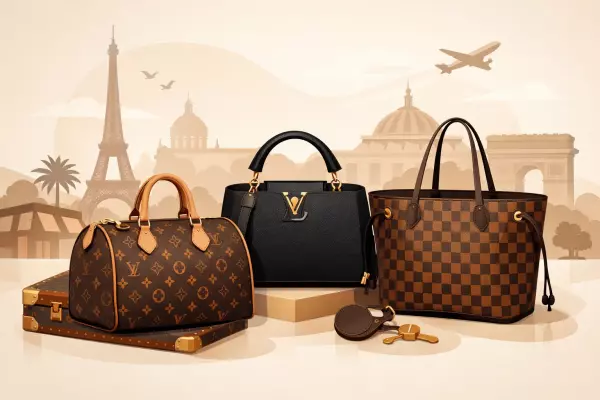
At Les Malletiers, the resale site for pre-owned bags, a Louis Vuitton bag doesn’t become a collector’s item simply because it’s old or expensive. It becomes one when a model combines three qualities that are rarer than one might think—a strong identity, flawless craftsmanship, and a timeless appeal. This guide to collectible Louis Vuitton bags is for those seeking more than just a beautiful accessory: a piece of heritage, imbued with history, craftsmanship, and, at times, genuine demand on the secondary market.
At Louis Vuitton, the concept of a collection extends beyond limited editions. Certain permanent lines, certain sizes no longer in production, certain special monograms, or manufacturing details can generate interest far exceeding their original status. This is what makes the purchase a demanding one. It’s not enough to simply like a bag. You must understand why it matters.
## What Makes a Louis Vuitton Collector’s Bag
Collectible value stems from a combination of factors. The first is the model’s place in the house’s history. An vintage Speedy, a well-proportioned structured Alma, a vintage Noé, or a Keepall in a version that has become hard to find do not hold the same status as a widely distributed new release. Some bags embody the Louis Vuitton DNA so clearly that they become benchmarks for enthusiasts.
The second criterion is rarity, but this must be defined precisely. A piece may be rare because it was produced in limited quantities, because it has not survived the test of time well, or because it rarely appears on the market in a convincing condition. Conversely, a common model can remain desirable without being a true collector’s item. This nuance is essential for making discerning purchases.
The third criterion is aesthetic clarity. Collectors often seek bags that clearly embody a defining moment in Louis Vuitton’s style: the historic Monogram canvas, the Epi in certain shades, the patent leather from specific eras, artistic collaborations, or travel pieces that directly evoke the house’s trunk-making heritage. A collector’s bag tells a story about Vuitton at first glance.
## Guide to Louis Vuitton Collector Bags: Models to Know
Certain names consistently come up in serious conversations. The Speedy, of course, especially in its well-proportioned vintage versions, with supple canvas and a harmonious patina. It is not rare in the strict sense, but certain references, certain sizes, and certain conditions of preservation generate sustained demand.
The Alma holds a comparable place. Its design, directly linked to the idea of 20th-century Parisian modernity, gives it a special authority. Well-preserved vintage pieces, with clean lines and natural leather that has aged just right, appeal to buyers who value structure and timeless design.
The Noé deserves special attention. Created for transporting bottles of champagne, it single-handedly embodies Louis Vuitton’s ability to transform a specific function into an icon. Older versions in Monogram canvas, when they retain a beautiful shape and leather that still has a lively feel, possess a charm that enthusiasts recognize immediately.
When it comes to travel, the Keepall, the quintessential soft-sided travel bag, remains a staple. Vintage pieces, sought-after sizes, and certain variations in canvas or finishes can fit into a more serious collecting framework. Here, the appeal lies as much in practical use as in its heritage value. Owning a beautiful Keepall is to touch the very heart of the Vuitton aesthetic.
Finally, we must mention collaborations and special editions. Not all age with the same grace. Some are strongly marked by their era, while others have already attained a status bordering on museum-quality. In this segment, the collector is less concerned with mere rarity than with the successful fusion of the house’s identity and a strong creative vision.
## How to assess rarity without being swayed
In the secondary market, the word “rare” is often thrown around too freely. A savvy collector first looks at the actual frequency with which the model appears, then at the quality of the available examples. A bag may turn up several times a year, but almost always in a worn, repaired, or inconsistent condition. A beautiful example, on the other hand, becomes rare.
Completeness also matters. An original dust bag, padlock, bell, authentic zipper pull, consistent lining, legible markings, and correct proportions: these details are not a matter of obsession. They distinguish a piece that is simply old from an object worthy of a discerning collection.
International desirability must also be taken into account. Certain models are rarely seen in Europe but highly sought after in Asia or the United States, which automatically drives up the market. A wise purchase is therefore based not only on personal taste but also on an understanding of the global discourse surrounding the piece.
## Authenticity: The Non-Negotiable Factor
In the world of Louis Vuitton, the question of authenticity brooks no approximation. Sophisticated counterfeits, assemblages made from disparate elements, unreported repairs, or modified pieces make expert appraisal indispensable. A beautiful patina never excuses a manufacturing inconsistency.
The examination must cover the whole: quality of the canvas, clarity of the pattern, symmetry, typography of the markings, hardware, stitching, construction, dating, the logic of the materials, and the model’s conformity to its period. No detail should be isolated from the rest. It is precisely the accumulation of consistent signs that establishes certainty.
For a collector, buying without a serious guarantee of authenticity undermines the item’s entire future value. The thrill of the find must never take precedence over rigor. This is also why a selection curated by a specialist retains particular relevance in a market saturated with uneven offerings.
## Condition Changes Everything
Two bags that appear identical on paper can vary considerably in value depending on their condition. With Louis Vuitton, one must learn to distinguish between a noble patina and problematic wear. Natural leather that has darkened evenly, without drying out or major cracking, can be very appealing. On the other hand, leather that is hardened, stained, brittle, or misshapen compromises both aesthetics and longevity.
The canvas must be examined carefully. Corners, folds, areas near the closures, and points of tension often reveal structural weaknesses. The interior lining, meanwhile, provides insight into the bag’s actual use. Persistent odors, stains, peeling, abnormal wear, or signs of moisture must be taken seriously.
Finally, hardware plays a more significant role than is often acknowledged. Light oxidation or signs of use are acceptable on an antique piece. However, non-original replacements, excessive wear, or missing parts compromise the object’s integrity. In collecting, integrity often takes precedence over mere appearance.
## Buying to Wear, Buying to Preserve
Not all collectors buy with the same intention. Some want a bag for everyday use, one that fits into daily life while retaining genuine heritage value. Others seek a rarer piece, less frequently used, carefully preserved, and worn only occasionally. Neither approach is superior to the other, but it changes the perspective.
If the bag is to be worn often, structural condition and practicality become decisive factors. An iconic but fragile model can be frustrating to use. If the focus is more on heritage value, one is more willing to accept a less practical size or a more delicate piece, provided it possesses a strong sense of uniqueness.
The right purchase often lies at the intersection of these two approaches. A bag significant enough to spark interest, sound enough to last, and personal enough not to depend solely on shifting trends.
## When the price is justified—and when it isn’t
A high price isn’t automatically excessive. It can be justified by superior condition, a reassuring provenance, a hard-to-find model, a specific craftsmanship, or authenticity documented under rigorous conditions. In the world of collectible luxury, peace of mind has a value of its own.
Conversely, some prices are inflated by seductive terms—vintage, rare, collector’s item—without any real basis. A widely available, worn-out model, restored in a questionable manner, or offered without solid expertise does not become desirable simply because it is old. The market rewards beautiful pieces, not mere survivors.
This is where an expert eye makes all the difference. A specialized house like Les Malletiers does not simply select a name or a logo. It identifies objects worthy of being passed down, precisely because they combine authenticity, coherence, and presence.
A fine Louis Vuitton collector’s bag is not chosen in haste. It is recognized by that very particular sense of rightness—that of an object that has stood the test of time without losing its poise, and that continues to speak clearly to the discerning connoisseur. If a piece holds your attention long after the initial thrill of first sight and a thorough examination, it is often because it has already begun to find its place in a collection.
29 Apr 2026

Looking for the best luxury resale site isn’t just about finding the platform with the largest selection. In this world, abundance rarely inspires confidence. What really matters is the care taken in examining each piece, the rigor of the authentication process, the accuracy of the description, and the ability to distinguish a beautiful item from one that’s merely in demand.
When it comes to a Chanel bag, a Hermès scarf, a Louis Vuitton trunk, or a designer piece of jewelry, the purchase is not just about style. It involves a significant sum, of course, but also trust. Yet the luxury second-hand market has expanded considerably. This growth has allowed more buyers to access rare pieces, sometimes impossible to find in stores. It has also created persistent confusion between marketplaces, consignment shops, specialized curators, and expert authenticators. Not all are created equal.
## What Really Defines the Best Luxury Secondhand Site
The best luxury secondhand site isn’t necessarily the most visible one. It’s the one that minimizes uncertainty at every step. Even before the question of price, a savvy buyer wants to know who examined the item, according to what criteria, with what expertise, and how the item is presented.
A reputable site doesn’t just sell a brand. It documents an item. It knows how to explain the material, the period, the finishes, the actual wear, any restorations, and, when necessary, the particular significance of a specific model. This precision isn’t just editorial fluff. It’s a testament to expertise.
The difference is decisive for the most sought-after brands. At Hermès, a few details regarding stitching, branding, or structure make all the difference. At Chanel, the focus must be as much on the overall look as on the manufacturing details. For Louis Vuitton, knowledge of trunks, canvas, travel pieces, or vintage collections requires a much deeper understanding of the house’s heritage than a simple visual inspection.
### Authenticity: A Non-Negotiable Criterion
In the world of pre-owned luxury, authenticity is not a marketing pitch. It is the foundation. Without it, the rest is worthless. Yet not all websites place the same emphasis on this requirement. Some settle for vague wording, others pile on clauses that shift liability, and still others present internal procedures that are impossible to evaluate from the outside.
A discerning buyer must seek out clear, tangible, and verifiable guarantees. Who authenticates the item? What are the expert’s qualifications? Does a certificate accompany the piece? Does the website clearly assume responsibility? The more precise these answers are, the more the purchase is based on a sound foundation.
This is precisely where a specialist stands out from a generalist platform. A platform connects people. A specialist puts their name on the line.
### Selection matters as much as inventory
A large volume can be impressive, but it is not always synonymous with quality. In the world of luxury, selection is a language. It conveys a vision, an understanding of the houses, and a hierarchy of taste. Seeing a rare heritage piece, a timeless classic, and a more niche yet remarkable item side by side reveals an editorial vision. Seeing a simple pile of items reveals, above all, a focus on turnover.
For the discerning connoisseur, the real question is therefore not just “is there a lot of choice?”, but “has this selection been thought through?”.
A site that knows how to curate inspires more confidence than a site that merely accumulates.
## How to recognize a reliable site before buying
The first indicator is often the quality of the product listings. Clear, numerous, and consistent photographs showing essential angles, corners, the interior, markings, and signs of use say a lot about the company’s professionalism. A description that is too brief, on the other hand, leaves unnecessary gaps.
The second indicator relates to vocabulary. A competent site does not use terms like “vintage,” “collector’s item,” “exceptional,” or “rare” indiscriminately. It reserves them for pieces that truly deserve them. This restraint is valuable. In the luxury sector, exaggeration undermines credibility.
The third criterion concerns service. The ability to ask specific questions, obtain additional information, or even receive assistance in searching for a particular model transforms the experience. For a collector, this aspect is far from secondary. It allows one to move beyond a standardized purchase and enter into a relationship built on expertise.
### Marketplace or Specialized Dealer: A Fundamental Difference
Confusion is common. Many buyers compare models that do not fulfill the same promise. A marketplace aggregates sellers and offers a vast catalog. This may suit those seeking, above all, the speed of comparison. On the other hand, the level of control varies depending on the items, the channels, and the contacts.
A specialty retailer, on the other hand, offers a narrower but generally more discerning selection. It provides a curated perspective, consistency, editorial responsibility, and often more deeply rooted expertise. For high-value items, this approach has a clear advantage. It prioritizes trust over volume.
This is not to say that one model is always superior to the other. It all depends on the item being sought and the buyer’s level of discernment. For a common item, some will accept a broader, less personalized framework. For a rare, iconic, or highly counterfeited item, the criteria change immediately.
## Price isn’t everything
Many believe that identifying the best luxury second-hand site comes down to finding the lowest price. This is a classic mistake. In the luxury heritage market, a slightly higher price may reflect genuine expertise, a more rigorous selection process, better traceability, or a more accurately described condition.
Conversely, a very attractive price should prompt caution, especially for the most coveted models. An item that is poorly authenticated, over-restored, incomplete, or inaccurately described can end up costing far more in the long run than a purchase that seems more demanding at first.
The right price stems from a balance between desirability, rarity, condition, market season, and the quality of the warranty offered. A reputable site knows how to maintain this balance without exaggeration or false promises.
## Categories Where Expertise Makes All the Difference
Not all luxury items present the same level of complexity. Iconic bags naturally attract the most attention, but they are not the only ones requiring an expert eye. Small leather goods, designer jewelry, travel items, trunks, and certain vintage accessories demand specific expertise.
Travel items, in particular, often defy standardized approaches. Their value depends not only on the brand, but on the era, construction, hardware, restorations, and sometimes very subtle details regarding provenance or typology. In this field, a company like [Les Malletiers](https://www.lesmalletiers.com/fr/) offers a valuable distinction: an eye trained in the history of the great houses and in interpreting objects beyond their mere commercial appeal.
### The best luxury second-hand site for you also depends on your profile
A first-time buyer does not judge a site the same way a seasoned collector does. The former will seek above all a clear framework, transparent guarantees, and a reassuring experience. The latter will expect more: a curated selection, less common pieces, more detailed descriptions, and sometimes even the ability to source items on request.
Similarly, the buyer of a contemporary “it” bag doesn’t always have the same expectations as the enthusiast of a vintage piece or a travel item. One might prioritize inventory turnover and availability. The other will seek a cultural connection to the object, a sense of heritage, and a more nuanced relationship with rarity.
That’s why the right question isn’t just “which is the best site?”, but “which site handles what I’m looking for with the level of care I expect?” This nuance changes everything.
## What a connoisseur should always check
Before finalizing a purchase, a few checks remain essential. You must examine the claimed authentication, carefully read the condition description, assess the consistency of the photos, understand the return policy, and evaluate the quality of customer service based on the responses provided. None of this is trivial.
You must also accept that, in the secondhand market, absolute perfection is rare. A slight patina can be part of a piece’s charm, especially when it preserves its integrity. What matters is transparency. A great site isn’t one that embellishes the item. It’s one that presents it with intelligence and accuracy.
Ultimately, the best luxury second-hand website is one that understands that a designer item is never just a used item. It is a piece of craftsmanship, sometimes of memory, sometimes of a collection. When a website knows how to honor this dimension with rigor, the purchase ceases to be a cautious transaction and becomes what it should always be: a chosen encounter with an object of enduring desire.
27 Apr 2026

A vintage Chanel bag isn’t something you buy like a seasonal accessory. It requires a discerning eye, an appreciation for the object itself, and, above all, a method. If you’re wondering how to buy a vintage Chanel bag, the real question isn’t so much about style as it is about discernment: recognizing a piece that’s genuine, authentic, true to its era, and faithful to the quality expected from a brand so closely scrutinized on the secondary market.
Vintage Chanel appeals to buyers for very different reasons. Some seek the unique patina of aged leather; others, a discontinued model, more substantial hardware, or a design closer to the house’s original spirit. There are also those who wish to acquire their first classic piece, one with more personality than a contemporary model. In any case, the purchase deserves more than a quick impulse buy.
## How to buy a vintage Chanel bag without making a mistake
The first rule is simple: never start with the price. With Chanel, an attractive price tag can hide extensive restoration, replaced parts, a weakened structure, or, more seriously, questionable authenticity. Starting with the price before evaluating the item often leads to a bad purchase.
First, you must identify what you’re truly looking for. A Timeless with a single or double flap, a Diana, a Camera Bag, a Vanity, or a model in jersey, lambskin, caviar, tweed, or velvet do not serve the same purposes or meet the same preservation criteria. A collector may sometimes accept a bag in a more fragile condition to acquire a rare version. A buyer who wants to use their bag frequently will prefer a durable material, a practical size, and a bag in excellent structural condition.
This distinction changes everything, because the best purchase isn’t necessarily the one with the highest market value. It’s the one where desirability, condition, and practicality align.
### Identifying the Right Vintage Chanel Model
First and foremost, observe the proportions. Vintage Chanel bags can differ significantly from recent versions, even when they share the same common name. The height of the flap, the length of the chain, the suppleness of the leather, the depth of the gusset, and even the tone of the finish all influence the overall silhouette.
Vintage lambskin leather appeals with its supple feel and subtle sheen, but it shows wear more easily. Caviar leather offers reassurance through its structure and durability, with a more structured presence. Models made of fabric, tweed, or jersey can be stunning, but require a closer examination of wear, scuffs, and any restorations. There is no single “best” choice. It all depends on your aesthetic standards and your tolerance for fragility.
Also consider the size. A vintage mini bag can be perfectly elegant for evening wear but may prove impractical for everyday use. A large Chanel tote from the 1990s offers a striking look, but its appeal will depend on your lifestyle. In the vintage market, style alone isn’t enough. Condition matters just as much as rarity.
## Things to check before buying
Authenticity is the first filter, but it isn’t the only one. A bag can be authentic yet disappointing if its condition has been misjudged. You must therefore examine the piece for overall consistency.
Start with the construction. At Chanel, the bag’s balance, the evenness of the quilting, the tension of the leather, the sharpness of the angles, and the quality of the chain already provide valuable clues. A typical vintage piece bears the marks of time subtly. On the other hand, excessively polished leather, abnormal stiffness, overly repaired edges, or a replaced lining should immediately raise a red flag.
The hardware deserves careful examination. On many older pieces, the gold plating has a density and depth that are highly prized. But the wear on the metal must remain consistent. A fitting that looks too new on a heavily weathered bag—or vice versa—may indicate that it has been altered. Exercise the same caution with screws, clasps, rivets, and chains.
The interior must never be overlooked. The condition of the lining, the smell, the pockets, the markings, and the presence and consistency of serial stickers specific to different periods are all clues, but none should be interpreted in isolation. A savvy buyer does not look for a single reassuring detail. They look for a convergence of signs.
### Authenticity: What Really Matters
When it comes to Chanel, misconceptions spread quickly. Many buyers believe that a certificate of authenticity is sufficient. This is not the case. A certificate can be lost, replaced, or mistakenly associated with another bag. Similarly, a consistent serial number never replaces an expert examination of the piece.
What truly matters is a rigorous authentication process, based on construction, materials, finishes, markings, metal hardware, the period of manufacture, and the overall consistency of the model. In a market where Chanel is one of the most counterfeited brands, the authority of expert assessment profoundly changes the quality of the purchase.
This is why the sales channel is decisive. A seller who takes responsibility for authenticity, backed by clear and documented expertise, offers more than just peace of mind. They mitigate a structural risk of the secondary market.
## Where to Buy a Vintage Chanel Bag
Between general-purpose platforms, consignment shops, specialized dealers, and houses with a strong culture of expertise, the differences are considerable. The issue isn’t just about finding an offer. It’s about knowing in what environment that offer is vetted, described, and guaranteed.
Peer-to-peer platforms may offer access to attractive prices or rarer pieces, but they require real experience. Photographs are sometimes insufficient, descriptions incomplete, and communication with the seller does not compensate for the lack of independent verification. This channel is best suited for those who already know how to accurately assess a bag.
Specialized dealers generally provide a safer framework. However, one must distinguish between simple resale and genuine curation. A reputable dealer is recognized not only by its catalog but by the quality of its curatorial eye: precision in descriptions, transparency regarding condition, disclosure of restorations, consistent pricing, and the level of expertise applied. At Les Malletiers, this standard is part of a curatorial approach, complete with a certificate of authenticity drafted by Jérôme Lalande, an expert appointed by the Paris Court of Appeal—a particularly crucial factor for a brand as high-profile as Chanel.
Purchasing in a showroom can also offer a clear advantage when possible: seeing the piece in person, assessing the leather’s condition, the actual color, the drape of the chain, and the depth of the patina. A vintage Chanel is also revealed in the details.
## How to determine the price of a vintage Chanel
The price of a vintage Chanel bag depends on several factors, not just the model. Rarity matters, of course, but so do the material, color, era, the presence of original components, the structural condition, and the level of market desirability at any given time.
A black Timeless in caviar leather is not valued the same way as a seasonal satin model, even if the latter is rarer. The former benefits from constant, international demand. The latter may appeal to a discerning collector, but its market is more niche. Value is not solely a matter of objective rarity. It depends on the model’s cultural appeal.
You must also distinguish between patina and defects. A slight suppleness, small signs of wear, or even wear are often compatible with a beautiful vintage piece. On the other hand, a stretched chain, severely worn corners, cracked leather, a worn clasp, or visible restoration should significantly affect the price. Paying a high price for a mediocre piece simply because it is old is a common mistake.
### Should you buy to wear or to collect?
The answer changes your criteria. For regular use, it’s better to choose a model whose condition offers true peace of mind, even if it’s slightly less rare. For a collector’s perspective, a hard-to-find color, a discontinued style, or an older series may justify compromises on practicality.
The right purchase is therefore not universal. It depends on your intention. A vintage Chanel bag intended to complement an everyday wardrobe does not follow the same priorities as a piece chosen for its place in a larger collection.
## The most common mistakes
The first is buying too quickly, driven by the fear of missing out on a piece. Vintage items often trigger this reflex, especially with Chanel. However, a poorly documented rarity remains a bad purchase.
The second mistake is overestimating accessories. The box, dust bag, card, and old invoice are valuable, but they never replace the bag’s intrinsic quality or the expertise involved. A piece without a complete set can be excellent. A complete set can be problematic.
The third is believing that a restored bag is always worth less. It’s not that simple. A light, well-executed, and clearly disclosed restoration can preserve the bag’s usability without altering its character. Conversely, a heavy-handed, cosmetic restoration can diminish its collectible value. Again, it all depends on the nature of the restoration.
Buying a vintage Chanel therefore requires a bit of visual literacy, a lot of method, and absolute trust in the source. When a piece is just right—authentic, well-preserved, priced appropriately, and chosen for the right reasons—it goes far beyond the status of a mere fashion purchase. It becomes an object to be passed down, with that unique presence that only beautiful, well-worn pieces can offer.
26 Apr 2026

A Chanel Classic Flap from the 1990s, a Kelly in weathered Box leather, an older monogrammed Speedy with canvas that’s still thick—some bags don’t just age; they gain status. Asking why a vintage bag increases in value is less about observing a passing trend and more about understanding the intersection of heritage, rarity, and enduring desire.
The secondhand luxury market has matured. Yet not all vintage bags become sought-after pieces. The gap between a model that is simply dated and a true collector’s item can be considerable. Value is never determined by age alone. It rests on a set of precise, often subtle criteria that stem as much from the history of the fashion houses as from the material quality of the object.
## Why a vintage bag increases in value over time
The first reason lies in the natural scarcity of beautiful pieces. A bag is not a watch kept in a safe. It accompanies a life, endures daily use, and is subjected to friction, light, humidity, and sometimes clumsy restorations. Over the years, the number of examples that remain in very good condition dwindles. This simple decrease in supply is enough to create a difference in value.
But true rarity goes further. Certain models were produced for only a short time, in specific colors, with finishes that are no longer used or leathers that the brand no longer employs. When a manufacturing detail disappears, it retrospectively acquires special significance. Collectors are not just looking for a name or a silhouette. They are looking for a specific version of a model, rooted in an identifiable creative period.
We must also factor in the phenomenon of heritage revaluation. A bag bearing the signature of a house with strong historical legitimacy benefits from collective memory. Hermès, Chanel, Louis Vuitton, Dior, Goyard, or Moynat are not valued solely for their logos. Their value is rooted in a formal language, artisanal craftsmanship, aesthetic continuity, and a presence in the history of taste. When a vintage piece embodies this heritage, it ceases to be a mere accessory and enters the realm of heirlooms.
## The House, Craftsmanship, and the Model’s History
Not all luxury brands evolve in the same way on the secondary market. Desirability rests first and foremost on the cultural strength of the house. A brand that is highly visible at a given moment may lose its luster if it lacks heritage depth. Conversely, a more discreet but historically grounded house may see its vintage pieces rediscovered with great force.
The quality of craftsmanship plays a decisive role. A vintage bag gains value when it demonstrates, through its very presence, the nobility of its design. The density of the leather, the structure of the canvas, the precision of the stitching, the quality of the metal hardware, or the balance of the silhouette matter just as much as the signature. The most sought-after pieces are often those that demonstrate a level of craftsmanship perceived as superior to certain more recent productions.
The model’s own history further amplifies this dynamic. An iconic bag, associated with an era, a figure, or a landmark design line, retains its appeal more easily. This is particularly true of shapes that have become timeless because they have stood the test of time without losing their relevance. The market draws a very clear distinction between the iconic and the merely vintage.
### Discontinuation Changes Everything
When a model is discontinued, or when a leather type, clasp, size, or color is permanently removed from the catalog, perceptions shift. What is no longer available in stores enters a different economy of desire. It can no longer be obtained by order or by waiting. One must seek it out, recognize it, and then seize it at the right moment.
This lack of accessibility fuels its value. It is even stronger when the older version features characteristics deemed more appealing than the contemporary version. In the collector’s world, the notion of a “best period” is essential.
## Condition: A More Subtle Criterion Than It Seems
On paper, a flawless bag is worth more. In practice, the question of condition requires nuance. A vintage piece in mint condition is rare and often highly sought after, especially if it retains its original hardware. But a beautiful, age-appropriate condition can also be highly desirable, provided the structure is sound and the patina is elegant.
Patina is not a flaw when it reveals the quality of the material. On certain Box or Barenia leathers or on vintage canvases, it even adds a depth that connoisseurs consider irreplaceable. Conversely, visible repairs, rough recoloring, overly reworked corners, or replaced hardware can diminish the value, even if the bag appears visually refreshed.
This is where an important distinction between wear and damage comes into play. Wear tells a story of time. Damage compromises the integrity of the piece. A knowledgeable collector readily accepts the former and is wary of the latter.
### Original accessories boost the value
Dust bag, box, invoice, lock, bell, shoulder strap, mirror, card, or hologram—depending on the brand and era—these elements carry real weight. They do not create value on their own, but they reinforce it. They contribute to the object’s completeness and provide reassurance about its history.
In certain categories, the presence of a complete set can make a clear difference, particularly when the buyer is already thinking in terms of collecting or future resale.
## Market demand and generational trends
The value of a vintage bag is never determined in a laboratory. It is shaped by the eyes of buyers. Certain pieces that were long underestimated return to the forefront when tastes change. A highly structured shape, considered austere ten years ago, may now appear strikingly modern. A discreet logo or an archival clasp can become desirable again as tastes shift away from the overly conspicuous.
This trend is not always speculative. It can be deeply cultural. The generations buying today often rediscover the ’80s, ’90s, or 2000s with a dual perspective—both nostalgic and critical. They want objects that are more distinctive, less standardized, and bear a clear formal signature. Vintage meets this expectation because it offers uniqueness in a landscape that is sometimes uniform.
There is, however, one point to watch out for. A rapid rise in popularity does not guarantee lasting value. Some models rise with the trend and then stabilize, or even decline. The bags that best retain their value are generally those that combine current desirability with historical legitimacy. When one is missing, the value becomes more fragile.
## Authenticity: An Absolute Prerequisite for Value
No rarity, no leather, no patina can compensate for uncertainty regarding authenticity. In the world of secondhand luxury, trust directly determines value. A bag that has been thoroughly authenticated is not only more reassuring to purchase; it is also more liquid on the market, and thus a more solid asset.
This is a simple reality that is often overlooked. Two bags that appear comparable can have significant price differences depending on the quality of their documentation, the seller’s reliability, and the precision of the authentication. Provenance, consistency in manufacturing details, and examination of materials and markings are essential. In a market saturated with counterfeits and altered pieces, certainty is worth a great deal.
For this reason, the most discerning buyers favor dealers capable of providing written expertise and rigorous selection. At Les Malletiers, this demand for authenticity is fully integrated into how a piece is viewed—not as a mere secondhand bag, but as a vintage luxury item whose value rests on verifiable facts.
## What Truly Gains Value, and What Retains It
A vintage bag gains value when it combines several key factors. It must come from a brand whose prestige transcends fleeting fashion trends. It must embody a recognizable model—often iconic or now rare. It must exhibit discernible craftsmanship, consistent condition, and ideally reassuring traceability. Finally, it must meet a market demand deep enough not to depend on a mere passing fad.
This also means that not all vintage purchases should be viewed as investments. The true criterion remains the intrinsic quality of the piece. When a bag has presence, a history, remarkable craftsmanship, and unquestionable authenticity, it already possesses the essentials. Any potential increase in value comes later, almost as a logical consequence.
The most accurate approach, therefore, is to buy a vintage bag as one would choose a work of art—with emotion, with discernment, and with a clear understanding of what deserves to stand the test of time. This is often how the pieces that truly matter are born, in a collection as in life.
25 Apr 2026

An antique trunk isn’t purchased simply as a decorative item. It captures the eye, reflects the culture of the object, and often involves a degree of personal projection: we seek in it a sense of presence, a history, and a sense of authenticity. Knowing how to choose an antique trunk, therefore, means learning to read not only what it reveals but also what it conceals—the quality of craftsmanship, period authenticity, the success of any restoration, true authenticity, and collectible potential.
## How to Choose an Antique Trunk Without Being Seduced by Appearance Alone
The first instinct is often to judge a trunk by its overall appearance. This is understandable: a beautiful patina, well-designed hardware, and a balanced silhouette are enough to spark desire. However, aesthetics cannot be the only criterion. A trunk that looks very appealing in a photo may have been heavily altered, repainted, reupholstered with unsuitable materials, or stripped of essential original elements.
Conversely, a more understated piece, sometimes marked by the passage of time, may prove far more interesting if its structure, materials, and finishes are consistent. In the world of antique luggage, value lies not only in visible beauty but in the quality of preservation of what defines the object’s identity.
We must therefore start with a simple question: are we looking for a collector’s trunk, a heritage piece to integrate into an interior, or an object repurposed for another use, such as a coffee table or storage chest? The answer changes everything. A collector will be more willing to accept noble wear and tear if the authenticity remains intact. A home decor enthusiast might prefer a cleaner look, but must be careful not to sacrifice the piece’s soul to cosmetic restoration.
## Identifying the nature of the trunk
Not all antique trunks fall into the same category. A late 19th-century travel trunk, an early 20th-century cabin trunk, a wardrobe trunk, a car trunk, or a small household trunk do not share the same uses or manufacturing standards. The shape, dimensions, type of opening, and interior layout are already valuable clues.
A rounded trunk, for example, follows an old-fashioned logic of stacking and water drainage. A flat trunk is more in line with the evolution of modern travel, where stacking becomes more efficient. Some manufacturers have developed immediately recognizable signatures, whether in the canvas, corners, locks, or handle designs. However, one must know how to distinguish an authentic signature from a later decorative imitation.
The name of a major brand naturally attracts attention, but it should never be the sole criterion. In this field, markings, labels, plates, or numbers must be examined methodically. A documented provenance, an original interior, consistent stamps, or a signed lock often carry more weight than a simple visible inscription added merely to please the eye.
### Materials speak volumes
The structural wood, the exterior canvas, the leather reinforcements, the quality of the nails, the brass hardware, or the composition of the interior padding often allow one to identify a trunk and assess its level of craftsmanship. A beautifully crafted antique piece generally exhibits a sense of overall coherence. Nothing about it seems arbitrary.
When certain elements appear too new, too uniform, or stylistically out of place, caution is warranted. A replaced handle is not necessarily a problem if this is clearly indicated. On the other hand, a complete restoration that removes the original materials can significantly diminish the trunk’s heritage value, even if it makes it more visually appealing at first glance.
## Condition: Accept Wear, Reject Damage
The condition of an antique trunk must be assessed with nuance. Even wear, slightly scuffed canvas, a weathered interior, or a few travel marks are often desirable. They confirm the object’s history and contribute to its character. What you should be wary of are structural issues: weakened wood, a warped lid, a fragile base, unstable hinges, lingering musty odors, signs of woodworm infestation, or restorations that have stiffened the structure improperly.
The interior deserves special attention. Many buyers focus on the exterior, whereas the internal fittings are crucial. Original padding, compartments, hangers, trays, or pockets enhance the piece’s appeal. They tell the story of its use and reflect a certain art of travel. A refurbished interior may be elegant, but it alters the nature of the object.
The locking mechanism should also be examined. A functional lock with its original key remains a significant asset, but the absence of a key is not a deal-breaker for an antique piece. On the other hand, a lock replaced without stylistic consistency or a locking system that has been altered raises concerns.
### Restoration or Conservation?
It all depends on the project. For a piece intended for a collection, conservation generally takes precedence over extensive restoration. For decorative integration into a contemporary interior, certain interventions may be justified if they respect the original materials, colors, and spirit.
The right approach is to preserve what makes the trunk unique. A proper restoration stabilizes, cleans, and strengthens. It does not reinvent. As soon as an antique object appears too perfect, one must ask what has been erased to achieve that result.
## Authenticity and provenance: the true measure of trust
To understand how to choose an antique trunk wisely, authenticity must be a central consideration. The market for antique travel items is rife with hasty attributions, opportunistic alterations, and, at times, outright counterfeits. The more prestigious the brand in question, the higher the standard of verification must be.
Serious expertise is not limited to a general impression. It is based on the analysis of materials, assembly techniques, markings, wear, historical consistency, and manufacturing details. This is particularly true for the great trunk-making houses, whose codes have evolved over time. A beautiful trunk attributed without proof remains a fragile attribution.
Provenance adds a layer of depth. An old travel label, a documented monogram, an invoice, an inventory record, or an identifiable lineage enrich the interpretation of the object. This alone does not create value, but it reinforces its legitimacy and appeal to a discerning collector.
With this in mind, working with a recognized specialist transforms the buying experience. At Les Malletiers, the question of authenticity is not a secondary consideration, but a fundamental condition for trust.
## The value of an antique trunk is not determined solely by the brand
The prestige of a brand matters, of course. Certain names hold enduring appeal for collectors and connoisseurs of refined interiors. But reducing a trunk’s value to its name alone would be an oversimplification.
The rarity of a model, the quality of its condition, the presence of a complete interior, the desirability of its size, and the balance of its patina all play a decisive role. An anonymous trunk that is perfectly constructed, highly cohesive, and remains intact may prove more interesting than a piece from a famous house that has been over-restored or is incomplete.
Size also influences the market. Very large trunks are impressive, but they are more difficult to incorporate. Cabin-sized trunks or those of intermediate dimensions are often more sought after for their versatility. Here again, it all depends on the intended use. A trunk chosen to anchor a living room does not follow exactly the same criteria as one purchased as a collector’s item.
## Important Questions to Ask Before Buying
Before making any decision, you must ask what is original, what has been restored, and whether the trunk’s attribution to a specific manufacturer is formally established. You should also examine the trunk when closed, open, from below, and from the back. Less visible areas often reveal more than the front.
If the purchase is made remotely, detailed photographs are essential: angles, hardware, handles, interior, lock, corners, labels, wear, and repairs. A vague description, even accompanied by beautiful images, is not sufficient for an object of this nature. The more significant the piece, the higher the standard of documentation must be.
Instinct has its place, but it comes after examination. A successful antique trunk is one that retains its integrity, fits squarely within its era, and continues to evoke a quiet, uncontrived emotion. It is often at this precise moment that the object ceases to be a mere purchase and becomes a lasting presence.
Choosing an antique trunk, at its core, means prioritizing the object’s authenticity over mere visual impact. This choice requires a bit of discernment, but in return offers far more than a beautiful decorative piece: a symbol of travel, craftsmanship, and memory that stands the test of time with dignity.
24 Apr 2026

Seeing a Hermès bag in person is not enough. In a Parisian showroom, the eye is naturally drawn to the silhouette, the leather, the artisan’s craftsmanship, and sometimes the patina. But the example of the Hermès Paris showroom reveals something else: between desire and decision, there is a precise, methodical examination based on physical clues, the house’s heritage, and a true discipline of authentication.
For a discerning connoisseur, this step is not mere formalism. It determines the piece’s trustworthiness, its heritage value, and, often, its collectible appeal. In the Hermès universe, where the subtlety of its codes matches an exceptional level of craftsmanship, expertise does not consist of searching for a spectacular detail. It consists of interpreting the object as a whole.
## What an example of Hermès expertise in a showroom reveals
A showroom offers a quality of observation that no photograph can fully replace. The light reveals the exact grain of the leather. Holding the item in hand allows one to assess the structure, suppleness, and density of the construction. The metal parts, the saddle stitching, the alignment of the components, the clarity of the markings, and the natural wear tell a coherent story or, conversely, raise doubts.
In an example of Hermès authentication in a showroom, the expert does not validate a piece based on a single sign. They cross-reference multiple categories of evidence. The overall form must be correct. The leather must correspond to the model, the presumed era, and the expected behavior of the material. The finishes must speak the house’s language. Even aging has its own logic. An authentic piece may have lived a life, but it rarely ages in an inconsistent manner.
This is where nuance matters. An old restoration, a hardware replacement, a spa treatment performed by the house, or simply years of use can alter the assessment. Serious authentication is therefore neither mechanical nor dramatic. It relies on experience, comparison, and the ability to distinguish anomalies from legitimate variations.
## Example of an appraisal at the Hermès Paris showroom: how to assess a piece
Let’s consider a concrete example. A soft-leather Kelly bag is presented during a private appointment. At first glance, the piece captivates with its drape, its color, and the quality of its patina. However, the appraisal begins before the emotional response.
The first level of analysis focuses on proportions. An authentic Hermès features a very distinctive precision in construction. The lines are not only elegant; they are masterfully executed. The opening, the base, the side gussets, the handle, the bell, the straps, and the edge of the flap must form a harmonious whole. There may be slight variations depending on the era or the craftsmanship of a particular series, but the overall balance remains evident.
Next comes the leather. Togo, Box, Clémence, Epsom, Swift, Fjord, Ardennes, or other rarer leathers do not offer the same feel or the same reaction to light. An expert examines the grain, the surface tension, and the way the material wrinkles, absorbs, or reflects light. It is not simply a matter of identifying a leather name, but of verifying whether its behavior is consistent with the model, the piece’s presumed age, and its intended use.
The stitching is another decisive factor. At Hermès, saddle stitching is recognizable by its lively regularity. It lacks the industrial rigidity of a standardized reproduction. It reflects expert craftsmanship, controlled tension, and a clean line. To the untrained eye, two stitches may appear similar. Upon close inspection, the difference becomes evident.
Markings require the same caution. The Hermès Paris Made in France stamp, the dating codes specific to each period, the typography, the depth of the imprint, and their placement must be interpreted with discernment. Many contemporary copies correctly imitate an isolated detail. They often fail in terms of overall consistency. A plausible marking on unsuitable leather or in a poorly constructed piece has no probative value.
Finally, hardware is not merely about its shine. Its weight, finish, angles, the quality of the plating or metal, the engraving, the functionality of the clasp, and its integration into the overall structure are all examined. Here again, an item may have been polished, show signs of wear, or have undergone restoration. One must therefore know how to interpret, not merely recite.
## Condition is not a detail; it is part of the value
In the luxury second-hand market, authenticity is the first requirement. Yet it is not the only one. The actual condition of a piece profoundly affects its desirability and market positioning.
A thorough Hermès appraisal describes the quality of the leather, marks at the corners, scuffing, traces under the flap, the condition of the lining, the corners, storage odors, any oxidation of metal parts, the condition of the handle, and the presence of accessories. Dust bag, box, padlock, keys, bell, original invoice, or service history do not create authenticity, but they enrich the interpretation of the object and can support its value.
It is also important to distinguish between beautiful wear and deterioration. A harmonious patina can enhance the charm of an antique Box. Conversely, over-moisturized leather, clumsy re-coloring, or structural deformation can diminish the appeal of the piece, even if it is authentic. For a collector, this distinction is essential. The sought-after object is not merely genuine; it must remain true to its integrity.
## Why the showroom enhances the quality of the appraisal
The showroom environment creates a more precise connection to the object. There, one sees the color in its true form, without screen correction. One perceives the volume, the weight, the suppleness. One notices what photography tends to smooth over: a slight asymmetry of life, an old repair, the finesse of an edge, the density of a leather, the exact vibrancy of a hue.
In the case of Hermès, this physical presence is particularly valuable. The house works with materials whose nobility is understood through touch as much as through sight. A serious showroom is therefore not merely a setting. It is a place for verification, observation, and informed conversation.
For the international buyer as well as the Parisian collector, this step provides a rare intellectual comfort. It places the acquisition within a framework of knowledge rather than haste. At Les Malletiers, this standard is reflected in a certificate of authenticity drafted by Jérôme Lalande, an expert appointed by the Paris Court of Appeal, which lends the appraisal a particularly decisive level of authority in a market where mistakes are costly.
## What a Savvy Buyer Should Expect from a Hermès Appraisal
A discerning buyer should not settle for a simple “authentic.” An appraisal worthy of the name must explain why the item is considered authentic, its exact condition, the factors contributing to its value, and any potential reservations that must be noted.
This is all the more true for Hermès, as not all purchases follow the same logic. Some clients are looking for a piece to wear often, with a reasonable tolerance for signs of wear. Others are building a collection, more sensitive to the rarity of a leather, a specific color, a precise hardware configuration, or the presence of a complete set. In one case, a discreet restoration may be acceptable. In the other, it may be considered a limitation.
The right level of expertise is therefore one that informs the decision rather than artificially simplifying it. It does not dramatize minor flaws, but it does not gloss over anything. It recognizes that the value of a house’s object rests as much on its authenticity as on its beauty.
## Expertise as a Culture of the Object
To speak of an example of expertise at the Hermès Paris showroom is, at its core, to speak of a certain idea of secondhand luxury. Not an opportunistic luxury built on brand prestige, but a well-documented luxury, examined closely, respectful of the original craftsmanship.
Hermès is not merely a symbol of desire. It is a house of craftsmanship, of time-honored tradition, of precise techniques. A piece from this world deserves to be approached with the same rigor. Expertise does not detract from the pleasure of purchasing; it gives it depth.
It is often at this moment that the object ceases to be merely coveted and becomes fully chosen. And in this gap, however subtle it may be, lies the true quality of a lasting acquisition.
21 Apr 2026

A 1960s Kelly Sellier doesn’t have the same presence as a recent Kelly. The leather, the craftsmanship, the silhouette—even the way it catches the light—all speak to a bygone era. That’s precisely what makes the question of the best vintage bags to collect so fascinating: you’re not just buying an accessory, but a piece of heritage, and sometimes even a milestone in the history of luxury.
Collectible vintage isn’t limited to the models most visible on social media or bags that are currently in demand. A true collector’s bag combines several qualities: a strong identity, remarkable craftsmanship, enduring desirability, and, in some cases, a rarity that has become inherent to the piece. The brand matters, of course, but the era, material, size, color, and condition matter just as much.
## What Sets a Vintage Collector’s Bag Apart
Not all vintage bags become collectible. Some remain charming, while others attain a more unique status because they embody a brand’s DNA with a precision that has become rare. This is often the case when a model has stood the test of time without losing its visual impact.
Craftsmanship is the first filter. In the secondhand luxury market, the pieces that retain strong desirability are almost always those whose construction stands the test of time: clean stitching, balanced hardware, leather that develops a patina rather than showing signs of wear. Added to this is historical consistency. A mass-produced bag isn’t necessarily without merit, but collectors seek more than just a famous name: they’re looking for an object that showcases a brand at its best.
One must also accept a key nuance. The best buy isn’t always the most hyped. Some star bags are excellent for style but less compelling as collector’s items if supply remains abundant or if variations are too similar. Conversely, certain more understated models, especially in beautiful vintage versions, offer far greater heritage depth.
## The Best Vintage Bags to Collect Today
### Hermès Kelly
The Kelly belongs to that very select category of objects that transcend fashion. In its vintage versions, it captivates with the precision of its lines and the elegance of its silhouette, giving it an almost architectural presence. Sellier models, especially those in classic proportions and vintage leathers, are particularly sought after.
What makes the Kelly so strong as a collectible is the consistency of its aesthetic language. It relies neither on fleeting trends nor on a flashy logo. Instead, everything hinges on the specific configuration. A harmonious size, desirable leather, a timeless color, and honest condition matter more than mere age.
### Hermès Birkin
More recent in its history than the Kelly, the Birkin is already a collector’s classic. The first models, certain older productions, as well as combinations of leather and dimensions that have become hard to find, attract sustained demand.
The vintage Birkin is appealing for one simple reason: it combines practicality, prestige, and relative rarity depending on the era. It is not a bag to buy on a whim. A size that is too specific or a color that is less desirable can limit its long-term appeal. But when the right factors align, it retains remarkable heritage value.
### Chanel Timeless Classic Flap
The Timeless is one of the cornerstones of the vintage market. Older versions, particularly those featuring beautiful lambskin, a balanced chain, and classic proportions, often possess a charm that collectors recognize immediately.
Its appeal lies in the model’s universality, but also in the manufacturing variations across decades. A well-preserved vintage Classic Flap, with a beautiful structure and a consistent patina, remains a top-tier purchase. One must simply be particularly vigilant about authenticity, as this model has been widely copied.
### Vintage Chanel 2.55 Reissue
The Timeless and the 2.55 are sometimes confused. For a collector, however, the distinction is important. The vintage 2.55, with its Mademoiselle clasp and more understated aesthetic, possesses a unique historical significance.
It often appeals more to enthusiasts of heritage Chanel than to logo-driven buyers. Its value is not merely commercial; it is cultural. It is a bag that embodies the essence of Chanel with a highly sought-after intellectual restraint.
### Vintage Louis Vuitton Speedy
The Speedy is not rare in the strict sense, but certain vintage versions have become true collector’s items. Well-proportioned examples, crafted from vintage canvas that holds its shape beautifully and featuring a distinct, elegant patina, can be infinitely more appealing than recent versions lacking character.
Its appeal is twofold. It is an absolute classic of travel and French leather goods, but also a relevant entry point for a collector who wants to acquire a historic piece without immediately aiming for the market’s highest echelons. The potential here depends less on rarity than on the quality of the specimen.
### Vintage Louis Vuitton Alma
The vintage Alma often deserves more attention than it receives. Its structured silhouette, almost Art Deco in its clarity, gives it a true aesthetic depth. Beautiful vintage versions, particularly in balanced sizes, embody the house’s refinement beyond the monogram.
When collecting the Alma, prioritize clean lines. A sagging structure or overly worn trim immediately diminishes its appeal. In good condition, it is a bag of great distinction.
### First-generation Dior Saddle
The first-generation Saddle is already a piece of history. It belongs to a very distinct era of fashion, with all that this implies in terms of desire, nostalgia, and reinterpretation. The early editions, especially in certain colors, materials, or versions with striking logos, have well-established collector’s appeal.
It is also a good example of a bag whose value depends heavily on the context of taste. Its appeal is real, but more cyclical than that of a Kelly or a 2.55. For a collector, this does not diminish its appeal—it simply means that one should buy it for its stylistic significance as much as for its investment potential.
### Vintage Gucci Jackie
The vintage Jackie possesses that understated Italian elegance that ages beautifully. Beautiful vintage examples, with supple leather, clean lines, and a distinctive clasp, are now being rediscovered—and rightly so.
This is a connoisseur’s bag. Less spectacular than a model with a strong visual signature, it charms with its structure, enduring modernity, and ability to effortlessly transcend eras. In a collection, this discretion is often a virtue.
### Vintage Prada Nylon
Vintage Prada nylon holds a special place. It doesn’t belong to the same category as the great saddle bags, but it tells the story of a major aesthetic revolution in 1990s luxury. Certain vintage pieces, especially those with beautiful proportions or lines that have become iconic, have achieved true collector’s status.
Their strength lies in their clever design. However, preserving them requires greater discernment. Vintage nylon does not tolerate neglect: wear, odors, deformation, or worn hardware significantly diminish the piece’s appeal.
### Vintage Goyard Saint Louis
The vintage Saint Louis is not always purchased as a collector’s item, yet certain versions deserve genuine attention. Well-preserved vintage examples, featuring distinctive canvas and a rarer presence on the market, reflect a very refined taste for traditional houses.
It is a more subtle choice, driven less by ostentation than by brand culture. It will appeal more to the connoisseur already familiar with understated rarity than to the collector seeking immediate recognition.
## How to Choose Among the Best Vintage Bags to Collect
The first criterion is the authenticity of the model, but it would be unwise to stop there. In collecting, condition is never a minor detail. Consistent wear is acceptable, and sometimes even desirable when it accompanies a beautiful patina. On the other hand, extensive restoration, replaced parts without traceability, or a structure that is too weakened can compromise future desirability.
Authenticity is, of course, decisive. For certain models, the abundance of counterfeits and hybrid assemblies makes serious expertise indispensable. For a discerning buyer, a certificate of authenticity issued by a recognized expert is not merely a comfort—it is a prerequisite.
Rarity must also be viewed with a cool head. A bag is not valuable simply because it is old or rarely seen. It truly becomes collectible when it combines rarity with relevance. A marginal variation—in a hard-to-find color or an uninspiring size—may remain secondary even if it is scarce.
Finally, there is the question of personal taste. A savvy collector does not buy against their own eye. The market validates certain icons, but the finest collections always contain an element of cultivated subjectivity. At Les Malletiers, this is often what distinguishes an opportunistic acquisition from a true connoisseur’s choice.
## Buying to Wear, Keep, or Pass On
The most desirable vintage bags share one thing in common: they withstand multiple lives. They can be worn, kept, and then passed on without losing their meaning. This is what makes them more interesting than a mere fashion expense.
Not all appreciate in value in the same way, and it would be unrealistic to promise uniform growth. But the great pieces—rigorously authenticated and selected for their quality—retain a cultural and material depth that few objects offer today. When an antique bag still looks right after thirty, forty, or fifty years, it no longer follows fashion—it becomes part of our heritage.
20 Apr 2026

A pre-owned luxury bag isn’t something you buy on a whim. It’s chosen with the same care as a collectible watch, a designer piece of jewelry, or a piece of furniture crafted by a master cabinetmaker. Behind a familiar silhouette, several factors come into play—authenticity, of course, but also the bag’s actual condition, the model’s desirability, how well it suits your needs, and, at times, its longevity. In this world, the costliest mistake isn’t paying a little more. It’s believing that a beautiful object is nothing more than a few flattering photos.
## Why secondhand luxury bags are so appealing
The rise of the secondary market is no longer merely an opportunistic trend. It reflects a shift in how we view the major luxury houses. Buying a pre-owned bag often means accessing a period of luxury that was more demanding in terms of materials, finishes, or proportions. It also means rediscovering discontinued models, abandoned sizes, leathers that have become rare, and craftsmanship details that tell the story of an era.
This appeal also stems from a sense of maturity. The discerning customer isn’t just looking for a logo or the latest trend. They’re looking for the right piece—one with presence, craftsmanship, and a story. A Kelly, a Timeless, a Lady Dior, an Alma, or a Jackie does not occupy the same place in a wardrobe as a seasonal impulse buy. They are part of an aesthetic continuity, sometimes even a tradition of passing down.
We must also acknowledge a more pragmatic reality. The second-hand market allows for more discerning purchases. Certain iconic pieces, whose retail prices have risen sharply, become more accessible on the secondary market. Others, on the contrary, should be purchased with caution, as their value is based more on hype than on the strength of their appeal.
## What to check before buying a secondhand luxury bag
The first question isn’t about color, nor even price. It’s authenticity. On this point, the distinction is simple: a reassuring opinion is no substitute for an expert appraisal. In a market saturated with increasingly convincing counterfeits, the bag’s provenance, the quality of the inspection, and the seller’s credibility carry infinitely more weight than a well-presented pitch.
An authentic item is never judged by a single detail. You have to look at the whole picture. The construction, the quality of the leather, the regularity of the stitching, the clarity of the markings, the consistency of the hardware, the typography of the stamps, the lining, and even the scent of the material all make up a set of clues. Every house has its own language, its workshop practices, and its variations over the years. This is precisely what makes generalizations dangerous. A detail that is authentic at Chanel means nothing at Hermès. A serial number, on its own, proves nothing if it is not placed in context.
Condition requires the same precision. Between a bag in very good condition, a restored bag, a bag that is structurally worn, or a bag that is simply weathered, the value is not the same. A surface scratch on a metal trim may be insignificant. A weakened handle, a clumsily repaired corner, or a sticky lining, on the other hand, can profoundly alter the piece’s appeal. The discerning collector knows that honest wear is not a moral flaw. But they also know how to distinguish a noble patina from severe deterioration.
Finally, original accessories deserve careful consideration. A dust bag, box, lock, bell, shoulder strap, vintage invoice, or card can enhance the overall package. They never replace expert appraisal, but they contribute to the coherence of the item’s history. For certain highly sought-after pieces, their presence significantly influences desirability.
## Condition, rarity, value: three criteria that must be prioritized
Not all buyers are looking for the same thing, and this is where many decisions become muddled. If you’re looking for a bag intended for regular use, condition must take precedence. A rare but fragile piece, or one that’s too worn, may look appealing on paper but disappoint in use. Conversely, a collector will sometimes accept some signs of wear if the model has become hard to find, if it belongs to a sought-after period, or if it embodies a particular craftsmanship.
Value, however, is not limited to resale potential. Some bags maintain a solid market value because they combine three qualities: a strong identity, controlled production, and consistent demand. Others rise and then fall. One must be wary of purchases motivated solely by the idea of an investment. The luxury market is governed by cycles, supply dynamics, the condition of the product, and the model’s actual desirability. A very beautiful, well-chosen bag can retain its appeal. An average purchase of a supposedly “profitable” model remains an average purchase.
Rarity, finally, requires discernment. A bag rarely seen is not necessarily rare in the noble sense of the term. It may simply be little sought after. True rarity arises when an object combines difficulty of access, quality of craftsmanship, and aesthetic recognition. This is where knowledge of the brands becomes decisive.
## How to Recognize a Good Seller
A good seller doesn’t exaggerate, doesn’t promise the impossible, and doesn’t hide the flaws. They provide documentation. They describe the bag accurately, including its imperfections. They provide clear images of the angles, the interior, the markings, the clasps, the handles, and the corners. They know how to answer specific questions without resorting to vague phrases.
Above all, they frame the sale within a verifiable framework of trust. In a market where expertise makes all the difference, the presence of a credible certificate of authenticity, issued by a recognized authority, profoundly changes the quality of the purchase. This is what distinguishes a simple commercial transaction from a genuine curation of heritage. At Les Malletiers, this standard shapes the offering itself: the item is not merely put up for sale; it is presented, examined, and validated with the level of rigor expected by connoisseurs of prestigious houses.
A good seller also understands the logic behind your search. They do not push the available model simply for the sake of convenience. They help you decide between a newer version and a more desirable one, between an attractive color and a more timeless option, between a beautiful immediate purchase and waiting for the perfect piece. In the world of pre-owned luxury, guidance is not an extra service. It is part of the value.
## Which models to choose based on your needs
If you’re buying to wear often, prioritize established designs, balanced proportions, leathers that age well, and colors that stand up to daily use. The most satisfying pieces aren’t always the most spectacular. A well-proportioned city bag, with a beautiful shape and clear craftsmanship, will often bring more joy than a highly sought-after but impractical model.
If you’re buying to collect, the approach changes. You’ll focus more on discontinued editions, unique materials, specific production periods, or workshop details that have become rare. The question is no longer just “will I wear this?” but “is this a piece that matters?” From this perspective, the historical consistency of the model takes on special significance.
If you’re torn between several brands, let your eye guide you before brand recognition. Hermès embodies the art of saddlery and mastery of leather. Chanel imposes an immediately recognizable aesthetic. Louis Vuitton embodies a culture of travel and canvas that has profoundly shaped the history of luxury. Dior, Prada, Gucci, Moynat, and Goyard each offer a distinct relationship to elegance, materials, and function. The best choice is the one that effortlessly reflects who you are.
## True luxury, here, is certainty
There is a certain paradox in buying a secondhand luxury bag. The item already carries a history, but it is the clarity of the present that gives it its value. The more the market has expanded, the more certainty has become precious. Certainty regarding authenticity, condition, the fairness of the price, and the accuracy of the description. Without this, luxury becomes blurred and the piece loses its nobility, turning into a risk.
A beautiful bag is not just a brand name or a coveted silhouette. It is an object whose craftsmanship stands up to scrutiny, whose aging has meaning, and whose acquisition is based on well-founded trust. Buying this way sometimes requires a little more time, a little more discernment, and occasionally a slightly higher budget. But this rigor never diminishes the pleasure. It gives it depth.
When a piece is just right, you know it immediately. It doesn’t try to convince through excess. It asserts itself through its obviousness, with that rare blend of beauty, integrity, and presence that distinguishes objects meant to last.
19 Apr 2026

Buying a pre-owned luxury bag is far from an impulse purchase. It is often a more nuanced, more meaningful experience than a purchase made in a store. You aren’t just choosing a brand or a line—you’re choosing a condition, an era, a patina, and sometimes even a rarity that no longer exists in the catalog. This is precisely what makes this market so distinguished, but also so demanding.
A well-chosen secondhand bag can offer more than just access to luxury. It allows you to experience a brand through its most enduring qualities—the quality of the leather, the precision of the craftsmanship, the timelessness of the design. But you still need to know where to look and what criteria to base your decision on.
## Why buying a secondhand luxury bag is so appealing
The high-end secondhand market has undergone a profound shift in status. It is no longer seen as a secondary alternative, but as a legitimate gateway to iconic pieces—sometimes impossible to find, often more interesting than current productions.
For a discerning enthusiast, the appeal is threefold. First is the heritage aspect. Certain Chanel, Hermès, Louis Vuitton, Dior, or Goyard designs have stood the test of time without losing their visual impact. Buying these models secondhand sometimes means rediscovering proportions, finishes, or leathers that have evolved in recent collections.
Then there is the question of selection. In the primary market, supply depends on timing, availability, waiting lists, and distribution policies. In the secondary market, one can look toward vintage pieces, limited editions, discontinued colors, or sizes that have become rare. The choice becomes more unique.
Finally, there is value. This does not necessarily mean getting a good deal in the simplest sense of the term. A remarkable secondhand luxury bag, in excellent condition and fully authenticated, comes at a price. But that price may be more in line with the item’s true value, its market appeal, and its potential to hold its value over time.
## How to Buy a Secondhand Luxury Bag Without Making a Mistake
The first criterion is neither price nor even the brand. It is authenticity. In a market saturated with increasingly sophisticated counterfeits, trust cannot be based on general impressions or a few flattering photographs. A piece must be examined methodically, focusing on construction details, materials, markings, manufacturing consistency, and provenance.
This is where many buyers go wrong. They believe they can recognize a genuine bag by its overall appearance, the logo, or the presence of a certificate of authenticity. Yet these elements, on their own, are not enough. A certificate of authenticity may be missing for an older piece that is perfectly authentic. Conversely, documents may accompany an item that is not genuine. In the world of pre-owned luxury, serious expertise always takes precedence over commercial trappings.
The condition also warrants a more nuanced assessment than a simple “very good condition.” Smooth leather does not age the same way as supple lambskin. Coated canvas is not evaluated the same way as box calf or exotic leather. The edges, handles, corners, hardware, lining, stitching, and closures reveal how the bag has been worn. You must distinguish between natural patina, which can be elegant, and structural wear, which affects usability or value.
The right purchase also depends on your intention. Are you looking for an everyday bag, a classic collector’s item, an emotional investment piece, or a rare model meant to be worn sparingly? The answer changes everything.
A supple tote in good condition may be more practical for daily use than a highly sought-after but fragile model. Conversely, a more delicate bag, in excellent condition and with a reliable provenance, may appeal to a collector despite its limitations in terms of use.
## Points to consider before deciding
Before buying, you must learn to read a bag as an object of craftsmanship. The material comes first. Beautiful leather retains its depth, structure, and texture. Canvas from a prestigious house exhibits a consistency and sharpness that are no accident. The interior finishes matter just as much as the exterior, because reputable houses never neglect what isn’t immediately visible.
The hardware is often revealing. The weight, the metal’s hue, the precision of an engraving, and the shape of a clasp or zipper can sometimes help you quickly rule out a questionable piece. Logos, stamps, serial numbers, and internal codes must be consistent with the supposed year, the model, and the brand in question. Here again, there is no single rule that applies to all brands or all periods.
Repairs are also worth noting. They do not necessarily disqualify a purchase. A well-executed restoration can extend a bag’s lifespan and preserve its functionality. But it must be known, understood, and factored into the price assessment. The difference between a light touch-up and major structural work is considerable.
## Where to Buy a Secondhand Luxury Bag
Where you buy matters almost as much as the bag itself. Generalist platforms offer volume, but rarely the level of editorial rigor and expertise expected by a connoisseur of fine pieces. They are suitable for certain simple purchases, but less so for rare, expensive, or heavily counterfeited models.
A specialized retailer inspires greater confidence when it takes genuine responsibility for the selection. This means rigorous curation, precise descriptions, an honest assessment of condition, and above all, authentication conducted by a recognized authority. For the buyer, this rigor transforms the experience. You’re no longer sifting through a sea of listings; you’re entering a curated world.
In this spirit, the quality of the dealer’s eye makes all the difference. A good selection does not simply juxtapose famous bags. It creates a coherent collection of desirable pieces—sometimes iconic, sometimes more niche—but always championed for their own merits: design, provenance, rarity, condition, and brand of origin.
## The right price is not the lowest price
The obsession with the “right price” often leads to the most disappointing purchases. In the world of secondhand luxury, an abnormally low price should raise a question before sparking enthusiasm. Why is this piece discounted? Is it its condition, its lack of traceability, extensive restoration, or a deeper concern?
Conversely, a high price is not automatically excessive. Certain items command sustained high prices because demand remains strong, supply is scarce, and examples in good condition are becoming hard to find. This is particularly true for certain house classics, discontinued series, or specific leather goods.
The fair price therefore results from a balance between four factors: authenticity, condition, the model’s desirability, and its actual rarity. When these four criteria are met, the value makes sense. It is not determined solely by a raw comparison, but by the objective quality of the item in question.
## What Sets a Whim Purchase Apart from a Lasting Purchase
A successful purchase is one that you continue to appreciate after the initial excitement has faded. This implies a certain harmony between the bag and your lifestyle. The most beautiful model isn’t always the best choice if its weight, size, fragility, or closure system prevent you from actually using it.
Conversely, certain bags stand out clearly because they combine style, comfort, and longevity. These are often the ones we carry for a long time, then pass on or resell without regret. The secondhand luxury market offers precisely this sense of timelessness. An item has already lived a life, but its story isn’t over yet.
Collectors know this well: sometimes you have to wait for the right piece rather than settle for a close approximation. A more common color, average condition, or a less desirable manufacturing detail may seem acceptable at the time, but can leave a sense of incompleteness. In this case, discernment is better than haste.
For those seeking a specific piece, specialized guidance can save precious time. When an expert eye knows the brands, the variations in models, and the criteria that determine a bag’s value, the search becomes more precise, more serene, and often more demanding as well.
At Les Malletiers, this commitment is rooted in a simple conviction: in the world of pre-owned luxury, trust is never just for show; it is the very foundation of desire. Buying a beautiful bag is, of course, about choosing a silhouette. Above all, it is about recognizing a brand’s craftsmanship, the authenticity of an object, and the opportunity to give it a new place in a story that deserves to endure.
18 Apr 2026

Some bags almost never appear on the market. A model discontinued too soon, leather that’s become impossible to find, a special edition reserved for a select few clients, a seasonal color the brand never brought back. This is precisely where the search for a collector’s bag on demand comes into its own: not as a mere hunt for an object, but as a connoisseur’s pursuit, grounded in rarity, authenticity, and the right choice.
In the world of secondhand luxury, not everything holds the same value, even when the brand name is prestigious. A collector’s bag is not defined solely by its market value or how hard it is to obtain. It also stands out for its place in a brand’s history, the quality of its craftsmanship, the uniqueness of its materials, and sometimes a detail nearly invisible to the general public. Searching for such a piece on demand therefore requires more than just active monitoring. It requires an understanding of the market, knowledge of the models, and a constant focus on provenance.
## Why choose a custom collector’s bag search
Buying a rare bag that’s available immediately may seem simpler. However, this convenience often comes with a downside. When a piece appears unfiltered on highly open platforms, the buyer must alone assess the reasonableness of the price, the actual condition, the authenticity, the long-term desirability, and any fidelity to the original characteristics. Yet, with the most sought-after models, a mistake comes at a high cost.
On-demand search allows us to reverse this logic. Instead of settling for what the market offers, it starts with your specific intent. You may be looking for a vintage Kelly Sellier with a sleeker silhouette than recent models, a Chanel Timeless in a specific configuration, a Louis Vuitton collaboration that has become iconic, or a vintage Dior Saddle with particular finishes. In every case, the search becomes selective, targeted, and well-reasoned.
This approach is particularly suited to those who aren’t just buying a brand name, but a specific piece. A discerning collector knows that between two seemingly identical bags, the differences can be significant. The year, the hardware, the patina, the structure, the presence of accessories, the quality of the leather, and even the appropriateness of any restoration work profoundly alter the object’s appeal.
## What a custom search should actually cover
A serious custom search for a collector’s bag isn’t just about sending a few alerts and then waiting. It begins with a precise definition of the need. This is often the most underestimated step. Many clients arrive with a correct intuition, but one that is still incomplete. They know they want a specific model, but haven’t yet decided between different versions, sizes, or production periods.
### Defining the right piece, not just the right model
In heritage luxury, the right question isn’t always “which bag do you want?”, but “which version of this bag is worth seeking out?”. A Birkin in Box leather does not convey the same presence as a Birkin in Togo leather. A Chanel from the 1990s does not tell the same story as a more recent piece. A collector’s model may be desirable for its silhouette, for a technique that is no longer used, for a limited edition, or for a color that has become iconic.
Defining the criteria helps avoid two pitfalls. The first is overpaying for an average piece due to a lack of reference points. The second is dismissing a truly beautiful example because it doesn’t match an overly vague idea. The more refined the search, the more effective it becomes.
### Assessing rarity with discernment
The word “rare” is used liberally, often incorrectly. A piece is not rare simply because it is unavailable at a given moment. It may be hard to find, poorly described, held in private collections, or available in a condition unsuitable for a discerning purchase. True rarity depends on a combination of factors: the number of copies produced, the number surviving in good condition, market demand, the appeal of the configuration, and the quality of provenance.
One must also accept that a very rare piece is not always the wisest choice. Some rarities are difficult to resell; others have been restored to the point of losing some of their appeal. Conversely, a better-known model but in an exceptionally fine condition may represent a stronger, more elegant, and more enduring choice.
## Authenticity: Non-Negotiable
In the secondary market, the pursuit of rarity inevitably attracts sophisticated counterfeits, altered pieces, and inaccurate descriptions. The more coveted the model, the greater the vigilance required. This is particularly true for brands whose iconic pieces are widely copied, but also for certain limited editions where authentic pieces are scarce.
The authenticity of a collector’s bag is never limited to a general impression. It requires an analysis of the materials, markings, proportions, assembly techniques, consistency between the period and the finishes, as well as the model’s history. A thorough appraisal also examines what may have been altered: the handle, clasp, lining, color, stitching, and accessories. An authentic piece that has been overly altered does not hold the same heritage value as one that has remained true to its original condition.
This is where a specialist intermediary makes all the difference. When a bag is sought for a specific client, the challenge is not simply to find an authentic piece, but to find the right authentic piece.
## The criteria that distinguish a purchase from an acquisition
A collector’s bag deserves to be approached as an heirloom, or at least as an object whose presence will stand the test of time. This requires a more nuanced assessment than simply falling in love at first sight.
### Condition is not a binary issue
Between “excellent condition” and “good condition,” the actual differences are immense. A light patina can enhance vintage leather. A slightly softened structure may be acceptable on some models, but much less so on others. Conversely, overly visible restoration can diminish the aesthetic and heritage value of a piece that might otherwise be appealing in photographs.
Condition must therefore be judged in light of the model, its age, and its nature. A collector’s bag does not need to be new to be remarkable. It must be consistent, sound, and desirable.
### Provenance and Associated Items
Pouch, padlock, bell, original invoice, dust bag, box, certificate, runway archive, or original sales documentation: not all of these items carry the same weight, but they can matter. For some pieces, they enhance the value. For others, they primarily serve to document the item’s history.
In any case, they contribute to the quality of the acquisition.
### Price Accuracy
The price of a collector’s item is not determined solely by public market value. It depends on a combination of condition, desirability, actual rarity, and quality of craftsmanship. A well-priced piece can sell quickly. Another, priced too high, may remain unsold for a long time despite a prestigious name. Research on demand allows us to place the price within a clearer context, far from fleeting market frenzies.
## For whom is this approach most relevant
It is primarily aimed at collectors seeking a specific reference and unwilling to make hasty compromises. It is also suitable for the discerning enthusiast who wishes to enter the world of collector’s bags with a piece that is coherent, durable, and reliable. Finally, it perfectly meets the needs of international clients for whom direct access to certain qualified resale networks is not always straightforward, especially when they desire a rigorous selection and controlled shipping.
In Paris, where exquisite pieces from private wardrobes still circulate, this approach holds particular significance. Yet it is by no means strictly local. True luxury today is not merely about having access to the market. It is about being guided with discernment through a market that has become too vast, too fast-paced, and at times too uncertain.
When conducted with high standards, on-demand sourcing achieves more than just a successful purchase. It provides access to a piece that fits naturally into a collection, a personal style, or a family legacy. It is in this spirit that Les Malletiers approaches this work: not as a simple matchmaking service, but as the quest for the right object—rigorously authenticated and chosen to last.
A great collector’s bag isn’t always found quickly. But when you finally find the right one, the wait ceases to be a delay and becomes part of its value.
16 Apr 2026
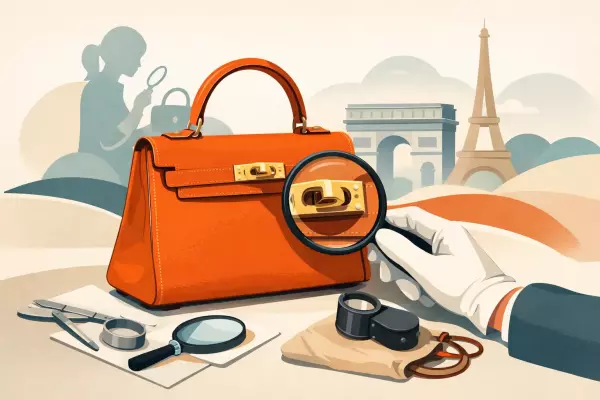
A vintage Hermès bag should never be judged based on a single detail. What determines its value, desirability, and sometimes its rarity lies in a specific combination of factors—the silhouette, the leather, the craftsmanship, the markings, the era, and the overall consistency of the construction. A guide to appraising vintage Hermès bags must therefore go beyond quick, instinctive judgments. In the high-end secondhand market, the trained eye does not merely seek to confirm authenticity. It reads an object, its material history, and its place within the house’s heritage.
## Why appraising a vintage Hermès bag requires a rigorous method
Hermès occupies a unique place in the world of luxury. The house has built its reputation on manufacturing standards whose codes have evolved discreetly over the decades, without ever succumbing to passing fads. This is precisely what makes authentication so delicate. An unusual detail is not necessarily suspicious on a vintage piece. On the contrary, it may be consistent with a specific period, workshop, special order, or manufacturing logic that no longer exists today.
The most common mistake is to apply the criteria of a contemporary bag to an antique Kelly or Bolide. The proportions of the letters, the shade of the branding, the suppleness of the leather, the appearance of the lining, or the shape of the handles can vary depending on the year. Serious authentication therefore relies on comparison, an understanding of the object, and knowledge of the brand’s historical variations.
## Guide to Authenticating Vintage Hermès Bags: Key Points to Observe
The examination begins with the overall impression. A vintage Hermès bag, even one that has been heavily used, generally retains structural integrity. The silhouette remains true. The lines are balanced. The stitching complements the shape rather than constraining it. When several elements appear out of place at the same time—poorly positioned handles, unstable proportions, rough hardware, leather lacking depth—caution is warranted.
The leather deserves special attention. Depending on the era and model, Hermès has used hides with very specific grains, sheens, and textures. An older Box bag does not have the same presence as a Courchevel calfskin, a Fjord, or an Ardennes. Over time, some leathers develop a subtle patina, others become more matte, and still others soften. A convincing patina is not merely a matter of signs of use. It must appear natural and gradual, consistent with the areas of handling and the bag’s presumed age.
Saddle stitching is another essential indicator. At Hermès, it exhibits a lively regularity, never mechanical in the industrial sense. On an older piece, the stitching may show nuances related to use, but it must retain this characteristic artisanal precision. Stitching that is too stiff, too uniform, or, conversely, poorly executed at the corners, warrants closer examination.
## Markings, Stamps, and Dating Codes
Markings often fascinate buyers, sometimes to their detriment. Yes, they are decisive. No, they are never sufficient on their own. The Hermès Paris Made in France marking must be evaluated for its typography, clarity, placement, and consistency with the model. Depending on the era, the depth, spacing, and finish may vary. A stamp that is too deep or abnormally clear on a bag presented as vintage may raise concerns.
The date stamp, when present, helps pinpoint the production date. Here again, one must know how to interpret it. Systems have changed over the years, featuring single letters, circled letters, or square letters depending on the period. Certain restorations, interior wear, or specific model features can make this marking harder to read. The absence of perfect legibility does not automatically invalidate a piece, especially on a vintage bag that has seen use.
Artisan’s hallmarks, additional markings, and certain internal signs can also inform the analysis. But their presence only makes sense when viewed as part of a whole. A sophisticated forgery can reproduce a date code. It is more difficult for it to reproduce the complete logic of a vintage Hermès bag.
### What the hardware really reveals
The hardware of an antique Hermès bag speaks volumes, provided it is not reduced to its mere color. Whether it is gold-plated or palladium-plated is not the only question. One must observe the visual weight, the quality of the engravings, the shape of the lock, the cut of the plates, the screws, the rivets, and how the metal has aged over time.
On an authentic, vintage piece, the wear on the metal generally follows a credible pattern. It appears where the hand interacts with it, where the clasp operates, and where friction occurs naturally. Hardware that is artificially aged or looks strangely new compared to the leather may indicate tampering, restoration, or a problematic assembly. This isn’t always a deal-breaker, but it does affect the object’s heritage value.
## The Importance of the Model and the Period
Appraising an antique Hermès bag also requires a thorough understanding of the model. A Kelly Sellier does not age like a Kelly Retourne. An antique Bolide does not have the same structural characteristics as a Constance or a Trim. Some sizes were more widely produced, others are rarer. Certain combinations of leather, color, and hardware are common, while others are exceptionally sought-after.
The period matters just as much. Bags produced several decades ago sometimes feature details that no longer exist today, whether in the interior, the pockets, the dimensions, or certain construction details. This is where expertise takes on a cultural dimension. It is no longer just a matter of verification. It is a matter of situating the piece within the material history of Hermès.
An antique bag may thus be worth more than a newer model not because it is old, but because it reflects a standard of craftsmanship, a type of leather, proportions, or a presence that has become rare. Conversely, age alone guarantees neither desirability nor value. Condition, the model’s recognizability, and overall balance remain decisive.
## Condition, Restorations, and Impact on Value
In the collectibles market, the concept of condition requires nuance. An older Hermès bag in beautiful original condition may be more sought-after than one that has been overly restored. A well-executed restoration can preserve functionality and elegance. Excessive restoration, however, can diminish the piece’s historical character.
It is therefore important to distinguish between maintenance work—which is compatible with an object’s normal life—and modifications that alter its appearance. Heavy recoloring, replacement of visible parts, clumsy stitching repairs, non-compliant replacement of hardware, or overly aggressive restructuring can affect value.
It all depends on the model, its rarity, and the extent of the intervention. For a very rare bag, expert restoration may remain acceptable. For a more common model, however, it may make it less desirable.
### Provenance and Documentation
Provenance is not merely a nice-to-have. In some cases, it builds confidence and refines the valuation. An old invoice, certificate, sales history, or even simple documentary consistency are useful elements. They never replace a physical appraisal, but they can support an attribution and reassure a future buyer.
In a world where counterfeiting has become increasingly sophisticated, documentation alone does not provide complete protection. A convincing dossier must always be compared with the reality of the object.
## Why Independent Expertise Remains Indispensable
A guide to appraising vintage Hermès bags can refine one’s eye, but it can never replace an expert. The older, rarer, or more atypical the piece, the more rigorously the evaluation must be conducted. Some apparent anomalies are actually consistent with production from that era. Other highly appealing details mask profound inconsistencies. This is precisely the value of a professional assessment, grounded in hands-on experience with authentic pieces.
At a specialized firm like Les Malletiers, expertise truly comes into its own when it draws on knowledge of major heritage houses, repeated observation of materials, and rigorous documentation standards. For the buyer, this changes everything. They are not just purchasing a bag. They are choosing an object already placed within its context of manufacture, preservation, and collecting.
## What a savvy buyer should keep in mind
When faced with a vintage Hermès, one must resist jumping to conclusions too quickly. A visible date code, a lock, a dust bag, or a beautiful patina are not enough. What matters is consistency. Consistency of the leather with the era. Consistency of the markings with the model. Consistency of the construction with the house’s craftsmanship. Finally, consistency between the bag’s actual condition and the story that accompanies it.
An eye for these details develops over time, but one rule remains very reliable: when a piece inspires both desire and hesitation, it is expertise that must decide, never enthusiasm alone. In the vintage luxury market, true elegance also lies in buying with discernment.
15 Apr 2026

A Louis Vuitton trunk weathered by time, a Hermès vanity case with just the right patina, a Dior trolley from a line that no longer exists—in the world of luxury travel, certain pieces go far beyond their practical purpose. This guide to luxury luggage is for those who seek not just a beautiful object, but a piece of history, craftsmanship, and timeless style.
Luxury luggage occupies a unique place in a collection. It is less visible than an iconic handbag, often more demanding to choose, but it tells a different story: the art of travel, a culture of detail, elegance in motion. A beautiful travel piece is never purely utilitarian. It carries the memory of a house, an era, and sometimes a use that no longer exists.
## Why Collect Luxury Luggage
Collecting luxury luggage is not simply about expanding a wardrobe. It is about entering a realm where heritage, craftsmanship, and true rarity intersect. The great houses have never treated travel as a secondary accessory. For some, it is even the point of origin. Trunks, hard-sided suitcases, toiletries bags, garment bags, or travel bags often constitute the most faithful expression of their identity.
This historical dimension changes our perspective. An antique trunk is not interesting simply because it is old, but because it embodies a craftsmanship, a silhouette, and a way of life that has since passed. Conversely, certain more recent pieces appeal through their understated sophistication and limited availability. The discerning collector knows that desirability does not depend solely on age.
One must also consider the timelessness of taste. Luxury luggage is, in part, immune to the rapid cycles of fashion. Beautiful craftsmanship, fine materials, and perfect proportions stand the test of time better than objects designed for immediate impact. This does not automatically make them investments, but it explains their enduring appeal.
## Luxury Luggage Collection Guide: Brands to Watch
Not all prestigious brands occupy the same place in the world of travel. Some have built their legends there, while others have brought a more contemporary or niche perspective.
Louis Vuitton remains a benchmark. Trunks, suitcases, beauty cases, and Keepall, Alzer, or Pégase bags make up an extremely codified realm, rich in archives and variations. Value depends on many factors: era, model, condition of the hardware, presence of markings, interior configuration, and how common the piece is.
Hermès attracts a different kind of attention. The house is less spontaneously associated with trunks than certain historic trunk makers, but its travel pieces, weekend bags, vanity cases, and certain travel accessories embody a standard of leather and craftsmanship that appeals to collectors of materials and finishes.
Moynat and Goyard occupy a niche market. Their appeal lies in the culture of trunk-making, the tradition of personalized travel, and a rarity that, on the secondary market, can become particularly sought-after. These pieces, however, require a more expert eye, as supply is less abundant and comparables are harder to find.
Dior, Chanel, Prada, or Gucci are of particular interest when a travel line strongly embodies the aesthetic of an era. Here, the collector seeks less a lineage of luggage-making and more a consistency of style, remarkable craftsmanship, or a series that is now impossible to find.
## What Determines a Piece’s Value
The first criterion is authenticity. In luxury luggage, this is never limited to a logo or a serial number. It is evident in the construction, the hardware, the quality of the trims, the logic of the stitching, the consistency of the branding, and the relationship between the object and the customs of its era. The older or rarer the piece, the more nuanced this assessment must be.
Next comes condition. This is where judgment must remain nuanced. A natural patina can enhance the beauty of an antique piece, whereas excessive restoration can diminish its appeal. Conversely, on contemporary luggage, warping, worn corners, replaced wheels, or damaged linings carry greater weight. It all depends on the category, age, and purpose of the piece—pure collection, occasional use, or dual-purpose.
Rarity matters, of course, but it is not enough. A rare piece without real market demand may remain marginal. What matters is the intersection of rarity, clarity, and desirability. An iconic model in a rare version will often be more interesting than an obscure object—admittedly rarely seen, but difficult to situate within a house’s history.
Finally, provenance sometimes adds a particular depth. An original monogram, a special order, a custom interior configuration, or a precise match with the house’s archives can tip a piece over into the realm of a true collector’s item.
## Antique, vintage, or contemporary: you must choose your approach
Many buyers approach luxury luggage with an aesthetic preference but without a method. Yet a coherent collection rests on a clear perspective.
Antiques appeal through their presence. A trunk from the late 19th or early 20th century offers unparalleled historical depth. But it requires space, a certain commitment to preservation, and a tolerance for the marks of time. It is not always a spontaneous purchase.
Vintage, in the sense of the 1970s to 2000s, often offers a simpler balance. The pieces remain recognizable, easier to integrate into contemporary life, while retaining a true uniqueness. This is often where the most discerning collections begin.
Finally, contemporary pieces should not be overlooked. Certain limited editions, discontinued lines, or low-circulation creations already constitute the archives of tomorrow. The risk lies in buying too close to the novelty effect. The value of a collection piece then rests on the accuracy of one’s eye, not on the enthusiasm of the moment.
## How to assess condition without making a mistake
In a guide to collecting luxury luggage, the question of condition deserves more than a simple “good” or “bad.” One must learn to distinguish between noble wear and problematic deterioration.
On a trunk, the protected corners, original hardware, canvas or outer lining, handle, closures, and interior must all be examined together. Beautiful, even wear may be acceptable, and sometimes even desirable. On the other hand, structural damage, persistent odors, old moisture, or poorly executed restorations should raise a red flag.
With soft luggage, the inspection focuses more on overall condition, load-bearing seams, the quality of the zippers, the state of the handles and shoulder straps, as well as areas of friction. An item can look very appealing in photos but be disappointing in person if its structure has lost its integrity.
The ideal is not always to find a perfect piece. The ideal is to pay the right price for a condition that is clearly understood.
## Buying to Use or to Keep
This is one of the real questions, and it changes everything. A collector who wants to travel with their luggage will not apply the same criteria as someone building a heritage collection.
For actual use, functionality takes precedence. Sturdy handles, smooth-closing mechanisms, a clean interior, and compatibility with modern travel constraints—all of these become essential. An exceptional but fragile piece will not serve the same purpose.
For preserving a collection, one can tolerate more delicacy if rarity and historical integrity are present. Certain trunks, vanity cases, or travel accessories now hold more legitimacy as objects of decoration, heirlooms, or historical artifacts than as travel companions.
There is no hierarchy between these two approaches. There are simply different trade-offs.
## The Decisive Role of Expertise
The secondary luxury market has increased the supply. It has also created more gray areas. In luxury luggage even more so than in other categories, independent expertise makes the difference between an informed purchase and a risky gamble.
Rigorous authentication does more than just provide reassurance. It protects the item’s value, clarifies its place in the brand’s history, and enables purchases made with a level of discernment consistent with the high-end market. At Les Malletiers, this rigor is part of a precise vision of second-hand luxury: an object is only fully valuable if it is correctly identified, described, and contextualized.
This standard is particularly important for rare, atypical, or antique pieces, where visual cues alone are insufficient. The discerning collector does not seek a mere promise. They expect an expert assessment.
## Building a Collection That Makes Sense
The finest collections are not always the largest. They have a cohesive theme. Some choose a single brand. Others focus on a specific type of item—vanity cases, cabin trunks, coated canvas travel bags, leather travel accessories. Still others collect pieces from a particular era or style.
This consistency strengthens the collection as a whole and refines decision-making. It prevents opportunistic purchases, which are often appealing in the moment but less convincing over time. In luxury luggage, taste develops quickly once you consistently examine the details, proportions, and construction.
Starting modestly is not a flaw. A single, beautifully chosen piece is better than a scattered collection. Over time, the eye becomes more discerning, the criteria more precise, and the collection gains intellectual depth as well as aesthetic richness.
True luxury isn’t just about what you own. It’s about understanding the significance, craftsmanship, and history behind it—and wanting to pass it on just as much as you want to admire it.
14 Apr 2026

A pre-owned bag isn’t purchased like an ordinary accessory. In the world of luxury, it involves more than just a matter of personal taste—it’s about a connection to the material, to the house that created it, to its era, and to how it will stand the test of time. This is precisely what makes it unique: a beautiful pre-owned bag can offer more than a new model, provided you know what to look for.
## Why Pre-Owned Bags Are Gaining Ground in Luxury
The appeal of pre-owned items is no longer just a matter of opportunity. In the high-end fashion segment, it reflects a matter of taste. Many of the most desirable models are no longer produced, have changed in size, leather, or finishes, or belong to a particularly significant moment in a house’s history. Buying secondhand therefore often means accessing a more interesting version of a bag that has already become an icon.
There is also a question of perceived quality. Some collectors seek out specific production periods, leathers that are harder to find today, or construction details that have been phased out over time. A vintage Chanel, an older Louis Vuitton Keepall, a Kelly in a less common style, or a Lady Dior from a certain decade convey a different story than a piece fresh from the workshop this season.
Finally, value isn’t solely financial, even if that matters. For certain iconic lines, the secondary market allows you to acquire an item whose desirability remains strong—sometimes more stable than that of a new purchase. But this depends on the model, its rarity, its condition, and its documentation.
## Choosing the Right Secondhand Bag: The Criteria That Really Matter
The first criterion is always the model itself. You must distinguish between a trend-driven bag and a timeless classic. The former is quick to captivate and can grow tiresome just as quickly. The latter embodies enduring design principles: balanced proportions, a strong identity, clear functionality, and visible craftsmanship. It is often in this second category that the most satisfying purchases over time are found.
The material comes next, and it changes everything. Box calf, grained calfskin, caviar leather, monogrammed canvas, or exotic leather do not age in the same way or at the same pace. Some leathers develop a beautiful patina. Others show more wear, which isn’t necessarily a flaw if you accept that the item is a living thing. You must therefore examine the condition with care: a slight suppleness in the leather can be charming, while a sagging structure on an architectural model can diminish its appeal.
Metal finishes deserve the same attention. Gilding, palladium, brass, clasps, chains, bag feet, zippers, and screws must be examined carefully. Even wear may be consistent with the bag’s age. On the other hand, replacements, inconsistencies in engraving, or unusual variations should prompt caution.
Size is another factor that is often underestimated. A highly sought-after bag isn’t necessarily the right bag for you. Between a mini evening bag, a structured tote, a soft shoulder bag, or a travel bag, actual use matters just as much as the market value. A great secondhand purchase is one you actually wear, not just a name on an invoice.
### Condition: Acceptable Flaw or Real Issue
In the world of second-hand luxury, condition is never a black-and-white issue. Some signs are consistent with good preservation, while others significantly affect the item’s desirability. Even wear on a handle, a few internal marks, slightly softened leather, or subtly scuffed corners can be acceptable on an older bag, especially if the price reflects this reality.
On the other hand, certain alterations must be assessed more rigorously: cracking, lingering odors, severe deformation, poorly executed repairs, damaged linings, open seams, or loss of structure on a model that is supposed to be pristine. In this area, it all comes down to the balance between the item’s age, rarity, brand, and the future owner’s standards.
## The authenticity of a secondhand bag is no small matter
This is where the difference between a market of trust and a market of risk comes into play. In the world of luxury bags, authenticity relies neither on intuition nor on a few flattering photos. It requires an expert examination of the piece: construction, materials, markings, typography, hardware, stitching, dating, and overall consistency. The higher the apparent quality of counterfeits becomes, the more decisive this expertise becomes.
One must therefore be wary of an overly simplistic approach. The presence of an old receipt, a box, or a dust bag is not enough to guarantee authenticity. These elements are valuable, but they never replace a thorough examination. Conversely, a perfectly authentic piece may have lost some of its accessories over time without losing its legitimacy.
For a discerning buyer, the right question is not merely “does the bag look genuine?” but “on what authority is this claim based?” It is this point that transforms the buying experience. When authentication is documented and endorsed by a recognized expert, the value of the transaction changes immediately. At Les Malletiers, this standard is upheld by a certificate of authenticity issued by Jérôme Lalande, an expert appointed by the Paris Court of Appeal, which elevates the verification process to a level rarely seen in the market.
## The Houses and Models That Best Stand the Test of Time
Not all houses perform the same way on the secondary market, nor do all bags from the same house. Certain lines have achieved a permanence that transcends shifting trends. At Hermès, the most architecturally designed models and the most classic styles retain a unique power. At Chanel, the strength of the quilted lines, interlaced chains, and historic silhouettes continues to attract both connoisseurs and new customers.
Louis Vuitton occupies a special place. Its canvas, travel pieces, and several iconic bags transcend eras with remarkable ease. However, one must distinguish heritage pieces from more mainstream productions. Dior, Prada, Gucci, Goyard, or Moynat require a more nuanced approach: some styles are deeply established, while others are more a matter of personal taste or a standout season.
The right approach is less about following a rigid hierarchy and more about understanding what makes a piece desirable: the purity of the design, the history of the line, the rarity of the material-color combination, the coherence of the proportions, and the quality of craftsmanship. A rarely seen but perfectly executed bag can prove more interesting than a highly publicized model.
### Buying to Wear, Collect, or Pass On
Different motivations entail different criteria. If you’re looking for a bag to wear regularly, the durability of the material, comfort, weight, and ease of care become central. If you’re buying to collect, the original condition, the presence of associated elements, the rarity of the model, and the integrity of the piece take precedence.
As for the idea of passing it down, it demands a different approach. One is more likely to choose an iconic line, a subtle color, impeccable craftsmanship, and a condition well-preserved enough for the item to change hands without losing its aura. Not all luxury bags become heirlooms. Some remain beautiful accessories. Others take on, over time, an almost heritage-like significance.
## What a Discerning Eye Notices Before Buying
An experienced buyer doesn’t just look at the front of a bag. They examine the corners, the edges, the evenness of the stitching, the condition of the handles, the clarity of the stamps, the interior, the pockets, the fasteners, and the alignment of the metal hardware. They also look for consistency between the bag’s supposed age and its actual condition.
They pay attention to what has been restored. Restoration isn’t necessarily a problem. When done well, it can extend a piece’s life without betraying its spirit. But it must be identified, understood, and factored into the evaluation. In the luxury sector, invisible interventions don’t really exist to the trained eye.
Finally, they examine the selection offered by the seller. A reputable house doesn’t present items as mere stock. It selects them, documents them, and contextualizes them. This curation is a signal in itself. In a market saturated with offerings, true luxury often lies in discernment.
Choosing a secondhand bag ultimately means choosing a piece whose presence has already stood the test of time. When it is authentic, well-preserved, and carefully selected, it offers something rare: not novelty, but authenticity.
13 Apr 2026

A collector's item doesn't sell the same way as an ordinary accessory. Whether it's a luxury watch, an iconic handbag, an antique trunk, or a rare piece of jewelry, its value isn't determined solely by its outward condition. It depends on a more nuanced set of factors—authenticity, desirability, provenance, production period, scarcity on the secondary market, and condition. This is precisely why knowing how to sell a collector’s item requires more than simply listing it online.
The first instinct is often to look at prices listed on general-purpose platforms. This is useful for gauging market sentiment, but rarely sufficient to determine a consistent value. In the world of luxury and collectibles, the listed price is not the selling price. Two items that look similar can vary significantly in value depending on their vintage, manufacturing details, color, hardware, size, or original documentation.
## How to Resell a Collector’s Item Without Devaluing It
The first mistake is to confuse speed with accuracy. A quick sale may be appropriate if the item is highly liquid and the price is in line with the market. But with a rare piece, moving too quickly often leads to undervaluing precisely what makes it appealing to a discerning collector.
Above all, the item must be documented with precision. A collector’s item inspires confidence when it is described with rigor. It is therefore advisable to gather everything that can attest to its identity and history: original invoice, certificate, case, dust bag, accessories, any maintenance or repair receipts, and any item that helps date or contextualize the piece. In some cases, the absence of these items does not prevent the sale, but their presence significantly supports the perceived value.
The condition then warrants a clear-eyed assessment. In the world of collectible luxury, “good condition” does not necessarily mean “like new.” A consistent patina, leather that has softened elegantly, and signs of regular use consistent with the item’s age can be perfectly acceptable—or even sought after. On the other hand, a botched restoration, replaced parts without traceability, a strong odor, structural deformation, or poorly photographed localized wear can dampen interest or lead to tougher negotiations.
## Authenticity, the Cornerstone of Resale
In the secondary market, authenticity is not a mere administrative detail. It is the very condition of the transaction. The more coveted the item, the greater the vigilance of buyers. Major heritage brands, particularly in bags, small leather goods, jewelry, or luggage, are subject to extreme scrutiny because they are also among the most frequently counterfeited.
Having the item appraised before putting it up for sale is often the wisest decision. A thorough appraisal reassures buyers, provides security for the seller, and allows the price to be defended with greater authority. It also prevents a common issue: the item is authentic but presented with inconsistencies that create doubt. Yet, with a collector’s item, doubt comes at a high cost.
This step is even more critical when the item is antique, discontinued, part of a limited edition, or belongs to a less standardized category than a widely referenced contemporary model. A trunk, a vanity case, a jewelry watch, a signed piece of jewelry, or an archival handbag often require a more specialized assessment than a simple algorithmic estimate.
## Choosing the Right Sales Channel
The best answer to the question of how to resell a collector’s item depends on the type of object, its level of rarity, and the profile of the target buyer. There is no universally superior channel. There is a suitable channel.
Generalist platforms offer broad visibility, but they require a significant investment from the seller. You must produce visuals, write the listing, answer questions, filter out unserious buyers, manage negotiations, shipping, insurance, and sometimes disputes. This model may work for a well-identified item that is relatively easy to sell, but it becomes riskier as soon as the item enters the realm of high value or rarity.
Selling on consignment or through a second-hand luxury specialist follows a different logic. It prioritizes the presentation of the item, the quality of the narrative, access to a clientele already attuned to the heritage value of the brands, and the ability to showcase the item in an environment consistent with its status. This may take a little longer than an impulsive sale, but the positioning is often more accurate.
For certain exceptional pieces, an expert firm may also recommend waiting for a more favorable market moment. Certain colors, formats, and archival periods experience cycles of interest. Selling at the right time can make a significant difference.
## Preparing the piece before putting it on the market
Preparing does not mean transforming. In the world of collectibles, the temptation to have the item completely restored before sale is not always a good idea. Gentle, professional cleaning may be welcome. So is a discreet refurbishment. On the other hand, overly extensive work—especially if it alters the materials, color, finishes, or original stitching—can compromise the item’s integrity.
Each case must therefore be considered individually. An antique Hermès or Chanel bag, a Louis Vuitton trunk, a Dior wallet, or a designer piece of jewelry do not require the same approach. The guiding principle is simple: preserve what defines the object’s identity and correct only what clearly detracts from its presentation or preservation.
Photographs then play a major role. A collector’s item must be presented with restraint and accuracy. Natural light, clean angles, close-ups of materials, markings, finishes, corners, the interior, clasps, and any signs of wear. Overly filtered or overly flattering images undermine trust. At this market level, a beautiful presentation is credible only if it remains true to the item.
## The right price is neither the highest nor the lowest
Setting a price requires distinguishing between desirability value and transaction value. A piece may be highly desirable in absolute terms yet take time to find a buyer if the price targets an extremely specific buyer. Conversely, a price that is too conservative quickly sparks interest but often leaves the impression of having sold too soon.
To establish a realistic price range, several factors must be considered: the dealer’s valuation, the model’s rarity, condition, completeness, seasonality, the depth of demand, and how frequently the item appears on the market. Paradoxically, some very rare items suffer from a lack of comparable items. Here again, the expert’s eye is decisive.
You must also factor in fees. Between commission, insurance, secure shipping, potential appraisal costs, and taxes depending on the situation, the seller’s net proceeds may differ significantly from the retail price. This is often where disappointments arise. A good advisor clarifies from the outset exactly what you will actually receive.
## What Collectors Are Looking For
The buyer of a collector’s item isn’t just looking for a beautiful object. They’re looking for certainty. Certainty regarding authenticity, price consistency, condition, and the professionalism of the presentation. They also want to feel that the object has been understood for what it is.
This is particularly true in a world where emotion, brand heritage, and the legacy of a design count as much as the material itself. A discontinued bag with a sought-after finish, a trunk bearing the marks of historical use, a piece of jewelry from a line no longer in production, or a vintage travel item must be described with precision—neither exaggerated nor trivialized.
From this perspective, selling through a specialist capable of certifying, contextualizing, and presenting the item to a clientele of connoisseurs can make all the difference. At Les Malletiers, this commitment to authenticity and a heritage-focused perspective precisely shapes our approach to reselling rare and collectible luxury items.
## Factors That Slow Down a Sale
Certain challenges often arise. A seller sometimes overestimates the sentimental value of the item. It’s human nature, but the market doesn’t compensate for personal attachment. Conversely, others downplay a rare variation, an interesting provenance, or a manufacturing detail that makes all the difference.
Sometimes the description is too vague. Simply saying “vintage,” “collector’s item,” or “rare” isn’t enough. You still need to explain why. An identifiable reference, a production period, a specific leather, a limited edition, a distinctive clasp, or a rare color carry much more weight than flattering adjectives.
Finally, a highly desirable piece may nevertheless sell slowly. The collector’s market is not always a volume market. With certain items, one must accept a more selective timeline. Patience, when accompanied by good positioning, is often better rewarded than haste.
Reselling a collector’s item ultimately involves balancing value, trust, and context. When an object has been chosen for its uniqueness, it deserves to be brought back to the market with the same level of care. This is often how a piece changes hands without losing what made it prestigious.
12 Apr 2026

A secondhand luxury handbag isn’t something you buy like a seasonal accessory. When people look for secondhand luxury handbags, they’re often seeking something more than just a beautiful object—a brand, an era, a line that’s no longer available, and sometimes even a certain sense of style. The market is rich, but it demands a trained eye, because desirability alone is never enough.
## Why second-hand luxury bags are so appealing
The appeal of these pieces lies first and foremost in what they embody. A vintage Kelly, a Timeless Chanel from a golden era of production, a Louis Vuitton Speedy with perfectly aged leather, or a Lady Dior in a discontinued shade do not have the same presence as a mass-produced item. High-end second-hand shopping provides access to items that have already stood the test of time, and sometimes gained character.
There is also a more subtle, yet decisive, reason. New luxury goods are subject to collection cycles, price hikes, waiting lists, and availability that varies by brand. Second-hand items, when carefully curated, offer a different sense of time. We no longer buy only what is in stores today, but what still deserves to be worn or kept tomorrow.
This logic appeals to both the discerning enthusiast and the collector. Some seek an iconic piece in a specific configuration. Others prefer a more niche model—less visible, yet more interesting in terms of craftsmanship, leather, or rarity.
## What Sets a Good Purchase Apart from a Disappointing One
In the world of second-hand luxury handbags, the first distinction lies in authenticity. This may seem obvious, but it is the factor that determines everything else. A seemingly great deal instantly loses all value if its provenance is unclear or if the expertise is insufficient. In this segment, trust isn’t granted; it’s earned.
Next comes condition. An older bag doesn’t need to be perfect to be desirable. A consistent patina, slightly softened corners, and subtly marked hardware can even enhance a piece’s charm. On the other hand, heavy restoration, brittle leather, lingering odors, a sagging structure, or clumsy repairs radically change the picture. Nuance is essential—time can ennoble an object, but it can also alter it.
The third criterion is the authenticity of the model. Not all bags from a major house are created equal on the secondary market. Some maintain consistent desirability thanks to their design, cultural status, or everyday utility. Others have a more volatile market value. A successful purchase therefore depends on the balance between personal desire, intrinsic quality, and long-term potential.
## How to evaluate a bag before buying it
### The material often speaks louder than the logo
The leather, the canvas, the finishes, the feel of the bag—everything speaks volumes. Box calf, Chanel Caviar, Louis Vuitton Epi leather, well-preserved Goyard canvas, or vintage Prada nylon do not age in the same way. You must observe how the material reacts to light, its structure, its suppleness, and its natural creases. A compelling bag is often recognizable even before you focus on the signature.
The hardware deserves the same attention. Gold plating that’s too uniform on a piece that’s supposed to have a history can raise questions, as can rough engraving or inconsistent weight. Luxury houses each have their own practices, eras, and manufacturing variations. This is precisely where expertise makes the difference.
### Condition must be assessed, not just noted
Descriptions like “very good condition” or “excellent condition” aren’t enough on their own. You need to understand what they mean. A clean interior is reassuring, but it doesn’t make up for a worn-out shoulder strap. A beautiful overall silhouette can hide a worn clasp. Conversely, a slight mark under the flap matters little if the structure, stitching, and leather are remarkable.
A savvy buyer isn’t necessarily looking for the total absence of signs of use. They’re looking for overall consistency. A bag must tell a credible story, never a rough approximation.
## Second-hand luxury bags and lasting value
It would be simplistic to present second-hand luxury leather goods as merely an investment. Not all models appreciate in value, and some price surges are more a matter of fashion trends than true heritage value. Yet, ignoring the question of value would be just as naive.
Some pieces stand the test of time with remarkable stability. This is due to several factors—the strength of the brand, the timelessness of the design, the quality of craftsmanship, the rarity of certain versions, and the depth of international demand. Hermès, Chanel, Louis Vuitton, and Goyard do not dominate this market by chance. These are names whose history, masterful craftsmanship, and place in the collective imagination fuel their desirability.
But one must remain discerning. The most profitable piece is not always the most interesting to own. A highly sought-after bag may be easier to resell, certainly, but a less visible model, from a golden era of production or a discontinued line, can offer far greater pleasure than a purchase dictated solely by market indicators.
## The Appeal of Rare or Discontinued Models
The true luxury of the second-hand market often begins where standard offerings end. A color no longer in the collections, a discontinued size, a unique finish, a workshop detail, a rarely seen travel model, a matching small leather good—it is these nuances that capture the attention of connoisseurs.
In this spirit, rarity is not merely a matter of quantity. It also depends on the quality of an object’s presence. Some bags are rare because they were produced in limited numbers. Others because few have been preserved in fine condition. Still others because they belong to an era when the house worked with certain materials or proportions with an elegance that feels different today.
For this reason, selection matters as much as inventory. An exceptional piece is not defined solely by its name. It stands out through the convergence of brand, condition, era, and desire.
## The Decisive Role of Authentication
In the secondary market, authentication is not a mere administrative detail. It is the very prerequisite for a confident purchase. Counterfeits have become more sophisticated, hybrid constructions exist, and certain restorations can obscure the original intent. In light of this, vague statements or ambiguous guarantees are no longer sufficient.
A certificate issued by a recognized authority provides a whole new level of security. It entails expertise, a method, and accountability. For the buyer, this changes everything—not only at the time of purchase, but also for preservation, insurance, or a potential future resale.
It is precisely this level of rigor that distinguishes a specialized house from a generalist platform. At Les Malletiers, each piece is presented as an object of trust before being presented as an object of desire. In this world, that is the right order.
## Buy according to your style, not according to market hype
There is a common temptation in the world of second-hand luxury bags—to choose the most talked-about model rather than the one that truly fits your life. Yet a bag, even a prestigious one, remains a silhouette piece. It must complement a certain look, a certain gesture, a way of moving through the day, travel, dinner, and work.
Someone who values discretion might gravitate toward less flashy designs, understated leathers, and understated silhouettes. A more assertive collector might seek out an iconic monogram, a signature chain, or a piece with strong cultural resonance. No choice is inherently superior. It all depends on the relationship you wish to have with the object.
This is also why guidance matters. When a specific model has eluded you for a long time, it may be wiser to wait for the right piece than to settle for a mediocre version. In the world of pre-owned luxury, patience is often a form of discernment.
A truly beautiful bag doesn’t need to be new to be exceptional. It needs to be just right—just right in its provenance, just right in its condition, just right in the way it resonates with you. The right purchase isn’t the one that makes the biggest splash, but the one whose presence continues to make an impression long after the first glance.
10 Apr 2026

A Speedy from the ’90s, a Keepall weathered by travel, a monogrammed trunk that still embodies the very idea of setting out—**pre-owned Louis Vuitton** is more than just an alternative to new. It is often a more refined, more deliberate choice, and sometimes even a more discerning one. But you still need to know how to distinguish a beautiful piece from one that is simply old, a heritage item from an impulse buy, and an authentic rarity from a market saturated with promises.
## Why secondhand Louis Vuitton is so appealing
Louis Vuitton occupies a unique place in the history of French luxury. Few houses have managed to consistently bring together function, travel, craftsmanship, and contemporary desirability. It is precisely for this reason that the pre-owned market is so vibrant.
Buying a second-hand Louis Vuitton piece isn’t just about looking for a price different from the one in the store. It also means gaining access to discontinued styles, finishes no longer offered, more balanced proportions, or pieces whose patina lends a depth that new items do not yet possess. Vintage Monogram canvas, natural leather that has aged gracefully, hardware slightly softened by time—these are all signs that can enhance a piece’s character rather than diminish it.
But this appeal has its downside. The higher the demand, the higher the standards must be. Not all vintage pieces deserve a collector’s interest, and not all offers are created equal.
## How to Choose a Pre-Owned Louis Vuitton with Discernment
The first criterion is less the model itself than the actual condition of the piece. An iconic piece retains its appeal, of course, but the condition determines the quality of the purchase. With Louis Vuitton, certain elements warrant special attention: the canvas, the corners, the handles, the stitching, the metal hardware, and—when the model features them—the natural leather parts.
The coated canvas should hold its shape well, without structural cracks or excessive sagging. The corners often reveal a bag’s true condition faster than its front face. As for calfskin, it warrants a nuanced assessment. A uniform honey-colored patina can be highly desirable. On the other hand, pronounced water stains, irregular darkening, or deep drying out detract from the bag’s overall elegance.
The second criterion is how you intend to use it. An Alma or a Speedy does not meet the same expectations as a Neverfull, an Accessory Clutch, or a Keepall. For an everyday purchase, practicality, weight, and ease of opening matter just as much as style. For a collector’s item, rarity, the accuracy of proportions, and the presence of original elements take precedence. There is no such thing as a “good” purchase per se—there is only a purchase that aligns with your perspective and how you experience the object.
### The models that stand the test of time
Certain Louis Vuitton models have stood the test of time with remarkable consistency. The Speedy remains a classic thanks to its instantly recognizable silhouette and its balance of capacity and elegance. The Keepall remains a benchmark for those who appreciate the heritage of travel. The Noé, with its supple silhouette, possesses a very distinctive presence on the secondary market, especially in its well-preserved vintage versions.
Other pieces appeal due to their more limited availability on the market. This is the case with certain small leather goods, costume jewelry that has become hard to find, or luggage and trunks that are more a part of heritage than mere accessories. These items require a more trained eye, but often offer a rarer sense of satisfaction.
### Older isn’t always better than newer
One might think that an older piece is necessarily more interesting. This isn’t always true. Some recent designs offer formats better suited to contemporary uses, more thoughtfully designed interiors, or refined finishes found in limited editions. Conversely, certain older models appeal because of their materials, construction, or craftsmanship details.
It all depends, therefore, on what you’re looking for. If you’re drawn to patina and history, vintage is the natural choice. If you prioritize structure, functionality, or near-new condition, a more recent piece may be preferable. The secondhand Louis Vuitton market is vast enough to accommodate both approaches, provided you don’t confuse them.
## Authenticity: The Decisive Factor in Secondhand Louis Vuitton
In this segment, trust isn’t a matter of convenience—it’s a necessity. Louis Vuitton is one of the most counterfeited brands in the world. A successful purchase therefore begins with a flawless verification process.
Authenticity is never determined by a single detail. It relies on a cluster of indicators: the quality of the canvas, the consistency of the markings, the uniformity of the stitching, the typography, the overall construction, the hardware, the date code where applicable, and the overall alignment between the model, the era, and its characteristics. It is precisely this level of expert analysis that distinguishes a reputable house from a mere intermediary platform.
A certificate of authenticity issued by a recognized expert profoundly changes the nature of the purchase. It is no longer merely a commercial statement, but a documented commitment. For both the discerning enthusiast and the collector, this guarantee provides decisive peace of mind, particularly for high-value items or models rarely seen on the market.
## What Determines a Piece’s True Value
Price alone says little. The value of a pre-owned Louis Vuitton is determined by a combination of factors: the model’s desirability, rarity, condition, the presence of original accessories, the appeal of the design, and market supply and demand.
A widely available model in average condition may be affordable without being particularly appealing. Conversely, a more understated piece, perfectly preserved, complete with its shoulder strap, padlock, keys, or original box, may command a significantly higher price. The savvy collector doesn’t just pay for a name—they recognize the integrity of the entire piece.
Timing is also a key factor. Some items experience spikes in interest tied to trends, then stabilize. Others appreciate more slowly but with greater consistency, particularly items related to the world of travel or models that have long been discontinued. If your purchase is driven by personal taste, this fluctuation matters little. If you’re also thinking in terms of long-term value, it’s worth observing calmly.
## Where to buy without compromising your standards
Today’s secondary market offers a wealth of channels, but not all provide the same level of curation or the same degree of accountability. The gap is considerable between generalist marketplaces, specialized dealers, and houses with a strong culture of expertise.
A truly serious selection does not present items as anonymous stock.
It describes them with precision, acknowledges their actual condition, documents important details, and situates the object within a history of manufacture, use, and desire. This is where a specialist’s approach becomes evident.
For buyers who value rarity, condition, and authenticity, a curatorial specialist often offers a more authentic experience. At Les Malletiers, this commitment takes the form of a selection focused on prestigious houses, accompanied by a certificate of authenticity written by Jérôme Lalande, an expert at the Paris Court of Appeal. In a world where assurance determines value, this rigor is no small matter.
## Buying well also means knowing how to wait
The desire to find something quickly often leads to unnecessary compromises. Yet the right pre-owned Louis Vuitton piece isn’t necessarily the one you see most often. It’s the one whose condition, size, era, and presence precisely match what you were looking for—sometimes without having even articulated it exactly.
Waiting for a better patina, a more compelling color, an older version, or simply a cleaner example is often the most elegant decision. This patience is part of the culture of the rare object. It avoids merely adequate purchases and allows for acquisitions that truly matter.
To achieve this, it is helpful to examine pieces methodically, compare proportions, familiarize yourself with manufacturing details, and never pit emotion against expertise. In the world of secondhand luxury, the finest choice is often the one where the two come together.
A well-chosen pre-owned Louis Vuitton piece offers more than just a logo or status. It introduces into a wardrobe, a collection, or an interior an object that has already stood the test of time and can continue to do so with style. It is perhaps the most demanding form of luxury—one that prioritizes authenticity over immediate impact.
08 Apr 2026

A collector's bag isn't chosen like just any accessory. It reflects a certain aesthetic, a fashion sensibility, and often involves a significant investment. A good guide to buying a collector's bag, therefore, isn't about simply pointing out a few desirable models, but about learning to recognize what gives a piece its lasting value—beyond market hype, fleeting trends, and empty promises.
Some bags stand out immediately. A silhouette that has become iconic, leather that ages gracefully, craftsmanship that withstands the test of time without losing its shape. Others appeal primarily because they are rare or currently in high demand. The difference between these two categories is crucial. The discerning collector doesn’t just buy a name. They buy a harmony between the brand, the era, the quality of craftsmanship, the condition, and genuine market demand.
## What Truly Makes a Collector’s Bag
The term “collector’s item” is widely used, sometimes to the point of losing its meaning. In reality, a bag becomes a collector’s item when it combines several factors at once. It may be an iconic model from a house, a limited edition, a discontinued model that is now hard to find, or a piece representative of a defining moment in the history of luxury.
At Hermès, Chanel, Louis Vuitton, Dior, Goyard, or Moynat, certain lines do not owe their status to mere scarcity. They embody a vision of craftsmanship. The proportions, construction, choice of materials, and quality of finishes all contribute to their enduring aesthetic appeal. A collector’s bag isn’t just hard to come by. It continues to look just right, year after year.
This nuance matters. A piece in high demand today may lose its appeal tomorrow if its appeal is based primarily on a trend. Conversely, a model with less media exposure may prove far more desirable to a discerning collector because it bears a strong signature, features remarkable craftsmanship, or has a specific history.
## Collector's Bag Buying Guide - Start with the House
Before even examining a specific piece, you must consider the house that designed it. Not all luxury brands carry the same heritage weight on the secondary market. Some models enjoy consistent demand, while others appeal to a more niche but highly loyal clientele.
Buying a Kelly, a Birkin, a Timeless, a Lady Dior, or a Louis Vuitton soft trunk involves a different logic than acquiring a more understated model from Prada or Gucci. The former often involves an established icon with strong market recognition. The latter can open up more subtle opportunities, particularly when quality is high and supply is limited. It’s not a matter of “good” purchases on one side and “bad” ones on the other. Above all, there are different buyer profiles.
If you’re looking for a heritage piece, prioritize models whose formal identity has already stood the test of time. If you’re buying with the eye of a pure collector, the appeal may also lie in a rare variation, a unique color, a special order, or an older production rarely seen on the market.
### The Icon Isn’t Always the Best Choice
The most famous model isn’t automatically the most relevant. Its entry price can be very high, and its relative availability may be wider than one might imagine on certain platforms. Conversely, a less-discussed bag that’s hard to find in pristine condition can offer a much more compelling appeal.
It all depends on your intention. Do you want an absolute benchmark of luxury, immediately recognizable, or a more sophisticated piece that speaks more to connoisseurs than to the general public?
## Authenticity Is Never a Minor Detail
In the luxury pre-owned market, the decisive factor remains authenticity. It is the foundation of all value. Without it, rarity means nothing, the market value becomes fictitious, and the joy of ownership is immediately undermined.
An experienced buyer is not satisfied with mere reassurances. They expect clear, well-documented, and compelling expertise. Construction details, material consistency, markings, hardware, stitching, typography, manufacturing codes, and natural wear must all come together to form a credible whole. This assessment requires specific knowledge, especially regarding the most frequently counterfeited brands.
This is precisely where rigorous selection makes all the difference. At Les Malletiers, every piece is presented as authentic and accompanied by a certificate of authenticity drafted by Jérôme Lalande, an expert appointed by the Paris Court of Appeal. For a buyer of rare pieces, this level of assurance is not merely a comfort factor. It is a prerequisite for trust.
## Condition Changes Everything
Two bags that appear identical on paper can vary considerably in value depending on their condition. Dried-out leather, repaired corners, heavily pitted hardware, or a sagging structure profoundly alter a piece’s desirability, even if the model remains sought-after.
You must learn to look beyond the labels “very good condition” or “good condition.” The overall condition matters just as much as localized flaws. A collector’s item can withstand patina—sometimes it even calls for it. On the other hand, severe deterioration, clumsy restoration, or alterations that don’t align with the original spirit can affect both its current appeal and its future potential.
### Noble patina or detrimental wear
The line is fine. A supple yet sound monogram canvas, slightly marked box leather, or an elegantly darkened handle can retain all their charm. On the other hand, visibly re-sewn seams, uneven varnish, a replaced lining, or metal parts changed without traceability call for greater caution.
The best approach is to ask for an honest assessment of the actual condition, not a flattering sales pitch. The more valuable the piece, the more essential this precision becomes.
## Rarity, limited edition, discontinuation—three distinct concepts
Not all rare bags are rare for the same reasons. Some were produced in limited quantities. Others have been discontinued and are becoming difficult to find in good condition. Still others are rare because they appealed only to a narrow circle at the time of their release, before being rediscovered later.
This distinction affects value. A highly publicized limited edition may see its price rise quickly and then stabilize. A discontinued model with a strong design may gain desirability more slowly, but more steadily. As for atypical pieces from less-studied eras, they often attract the most discerning collectors.
A serious guide to buying collector’s bags must therefore encourage a long-term perspective. True rarity is not merely quantitative. It is also cultural.
## Should you buy to wear, keep, or pass on?
The answer changes how you buy. If you plan to wear the bag often, the condition should be excellent but not necessarily perfect, and the choice of material becomes key. Some leathers withstand wear better, while certain designs age more gracefully.
If you’re buying to keep, you can aim for a rarer piece—less versatile, but more meaningful. The presence of original accessories, a dust bag, a box, or even an old invoice may then carry more weight. If you’re thinking about passing it on, it’s best to prioritize a recognizable, timeless model from a house whose history remains firmly rooted in the heritage of luxury.
This isn’t a hierarchy. It’s a matter of alignment. A very good purchase is, first and foremost, the right purchase for its owner.
## Collector’s Bag Buying Guide – The Most Costly Mistakes
The most common mistake is buying too quickly under the influence of an apparent opportunity. A price below market value is never enough to qualify as a good deal. It may mask doubts about authenticity, poor condition, extensive repairs, or a model with low actual demand.
The other mistake is relying solely on the market value. The potential resale value is a legitimate concern for many buyers, but it does not replace taste or knowledge. A sought-after bag in an undesirable configuration will not perform as well as the same model in a more prized leather, size, or color.
Finally, be wary of overly abstract purchases. A collector’s item is judged on its pedigree, certainly, but also on its presence. Its balance, feel, density, and construction often tell a story beyond its mere technical specifications.
## Buy with discernment, not haste
The best purchase isn’t always the most spectacular. It’s the one that combines undeniable authenticity, excellent condition, a reasonable price, and lasting emotional appeal. In a market where supply seems abundant but truly beautiful pieces are actually few and far between, discernment remains the true luxury.
If a specific model has been on your mind for a long time, it is sometimes better to wait for the perfect piece rather than settle for a less-than-ideal version. And if you are looking for a rare or discontinued model that is hard to find, an expert’s eye can save you precious time. A collector’s bag deserves better than an impulse purchase. It deserves to be chosen as one would choose a heritage piece—with passion, yes, but also with method.
07 Apr 2026

The Lady Dior isn’t just a bag you buy to complete a wardrobe. It’s a household item, almost a symbol of visual culture. When a customer asks us for our opinion on a vintage Lady Dior bag, the real question is often more complex: are we talking about a stylish purchase, a collector’s item, or a reasonable investment? The answer deserves more than just automatic enthusiasm.
## Review of the vintage Lady Dior bag—what makes it stand out
The vintage Lady Dior’s greatest strength lies in its silhouette. Few bags have managed to establish such a recognizable shape without falling into the trap of fleeting trends. The clean structure, the rounded handles, the cannage, the suspended DIOR letters—everything contributes to a very distinctive presence. You can recognize the bag from a distance, but it doesn’t scream for attention.
This restraint partly explains its longevity. While some “it” bags become dated because they too strongly epitomize a particular decade, the Lady Dior retains an air of timelessness. It belongs to the rare category of bags that can be worn with a tailored suit, a masculine coat, an evening gown, or a specific denim look, without losing their coherence.
Vintage adds a very special quality of perception to this. Older models often feature leather with a denser feel, finishes that are sometimes more substantial depending on the era, and above all that light patina that transforms a luxury accessory into a lived-in object. For a lover of fine pieces, this dimension matters just as much as the overall condition.
### An icon, but not a static icon
It’s also worth noting that the Lady Dior isn’t confined to a single stylistic interpretation. In black cannage lambskin, it exudes a classic, almost ceremonial elegance. In colored patent leather, it becomes more fashion-forward, more bold. In exotic leather or limited editions, it enters the realm of collectibles.
This is precisely what makes assessing a vintage Lady Dior bag a nuanced matter. One does not judge a medium-sized black quilted leather model, a more recent micro version, or an older seasonal edition in the same way. Desirability depends heavily on the size, material, and production period.
## Quality, Usability, Comfort—The True Assessment
In terms of craftsmanship, the Lady Dior generally lives up to its reputation. The structure is meticulous, the cannage requires consistent execution, the handles must retain their shape, and the whole piece rests on a precise balance between rigidity and refinement. A beautiful vintage example immediately gives the impression of solid construction.
On the other hand, we must be honest about its practicality. The Lady Dior isn’t the most practical bag on the market. Its opening may feel less fluid than that of a soft tote or a well-designed flap bag. Depending on the size, access to the interior isn’t always ideal for very active use. If you’re looking for a bag to use intensively from morning to night, every day, there are more convenient options.
This is where sound reasoning comes in. The vintage Lady Dior excels when you expect it to deliver silhouette, poise, and elegant lines. It’s less convincing if you demand almost utilitarian functionality. This isn’t a design flaw—it’s the very logic of a bag conceived as a style statement before being a tote.
### Sizes and what they really mean
The choice of size is crucial. Smaller models charm with their clean lines and grace, but quickly require compromises in terms of capacity. Medium sizes are often the most balanced for those who actually want to carry the bag. Larger sizes, which are rarer depending on the generation, have a strong presence but can lose some of their visual delicacy.
For a first vintage purchase, the medium size in a neutral color is often the most compelling choice. It stands the test of time better, resells more easily, and preserves the model’s original spirit without being overly restrictive.
## What to Check Before Buying
Any serious advice on vintage Lady Dior bags cannot sidestep the central issue of the secondary market: authenticity, of course, but also the overall integrity of the piece. With such an iconic model, counterfeits are numerous and can sometimes be visually convincing to the untrained eye.
You must examine the quality of the cannage, the regularity of the stitching, the precision of the metal finishes, the condition of the handles, the interior markings, the consistency of materials, and the overall harmony of the bag. An authentic Lady Dior rarely stands out because of a single detail. It stands out because of the harmony of all its details.
Condition deserves the same attention. The sumptuous lambskin is also delicate. Corners may show wear, handles may be worn down, certain patent leathers may show signs of deterioration, and the interior may reveal more use than the exterior suggests. Light restoration may be acceptable. Heavy or clumsy restoration is far less so, especially for a purchase intended as an investment.
### Vintage does not mean perfect
This is a key point. Many buyers approach vintage with a contradictory expectation: wanting the spirit of the era without accepting the signs of the times. On an older Lady Dior, slightly supple leather, subtle marks at the corners, or micro-oxidation on the hardware can be compatible with a truly beautiful piece.
On the other hand, structural deformities, sagging cannage, surface cracks, or visible repairs should prompt caution. Good vintage isn’t immaculate vintage at any cost. It’s vintage that’s authentic, sincere, and well-preserved.
## Value and Resale – Is It a Reasonable Purchase?
The Lady Dior has a clear advantage: its iconic status supports its value on the secondary market. One shouldn’t promise an automatic increase in value, as the pre-owned luxury market varies depending on the period, materials, sizes, and condition. But it is an established, recognizable, and sought-after model, and therefore relatively liquid when purchased wisely.
The simplest and most desirable versions are often the most reliable. Black leather, a balanced size, good condition, and impeccable authentication provide a solid foundation. Conversely, certain very dated colors or poor condition can slow down resale, even at a reduced price.
For a collector, the logic may differ. A special edition, a rare material, or a specific era can justify greater interest, even among a niche audience. Again, it all depends on the purpose of the purchase: to wear, keep, collect, pass on, or resell later.
## Who is the vintage Lady Dior really for?
The vintage Lady Dior is a perfect fit for anyone who loves structured bags, the house’s signature elegance, and instantly recognizable pieces without a flashy vibe. It also appeals to buyers who want to acquire a major Dior icon with more discernment than an impulsive new purchase.
It is less suitable for someone who prioritizes lightness, storage capacity, or a very casual look. If your wardrobe is dominated by soft, utilitarian, or very minimalist silhouettes, the Lady Dior may seem more formal than expected. It all depends on the contrast you’re seeking.
### Our take on the vintage Lady Dior bag based on buyer profile
For a first pre-owned luxury purchase, it’s an excellent option provided you embrace its character. For a collector, it’s a foundational piece rather than a whim. For intensive daily use, you must be certain you love its constraints as much as its style.
This is, in fact, what distinguishes great bags from merely desirable ones. Great bags demand genuine commitment. The vintage Lady Dior doesn’t seek to please everyone, and that is part of its nobility.
## Our Final Thoughts
Yes, the vintage Lady Dior deserves its reputation. It combines identity, craftsmanship, style, and recognition value in a way that few bags achieve with such consistency. But it is a purchase that demands precision: choosing the right size, the right material, the right condition, and above all, the right provenance.
In a market where trust makes all the difference, it is best to prioritize an expert selection and impeccable authentication. It is in this spirit that specialized houses like Les Malletiers, with a certificate of authenticity written by Jérôme Lalande, provide luxury vintage items with the setting they deserve. A beautiful vintage Lady Dior is not purchased simply because it is iconic—it is purchased because the chosen piece is the right one.
06 Apr 2026

The two terms are often used as if they were interchangeable. However, when it comes to a Chanel bag, a Louis Vuitton trunk, or a designer piece of jewelry, understanding **the difference between vintage and secondhand** profoundly changes how one views the item—and often determines whether the purchase is a wise one.
In the world of luxury, this distinction goes beyond mere fashion terminology. It relates to the era of manufacture, cultural value, rarity, condition, and, of course, desirability. A secondhand item can be recent, flawless, and highly coveted. A vintage piece, on the other hand, belongs to a specific era, sometimes to a bygone aesthetic, and carries with it a piece of history that the contemporary market no longer reproduces.
## What is the difference between vintage and secondhand in practice?
Secondhand refers, in the most direct sense, to an item that has already had a first owner. The main criterion is prior use, not age. A Hermès bag purchased six months ago and then resold is therefore secondhand. It may be almost new, still in line with the brand’s current codes, featuring leather, hardware, and a style still in production.
Vintage, on the other hand, refers to an older piece from an identifiable period, whose value extends beyond mere resale. In fashion and leather goods, an item is generally considered vintage after about twenty years, sometimes longer depending on the brand and category. But age alone is not enough. An older piece without any distinctive character does not automatically attain vintage status in the noble sense of the term.
In other words, everything vintage is secondhand, but not everything secondhand is vintage. That is the essential distinction.
## Vintage Is Not Just About Age
What truly distinguishes vintage is the intersection of age and uniqueness. A vintage piece tells the story of an era through its silhouette, clasp, monogram, construction, or history of use. It bears witness to a specific moment in a brand’s style and craftsmanship.
Take, for example, a Dior bag from the 1990s or an older Goyard suitcase. Their appeal lies not only in the fact that they have stood the test of time. It also lies in the manufacturing details, proportions, materials, or finishes that are no longer exactly the same as today’s. Vintage appeals because it offers a less standardized version of luxury—sometimes more authentic, rarer, and even bolder.
This heritage aspect explains why certain vintage pieces are sought after as collectibles, while others remain simply secondhand items.
### Secondhand can be very contemporary
Conversely, secondhand covers a much broader spectrum. It includes everything from a Prada clutch from last season to a Gucci wallet that was still being sold in stores just a short while ago. The desired benefit isn’t always the same. Some buyers want to acquire an iconic piece at a more reasonable price. Others are looking for a discontinued model, a hard-to-find color, or a style no longer listed in the catalog.
In this context, secondhand shopping often responds to a desire for immediate gratification and practical use. Vintage, on the other hand, is more closely tied to personal taste, culture, and sometimes collecting.
## What Changes in Terms of Value
One of the most common misconceptions is the belief that vintage items are always more expensive than recent second-hand ones. It’s not that simple.
A piece’s value depends first and foremost on the brand, the model, its rarity, condition, materials, provenance, and market demand. A highly sought-after vintage Chanel bag can naturally command a high price. But a recent Hermès model, made of prized leather, in one of the brand’s signature styles, may be worth more than an older but less desirable piece.
The term “vintage” therefore guarantees neither an automatic premium nor intrinsic superiority. Rather, it signals a different positioning. Sometimes we pay for age, but more often for rarity and character.
This is where a more discerning reading of the market comes into play. A recent secondhand piece can offer an excellent balance between use, condition, and value. A vintage piece, on the other hand, may justify its price through an aesthetic or historical presence that no reissue can fully replicate. It all depends on what one is seeking to buy: functionality, a signature, an era, or an emotion.
## Condition: A Decisive Factor
In the luxury sector, condition is never assessed superficially. One must examine the structural integrity, the condition of the corners, the quality of the leather, the patina, the interior, the metal finishes, and any restorations and their appropriateness.
For a recent secondhand piece, expectations are often high. The buyer hopes for an item that has been worn very little, close to its original condition. For vintage pieces, the perspective is more nuanced. A light patina, consistent wear, or the softness of the leather that comes with age can all add to the charm, provided the overall condition remains sound, legible, and true to the spirit of the piece.
We must therefore avoid two extremes: idealizing every sign of age under the guise of authenticity, or, conversely, demanding that an antique item look brand-new. In vintage items, preservation matters just as much as history. In secondhand items, the item’s condition—how little it has been used—often remains a major selling point.
## What is the difference between vintage and secondhand in terms of authenticity?
On this point, no leniency is permitted. A piece is either authentic or it is not. But the risks do not always manifest in the same way.
Recent second-hand items circulate in a very broad, fast-moving, and abundant market, where counterfeits sometimes mimic current styles with a disturbing degree of precision. Vintage items, on the other hand, can present other challenges: poorly documented older collections, changes in markings, manufacturing details specific to a particular period, and past repairs that obscure the object’s true nature.
In other words, neither the term “vintage” nor “secondhand” protects the buyer. What protects them is expertise. For a clientele devoted to heritage houses, authenticity is not just another sales pitch. It is the absolute prerequisite for value, legacy, and trust. At Les Malletiers, every piece is presented as authentic and accompanied by a certificate written by Jérôme Lalande, Expert at the Paris Court of Appeal—a requirement that takes on its full meaning in a market where desirability also attracts ambiguities.
## A question of style, but also of intention
Choosing between vintage and secondhand often comes down to clarifying one’s own relationship with luxury.
If you’re looking for an everyday bag—a clean silhouette, simple functionality, and more predictable maintenance—recent secondhand pieces may be the most relevant option. You stay close to the brand’s contemporary references, with familiar proportions and features.
If you’re looking for a piece with character, a less common item, or a design from another era, vintage opens up a more unique realm. It appeals to those who want to buy not just a brand, but a history of taste. An old vanity case, a 1980s clutch, a cabin trunk, or a bag with a discontinued clasp don’t carry the same status as an item simply resold after use.
This is why vintage often appeals to those with a personal sense of style and to collectors, while secondhand goods in the broader sense also cater to more functional purchases. Of course, the two worlds overlap. A piece can be practical, precious, and steeped in memory all at once.
## How to Know What You’re Really Buying
The best approach is to look beyond the label. When a seller mentions “vintage,” ask yourself: What era does the piece date from? What makes it unique? Is its condition consistent with its age? Do its details align with the brand’s design codes from that era?
When it comes to secondhand items, other questions take precedence: how much has the item been worn, is it still in production, what original components come with it, and is its value justified by the current market?
Vocabulary matters, but precision matters more. A thriving second-hand luxury market relies on rigorous descriptions, honest photographs, serious expertise, and a genuine ability to situate the item within the brand’s history.
Ultimately, the distinction between vintage and second-hand isn’t meant to mechanically rank two categories. It helps define two ways of buying. One prioritizes informed access to an item that has already been worn. The other seeks, beyond mere use, the presence of an era, a craftsman’s touch, or a rarity sometimes impossible to find in new items. Making the right choice rarely begins with love at first sight alone. It begins with a discerning eye.
05 Apr 2026

For Les Malletiers, a vintage Hermès bag isn’t just another accessory. When wondering how to buy vintage Hermès, the real question isn’t just where to buy, but how to recognize an authentic piece—in terms of its material, era, condition, provenance, and price.
At Hermès, time rarely takes its toll on an item. On the contrary, it can enhance its value. An antique Kelly Sellier in its box, a 1990s Bolide, a Rio clutch, or a silk scarf with a sought-after design are not merely of interest for their practical use. They captivate because they embody a certain idea of luxury—one of meticulous craftsmanship, timeless design, and a rarity that cannot be manufactured.
## How to Buy Vintage Hermès with Discernment
Buying vintage at Hermès first requires a shift in perspective. It is not about seeking out new items at a discount, but about evaluating a heritage piece. A vintage item may have a patina, slightly supple leather, softened edges, and sometimes even signs of wear. The challenge lies in distinguishing between acceptable—and sometimes even desirable—wear and tear and damage that compromises the item’s beauty, structure, or resale value.
This distinction is essential, as the Hermès secondary market is one of the most attractive, but also one of the most vulnerable. The more coveted the item, the more it attracts approximations, flattering descriptions, and sophisticated counterfeits. A successful purchase therefore depends less on impulse than on the quality of the examination.
### Start with the right piece
Before even comparing listings, you must clarify what you’re actually looking for. A collector won’t have the same goal as a buyer seeking an everyday bag. A rigid Kelly 28 in black box leather doesn’t have the same presence or the same uses as a soft Trim in natural leather or an vintage Garden Party.
The model matters, of course, but the era matters just as much. Certain years feature cleaner proportions, leathers that are less common today, or particularly prized craftsmanship details. At Hermès, desirability often stems from the combination of a shape, a material, and a specific production era. This explains why a relatively understated model can become far more interesting than an overproduced or overly restored classic.
### Authenticity is never just a detail
In the Hermès universe, authenticity isn’t limited to a stamp or a general impression of quality. It is evident in a coherent whole: construction, saddle stitching, leather quality, markings, typography, hardware, date stamp, proportions, lining, and assembly logic.
The danger lies in pieces that seem convincing at first glance. A savvy buyer knows that a beautiful photograph is no substitute for expert appraisal. That is why one should prioritize houses and specialists capable of vouching for the authenticity of each piece. In a market where trust determines value, a certificate issued by a recognized expert carries far more weight than a mere commercial claim.
## Where to Buy Vintage Hermès
The purchasing channel directly influences the level of risk. Generalist platforms can sometimes yield great finds, but they require extreme vigilance. Photos are inconsistent, descriptions are often brief, and understanding of the product is sometimes insufficient.
Conversely, a specialist in pre-owned luxury goods offers a more curated selection, a more precise presentation, and, above all, a rigorous authentication process. This is particularly valuable for Hermès, a brand whose variations in leather, size, and era require careful scrutiny. A smaller but accurate selection is preferable to an abundance of poorly documented pieces.
A showroom by appointment also offers a decisive advantage: seeing the item in person. The lighting, the condition of the leather, the drape of a bag, the sound of a hardware piece, the evenness of a stitch, or the overall look of an interior can never be fully assessed on a screen. For enthusiasts seeking a specific item, it may also be wise to work with a dealer capable of sourcing a piece based on defined criteria rather than waiting for a random find.
### Condition must be assessed with precision
In the vintage market, “very good condition” means nothing without a concrete description. You must examine the corners, the handles, the shoulder strap if the model has one, the opening folds, the structure of the base, the interior, any odors, oxidation of metal parts, and the presence of previous repairs.
An older Hermès bag can remain highly desirable with a uniform patina. On the other hand, heavy recoloring, visibly re-sewn seams, dried-out leather, or a sagging structure alter the nature of the item. This does not mean that all restoration should be ruled out. Certain interventions are legitimate. But they must be transparent, measured, and compatible with the integrity of the piece.
The best purchase isn’t always the one that looks flawless. It’s often the one whose condition is consistent with its age, without any major compromise to the material or the original design.
### The fair price isn’t necessarily the lowest
One of the most common mistakes is believing that a good deal is measured by the difference from the price of a new item. This logic doesn’t apply to vintage Hermès. The price depends on the model, the leather, the color, the size, the rarity, the condition, the included accessories, and the actual market demand.
A surprisingly low price should prompt caution, not enthusiasm. It may indicate a structural defect, an unmentioned repair, an unclear provenance, or an authenticity issue. Conversely, an expensive piece isn’t automatically a good investment. Some models are overpriced because they’re riding a fashion trend, without offering any particular heritage value.
You must therefore balance desire, practicality, and value. If the goal is to carry the bag often, a more understated color, a more durable leather, and excellent condition will often make more sense than a fragile rarity. If you’re buying for a collection, the priorities shift: provenance, period, material, and uniqueness take precedence.
## The Details That Make the Difference
At Hermès, details are never incidental. The type of leather profoundly alters a piece’s character. Box calf provides a crisp silhouette and formal elegance, but it shows wear more readily. Courchevel, Epsom, or Clémence do not age in the same way and are not intended for the same uses.
Color, too, changes the interpretation. Black, gold, navy, or deep red stand the test of time with great authority. Certain rarer shades generate strong enthusiasm, but require a trained eye to avoid buying a fleeting fad at the price of a timeless classic.
Original accessories also matter: padlocks, bells, keys, dust bags, boxes, and sometimes old invoices. Their absence does not necessarily invalidate the piece, especially for vintage items, but it does influence market perception and sometimes future resale value.
### Buying to Wear or to Collect
This question deserves to be asked frankly. You don’t buy the same vintage Hermès depending on whether you want to incorporate it into a living wardrobe or build a collection of pieces.
For regular use, it’s best to prioritize styles that fit your daily life, leather that can withstand the rigors of real-world use, and a piece where a few signs of wear won’t cause undue anxiety. For a collector’s perspective, rarity may justify higher standards, even at the cost of greater fragility or more occasional use.
This point helps avoid many disappointments. A bag that looks stunning in the window may prove ill-suited to an active lifestyle. Conversely, a less spectacular but well-chosen model often becomes a piece you keep for years.
### Getting expert guidance changes the quality of the purchase
In this segment, expertise isn’t just a luxury. It’s essential for making the right choice. Having guidance allows you to ask the right questions, prioritize criteria, and sometimes pass on an attractive but questionable piece.
A serious specialist does not pressure you into an immediate purchase. They place the piece within the history of the brand, explain its position in the market, describe its condition without exaggeration, and clarify what constitutes its true value. It is this rigor that transforms a purchase into a lasting choice. For a collector seeking a specific item, a house like [Les Malletiers](https://www.lesmalletiers.com/fr/) can also assist with a targeted search, offering the level of selection and assurance that the Hermès universe implies.
Buying vintage Hermès, at its core, means choosing an object that has already stood the test of time and deserves to continue doing so with grace. If the piece is authentic, well-preserved, and just right for you, it will not only be a successful purchase—it will become a presence.
04 Apr 2026

With Les Malletiers, buying a bag by Hermès, Chanel, Louis Vuitton, or Dior on the secondhand market is no longer just a matter of impulse. It is an act of discernment. And in this decision, the luxury bag certificate of authenticity plays a central role—often decisive, sometimes overrated.
This document provides reassurance because it gives tangible form to an essential promise: that of authenticity. However, not all certificates are created equal. Some truly bind the issuer to their word. Others are merely marketing fluff, with no real substance. For both the discerning enthusiast and the collector, the question is therefore not just whether a certificate exists, but what that certificate actually proves.
## Why a luxury handbag’s certificate of authenticity matters so much
In the pre-owned luxury market, authenticity determines everything. It dictates value, desirability, resale potential, and, quite simply, the buyer’s peace of mind. A rare or iconic bag instantly loses its status if there is even the slightest doubt about its origin.
This is precisely where the certificate comes in. It formalizes an expert assessment. It does not replace the item itself, nor the examination of its materials, construction, or markings, but it sets out a conclusion in black and white. For the buyer, this changes the nature of the purchase. One no longer relies solely on sales pitches or a few well-framed photographs. One relies on a written, dated, and authoritative assessment.
This distinction is crucial. In the world of heritage fashion houses, a stitching detail, the typography of a mark, the quality of a metal trim, or the structure of the leather can be enough to distinguish an authentic piece from a sophisticated imitation. The certificate holds value when it stems from this expert analysis, not when it merely asserts without providing evidence.
## Not all luxury bag certificates of authenticity offer the same guarantees
The most commonly misunderstood point is often this: the term “certificate” is not, in and of itself, an absolute guarantee. In practice, there are several levels of reliability.
First, there are cards, tags, or booklets sometimes originally provided by certain brands or included by a seller with the bag. These items can contribute to the overall picture, but they do not necessarily constitute sufficient proof. They can be lost, replaced, or even forged. Their presence is noteworthy. Their absence is not always cause for alarm. It all depends on the brand, the era, and the item.
Next come the certificates issued by resellers. Some are serious, precise, and backed by genuine expertise. Others resemble more of a standard form printed automatically after the sale. The document then has commercial value, but not always strong probative value.
Finally, there is the appraisal signed by an identified specialist, whose expertise is recognized and whose credibility is at stake. This is where the certificate takes on a much more substantial dimension. When it is written by an expert capable of attributing a piece to a house, a period, or a production line, it becomes a much more solid basis for trust.
## What a good certificate must contain
A reliable certificate is recognized by its precision. The vaguer it is, the more caution is warranted. A simple “authentic item” without a detailed description says almost nothing.
The document must clearly identify the bag: brand, model (when possible), material, color, distinctive features, and sometimes dimensions, serial number, or date code if the item has one. It must also unambiguously state the conclusion of authenticity.
The credibility of the signatory matters just as much. Their name, title, date of issuance, and, ideally, the scope of their expertise must be clearly stated. A certificate is not merely a piece of paper attached to a purchase. It is an expression of responsibility.
One must also pay attention to the language used. Cautious wording may be appropriate when an antique piece has unique features, restorations, or significant wear. Conversely, a tone that is too vague, too promotional, or too standardized should raise red flags. In this field, precision is always more reassuring than hyperbole.
## What a certificate can never replace
As useful as it may be, a certificate does not exempt one from examining the item’s overall context. This is, in fact, one of the most common pitfalls for buyers: viewing the document as a final word on the matter.
Yet an authentic luxury bag always tells a story that goes beyond what a certificate summarizes. Its condition, the consistency of its finishes, the patina of the leather, the evenness of the stitching, the quality of the lining, the functionality of the clasps, the logic of the markings—all these elements contribute to the interpretation of the object.
One must also consider the seller’s background. A rare piece offered at an abnormally low price, accompanied by a generic certificate, does not become credible simply because the document exists. Conversely, a recognized professional—selective in their sourcing, precise in their descriptions, and transparent about the item’s condition—inspires a different kind of trust.
Authenticity is never just a piece of paper. It is a bundle of consistencies.
## How to read a certificate before buying
The right approach is to read it as one would examine provenance in art or furniture. Not with systematic suspicion, but methodically.
First, verify that the certificate corresponds exactly to the bag presented. The description must match the photographs and the item received. An imprecise reference, an incorrect color, or a overly broad description are subtle but real red flags.
Next, ask yourself who is speaking. An identified expert carries more authority than an anonymous statement like “certified by our team.” It’s not that an internal document is necessarily worthless. But for a high-value or collectible item, the standards must be raised a notch.
Also examine the date. A recent certificate issued for the sale does not carry the same weight as an older document or proof of the item’s circulation through recognized channels. Again, it all depends on the item. For a common contemporary model, this is often sufficient. For a sought-after vintage bag or a rare edition, one would expect a more thorough examination.
Finally, check whether the certificate is part of an overall approach that demonstrates reliability. Clear photos, details shown without hesitation, an honest description of flaws, a clear return policy: these elements do not replace expert appraisal, but they make it credible.
## The Special Case of Vintage Bags and Rare Pieces
The older a piece is, the more nuanced the issue of the certificate becomes. Many vintage bags circulate without an original invoice, without a dust bag, without a box, and sometimes without a serial number that can be easily verified based on the era and the brand. This is not, in itself, a reason to disqualify the item.
In these cases, the appraisal takes on even greater importance. It relies less on documentary evidence than on an intimate knowledge of a brand’s manufacturing codes, its leathers, its trims, and its usage patterns across decades. An antique Kelly, a vintage Chanel model, or a Louis Vuitton travel trunk cannot be interpreted in the same way as a recent bag that left the store two seasons ago.
For this reason, savvy collectors often place greater value on the expert’s expertise than on the accumulation of peripheral items. A rigorous certificate, issued by a recognized authority, can carry more weight than an incomplete set of original accessories.
## What This Means When Reselling
A certificate of authenticity also shapes the bag’s future. It reassures the next buyer, facilitates transactions with a specialized reseller, and contributes to the smoothness of a potential resale.
It does not automatically guarantee a high price—the condition, desirability of the model, rarity, current market conditions, and the presence of original features remain decisive factors—but it reduces a key source of friction: doubt. In the secondary market, doubt comes at a high cost.
This is why the most discerning resale houses treat the certificate not as a mere formality, but as one of the cornerstones of their offering. At Les Malletiers, every piece comes with a certificate of authenticity written by Jérôme Lalande, an expert appointed by the Paris Court of Appeal, which gives the purchase a foundation that is particularly rare in the world of luxury second-hand goods.
## True luxury, here, is certainty
A beautiful bag can move us with its silhouette, its feel, its history, or the memory of the house that created it. But in the pre-owned market, emotion alone is not enough. It must be backed by a clear, transparent, and unambiguous certainty.
A proper certificate does not serve to embellish the purchase. It gives it legitimacy. And when a luxury item enters a personal collection, this legitimacy is not a mere administrative detail. It is what allows one to buy with peace of mind, to keep it with confidence, and, perhaps one day, to pass it on with the same high standards.
28 Mar 2026

Les Malletiers ask you: Faced with a truly discerning selection of pre-owned items, the question is far from trivial: Hermès or Chanel? Behind this choice lies more than just a preference for a logo or silhouette. It involves weighing two visions of luxury, two relationships with time, and two ways of thoughtfully building a collection.
Certain Chanel pieces captivate immediately with their presence. Certain Hermès pieces reveal their appeal more gradually, through their materials, their structure, and the evident craftsmanship. For a discerning connoisseur, the question is therefore not which house is generally more desirable, but which one aligns with the intended use, aesthetic vision, and heritage perspective one seeks.
## Vintage or Secondhand Hermès or Chanel: Two Signatures, Two Languages
Choosing between vintage Hermès and Chanel means first recognizing that the two houses do not speak the same aesthetic language. Chanel has built a vocabulary that is immediately identifiable: quilting, the interlaced leather chain, the logoed clasp, the fluidity of a look that transitions from day to evening with remarkable ease. Vintage Chanel often carries a sense of iconic familiarity. It stands out immediately, and that’s often what appeals.
Hermès takes a different approach. The house is rooted in a culture of saddlery, leather, and restraint. The strength of a Kelly, a Birkin, a Trim, or a Constance lies not solely in visual recognition, but in the precision of its proportions, the nobility of the leather, and the rigor of its construction. A vintage Hermès bag doesn’t always seek an immediate impact. It stands out through its perfection.
This contrast is essential. Chanel readily appeals to those who love a more expressive, sometimes more fashion-forward elegance. Hermès often attracts collectors who prioritize longevity, craftsmanship visible in the details, and a more understated form of luxury.
## The question of personal style
The right choice depends less on general popularity than on how you wear luxury. A vintage Chanel flap bag, particularly in its 1980s to 1990s versions, perfectly complements a structured yet flexible wardrobe: a blazer, raw denim, a little black dress, fine knitwear, pumps, or ballet flats. It has that rare ability to add depth to a silhouette without weighing it down.
Vintage Hermès sometimes calls for a more deliberate interplay with your wardrobe. A Kelly Sellier dictates a certain line. A Bolide beautifully complements a discreet and precise look. A Trim brings a very different fluidity, almost intellectual. Where Chanel can play the card of urban ease, Hermès often evokes a culture of detail and poise.
So you must ask yourself a simple question: do you want a bag that defines the silhouette at first glance, or an object that reveals its value the more you look at it? Both approaches are valid. They simply don’t tell the same story.
## Hermès or Chanel Vintage for a First Purchase
For a first foray into luxury vintage, Chanel often seems more accessible. The models are well-known, the appeal is immediate, and daily use is generally very intuitive. A vintage Classic Flap or a Timeless in lambskin or caviar leather can be a very satisfying purchase if you’re looking for an iconic, wearable, and instantly recognizable piece.
Hermès, for a first purchase, sometimes requires a bit more precision. The market features significant variations in value depending on the model, leather, size, color, and era. But this complexity also has a virtue: it allows connoisseurs to find pieces that are less expected yet extremely relevant. An older Herbag, an early Garden Party, a well-chosen vintage Evelyne, or a Bolide in a beautiful shade can offer a very fitting introduction to the house’s universe.
In other words, Chanel often makes the first purchase a safe bet. Hermès rewards the discerning eye that is willing to compare, wait, and choose methodically.
## Rarity, Desirability, Value
In the secondary market, the two houses occupy a unique position, but not for the same reasons. Chanel benefits from very broad demand, supported by the power of its signature codes and the steady rise in prices for new items. This dynamic fuels interest in beautiful vintage pieces, especially when they retain their original silhouette, hardware, tag, or certain traceability elements depending on the era.
Hermès, on the other hand, operates within a more segmented and often more heritage-driven framework. Rarity depends not only on the model’s name, but on a specific combination: leather, color, size, production era, condition, and market demand at a given moment. A vintage Hermès bag can appreciate very differently from another, even within the same model family.
Here, one must avoid oversimplifications. Not all vintage Chanel bags appreciate in value in the same way, and not all vintage Hermès bags are automatically sound investments. Value always depends on the soundness of the initial purchase. A piece that has been over-restored, poorly preserved, is incomplete, or lacks sufficient documentation does not tell the same story as a coherent, sound, and properly attributed example.
## Condition and authenticity make all the difference
In the world of vintage, the brand name is never enough. Between two bags that appear identical, the actual difference can be considerable. Chanel leathers can exhibit varying degrees of fragility depending on the year and finish. The corners, chain, quilting, lining, overall alignment, interior markings, and serial elements must be examined with precision.
At Hermès, the analysis focuses in particular on the quality of the leather, the sharpness of the topstitching, the structure, the hardware, the stamps, the date letters specific to each period, as well as the overall consistency of the piece. A Hermès piece that has been overly repaired or subjected to major alterations loses some of its appeal, even if it remains attractive at first glance.
This is where the choice of seller becomes decisive. In a market where sophisticated counterfeits, inconsistent assemblies, and opaque restorations still circulate, expertise must come before desire. At Les Malletiers, every piece is presented as authentic and accompanied by a certificate of authenticity drafted by Jérôme Lalande, Expert at the Paris Court of Appeal. For a collector, this rigor is not a mere administrative detail. It is the prerequisite for a worry-free purchase.
## How to use it in everyday life?
The best vintage pieces aren’t always the most spectacular. They are often the ones you actually wear. In this regard, Chanel and Hermès meet different expectations.
Vintage Chanel excels in versatility. A bag worn over the shoulder or as a crossbody, depending on how the chain is attached, easily accompanies an active day, a dinner, or a short trip. It adds an instantly polished touch, even to a simple outfit. For someone who wants to integrate their purchase into a busy urban lifestyle, Chanel is often the obvious choice.
Vintage Hermès offers, depending on the model, a more structured experience. Some bags are beautifully crafted but less spontaneous in use. Others, on the contrary, surprise with their functionality. An Evelyne, a Trim, or a Garden Party can become remarkably practical everyday companions. A more structured Kelly will be more of a choice based on silhouette and occasion, even if it can be worn every day by those who embrace its codes.
The real question, then, is not merely aesthetic. It depends on your lifestyle. If you want an instinctive companion, Chanel often wins out. If you’re looking for an object with a more understated presence but of rare depth, Hermès takes the lead.
## Hermès or Vintage Chanel for Collecting
A collector doesn’t just look at the individual piece. They look at the coherence of the collection as a whole. From this perspective, Chanel allows you to build a highly cohesive collection centered on variations in flaps, leathers, hardware, seasons, and eras. It’s a collection that engages deeply with the history of fashion.
Hermès opens up another realm, broader in materials, uses, and craftsmanship. One can collect bags, of course, but also travel items, small leather goods, jewelry, or objects where the artisanal dimension takes precedence over the trend factor. For many enthusiasts, Hermès places the collection more firmly within a heritage framework.
There is no universal hierarchy between the two. Chanel offers an incomparable stylistic intensity. Hermès offers a slower, often deeper, relationship with the object. The best choice depends on what you wish to convey about your taste.
If you’re still hesitating between vintage Hermès or Chanel, don’t look for the answer in general market preferences. Instead, look at the specific piece, its condition, its balance, its era, and the way it fits into your life. The true luxury of secondhand shopping isn’t about following a buying impulse. It’s about calmly recognizing the item that was already waiting for you.
28 Mar 2026
Connectés sur la toile.
Tant qu’il y aura des saisons il y aura des collections.
Chaque passage à l’heure d’été sonne le retour du soleil et des tenues légères aux matières décontractées.
En accord avec ce rituel renouvellement de garde-robe, le sac à main suit le mouvement et se décline en version toile, dans une large gamme d’inspirations, de couleurs et de tailles différentes.
Au commencement était le Tote Bag.
Utilisé à son origine par les postiers et les livreurs de journaux, il constitue de ce fait l’élément idéal pour illustrer cette newsletter.
Shopping bag réutilisable, éco-responsable, ce sac cabas aux qualités multiples est devenu un incontournable de la mode repris et personnalisé par toutes les marques, qu’on retrouve en objet promotionnel ou sur les podiums.
Au catalogue des grandes maisons, quelques modèles en toile sont devenus des classiques disponibles en seconde main.
Chez Dior, par exemple, on retient le Book Tote, disponible en toile de Jouy ou toile tissée, ou encore le Dior Camp, à porter en bandoulière, en toile Diorama et son motif Dior oblique, tandis que chez Hermès le sac cabas maison s’appelle tout simplement Toto.
Un outsider : le Prada Canapa en toile denim bleu.
À retrouver sur le site lesmalletiers.com
13 Mai 2025
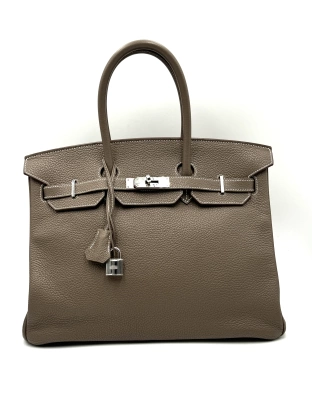
S.A.C.
Sac : le mot est simple, élémentaire.
Pour autant (est-ce assez ?), ces trois lettres presque insignifiantes contiennent en réalité, comme par magie, une quantité infinie d’objets de toutes sortes, surprises, trésors, mystères, promesses, souvenirs ou secrets.
Néo~aristo, il fait sa révolution à contrepied de l’Histoire, de France notamment, et se voit attribuer une particule qui lui confère ses lettres de noblesse : longue vie au sac à main !
Acclamé. Adoubé. Adulé. Il devient un objet de culte.
Mystique, religieux, divin ?
Dans l’écho de son nom, proféré tel un mantra, se trouve peut-être l’énigme de son âme phonétique : [amɛ̃]
À la question « Quel est votre sac du moment ? »,
les invités du podcast Sans Contrefaçon ont répondu par exemple :
Un Diorcamp, sac besace à bandoulière Dior, un Manhattan large de Yves Saint Laurent,
un Evelyne Hermès, un Muse Two Yves Saint Laurent, un Cross-body Rimowa,
un Kelly Hermès, un City Bag Balenciaga vintage, un cabas APC,
un small bag bordeaux Bottega Veneta, ou encore un vieux sac de chasse…
Source d’inspiration, chaque sac a son histoire.
Les mots sont comme les sacs.
Ils prennent la forme de ce qu’on met dedans.
Alfred CAPUS
Voici quelques ouvrages de références à consulter sans modération
* Le Sac à Main Megan Hess (L’imprévu)
* SACS Sophie Gachet (EPA)
* Pièces Iconiques Federico Rocca (Larousse)
* For the love of Bags Julia Werner (TeNeues)
* Sacs à Main Anna Johnson (HF Ullmann)
* Vintage handbags Marnie Fogg (Welbeck)
* Le Sac à main Marie Desplechin (Points) Roman
* La Malle Auteurs divers (Gallimard) Recueil de nouvelles
Je me retrouvai, après une suite de visions étranges,
le nez dans l’herbe, mon sac à la main : chose curieuse, car je l’oublie généralement partout.
Françoise SAGAN (Le garde du cœur)
25 Apr 2025
Confirm your action